
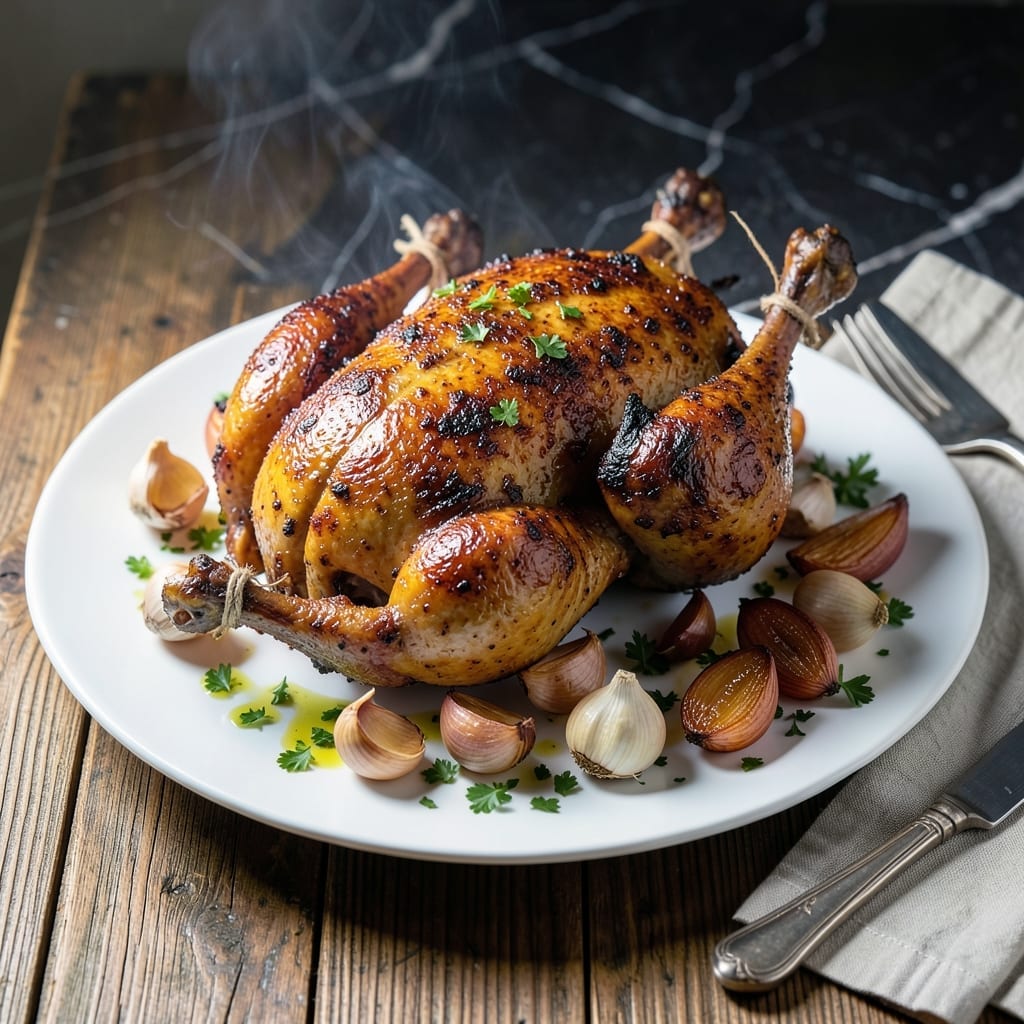
This self-basting rotisserie chicken delivers even flavor and juicy results every time. The spice rub creates a perfect crust while keeping the meat tender, and the rotisserie method ensures consistent cooking without drying out the chicken.
I developed this recipe after years of experimenting with different seasoning blends and cooking techniques. The key is using a balanced mix of spices that enhances the natural chicken flavor without overpowering it.
The rotisserie does most of the work, slowly rotating the chicken to baste in its own juices. This method produces a golden, flavorful exterior with meat that falls off the bone.
Serve with classic sides like corn on the cob and potato salad for a complete meal that will impress at any gathering.
Ingredients for Barbecue Rotisserie Chicken
A whole chicken plus a bold spice rub deliver that classic barbecue flavor with ease.
| Ingredient | Amount | Notes |
|---|---|---|
| Whole Chicken 🍗 | 4 lb | Fresh, giblets removed |
| Brown Sugar 🧈 | ¼ cup | Light or dark variety |
| Smoked Paprika 🌶️ | 2 tbsp | For depth of flavor |
| Garlic Powder 🧄 | 1 tbsp | Not garlic salt |
| Onion Powder 🧅 | 1 tbsp | Fresh ground preferred |
| Ground Black Pepper 🌶️ | 1 tbsp | Freshly ground preferred |
| Sea Salt 🧂 | 1 tbsp | Fine grain preferred |
| Dried Thyme 🌿 | 1 tsp | Crushed for better adhesion |
| Dried Oregano 🍃 | 1 tsp | Mediterranean variety ideal |
| Cayenne Pepper 🔥 | ½ tsp | Adjust for heat preference |
| Olive Oil 🫒 | 2 tbsp | Extra-virgin for richness |
| Barbecue Sauce 🍅 | 1 cup | Thick, quality brand |
| Apple Cider Vinegar 💧 | 1 tbsp | Balances sweetness with acidity |
The chicken quality matters here. Opt for fresh, free-range birds (around 4 pounds) for the juiciest results—avoid pre-brined or enhanced varieties as they can dry out. Whole Foods or Costco typically carry excellent options. The spice rub needs freshly ground black pepper and fine sea salt for even distribution, so avoid coarse kosher salt here.
No smoked paprika? Regular paprika plus a pinch of liquid smoke gets you close. Fresh thyme and oregano can replace dried (use triple the amount). The barbecue sauce should be thick—Stubb’s or Sweet Baby Ray’s work well. If using a vinegar-based sauce, reduce the apple cider vinegar to avoid overpowering the dish.
The spice rub keeps for 2 weeks in an airtight container. Brine the chicken overnight for extra juiciness (optional but recommended). Leftovers hold 3-4 days refrigerated, or freeze portions for up to 3 months.
Why You’ll Love This Recipe
- Set It and Forget: I toss the chicken on the rotisserie, let the oven do the work, and come back to juicy perfection.
- Smoky Sweet Crust: Brown sugar caramelizes with smoked paprika for a glaze so good I lick my fingers.
- Feeds the Week: One chicken becomes tacos, salads, and sandwiches—my meal prep short cut.
- Wallet-Friendly Feast: A whole chicken plus pantry spices costs less than takeout and tastes better.
Step-by-Step Instructions for Barbecue Rotisserie Chicken
Master the technique for juicy, flavor-packed chicken with a caramelized barbecue glaze.
Step 1: Prepare and Season the Chicken
Pat the 4 lb Whole Chicken dry inside and out with paper towels. Remove any remaining giblets from the cavity. This ensures the sea salt and ground black pepper adhere properly and promotes crispy skin.
In a small bowl, combine the 0.25 cup Brown Sugar, 2 tbsp Smoked Paprika, 1 tbsp Garlic Powder, 1 tbsp Onion Powder, 1 tbsp Sea Salt, 1 tsp Dried Thyme, 1 tsp Dried Oregano, and 0.5 tsp Cayenne Pepper. Rub this mixture evenly over the entire surface of the chicken, including under the skin and inside the cavity. The sugar will caramelize beautifully during cooking.
Step 2: Truss and Skewer for Rotisserie Cooking
Tuck the wings behind the back and tie the legs together with kitchen twine to create a compact shape. This promotes even cooking and rotation on the rotisserie. Brush the entire surface with 2 tbsp Olive Oil to help the seasoning adhere and prevent sticking.
Carefully thread the chicken onto the rotisserie skewer, ensuring it’s balanced and secure. The skewer should run through the cavity, with the prongs firmly holding the chicken in place. This setup allows the chicken to self-baste as it rotates.
Step 3: Grill with Indirect Heat
Preheat your grill for indirect cooking at 350°F. Place a drip pan under the rotisserie to catch drippings. Once the grill is at temperature, attach the rotisserie and begin cooking. The chicken should rotate at a steady pace, about 4-5 rotations per minute.
Cook the chicken for approximately 1 hour and 15 minutes to 1 hour and 30 minutes. The internal temperature should reach 165°F in the thickest part of the thigh. The skin will be deeply browned and the juices should run clear when pierced.
Step 4: Glaze and Finish
In a small bowl, whisk together the 1 cup Barbecue Sauce and 1 tbsp Apple Cider Vinegar. This combination balances sweetness with a touch of acidity. During the last 15 minutes of cooking, brush the chicken generously with the barbecue mixture, repeating every 5 minutes.
The vinegar in the glaze helps cut through the richness of the barbecue sauce while adding a subtle tang. Watch closely during this final stage to prevent burning—the sugars in both the rub and glaze can caramelize quickly.
Step 5: Rest and Serve
Remove the chicken from the rotisserie and transfer to a cutting board. Let it rest for 10-15 minutes before carving. This resting period allows the juices to redistribute, ensuring moist, flavorful meat throughout.
Carve the chicken into serving pieces and arrange on a platter. Drizzle any remaining barbecue glaze over the top for an extra layer of flavor. The result should be tender meat with a sticky, caramelized exterior that showcases the depth of the spice rub and barbecue combination.
Pro Tips For Making Barbecue Rotisserie Chicken
- Truss the Chicken: I learned this the hard way—if you skip trussing, the chicken spins unevenly on the rotisserie and the dark meat overcooks while the breasts dry out. Take 2 minutes to tie those legs together with kitchen twine.
- Bloom the Spices: Toast the smoked paprika, garlic powder, and onion powder in a dry pan for 30 seconds before mixing with brown sugar. Sounds weird, but it works: the flavors deepen and stick better to the skin.
- Skip the Cold Bird: After burning three batches, I finally figured out that starting with a fridge-cold chicken makes the skin steam instead of crisp. Pull it out 30 minutes before cooking to bring it closer to room temp.
- Sugar Last Minute: Brush on the brown sugar glaze only in the last 20 minutes of cooking. Add it too early and it’ll burn before the chicken finishes, leaving bitter black spots instead of a sticky, caramelized crust.
Creative Variations of This barbecue rotisserie chicken
Honey Sriracha Glaze
Swap the barbecue sauce for a mix of ½ cup honey and ¼ cup sriracha with 1 tbsp lime juice. Brush this glaze on during the last 15 minutes for a sweet-spicy kick. The heat builds beautifully against the smoky paprika in your rub. 🌶️
Lemon-Herb Mediterranean
Replace the brown sugar with zest of 1 lemon and add 1 tbsp dried rosemary to the rub. Use olive oil and lemon juice for basting instead of barbecue sauce. This bright, herbal version pairs perfectly with grilled vegetables.
Coffee-Chili Rub
Add 1 tbsp finely ground coffee and 1 tsp chili powder to your spice mix. The coffee deepens the smoky notes while the chili adds warmth. I love this with a dark beer basting liquid.
Asian Five-Spice
Swap the thyme and oregano for 1 tsp five-spice powder and 1 tbsp grated ginger. Baste with a mix of soy sauce, rice vinegar, and honey for an East-West fusion that’s unexpectedly delicious. ✨
Maple-Mustard Glaze
Combine ½ cup maple syrup with 2 tbsp Dijon mustard and 1 tbsp apple cider vinegar for a tangy-sweet finish. This works especially well with the existing brown sugar in your rub.
Cajun Blackened
Boost the heat by adding 1 tbsp Cajun seasoning to your rub mix. For extra crunch, dust the chicken with a bit of cornstarch before cooking. The result is a crispy, boldly spiced bird with serious kick.
Nutrition Facts
Frequently Asked Questions
What temperature should the grill be?
Maintain a steady 350°F for even cooking. This temperature allows the chicken to cook through without burning the sugar in the rub.
How do I know when it’s done?
Use a meat thermometer to check the thickest part of the thigh. It should reach 165°F. The juices will run clear when pierced.
Can I use a different size chicken?
Adjust cooking time for larger or smaller birds. A 3 lb chicken may take 1 hour, while a 5 lb bird could need up to 2 hours.
Why does my chicken stick to the skewer?
Ensure the chicken is well-oiled and the skewer is properly secured. If it sticks, the rotisserie may be off-balance or the heat too high.

- Jollof Rice Sauce Recipe: West African Tomato and Spice Infusion - September 25, 2026
- Japanese Rice Soup Recipe: Umami-Rich Comfort in a Bowl - September 25, 2026
- Homemade Cream Of Rice Recipe: Silk-Smooth Breakfast in Minutes - September 25, 2026