
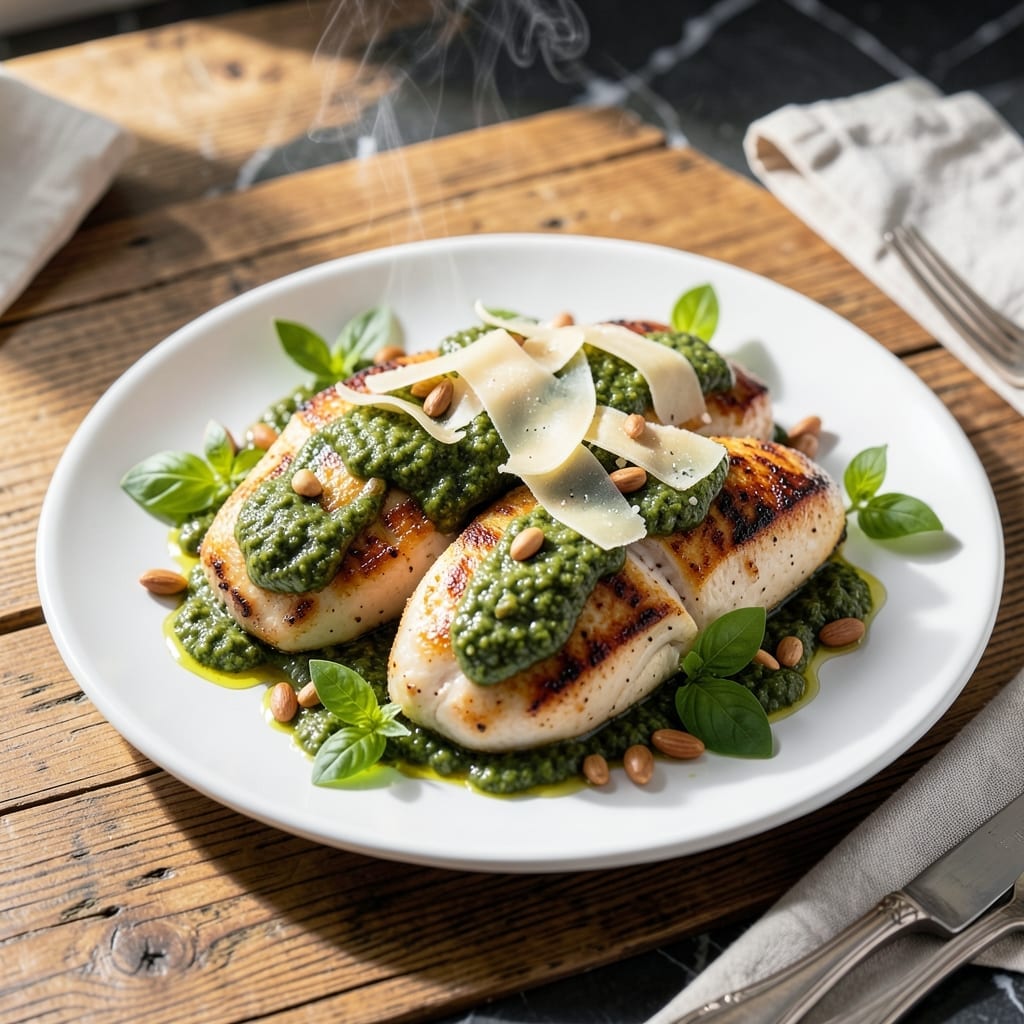
There’s a reason basil pesto chicken remains a timeless favorite—it delivers herb-crusted flavor in every juicy bite. This dish transforms simple ingredients into something extraordinary with minimal effort.
The key lies in the pesto, which creates a fragrant crust that locks in moisture while adding layers of fresh basil, garlic, and nutty richness. A quick sear ensures golden-brown perfection without drying out the meat.
What emerges is tender, aromatic chicken that’s as impressive for weeknight dinners as it is for special occasions. The pesto’s vibrant green hue and bold taste make it a standout main course.
Serve it hot with roasted vegetables or over a bed of pasta for a complete, satisfying meal.
Ingredients for Basil Pesto Chicken
Eleven quality ingredients create this herb-crusted chicken with vibrant pesto flavor in every bite.
| Ingredient | Amount | Notes |
|---|---|---|
| Boneless Skinless Chicken Breasts 🍗 | 1 ½ lb | Pounded to even thickness |
| Fresh Basil Leaves 🌿 | 2 cups | Packed, stems removed |
| Pine Nuts 🥜 | ½ cup | Toasted for nutty richness |
| Garlic Cloves 🧄 | 4 cloves | Minced for pesto |
| Parmesan Cheese 🧀 | ¾ cup | Freshly grated from wedge |
| Extra-Virgin Olive Oil 🫒 | ¾ cup | Divided for pesto and cooking |
| Lemon Juice 🍋 | 1 tbsp | Freshly squeezed for brightness |
| Kosher Salt 🧂 | 1 tsp | Diamond Crystal preferred |
| Freshly Ground Black Pepper 🌶️ | ½ tsp | Coarsely ground for texture |
| All-Purpose Flour 🌾 | ¼ cup | For light dredging |
| Dry White Wine 🍷 | ¼ cup | Optional for deglazing |
| Chicken Stock 🥣 | ½ cup | Low-sodium preferred |
The basil must be fresh—farmers market or grocery store with vibrant green leaves (avoid the wilted plastic containers). Pine nuts are pricey but worth it; Trader Joe’s offers the best value. For Parmesan, Parmigiano-Reggiano wedge is non-negotiable for authentic flavor. The chicken should be uniform thickness to ensure even cooking.
No pine nuts? Walnuts or raw cashews work at a one-to-one ratio. Short on basil? Supplement with fresh parsley (up to half). Pecorino Romano can replace Parmesan for sharper flavor. Dry white wine isn’t essential—substitute chicken stock with a splash of lemon juice. Always use freshly grated cheese; pre-grated lacks the necessary texture.
Pesto oxidizes quickly—press plastic wrap directly on the surface and refrigerate for up to 3 days. Cooked chicken keeps 4 days refrigerated or freezes for 2 months. Toast pine nuts in a dry pan until golden (about 3-4 minutes).
Why You’ll Love This Recipe
- One Pan Meal: I toss everything in a single dish—chicken, pesto, done. No stack of bowls to wash later.
- Garlic-Basil Bomb: That combo of fresh basil, garlic, and parmesan? It makes the chicken so flavorful I skip the sides sometimes.
- Feeds Everyone: From weeknight dinners to summer picnics, this works. Even my picky nephew cleans his plate.
- Leftovers? Yes Please: Honestly, it tastes even better the next day in wraps or over pasta.
Step-by-Step Instructions for Basil Pesto Chicken
Master the technique for herb-crusted perfection with these precise, professional steps.
Step 1: Prepare and Pound the Chicken Breasts
Begin by placing the 1.5 lb boneless skinless chicken breasts between two sheets of plastic wrap. Using a meat mallet or rolling pin, pound them to an even ½-inch thickness. This ensures uniform cooking and prevents dry, overdone edges.
Uniform thickness is critical—thicker spots will be undercooked while thinner areas dry out. Season both sides generously with 1 tsp kosher salt and 0.5 tsp freshly ground black pepper, pressing the seasoning into the meat so it adheres during cooking.
Step 2: Create the Basil Pesto Base
In a food processor, combine the 2 cups fresh basil leaves, 0.5 cup pine nuts, and 4 cloves garlic cloves. Pulse until finely chopped but not pureed—you want texture, not a smooth paste. Scrape down the sides as needed.
With the processor running, slowly drizzle in 0.75 cup extra-virgin olive oil until emulsified. Add the 0.75 cup parmesan cheese, 1 tbsp lemon juice, and pulse just until combined. The pesto should be thick but pourable, with visible flecks of basil and pine nuts.
Step 3: Dredge and Sear the Chicken
Lightly dredge each chicken breast in the 0.25 cup all-purpose flour, shaking off any excess. This creates a delicate crust that helps the pesto adhere. Heat 2 tablespoons of the remaining extra-virgin olive oil in a large oven-safe skillet over medium-high heat.
Once the oil shimmers, add the chicken and sear for 3-4 minutes per side until golden brown and the internal temperature reaches 160°F. The flour coating should be crisp and lightly browned, not burnt. Transfer the chicken to a plate and tent with foil.
Step 4: Deglaze and Finish with Pesto
Reduce the heat to medium and add the 0.25 cup dry white wine to the skillet, scraping up any browned bits with a wooden spoon. Let it simmer for 2 minutes until reduced by half. This deglazing step builds a flavorful base for the sauce.
Pour in the 0.5 cup chicken stock and simmer for another 2 minutes. Return the chicken to the skillet, spoon the pesto over each breast, and let it warm through for 1-2 minutes. The pesto should cling to the chicken and meld with the pan sauce.
Step 5: Rest and Serve
Transfer the chicken to a serving platter and let it rest for 5 minutes. This allows the juices to redistribute, ensuring each bite is tender and moist. Spoon any remaining pesto and pan sauce over the top.
Garnish with additional fresh basil leaves if desired. The chicken should be juicy with a vibrant green herb crust, and the sauce should pool slightly around the edges. Serve immediately while hot.
Pro Tips For Making Basil Pesto Chicken
- Pound the Chicken: Pound the breasts to an even ¾-inch thickness so they cook through without drying out—uneven pieces mean burnt edges and raw centers.
- Toast the Pine Nuts: I learned this the hard way—raw pine nuts taste flat. Dry-toast them in a pan over medium-low heat for 2-3 minutes until golden and fragrant.
- Don’t Overcook Basil: Add fresh basil leaves to the pesto at the very end and pulse just until combined, or you’ll turn it bitter and brown.
- Use Room-Temp Chicken: Pull the chicken out of the fridge 20 minutes before cooking—it sears better and cooks more evenly, no tough spots.
Troubleshooting This Recipe
Pesto Too Thick
If your pesto seems dry or clumpy, add 1-2 tbsp extra-virgin olive oil while pulsing. This restores the smooth, spreadable texture needed to coat the chicken evenly. I often drizzle in a splash of warm water for a lighter consistency. 💡
Chicken Sticks to Pan
Ensure your skillet is fully preheated over medium-high heat with enough oil to create a thin layer. If sticking occurs, let the chicken cook undisturbed for the full 3-4 minutes to develop a proper crust before flipping.
Pesto Turns Brown
Pesto oxidizes quickly—press plastic wrap directly on the surface to minimize air exposure. If it darkens, stir in 1 tsp lemon juice to brighten the color. Refrigerate in an airtight container for up to 3 days.
Dry Chicken
Overcooking is the main culprit. Pull the chicken at 160°F internal temperature—it’ll rise to 165°F while resting. Pounding to ½-inch thickness helps prevent dryness by ensuring even cooking throughout.
Pesto Slides Off
Dredging in all-purpose flour creates a base for the pesto to cling to. If it still slides, thicken the pan sauce slightly by simmering for an extra 1-2 minutes before adding the chicken back in.
Uneven Cooking
Uneven thickness causes this issue. Always pound the chicken to ½-inch uniformly. If some pieces cook faster, remove them earlier and keep warm in a 200°F oven while finishing the rest.
Nutrition Facts
Frequently Asked Questions
Can I use store-bought pesto?
Yes, but fresh tastes better. If using store-bought, add 1 tbsp lemon juice to brighten it.
What if I don’t have pine nuts?
Walnuts or cashews work at a 1:1 ratio. Toast them first for best flavor.
How do I know when it’s done?
Use a meat thermometer—pull at 160°F. It’ll reach 165°F while resting.
Can I bake it instead of pan-searing?
Bake at 375°F for 20-25 minutes until 160°F internal temp.

- Jollof Rice Sauce Recipe: West African Tomato and Spice Infusion - September 25, 2026
- Japanese Rice Soup Recipe: Umami-Rich Comfort in a Bowl - September 25, 2026
- Homemade Cream Of Rice Recipe: Silk-Smooth Breakfast in Minutes - September 25, 2026