
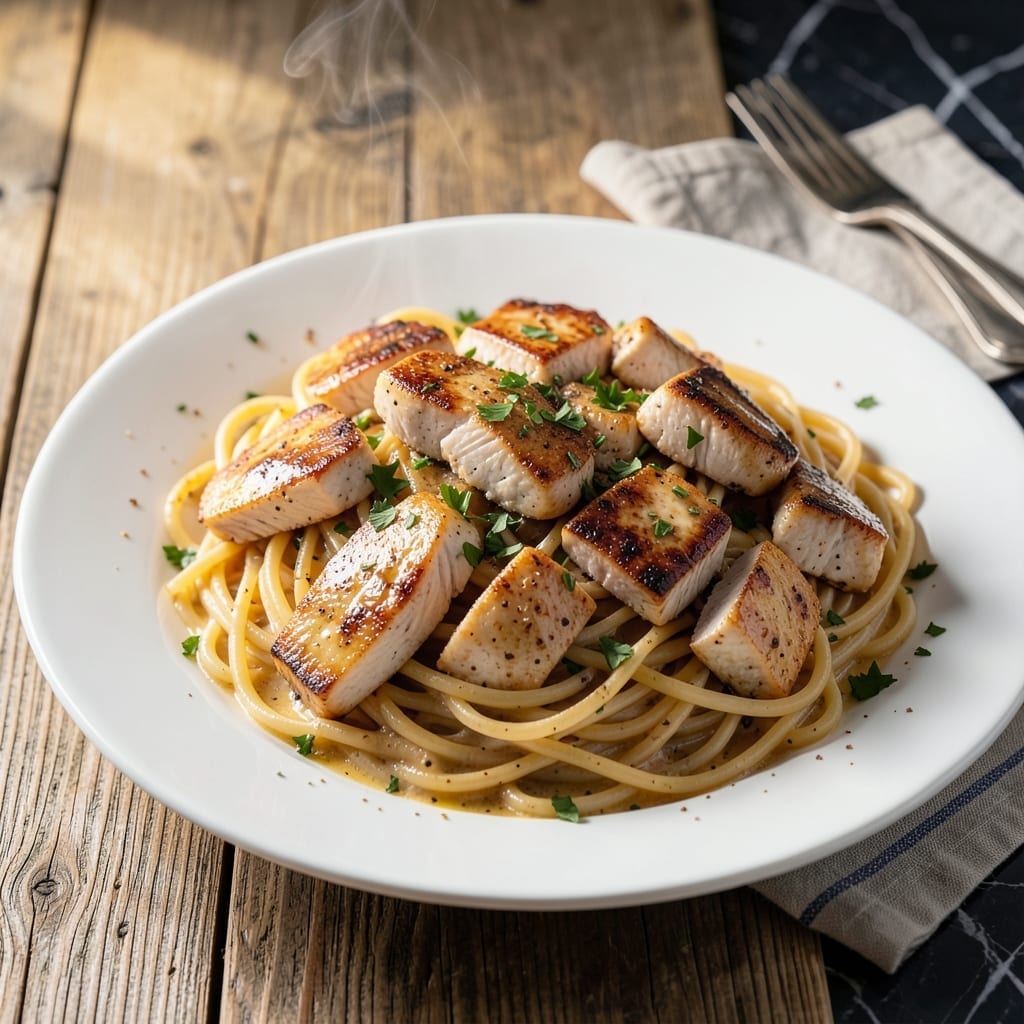
This chicken spaghetti delivers on two essential promises: creamy sauce and tender chicken in every bite. I developed this method to ensure the pasta stays perfectly al dente while the chicken remains juicy and flavorful.
The secret is cooking the chicken separately before combining it with the noodles and sauce. This prevents overcooking and ensures each piece stays moist. A simple roux-based sauce creates that classic creamy texture without being overly heavy.
What you get is a comforting dish where the sauce clings to every strand of spaghetti, and the chicken adds hearty, flavorful bites throughout. It’s the kind of meal that feels special but comes together with minimal effort.
Serve it hot, garnished with fresh parsley for a pop of color. This is a dish that satisfies every time.
Ingredients for Basic Chicken Spaghetti
Quality ingredients create that perfect balance of creamy texture and tender chicken in every bite.
| Ingredient | Amount | Notes |
|---|---|---|
| Spaghetti 🍝 | 12 oz | Dried, broken in half for easier handling |
| Boneless Skinless Chicken Breasts 🍗 | 1 ½ lb | Cut into bite-sized pieces |
| Unsalted Butter 🧈 | ½ cup | For roux and richness |
| All-Purpose Flour 🌾 | ½ cup | For thickening the sauce |
| Whole Milk 🥛 | 2 cups | Full-fat for creaminess |
| Chicken Broth 💧 | 1 ½ cups | Low-sodium preferred |
| Garlic Cloves 🧄 | 3 cloves | Minced finely for even flavor |
| Yellow Onion 🧅 | 1 whole | Finely diced for base flavor |
| Salt 🧂 | 1 ½ tsp | Divided, Diamond Crystal preferred |
| Black Pepper 🌶️ | ½ tsp | Freshly ground for best results |
| Dried Italian Seasoning 🌿 | 1 tsp | Blend of oregano, basil, thyme |
| Parmesan Cheese 🧀 | ½ cup | Freshly grated from wedge |
| Fresh Flat-Leaf Parsley 🌿 | ¼ cup | Chopped for garnish |
| Olive Oil 🫒 | 2 tbsp | Extra-virgin for cooking chicken |
The chicken quality directly impacts texture. Boneless, skinless breasts stay moist when cooked quickly over high heat—avoid overcooking. Whole milk is non-negotiable for the sauce; lower-fat versions separate. For the best Parmesan, grab a wedge from a specialty shop and grate it fresh. Pre-shredded contains anti-caking agents that affect meltability.
Need to swap the chicken? Boneless thighs work too but reduce cooking time. For a richer sauce, use half-and-half instead of milk (adjust thickness with extra flour). No Italian seasoning? Use 1/2 tsp each dried oregano and basil. The parsley garnish isn’t just decorative—it brightens the dish with freshness.
Cook the chicken and sauce separately, then combine. Leftovers keep 3-4 days refrigerated in airtight containers. The sauce thickens as it cools—stir in a splash of milk when reheating. Freezes beautifully for up to 3 months if needed.
Why You’ll Love This Recipe
- One Pot Wonder: I love that everything cooks in a single pot—spaghetti, chicken, and that creamy butter-flour sauce.
- Velvety Comfort: The whole milk and butter create this rich, smooth sauce that clings to every strand.
- Feeds the Crew: Between us, this stretches easily for leftovers or a family dinner without extra effort.
- Budget Friendly: Boneless chicken breasts and pantry staples keep costs low but taste like a million bucks.
Step-by-Step Instructions for Chicken Spaghetti
Master this technique for creamy, tender results that never disappoint.
Step 1: Cook and Season the Chicken
Heat the 2 tbsp olive oil in a large skillet over medium-high heat until shimmering. Add the 1.5 lb boneless skinless chicken breasts (cut into bite-sized pieces) in a single layer, being careful not to overcrowd the pan. Season with ½ tsp salt, ½ tsp black pepper, and the 1 tsp dried Italian seasoning.
Cook for 6-7 minutes, stirring occasionally, until the chicken is no longer pink inside and develops a light golden crust. The internal temperature should reach 165°F. Transfer to a plate and set aside, reserving the skillet with its flavorful drippings for the sauce.
Step 2: Build the Roux and Aromatics
In the same skillet, reduce heat to medium and melt the ½ cup unsalted butter. Add the 1 whole yellow onion (finely diced) and cook for 3-4 minutes until translucent and beginning to soften. Stir in the 3 cloves garlic cloves (minced) and cook for 30 seconds until fragrant.
Sprinkle the ½ cup all-purpose flour over the onion mixture and whisk constantly for 1-2 minutes to create a smooth roux. This step is crucial—you want a light golden color (like peanut butter) to remove the raw flour taste and ensure proper thickening.
Step 3: Create the Creamy Sauce
Gradually pour in the 1.5 cups chicken broth and 2 cups whole milk, whisking continuously to prevent lumps. Increase heat to medium-high and bring to a gentle simmer, stirring frequently. Cook for 4-5 minutes until the sauce thickens enough to coat the back of a spoon.
Reduce heat to low and stir in the remaining 1 tsp salt. Return the cooked chicken to the skillet along with any accumulated juices. Simmer for 2-3 minutes to allow the flavors to meld and the chicken to absorb some of the creamy sauce.
Step 4: Combine with Pasta and Finish
Meanwhile, cook the 12 oz spaghetti in salted boiling water until al dente (about 1 minute less than package directions). Drain well and add directly to the skillet with the chicken and sauce. Toss everything together until the pasta is evenly coated.
Remove from heat and stir in the ½ cup Parmesan cheese until fully melted and incorporated. The sauce should be rich and velvety, clinging generously to each strand of pasta. Taste and adjust seasoning if needed.
Step 5: Garnish and Serve
Transfer to a serving dish and sprinkle with the ¼ cup fresh flat-leaf parsley (chopped). Let rest for 2-3 minutes to allow the sauce to set slightly. The parsley adds a fresh contrast to the rich, creamy dish.
Serve immediately while hot. Each serving should have a generous portion of tender chicken pieces distributed throughout the creamy, well-coated pasta. The sauce will thicken slightly as it cools, so work quickly for the best texture.
Pro Tips For Making Basic Chicken Spaghetti
- Pound the Chicken: Butterflying or pounding the breasts to an even ½-inch thickness guarantees they cook through in the same 6-7 minutes without drying out—no more chewy bites hiding in the center.
- Salt the Pasta Water: Use a full tablespoon of salt per gallon; I learned this the hard way after too many bland noodles that couldn’t stand up to the creamy sauce.
- Temper the Milk: Warm the whole milk for 30 seconds in the microwave before whisking it into the butter-flour roux—cold milk can make the sauce break or turn lumpy.
- Use Pasta Water: Reserve a cup of the starchy pasta water and splash in a few tablespoons to loosen the sauce; it binds better than plain milk and clings to the spaghetti.
Storing and Reheating This basic chicken spaghetti
Refrigerator Storage
Let your chicken spaghetti cool for no more than 2 hours before transferring to airtight containers. It keeps beautifully at 40°F or below for up to 4 days. The flavors actually deepen as the pasta absorbs the creamy sauce overnight. ❄️
Freezer Storage
For longer storage, freeze in quart-sized freezer bags for up to 3 months. I lay them flat to save space and ensure even freezing. Leave 1 inch of headspace for expansion and squeeze out excess air to prevent freezer burn.
Stovetop Reheating
This is my preferred method for maintaining texture. Heat in a skillet over medium-low heat with 2 tbsp milk or chicken broth to prevent drying. Stir frequently for 5-7 minutes until heated through. 🔥
Microwave Reheating
For quick meals, microwave individual portions covered with a damp paper towel. Heat on 70% power for 2-3 minutes, stir, then continue in 30-second intervals until reaching 165°F. Add a splash of milk if it looks dry.
Sauce Consistency Tip
The sauce thickens as it cools, so don’t worry if it looks separated when cold. When reheating, thin with small amounts of liquid until creamy again. I find whole milk works best to restore the original texture.
Nutrition Facts
Frequently Asked Questions
Can I use chicken thighs instead of breasts?
Yes! Boneless thighs work well and may stay juicier. Reduce cooking time to 5-6 minutes since they cook faster. The flavor will be slightly richer.
How do I prevent the sauce from being too thick?
If the sauce thickens too much, stir in 1-2 tbsp whole milk at a time until creamy. Cook the roux for 1-2 minutes max to avoid over-thickening.
Can I make this ahead of time?
Assemble and refrigerate for up to 4 days. Reheat on the stovetop with extra milk. The flavors improve overnight.
What if my sauce is lumpy?
Whisk vigorously while adding liquids to prevent lumps. If they form, use an immersion blender for 10-15 seconds to smooth it out.

- Jollof Rice Sauce Recipe: West African Tomato and Spice Infusion - September 25, 2026
- Japanese Rice Soup Recipe: Umami-Rich Comfort in a Bowl - September 25, 2026
- Homemade Cream Of Rice Recipe: Silk-Smooth Breakfast in Minutes - September 25, 2026