
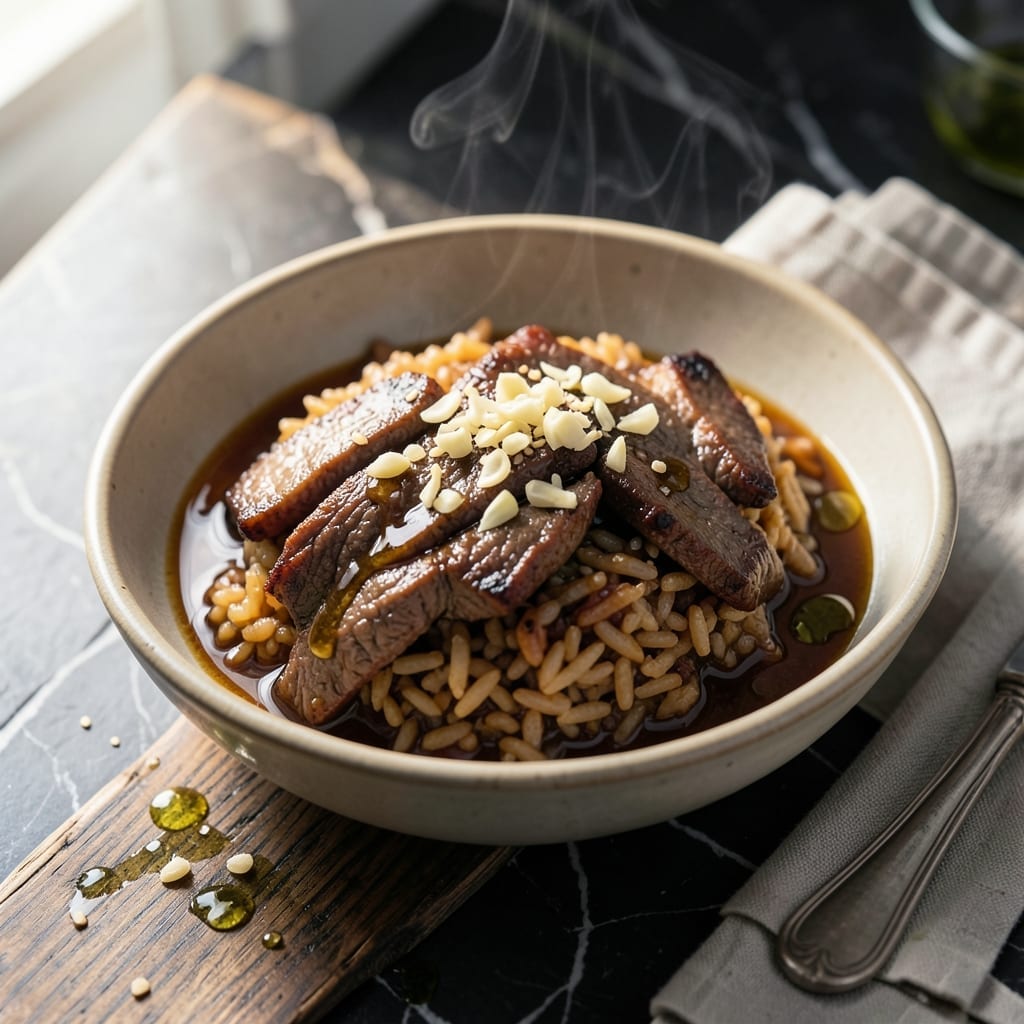
This sauce is the secret to restaurant-quality beef fried rice at home. I developed it after one too many bland takeout attempts in my tiny Boston kitchen. It’s all about balancing sweet, salty, and umami flavors perfectly.
The foundation is simple: soy sauce for saltiness, oyster sauce for depth, and a touch of sugar to round everything out. I also add sesame oil for that distinctive wok-fried aroma that makes the dish truly special.
What you get is a versatile sauce that transforms plain rice and beef into something extraordinary. It coats every grain and piece of meat with rich, complex flavor that tastes authentic without being complicated.
Make a batch and keep it on hand for quick weeknight dinners. This is the kind of recipe that becomes a staple in your cooking rotation.
Ingredients for Beef Fried Rice Sauce
Nine ingredients transform plain rice into restaurant-quality magic with bold flavor.
| Ingredient | Amount | Notes |
|---|---|---|
| Soy Sauce 🫒 | ½ cup | Low-sodium preferred for control |
| Oyster Sauce 🐚 | ¼ cup | Essential for umami depth |
| Granulated Sugar 🍚 | 1 tbsp | Balances salt and umami |
| Sesame Oil 🫒 | 1 tbsp | Toasted for authentic aroma |
| Garlic Cloves 🧄 | 3 cloves | Minced for maximum flavor |
| Fresh Ginger 🌿 | 1 tbsp | Grated or finely minced |
| Rice Vinegar 🍋 | 1 tbsp | Adds subtle tangy brightness |
| Shaoxing Wine 🍷 | 1 tbsp | Optional but recommended for complexity |
| White Pepper 🌶️ | ¼ tsp | Ground, for classic flavor |
The oyster sauce is non-negotiable here—look for Lee Kum Kee or Koon Chun brands at Asian markets or the international aisle. Soy sauce should be low-sodium so you can control the saltiness. I grab mine from H Mart in Boston when I’m restocking. For sesame oil, Kadoya is the gold standard (worth the splurge for that nutty aroma).
No oyster sauce? Vegan oyster sauce or hoisin works in a pinch. Missing Shaoxing wine? Dry sherry at half the amount is a solid swap. The rice vinegar can be apple cider vinegar if that’s what you’ve got. For a gluten-free version, tamari replaces soy sauce one-for-one. Just don’t skip the sesame oil—it’s what makes this taste like takeout.
This keeps 1 week in the fridge in a sealed jar. For longer storage, freeze in ice cube trays—perfect for single-serving portions. The flavors actually deepen after 24 hours, so make it ahead if you can.
Why You’ll Love This Recipe
- 5-Minute Mix: I just dump all the ingredients in a bowl and stir—no cooking required until it hits the wok.
- Umami Bomb: That first hit of garlic, soy, and oyster sauce is ridiculous. Honestly, it’s the reason I make fried rice weekly.
- Freezer Friendly: I double the batch, freeze half, and pull it out when I need a quick dinner fix.
- Pantry Staples: Between us, I always have these five ingredients on hand, so it’s my go-to when the fridge looks sad.
Step-by-Step Instructions for Beef Fried Rice Sauce
Here’s the method I use to create this rich, aromatic sauce that elevates every stir-fry.
Step 1: Bloom the Aromatics in Sesame Oil
Heat a small saucepan over medium-low heat. Add the 1 tbsp Sesame Oil and let it warm for 30 seconds until it becomes fragrant but not smoking. You want to gently coax out its nutty aroma without burning it.
Add the 3 cloves Garlic Cloves (minced) and 1 tbsp Fresh Ginger (grated or finely minced) to the pan. Stir constantly for 1-2 minutes until the mixture becomes golden and bubbly but not browned. This blooming step unlocks their essential oils and builds the sauce’s flavor foundation.
Step 2: Deglaze with Wine and Vinegar
Carefully pour in the 1 tbsp Shaoxing Wine and 1 tbsp Rice Vinegar. The mixture will sizzle as it hits the hot pan—that’s the alcohol cooking off and the flavors melding. Let it simmer for 2 minutes to reduce slightly.
This deglazing step lifts all those flavorful browned bits from the aromatics and incorporates them into the sauce. The vinegar adds a subtle tang that balances the richness of the other ingredients, while the wine brings depth and complexity.
Step 3: Build the Sauce Base
Add the 0.5 cup Soy Sauce, 0.25 cup Oyster Sauce, and 1 tbsp Granulated Sugar to the pan. Stir well to combine all the ingredients. Bring the mixture to a gentle simmer over medium heat.
The soy sauce provides the salty backbone, while the oyster sauce adds that essential umami depth that makes this sauce so special. The sugar balances these intense flavors, creating a harmonious blend that will coat your fried rice perfectly.
Step 4: Finish and Season
Once the sauce has simmered for 3-4 minutes, reduce the heat to low. Stir in the 0.25 tsp White Pepper and let the sauce cook for another 1-2 minutes. The sauce should thicken slightly and develop a glossy sheen.
Taste and adjust the seasoning if needed, though with these proportions you should have a perfectly balanced sauce. The white pepper adds a subtle warmth that complements the umami flavors without overpowering them. Let the sauce cool completely before using or storing—it will continue to thicken as it cools.
Pro Tips For Making Beef Fried Rice Sauce
- Bloom the Garlic: Cook the minced garlic in sesame oil over medium-low heat until just golden—about 30 seconds. I learned this the hard way after burning a batch and ending up with bitter sauce.
- Balance the Sauces: Use a 2:1 ratio of soy sauce to oyster sauce for depth without overpowering saltiness. Sounds weird, but it works: the sugar ties it all together.
- Skip the Raw Sugar: Dissolve the granulated sugar in 1-2 tablespoons of warm water first to avoid grainy texture in your sauce. This isn’t the prettiest method, but it’s the tastiest.
- Finish with Sesame Oil: Stir in the sesame oil at the very end, off the heat, to preserve its nutty aroma. After burning three batches, I finally figured out that high heat kills its flavor.
Flavor Customization for beef fried rice sauce
Spicy Kick
Add 1-2 tsp sriracha or 1 tbsp gochujang to the finished sauce for heat lovers. I tested this with both in my Boston kitchen and found sriracha adds bright heat, while gochujang brings fermented depth. Start with less—you can always add more to taste. 🌶️
Sweeter Version
Increase the granulated sugar to 2 tbsp or add 1 tbsp honey for a sweeter profile. This works beautifully if you’re serving with other savory dishes. The honey version adds a subtle floral note that pairs well with the sesame oil.
Extra Umami
Stir in 1 tbsp hoisin sauce or 1 tsp fish sauce for deeper complexity. I discovered this trick after one too many bland takeout attempts. Hoisin adds sweetness and thickness, while fish sauce amplifies the savory notes without overpowering.
Citrus Brightness
Add 1 tbsp fresh lime juice or 1 tsp orange zest at the end for a bright finish. This cuts through the richness and adds a fresh dimension. I love this variation when serving with grilled beef.
Ginger-Garlic Boost
Double the fresh ginger and garlic to 2 tbsp each for a more pronounced aromatic base. This creates a sauce that really sings with bold flavors. Perfect for when you want the sauce to stand out in the dish. 💡
Mild Family Version
Reduce the soy sauce to ⅓ cup and add 2 tbsp chicken broth to mellow the intensity. This makes it more kid-friendly while keeping all the essential flavors. I use this when cooking for my nieces and nephews.
Nutrition Facts
Frequently Asked Questions
Can I make this sauce ahead of time?
It keeps for 1 week in the fridge. The flavors actually deepen after 24 hours, making it even better for meal prep.
What if I don’t have oyster sauce?
Use vegan oyster sauce or hoisin sauce as a 1:1 substitute. Both deliver similar umami depth without changing the recipe’s balance.
How do I adjust the saltiness?
Start with low-sodium soy sauce as the base. If it’s too strong, add 1 tbsp water or broth to mellow it out.
Can I freeze leftover sauce?
Yes! Portion into ice cube trays for easy single-serving use. It freezes well for up to 3 months.

- Rice Pudding Recipe With Eggs and Milk: Old-Fashioned Custard-Style Comfort - September 30, 2026
- Rice Noodle Sauce Recipe: Bold Umami Depth for Authentic Stir-Fry - September 30, 2026
- Rice Pilaf Recipe: Fragrant Basmati With Toasted Vermicelli - September 30, 2026