
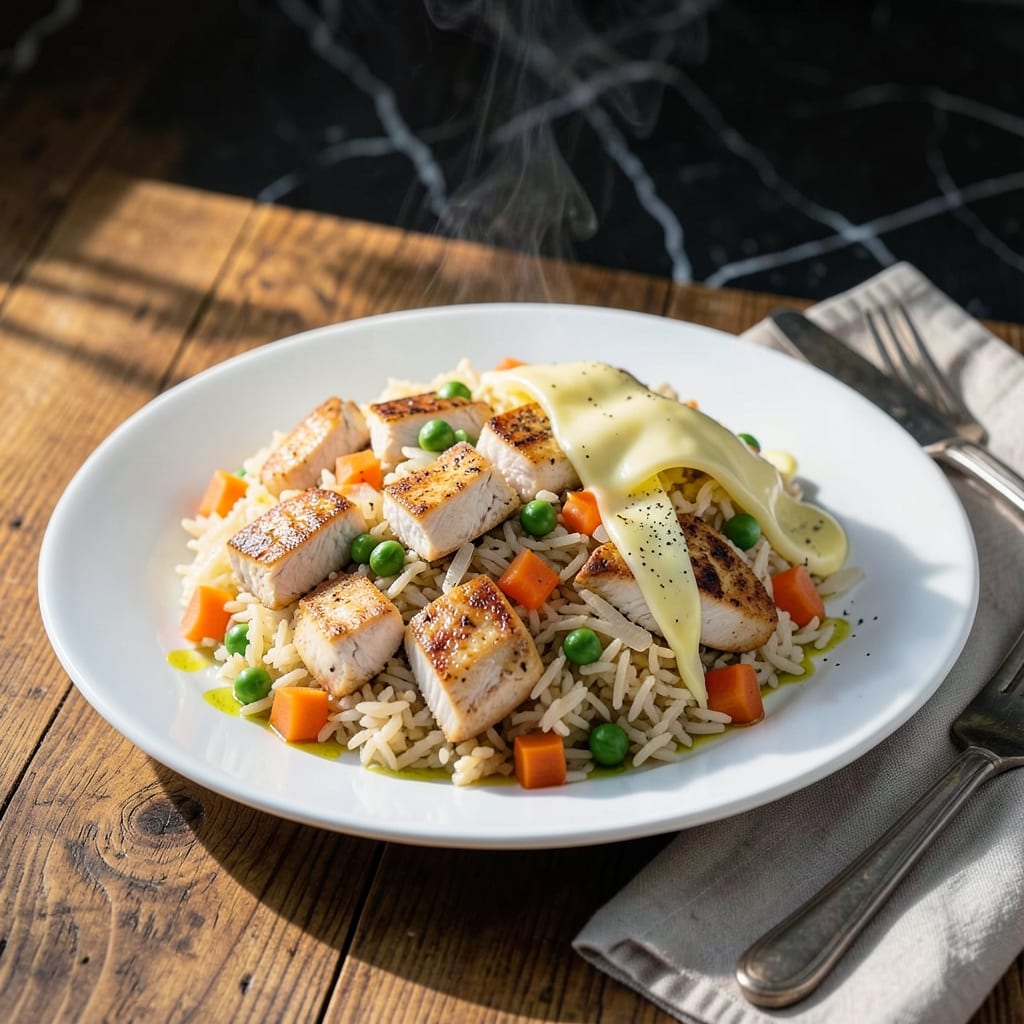
Recreating Benihana’s signature chicken fried rice at home is simpler than you might expect. This dish delivers the same savory, slightly sweet flavor and satisfying texture that makes hibachi-style rice so beloved.
The key lies in using day-old rice and cooking over high heat to achieve that characteristic slightly crispy texture. A blend of soy sauce, sesame oil, and a touch of sugar mirrors the restaurant’s signature seasoning perfectly.
What emerges from your wok is a plate of fried rice packed with tender chicken, scrambled eggs, and vegetables—all coated in that unmistakable Benihana flavor. The aroma alone will transport you to the teppanyaki table.
This version stays true to the original while making it accessible for home cooks. The result is a dish that rivals the restaurant experience.
Ingredients for Benihana Chicken Fried Rice Copycat
Day-old rice, fresh veggies, and a few pantry staples bring this hibachi classic to life.
| Ingredient | Amount | Notes |
|---|---|---|
| Day-Old Cooked White Rice 🍚 | 4 cups | Cold, preferably overnight |
| Boneless Skinless Chicken Breast 🍗 | 1 lb | Diced into small cubes |
| Large Eggs 🥚 | 2 whole | Lightly beaten |
| Small White Onion 🧅 | 1 whole | Finely diced |
| Carrots 🥕 | 2 whole | Peeled and finely diced |
| Frozen Green Peas 🌱 | ¾ cup | Thawed |
| Garlic Cloves 🧄 | 2 cloves | Minced |
| Soy Sauce 🥫 | 3 tbsp | Low-sodium preferred |
| Sesame Oil 🫒 | 2 tsp | Toasted for best flavor |
| Granulated Sugar 🧂 | 1 tsp | Balances savory flavors |
| Vegetable Oil 🫒 | 3 tbsp | High smoke point for stir-frying |
| Green Onions 🧅 | 3 whole | Thinly sliced for garnish |
| Salt 🧂 | ½ tsp | Or to taste |
| Black Pepper 🌶️ | ¼ tsp | Freshly ground |
The rice is non-negotiable—day-old, cold, and dry (fresh rice turns to mush). I grab mine from the local Chinese spot the night before (tell them it’s for fried rice, they’ll hook you up). For the chicken, thighs work too but breasts stay juicier in the high heat. Costco has great pre-diced options if you’re short on time. Don’t skip the sesame oil—it’s the secret to that signature Benihana aroma.
No soy sauce? Tamari or coconut aminos work in a pinch (but expect a flavor shift). Fresh garlic is key—powder just doesn’t cut it. Out of peas? Swap in frozen corn or diced bell peppers (just pre-cook them slightly). The sugar might seem odd, but it balances the saltiness perfectly. And if you’re feeling fancy, a dash of MSG gets you even closer to the original.
Leftovers keep 3-4 days in the fridge—reheat in a skillet to revive the texture. Freezes well too, up to 3 months (thaw overnight before reheating). Pro tip: make extra rice next time you order takeout and stash it for this.
Why You’ll Love This Recipe
- One Pan Wonder: I love that this comes together in a single skillet—just chop, toss, and stir-fry. Day-old rice soaks up the flavors while the chicken and veggies cook up fast.
- That Benihana Taste: Honestly, the combo of tender chicken, sweet carrots, and that signature eggy texture nails the restaurant version. The onion adds just the right bite.
- Meal Prep Hero: I make a big batch Sunday and it reheats beautifully for lunches all week. Even my picky nephew goes back for seconds.
- Budget Stretcher: Between us, it’s cheaper than takeout and uses pantry staples I always have on hand. One pound of chicken feeds four easily.
Step-by-Step Instructions for Hibachi-Style Chicken Fried Rice
Here’s the method I use to recreate that signature Benihana flavor at home.
Step 1: Prepare and Cook the Chicken
Heat 1 tablespoon of the vegetable oil in a large skillet or wok over medium-high heat. Add the diced boneless skinless chicken breast and season with 0.5 teaspoon salt and 0.25 teaspoon black pepper.
Cook for 5-6 minutes, stirring occasionally, until the chicken is lightly browned and cooked through. You’ll know it’s done when there’s no pink left in the center and the juices run clear. Transfer the chicken to a plate and set aside—it’ll go back in later.
Step 2: Scramble the Eggs with Vegetables
In the same skillet, add another 1 tablespoon of the vegetable oil. Pour in the 2 lightly beaten large eggs and let them set for 10-15 seconds before scrambling with a spatula until just cooked through but still slightly soft.
Add the finely diced small white onion, 2 peeled and finely diced carrots, and 2 minced garlic cloves to the skillet. Cook for 3-4 minutes until the vegetables soften and the onion becomes translucent. This builds the flavor base for your fried rice.
Step 3: Combine Rice and Seasonings
Increase the heat to high and add the remaining 1 tablespoon vegetable oil. Add the 4 cups day-old cooked white rice, breaking up any clumps with your spatula. The cold rice is crucial—it fries up fluffy instead of mushy.
Stir-fry for 2-3 minutes until the rice is heated through and starts to develop a slight toast. Add the 0.75 cup thawed frozen green peas, the cooked chicken, 3 tablespoons soy sauce, 2 teaspoons sesame oil, and 1 teaspoon granulated sugar.
Step 4: Finish and Garnish
Stir everything together and cook for another 2-3 minutes until all the ingredients are well combined and heated through. The rice should have a uniform color with no dry spots, and you should smell the fragrant aroma of the sesame oil.
Taste and adjust seasoning if needed. Transfer to serving plates and garnish with the 3 thinly sliced green onions. The green onions add a fresh, crisp contrast to the rich, savory rice. Serve immediately while hot for the authentic hibachi experience.
Pro Tips For Making Benihana Chicken Fried Rice Copycat
- Chill the Rice: Use day-old rice straight from the fridge—it’s drier and fries up fluffier. I learned this the hard way after my first batch turned into a mushy mess.
- Velocity the Chicken: Cut the chicken into tiny, even pieces so it cooks through in under 2 minutes on high heat. Sounds obsessive, but it’s the only way to get that Benihana speed and tenderness.
- Skip Fresh Rice: Resist the urge to use just-cooked rice; the moisture will steam everything instead of frying. My grandmother swore by this, and she was right.
- Push Eggs Aside: Scramble the eggs first, then push them to one side of the pan before adding the rest—this keeps them soft and distinct instead of disappearing into the rice.
Storing and Reheating Leftovers
Refrigerator Storage
Let your fried rice cool to room temperature for no more than 2 hours. Transfer to airtight containers and refrigerate at 40°F or below. It stays fresh for 3-4 days. I love how the flavors deepen overnight. ❄️
Freezer Storage
For longer storage, freeze in quart-sized bags with excess air squeezed out. It keeps well for up to 3 months. Lay bags flat to save space and thaw overnight in the fridge before reheating.
Skillet Reheating
My preferred method: Heat 1 tbsp vegetable oil in a skillet over medium heat. Add fried rice and stir frequently for 5-6 minutes until hot. Sprinkle with 1 tsp water to restore moisture if needed. 🔥
Microwave Method
Place a portion in a microwave-safe dish with a splash of water. Cover with a damp paper towel and heat on 70% power for 2-3 minutes, stirring halfway. This prevents the rice from drying out.
Reviving Texture
A quick stir-fry with an extra egg or 1 tsp soy sauce can bring back that fresh hibachi taste. I often add a sprinkle of sesame seeds for extra crunch and visual appeal.
Nutrition Facts
Frequently Asked Questions
Can I use fresh rice instead of day-old?
Fresh rice will turn mushy when stir-fried. Day-old rice works best because it’s drier. If you must use fresh, spread it on a baking sheet and refrigerate for 1-2 hours to dry it out first.
What can I substitute for chicken?
Shrimp, beef, or tofu all work beautifully. For shrimp, cook 2-3 minutes per side. For beef, use thinly sliced steak and cook 3-4 minutes total. Tofu should be pressed and cubed.
Why does my rice taste bland?
This usually happens when using low-sodium soy sauce without adjusting seasoning. Taste as you cook and add extra 1/2 tsp salt or a dash of MSG if needed. The sesame oil is also crucial for authentic flavor.
Can I make this in a regular pan?
A wok is ideal but not required. Use a large, deep skillet with high heat. Work in batches if needed to avoid overcrowding. The key is maintaining that high temperature for proper browning.

- Jollof Rice Sauce Recipe: West African Tomato and Spice Infusion - September 25, 2026
- Japanese Rice Soup Recipe: Umami-Rich Comfort in a Bowl - September 25, 2026
- Homemade Cream Of Rice Recipe: Silk-Smooth Breakfast in Minutes - September 25, 2026