
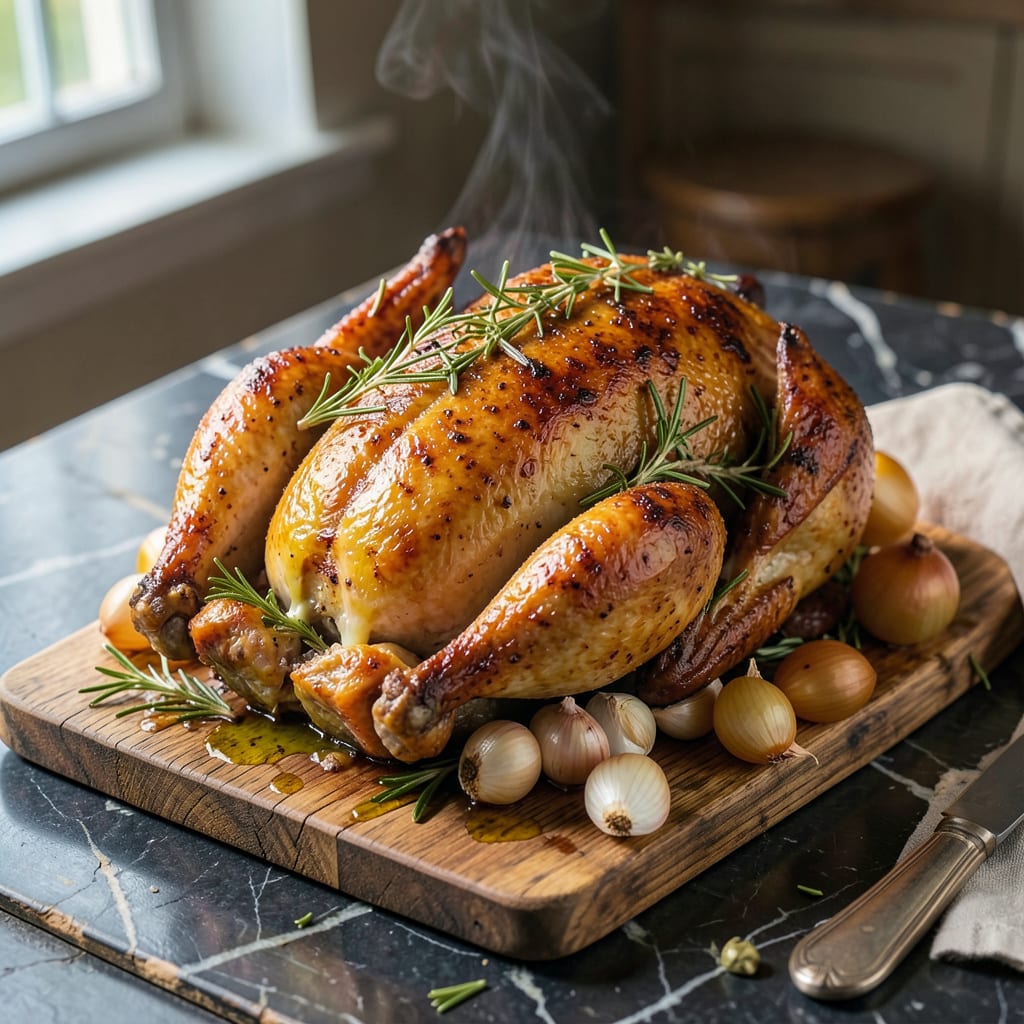
This method delivers perfectly golden chicken with crispy skin and juicy meat every time.
I developed this recipe through years of testing, focusing on even cooking and maximum flavor without complicated steps.
Ingredients for Best Baked Whole Chicken Recipe Ever
A whole bird plus fresh herbs and aromatics create that golden, crisp-skinned perfection every time.
| Ingredient | Amount | Notes |
|---|---|---|
| Whole Chicken 🍗 | 1 whole | 3-4 lb, giblets removed |
| Unsalted Butter 🧈 | ½ cup | Softened to room temperature |
| Fresh Rosemary 🌿 | 2 tbsp | Finely chopped, stems discarded |
| Fresh Thyme 🍃 | 2 tbsp | Leaves stripped from stems |
| Fresh Sage 🌿 | 1 tbsp | Finely minced for even distribution |
| Garlic Cloves 🧄 | 6 cloves | Minced into fine paste |
| Kosher Salt 🧂 | 1 ½ tbsp | Diamond Crystal preferred for texture |
| Black Pepper 🌶️ | 1 tsp | Freshly ground for maximum aroma |
| Lemon 🍋 | 1 whole | Zest and juice separated |
| Yellow Onion 🧅 | 1 whole | Quartered for cavity aromatics |
| Carrots 🥕 | 3 whole | Peeled and cut into chunks |
| Celery Stalks 🌿 | 3 pieces | Cut into large pieces for bed |
| Olive Oil 🫒 | 1 tbsp | Extra-virgin for basting |
| Dry White Wine 🍷 | ½ cup | For deglazing the pan |
[recipeingredientscaler]
The chicken is the foundation—opt for air-chilled birds from Whole Foods or a trusted butcher for superior texture and flavor. Look for skin that’s smooth and slightly moist, not dry or discolored. A 3-4 lb bird is ideal for even cooking. The herbs should be vibrant and fragrant; if they’re wilted or browned, they’ve lost their potency. Diamond Crystal kosher salt is my go-to for its clean taste and ideal texture for seasoning.
No fresh herbs? Dried at one-third the quantity works, but fresh is non-negotiable for that bright, layered flavor. Swap the white wine for chicken broth with a splash of lemon juice. If you’re avoiding alcohol, apple cider vinegar diluted with water adds tang. The butter can be replaced with olive oil, though the flavor profile will be less rich. Don’t skip the aromatics in the cavity—they infuse the meat beautifully.
Store the chicken in the coldest part of your fridge for up to 2 days before cooking. Leftovers keep for 4 days refrigerated or freeze for 3 months. Always bring the bird to room temperature before roasting for even cooking—this takes about 1 hour out of the fridge.
Why You’ll Love This Recipe
- One Pan Wonder: I just rub butter and fresh herbs under the skin, pop it in the oven, and walk away.
- Herb-Butter Magic: The rosemary, thyme, and sage melt into the meat, giving every bite that rich, aromatic punch.
- Feeds the Week: Leftovers make killer sandwiches, soups, or salads—no waste, all flavor.
- Budget Hero: A whole chicken costs less than individual parts, and honestly, it tastes even better.
Step-by-Step Instructions for Herb-Crusted Roasted Chicken
This method guarantees perfectly crisp skin and tender meat with aromatic herbs throughout.
Step 1: Prepare and Season the Chicken
Pat the whole chicken completely dry with paper towels, inside and out. This critical step ensures crispy skin. Season the cavity generously with 1 tbsp kosher salt and ½ tsp black pepper.
In a small bowl, combine the 0.5 cup softened unsalted butter with 2 tbsp fresh rosemary, 2 tbsp fresh thyme, 1 tbsp fresh sage, 6 cloves minced garlic, ½ tbsp kosher salt, ½ tsp black pepper, and the zest of 1 lemon.
Gently separate the chicken skin from the breast with your fingers and rub about half the herb butter underneath. Rub the remaining butter all over the outside of the chicken, including the legs and wings.
Step 2: Create the Aromatic Bed and Truss
Position a rack in the lower third of your oven and preheat to 425°F. Scatter the quartered yellow onion, 3 whole carrots, and 3 celery stalks in the bottom of a roasting pan to create a natural roasting rack.
Place the chicken breast-side up on the vegetables. Stuff the cavity with the juiced lemon halves and any remaining herb mixture. Tuck the wings under the body and tie the legs together with kitchen twine for even cooking.
Step 3: Roast to Golden Perfection
Brush the chicken with 1 tbsp olive oil and place the pan in the preheated oven. Roast undisturbed for 1 hour to allow the skin to crisp and brown evenly.
After 1 hour, carefully flip the chicken breast-side down. Continue roasting for 20-25 minutes until the thickest part of the thigh reaches 165°F on an instant-read thermometer.
Flip the chicken breast-side up one final time and roast for an additional 10-15 minutes until the skin is deep golden brown and crisp all over.
Step 4: Rest and Prepare the Pan Sauce
Transfer the chicken to a cutting board and tent loosely with foil. Let it rest for 15 minutes while you make the sauce—this ensures the juices redistribute for moist meat.
Place the roasting pan on the stovetop over medium heat. Add the 0.5 cup dry white wine and bring to a simmer, scraping up all the browned bits from the bottom of the pan with a wooden spoon.
Simmer for 3-4 minutes until the liquid reduces by half. Strain through a fine-mesh sieve into a small bowl, pressing on the vegetables to extract all the flavor. Serve the chicken with the pan sauce drizzled over the top.
Pro Tips For Making Best Baked Whole Chicken Recipe Ever
- Dry the Skin: Pat the chicken thoroughly dry with paper towels before seasoning—I learned this the hard way after ending up with steamed, soggy skin instead of crispy.
- Room Temp Start: Let the chicken sit out for 30 minutes before baking; it cooks more evenly and the butter-herb rub sticks better to the skin.
- Butter Under Skin: Gently loosen the skin over the breast and thighs, then stuff about 2 tablespoons of the herb butter underneath—this keeps the meat juicy where it matters most.
- Check Thigh Temp: Resist pulling it out at 165°F; the dark meat needs 175°F to be truly tender, and the breast will still be perfect by then.
Make-Ahead Tips for This Recipe
Overnight Herb Infusion
For maximum flavor, season your chicken with the herb butter mixture the night before cooking. This allows the flavors to penetrate deeply. Cover loosely with plastic wrap and refrigerate for up to 12 hours. 💡
Room Temperature Rest
Remove the chicken from the fridge 1 hour before roasting to bring it to room temperature. This ensures even cooking throughout the bird. I always set a reminder so I don’t forget this crucial step.
Prep Ahead Vegetables
Chop your onion, carrots, and celery the day before and store them in an airtight container in the fridge. This saves 15 minutes on cooking day and makes the process smoother.
Make the Pan Sauce Base
Prepare the herb butter mixture in advance and store it in the fridge. On cooking day, bring it to room temperature before using. The wine for deglazing can also be measured out ahead of time.
Post-Roast Resting
While the chicken rests, you can set the table or prepare side dishes. The 15-minute rest is non-negotiable for keeping the meat juicy. Use this time wisely to finish your meal prep.
Carve and Store
If serving later, carve the chicken after resting and store the pieces in the pan sauce to keep them moist. Reheat gently in a 300°F oven for 15-20 minutes before serving. ✨
Nutrition Facts
Frequently Asked Questions
What temperature should I bake it at?
Start with your oven preheated to 425°F for the first hour. This ensures crispy skin and even cooking throughout the bird.
How long does it take to cook a 4 lb chicken?
Plan for about 1 hour and 35 minutes total. This includes flipping the bird halfway through for even browning and doneness.
Can I use dried herbs instead of fresh?
Yes, use dried at one-third the amount. Fresh herbs provide brighter flavor, but dried work in a pinch.
How do I know when it’s done?
The thickest part of the thigh should reach 165°F on a meat thermometer. The juices should run clear, not pink.

- Jollof Rice Sauce Recipe: West African Tomato and Spice Infusion - September 25, 2026
- Japanese Rice Soup Recipe: Umami-Rich Comfort in a Bowl - September 25, 2026
- Homemade Cream Of Rice Recipe: Silk-Smooth Breakfast in Minutes - September 25, 2026