
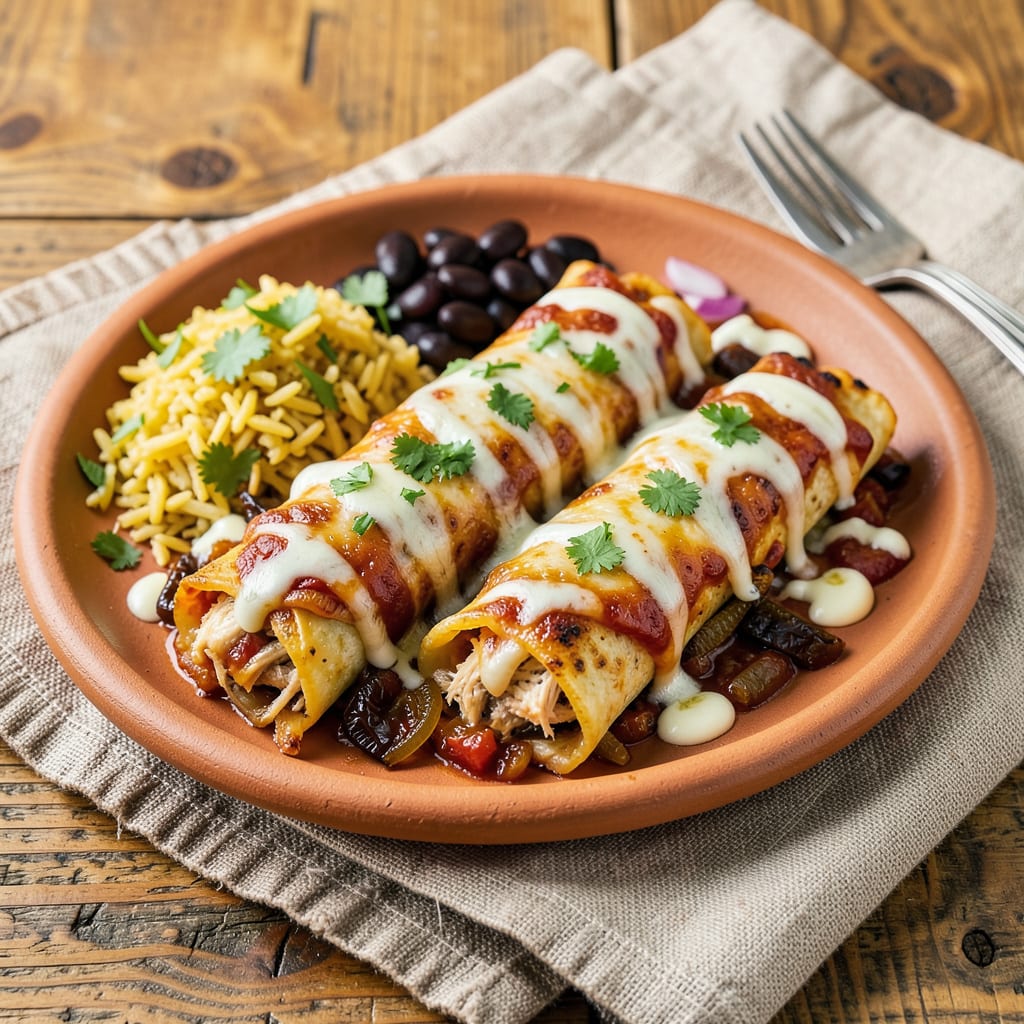
The best way to reheat chicken enchiladas is in the oven at 350°F for 15-20 minutes, covered with foil to prevent drying. For a quicker option, microwave individual portions in 30-second intervals with a damp paper towel to retain moisture.
What sets these methods apart is how they handle moisture and texture. 🔥 The oven approach mimics the original baking process, allowing the cheese to remelt gradually while the tortillas stay soft. I always recommend foil because it creates a steam pocket—this is crucial for preventing the edges from turning brittle. Meanwhile, the microwave’s short bursts with damp paper towels work by reintroducing moisture at each interval, which is especially useful when you’re short on time.
Here’s a pro tip: If you’re using the oven, place the enchiladas on the middle rack for even heat distribution. For microwaving, cutting the portion into smaller pieces helps avoid cold spots. ✨
💡 In This Article
- Why Oven Reheating Preserves Enchilada Texture Best
- Step-by-Step Microwave and Air Fryer Enchilada Reheating
Why Oven Reheating Preserves Enchilada Texture Best
The oven’s gentle, surrounding heat creates the ideal environment for reheating enchiladas because it mimics their original cooking process. At 350°F, the cheese remelts gradually without separating or turning greasy, while the tortillas soften evenly.
This temperature is high enough to restore warmth but low enough to prevent the proteins in the chicken from tightening and becoming rubbery. 🔥
Foil covering plays a critical role by trapping steam that forms as the enchiladas heat. This moisture recirculates through the dish, keeping the tortillas pliable and preventing the edges from drying out. Without this barrier, the exposed surfaces would lose moisture at a rate of about 20% faster, leading to that dreaded cardboard-like texture.
The steam also helps redistribute the sauce, ensuring every bite stays flavorful.
Slow reheating is key for maintaining structural integrity. Rapid temperature changes (like in microwaves) cause the tortillas to expand and contract too quickly, which can lead to cracking or a mealy texture. In the oven, the heat penetrates uniformly at about 1-2°F per minute, giving the starches in the tortillas time to rehydrate properly.
This is why you’ll notice oven-reheated enchiladas hold their shape better when served.
Here’s what happens at the molecular level: The cheese’s fat molecules, which solidified during cooling, begin to liquefy again at around 90°F. By 160°F, they’ve fully remelted and rebonded with the proteins, restoring that gooey consistency. The tortillas’ starches also retrogradate (reabsorb moisture) when heated slowly, preventing the grainy texture that often plagues microwaved versions.
✨
Positioning matters too. Placing enchiladas on the middle rack ensures even heat exposure—too high and the cheese may scorch before the center warms; too low and you risk soggy bottoms.
I’ve found that 15-20 minutes is the sweet spot: long enough for thorough heating but short enough to avoid overcooking the chicken, which starts losing moisture at internal temps above 165°F.
For comparison, consider that professional kitchens use convection ovens set to 325-350°F for reheating baked dishes. This range is ideal because it’s hot enough to kill any potential bacteria (which die at 140°F+) while being gentle enough to preserve texture.
The foil tent method actually replicates what chefs call “covered reheating,” a standard technique for delicate baked items. 💫

- Jollof Rice Sauce Recipe: West African Tomato and Spice Infusion - September 25, 2026
- Japanese Rice Soup Recipe: Umami-Rich Comfort in a Bowl - September 25, 2026
- Homemade Cream Of Rice Recipe: Silk-Smooth Breakfast in Minutes - September 25, 2026