
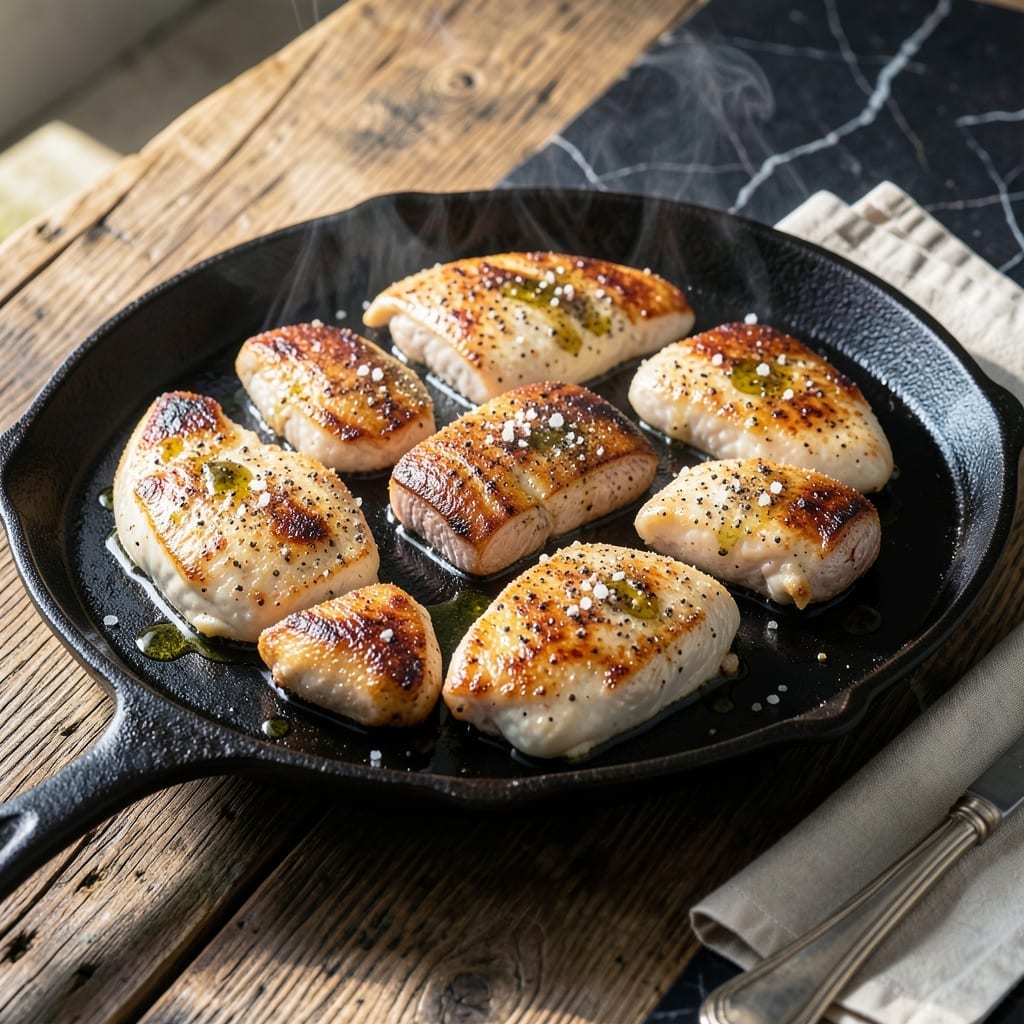
Few things compare to chicken cooked on a Blackstone griddle, where high heat creates a perfect sear while locking in juices. This method delivers charred edges and tender centers every time, with minimal effort and maximum flavor.
The griddle’s flat surface ensures even cooking, allowing you to prepare large batches without losing heat. Seasoning is simple but effective, letting the natural flavors shine through while adding depth to each bite.
What sets this apart is the ability to achieve professional-level results at home. The chicken develops a golden crust that gives way to succulent meat, making it ideal for any meal.
Serve straight from the griddle for a dish that’s as impressive as it is delicious. This technique works for any cut, from breasts to thighs.
Ingredients for Blackstone Chicken
Simple seasonings and chicken are all you need for that perfect griddle sear.
| Ingredient | Amount | Notes |
|---|---|---|
| Boneless Skinless Chicken Breasts 🍗 | 2 lb | Pounded to even thickness |
| Boneless Skinless Chicken Thighs 🍗 | 1 lb | Optional, for juicier texture |
| Olive Oil 🫒 | ¼ cup | Divided for cooking and seasoning |
| Kosher Salt 🧂 | 2 tsp | Diamond Crystal preferred |
| Black Pepper 🌶️ | 1 tsp | Freshly ground for best flavor |
| Garlic Powder 🧄 | 1 tsp | Or 2 fresh cloves minced |
| Onion Powder 🧅 | 1 tsp | Balances the seasoning blend |
| Smoked Paprika 🌶️ | 1 tsp | Adds depth and charred flavor |
| Dried Oregano 🌿 | ½ tsp | Crush between fingers to release oils |
| Dried Thyme 🍃 | ½ tsp | Earthy complement to the chicken |
| Lemon Juice 🍋 | 2 tbsp | Freshly squeezed for brightness |
| Butter 🧈 | 2 tbsp | Optional for basting finish |
The chicken is the star here. Boneless, skinless breasts and thighs both work—breasts for lean results, thighs for extra juiciness. Look for evenly sized pieces at Whole Foods or Costco to ensure consistent cooking. Pounding to an even thickness (about 1 inch) is key for that perfect char without overcooking. The griddle’s high heat demands quality cuts, so avoid pre-marinated options that can burn.
No smoked paprika? Regular paprika plus a pinch of cayenne works in a pinch. Fresh garlic and onion can replace the powders—use 1 clove minced garlic and 1 tbsp minced onion. For extra char, swap half the olive oil for avocado oil (higher smoke point). If you’re out of lemon juice, apple cider vinegar adds a similar brightness. The butter at the end is optional but highly recommended (trust me on this).
Prep the chicken just before cooking—don’t let it sit seasoned too long or it’ll dry out. Leftovers keep in the fridge for 3-4 days or freeze for up to 3 months. Reheat gently on the griddle or in a skillet to maintain that crispy crust.
Why You’ll Love This Recipe
- One Pan Wonder: I love that I can cook this entire batch on my Blackstone with just olive oil, salt, and pepper—minimal prep, maximum flavor.
- Crispy Perfection: The high heat gives the chicken that irresistible golden crust while keeping the inside juicy, especially with thighs mixed in.
- Meal Prep Hero: I make a big batch on Sunday and use it in salads, wraps, or tacos all week—no boring leftovers here.
- Budget Stretcher: Chicken thighs are so affordable, and this recipe makes them taste like a million bucks. Honestly, it’s my go-to for feeding a crowd without breaking the bank.
Step-by-Step Instructions for Blackstone Chicken
Here’s the method to achieve perfectly charred, juicy chicken on your griddle.
Step 1: Prep and Season the Chicken
Pound the 2 lb Boneless Skinless Chicken Breasts to an even ½-inch thickness using a meat mallet. This ensures even cooking and prevents dry spots. If using the 1 lb Boneless Skinless Chicken Thighs, trim any excess fat but leave the skin intact for flavor.
In a bowl, combine the 2 tsp Kosher Salt, 1 tsp Black Pepper, 1 tsp Garlic Powder, 1 tsp Onion Powder, 1 tsp Smoked Paprika, 0.5 tsp Dried Oregano, and 0.5 tsp Dried Thyme. Crush the dried herbs between your fingers to release their oils. Rub this seasoning blend evenly over all the chicken pieces, pressing it into the meat.
Step 2: Preheat the Blackstone and Start Cooking
Preheat your Blackstone griddle over medium-high heat for 10-12 minutes until it’s screaming hot. You should see a faint shimmer when you sprinkle a few drops of water on the surface. Add 2 tbsp of the 0.25 cup Olive Oil and spread it evenly across the griddle using a spatula.
Place the seasoned chicken on the griddle, leaving space between pieces. Cook the Boneless Skinless Chicken Breasts for 5-6 minutes per side until they develop deep char marks and reach an internal temperature of 160°F. The Boneless Skinless Chicken Thighs will take 6-7 minutes per side due to their thickness.
Step 3: Baste and Finish with Brightness
During the last 2 minutes of cooking, add the remaining Olive Oil and the 2 tbsp Butter to the griddle. As the butter melts, tilt the griddle slightly and baste the chicken with the hot butter using a spoon. This adds richness and helps develop a beautiful crust.
When the chicken is nearly done, drizzle the 2 tbsp Lemon Juice over the pieces. The acidity cuts through the richness and adds a bright finish. Remove the chicken from the griddle when it reaches 165°F internally and the juices run clear.
Step 4: Rest and Serve
Transfer the chicken to a cutting board and tent loosely with foil. Let it rest for 5-10 minutes to allow the juices to redistribute. This step ensures every bite is moist and flavorful, not dry.
Slice the Boneless Skinless Chicken Breasts against the grain into ½-inch thick pieces. The Boneless Skinless Chicken Thighs can be served whole or sliced. Serve immediately while hot, with any accumulated juices spooned over the top for extra flavor.
Pro Tips For Making Blackstone Chicken
- Preheat the Griddle: Get that Blackstone screaming hot—at least 400°F—before the chicken hits the surface. I learned this the hard way after my first batch stuck and tore when I tried to flip it too soon.
- Pound the Breasts: Use a meat mallet to even out the thickness of your chicken breasts to about ¾ inch. Sounds weird, but it works: they’ll cook through at the same rate as the thighs without drying out.
- Skip Wet Chicken: Pat the chicken dry with paper towels before seasoning, even if it looks fine. After burning three batches, I finally figured out that extra moisture causes steam, which ruins that perfect sear.
- Rest Before Serving: Give the chicken a solid 5 minutes under foil after cooking. My grandmother swore by this, and she was right: it keeps the juices inside where they belong.
Troubleshooting This Dish
Uneven Cooking
If your chicken has thick and thin spots, it will cook unevenly. Pound all pieces to an even ½-inch thickness before seasoning. This prevents burnt edges with raw centers. I use a heavy meat mallet for consistent results. 🔥
Sticking to the Griddle
Chicken sticks when the griddle isn’t hot enough or the oil has burned off. Ensure your surface reaches 400°F before adding the meat. Add 1 tbsp fresh olive oil every 2-3 batches to maintain a non-stick surface.
Dry Chicken
Overcooking is the main culprit. Remove breasts at 160°F and thighs at 165°F internal temperature. The carryover heat will finish the cooking. Always use a meat thermometer—I swear by ThermoWorks models.
Lack of Char
For those beautiful grill marks, don’t move the chicken for at least 3 minutes after placing it on the griddle. Press down lightly with your spatula for 10 seconds to ensure full contact with the hot surface.
Seasoning Burns
Smoked paprika and garlic powder can burn at high temperatures. Start with medium-high heat and reduce to medium after 2 minutes if you see excessive smoking. Add seasonings to the oil, not directly to the griddle.
Butter Burns
When basting, keep the butter moving. If it pools and blackens, it will create bitter flavors. Use a spoon to continuously pour the melted butter over the chicken, and wipe the griddle between batches. 💡
Nutrition Facts
Frequently Asked Questions
What’s the best heat setting for griddle cooking?
Start with medium-high heat for 10-12 minutes to get the surface screaming hot. If seasoning burns, reduce to medium heat after 2 minutes.
Can I use frozen chicken?
Thaw completely in the fridge first. Cooking frozen chicken leads to uneven cooking and potential food safety issues. Always pat dry before seasoning for best results.
How do I prevent dry chicken?
Remove at 160°F for breasts and 165°F for thighs. The carryover heat finishes cooking. Don’t skip the 5-10 minute rest before slicing.
What oil works best for high-heat cooking?
Use oils with high smoke points like avocado or refined olive oil. Add 1 tbsp fresh oil every 2-3 batches to maintain a non-stick surface.

- Jollof Rice Sauce Recipe: West African Tomato and Spice Infusion - September 25, 2026
- Japanese Rice Soup Recipe: Umami-Rich Comfort in a Bowl - September 25, 2026
- Homemade Cream Of Rice Recipe: Silk-Smooth Breakfast in Minutes - September 25, 2026