
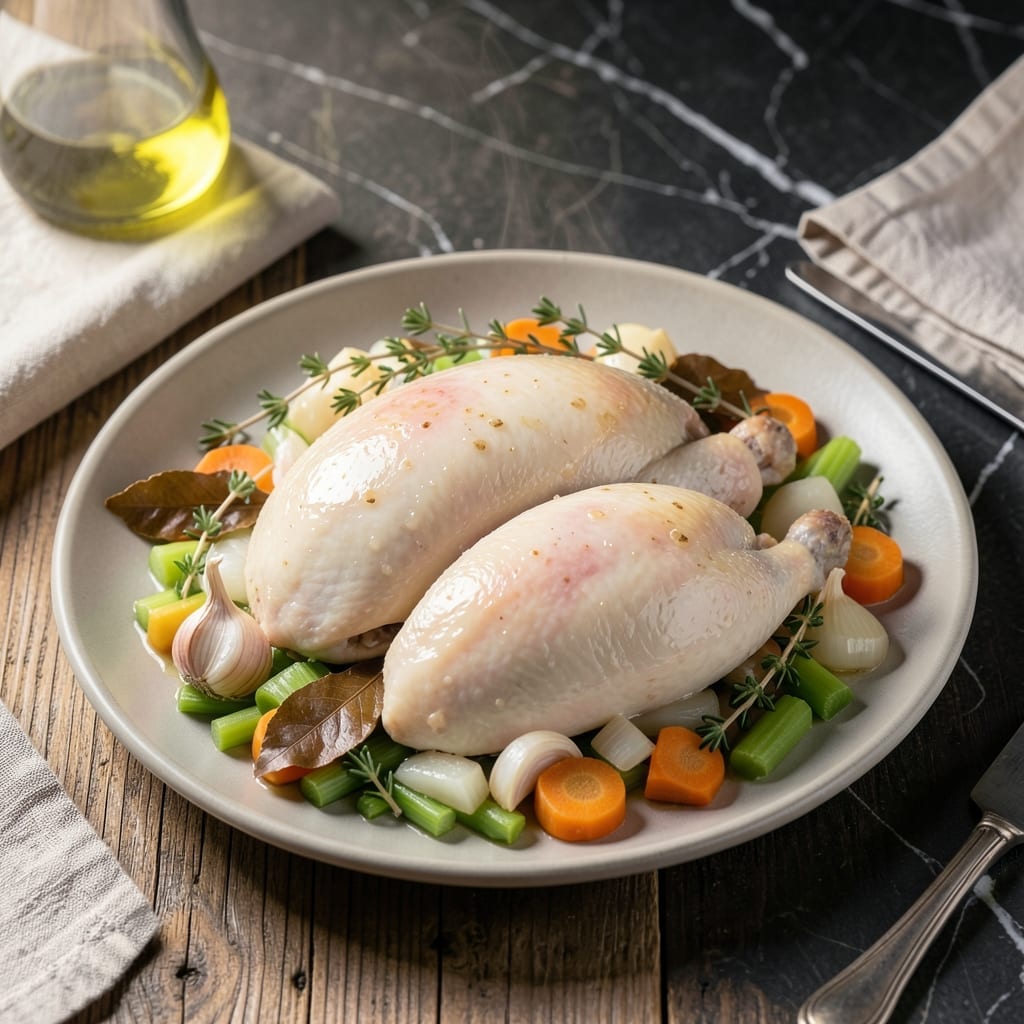
There’s a reason professional kitchens rely on poaching for tender chicken every time. This method guarantees juicy, flavorful meat without the risk of overcooking that comes with other techniques.
Starting with cold water ensures even cooking, while a few aromatic additions transform simple liquid into a fragrant broth. The chicken emerges perfectly cooked in under 30 minutes, ready for any use.
What you get is versatile protein that shreds effortlessly for tacos, salads, or soups. The poaching liquid becomes a bonus—use it as stock for future recipes.
This simple approach works with any chicken part and requires minimal active time. Here’s how to do it right.
Ingredients for Boiled Chicken
A handful of aromatics and chicken transform into tender, versatile protein for any meal.
| Ingredient | Amount | Notes |
|---|---|---|
| Chicken Breasts 🍗 | 1 ½ lb | Boneless, skinless, even thickness |
| Cold Water 💧 | 8 cups | Enough to cover chicken fully |
| Kosher Salt 🧂 | 1 tbsp | Diamond Crystal preferred |
| Black Peppercorns 🌶️ | 1 tsp | Whole, lightly crushed |
| Bay Leaves 🍃 | 2 whole | Dried, whole leaves |
| Garlic Cloves 🧄 | 4 cloves | Smashed, peeled |
| Fresh Thyme Sprigs 🌿 | 4 whole | Or 1 tsp dried thyme |
| Yellow Onion 🧅 | ½ whole | Quartered, skin on |
| Carrot 🥕 | 1 whole | Roughly chopped |
| Celery Stalks 🥬 | 2 pieces | Roughly chopped |
| Lemon 🍋 | ½ whole | Sliced, for brightness |
| Fresh Parsley Stems 🌿 | ¼ cup | For finishing broth |
Professional kitchens rely on Diamond Crystal kosher salt for its clean flavor and even seasoning. The chicken should be uniform in thickness—pound thicker parts if needed. Whole Foods or Costco offer quality organic chicken with consistent sizing. Fresh thyme is ideal, but dried works in a pinch (use one-third the amount). Always start with cold water for even cooking.
No thyme? Rosemary or oregano work well. Out of carrots? Fennel or parsnips add similar depth. The lemon can be swapped for white vinegar or apple cider vinegar (1 tbsp). For a richer broth, add a splash of white wine at the start. The aromatics are flexible—use what you have.
The poached chicken keeps refrigerated for 4 days or frozen for 3 months. Strain and save the broth—it’s liquid gold for soups or risotto. Portion the chicken before storing for easy meal prep. Always cool completely before refrigerating or freezing.
Why You’ll Love This Recipe
- Set and Forget: I just drop the chicken in cold water with salt and bay leaves, then let it simmer while I tackle other things.
- Simple Goodness: The peppercorns and bay leaves give the chicken a clean, subtle flavor that’s never overpowering.
- Meal Prep Magic: This boiled chicken shreds perfectly for tacos, salads, or soups—honestly, it’s my weekly prep shortcut.
- Budget Stretch: One batch makes enough for multiple meals, and chicken breasts are always affordable at my local store.
Step-by-Step Instructions for Boiled Chicken
This poaching method guarantees perfectly tender chicken with subtle, aromatic flavor.
Step 1: Prepare the Aromatic Broth Base
In a large pot, combine the 8 cups cold water with 1 tbsp kosher salt, 1 tsp black peppercorns, 2 whole bay leaves, 4 cloves garlic cloves, and 4 whole fresh thyme sprigs. Add the 0.5 whole yellow onion, 1 whole carrot, and 2 pieces celery stalks, all roughly chopped.
The onion skin adds a beautiful golden hue to the broth while the vegetables build a gentle, savory foundation. I lightly crush the peppercorns to release their oils without overpowering the delicate chicken flavor.
Step 2: Add Chicken and Lemon for Brightness
Place the 1.5 lb chicken breasts in the pot, ensuring they’re fully submerged. Add the 0.5 whole lemon slices to the liquid. The acid from the lemon not only brightens the flavor but helps break down proteins, ensuring exceptionally tender meat.
Bring the mixture to a gentle simmer over medium heat—you should see small bubbles breaking the surface, not a rolling boil. A hard boil would toughen the chicken, while this gentle approach maintains its delicate texture.
Step 3: Poach to Perfect Tenderness
Once simmering, reduce heat to low and maintain that gentle simmer. Partially cover the pot and cook for 15-18 minutes, depending on the thickness of your chicken breasts. The chicken is done when it reaches an internal temperature of 165°F and the meat is opaque throughout with no pink in the center.
I recommend checking the thickest piece with an instant-read thermometer for accuracy. The liquid should remain at a steady simmer throughout cooking, with occasional small bubbles but no vigorous boiling.
Step 4: Rest and Enhance the Broth
Remove the pot from heat and add the 0.25 cup fresh parsley stems. Let the chicken rest in the hot liquid for 10 minutes—this final step allows the flavors to meld while the parsley stems infuse the broth with a fresh, herbal note.
The chicken will continue to cook slightly during this resting period (carryover cooking), and the parsley stems add a subtle brightness that complements the other aromatics. This resting time also makes the meat more tender and easier to slice.
Step 5: Serve or Store for Future Use
Transfer the chicken to a cutting board and slice or shred as needed. The poaching liquid can be strained and reserved for soups, sauces, or cooking grains. For immediate serving, the chicken pairs beautifully with the strained broth ladled over the top.
If storing, let both chicken and broth cool to room temperature before refrigerating. The meat will stay moist for up to 4 days, and the flavorful broth can be used as a base for countless other dishes.
Pro Tips For Making Boiled Chicken
- Start in Cold Water: Always place the chicken in cold water first, then bring to a boil—this guarantees even cooking and prevents the outside from toughening up before the inside is done.
- Salt Like the Sea: Use at least 1 tablespoon of kosher salt per quart of water; the briny liquid seasons the chicken deeply, so don’t be shy.
- Skip Rolling Boils: Once boiling, drop the heat to a gentle simmer—violent bubbles can break apart the chicken and make it dry out.
- Rest Before Shredding: Let the chicken rest in the warm broth for 10 minutes after cooking; it stays juicier and shreds way easier.
Regional Styles of This Dish
Southern Comfort Style
In the South, we often add 1 tsp smoked paprika and 2 dried chili peppers to the poaching liquid for a subtle, smoky depth. This creates chicken perfect for shredding into tacos or topping with a vinegar-based BBQ sauce. I learned this trick from my grandmother’s kitchen in Georgia. 🔥
Asian-Inspired Poaching
For an Asian twist, swap the thyme and bay leaves for 3 slices fresh ginger, 2 star anise pods, and 1 cinnamon stick. Add 3 tbsp soy sauce to the water. This broth infuses the chicken with warm, aromatic flavors ideal for ramen or rice bowls.
Latin American Touch
Latin cooks often use 1 tsp cumin seeds, 1 tsp coriander seeds, and 1 dried guajillo chili in their poaching liquid. The result is chicken with a warm, earthy profile that works beautifully in enchiladas or as a filling for tamales.
Mediterranean Flavor
I love adding 1 tsp fennel seeds, 5 crushed cardamom pods, and 1 strip orange peel to the water. This combination gives the chicken a bright, citrusy note that pairs perfectly with a Greek salad or hummus wrap.
French Classic
For a traditional French poulet poêlé, include 1 leek (cleaned and chopped), 1 bouquet garni (thyme, parsley, bay leaf tied together), and ½ cup dry white wine. This creates a delicate, refined broth perfect for velouté sauce.
Spiced Caribbean
Caribbean cooks often poach chicken with 3 allspice berries, 1 scotch bonnet pepper (whole, for heat without bitterness), and 1 tbsp brown sugar. The result is tender meat with a sweet-spicy kick, ideal for jerk chicken dishes. 💛
Nutrition Facts
Frequently Asked Questions
Can I use bone-in chicken instead of breasts?
Yes, bone-in pieces work great for poaching. Increase cooking time to 25-30 minutes and ensure the internal temperature reaches 165°F. The bones will add extra flavor to your broth.
Why does the water need to stay at a simmer?
A rolling boil can toughen the meat while a gentle simmer keeps it tender. You’ll see small bubbles breaking the surface, not a vigorous boil. This method preserves the chicken’s natural juices.
What if my chicken is still pink inside?
Return it to the poaching liquid for 2-3 more minutes, then check the temperature again. Pink near the bone is normal in poultry, but the thickest part should read 165°F to be safe.
How do I prevent rubbery texture?
Avoid overcooking and use a thermometer. Remove the chicken at 160°F – it will rise to 165°F while resting. Also, don’t skip the 10-minute rest in the hot liquid.

- Jollof Rice Sauce Recipe: West African Tomato and Spice Infusion - September 25, 2026
- Japanese Rice Soup Recipe: Umami-Rich Comfort in a Bowl - September 25, 2026
- Homemade Cream Of Rice Recipe: Silk-Smooth Breakfast in Minutes - September 25, 2026