
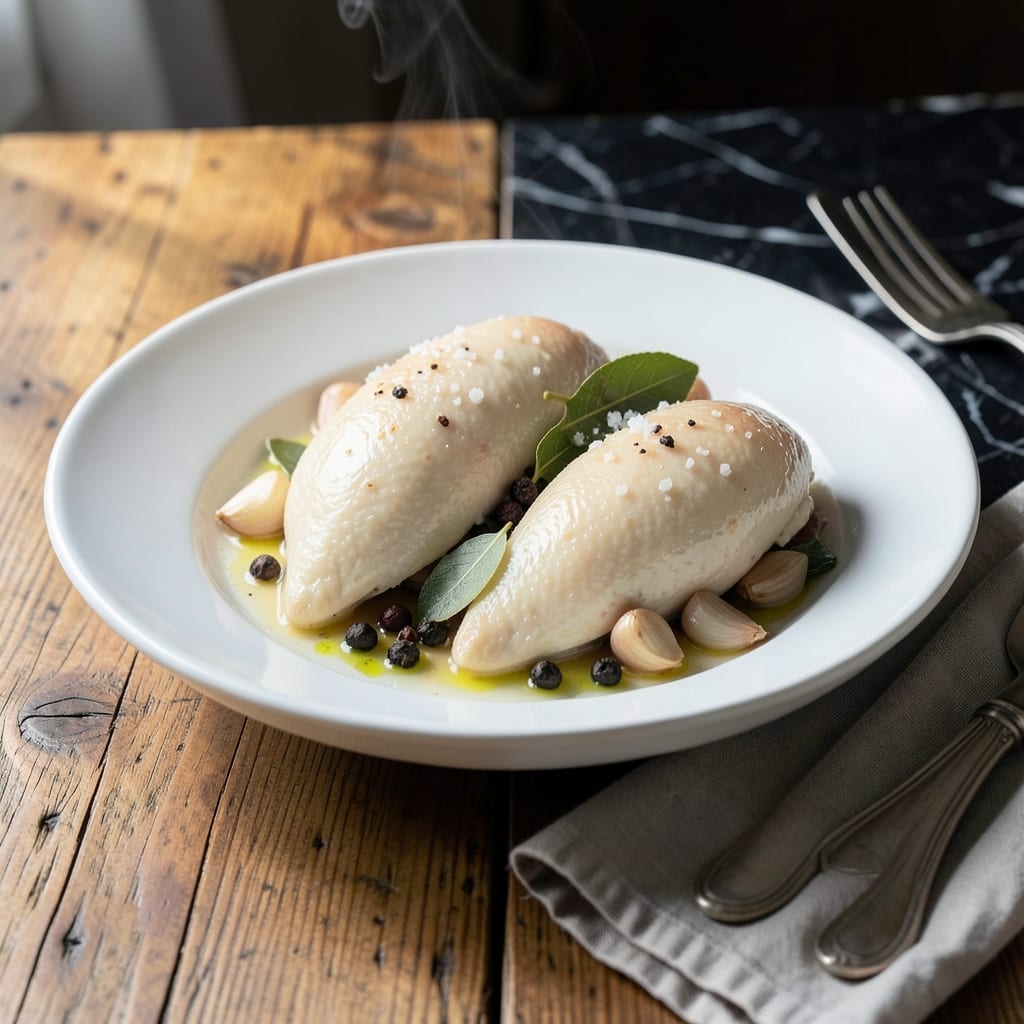
This method guarantees moist, tender chicken every time, perfect for soups, salads, or shredding for tacos. I’ve refined the technique to prevent dryness while maintaining flavor.
Simmering at a gentle boil with aromatics like bay leaves and peppercorns infuses the meat with subtle seasoning. The key is keeping the water just below a rolling boil to avoid toughening the flesh.
You’ll end up with juicy, perfectly cooked chicken that holds its shape in soups or shreds effortlessly for sandwiches. It’s a versatile base for countless meals.
Use the broth for cooking grains or soups—nothing goes to waste with this foolproof approach.
Ingredients for Boiling Chicken
Simple ingredients transform into perfectly poached chicken with rich, flavorful broth for countless uses.
| Ingredient | Amount | Notes |
|---|---|---|
| Boneless, Skinless Chicken Breasts 🍗 | 1 ½ lb | Uniform thickness for even cooking |
| Water 💧 | 8 cups | Enough to fully submerge chicken |
| Kosher Salt 🧂 | 1 tbsp | Diamond Crystal preferred for consistency |
| Bay Leaves 🍃 | 2 whole | Dried, for aromatic infusion |
| Black Peppercorns 🌶️ | 1 tsp | Lightly crushed for better release |
| Garlic Cloves 🧄 | 4 cloves | Smashed to release flavor |
| Yellow Onion 🧅 | 1 whole | Quartered for broth depth |
| Carrots 🥕 | 2 whole | Peeled and cut into chunks |
| Celery Stalks 🌿 | 2 whole | Cut into large pieces |
| Fresh Parsley 🌿 | ¼ cup | Chopped, for garnish and broth |
| Lemon 🍋 | 1 whole | Sliced for brightness in broth |
The chicken quality is paramount here. Boneless, skinless breasts from reputable sources like Whole Foods or Costco ensure consistent texture. Aim for uniform thickness—pound thicker sections if needed. The aromatics (bay leaves, peppercorns) should be fresh; old spices lose potency. Diamond Crystal kosher salt is ideal for its clean flavor and even distribution in the water.
Out of chicken breasts? Thighs work beautifully (use 2 lbs and reduce cooking time by 5 minutes). No bay leaves? A pinch of dried thyme offers similar depth. Skip the celery? Fennel or additional carrot maintains the aromatic base. For extra richness, add a splash of white wine to the water. Always use cold water to start—hot water can shock the meat.
Poached chicken keeps in its broth for 4 days refrigerated. Strain and freeze the broth for 3 months—it’s liquid gold for future soups or grains. Shredded chicken freezes well too, portioned in 1-cup measures for easy recipe scaling. Never waste the broth; it’s packed with flavor.
Why You’ll Love This Recipe
- Set It and Forget: I toss the chicken, water, and spices in a pot, then walk away—no stirring, no babysitting.
- Subtly Seasoned: The bay leaves and peppercorns infuse the chicken with a gentle, aromatic depth that’s anything but bland.
- Meal Prep MVP: Shreds perfectly for tacos, soups, or salads all week. Honestly, it’s my Sunday ritual now.
- Pocket-Friendly Protein: A pound of chicken breasts and a few pantry staples feed my family for days without breaking the bank.
Step-by-Step Instructions for Boiling Chicken
This method guarantees tender, juicy results ideal for any preparation requiring cooked poultry.
Step 1: Prepare the Aromatic Broth Base
In a large pot, combine the 8 cups water, 1 tbsp Kosher Salt, 2 whole Bay Leaves, and 1 tsp Black Peppercorns. I always lightly crush the peppercorns with the flat side of my knife to release their essential oils into the liquid.
Add the 4 cloves Garlic Cloves (smashed), 1 whole Yellow Onion (quartered), 2 whole Carrots (peeled and cut into chunks), and 2 whole Celery Stalks (cut into large pieces). The vegetables should be in large pieces since we’re straining the broth later—smaller pieces would make straining difficult.
Bring this to a boil over high heat. As it heats, you’ll start to see the water take on a subtle golden hue from the vegetables. This is your foundation for flavorful, moist chicken.
Step 2: Add Chicken and Maintain Gentle Simmer
Once the broth reaches a full, rolling boil, carefully add the 1.5 lb Boneless, Skinless Chicken Breasts. I ensure uniform thickness by pounding any thicker pieces to match the thinnest portion—this prevents uneven cooking.
Immediately reduce the heat to medium-low to maintain a gentle simmer. You want to see small bubbles breaking the surface occasionally, not the vigorous bubbling of a full boil. A hard boil will toughen the meat, while this gentle approach keeps it moist.
Add the 1 whole Lemon (sliced) to the pot. The acidity helps break down the proteins while adding a bright note to the broth. Partially cover the pot to retain heat while allowing some steam to escape.
Step 3: Cook to Perfect Doneness
Cook the chicken for 12-15 minutes, depending on the thickness of your pieces. The key visual cue is when the meat turns opaque white throughout—no pink should remain when you cut into the thickest piece.
I check for doneness by inserting an instant-read thermometer into the thickest part; it should read 165°F. Alternatively, you can cut into a piece—the juices should run clear, not pink, and the meat should feel firm but still tender.
Overcooking is the enemy of moisture, so start checking at the 12-minute mark. The chicken will continue cooking slightly as it rests in the hot broth after you remove it from the heat.
Step 4: Rest and Shred or Slice
Using tongs, transfer the chicken to a cutting board or plate. Let it rest for 5-10 minutes before handling. This resting period allows the muscle fibers to relax and reabsorb the juices that were driven to the surface during cooking.
Strain the broth through a fine-mesh sieve if you plan to use it for soups or sauces. I always reserve this aromatic liquid—it’s perfect for making chicken noodle soup or cooking grains like rice or quinoa.
Shred or slice the chicken as needed for your recipe. The meat should pull apart easily with two forks if you’re shredding, or cut cleanly with a knife if slicing. Garnish with the 0.25 cup Fresh Parsley (chopped) for a fresh finish.
Pro Tips For Making Boiling Chicken
- Start Cold Water: Place chicken breasts in cold water first, then bring to a boil—this guarantees even cooking and prevents the outside from toughening before the inside is done.
- Salt Like Seawater: Use enough kosher salt to make the water taste like the ocean; this seasons the chicken deeply instead of just at the surface.
- Skip Rolling Boil: Once boiling, reduce to a gentle simmer—rolling boils can make the meat rubbery, and the flavor won’t penetrate as well.
- Rest Before Slicing: Let the chicken rest in the warm broth for 5 minutes after cooking—it stays juicier and absorbs a little extra flavor.
Best Sauces and Condiments for This boiling chicken
Creamy Dill Sauce
Whisk together ½ cup Greek yogurt, 2 tbsp mayonnaise, and 1 tbsp fresh dill (chopped). This tangy sauce brightens the chicken’s mild flavor. I add 1 tsp lemon zest for extra zing. Perfect for drizzling over shredded chicken in wraps or salads. 💛
Spicy Chipotle Lime
Blend ¼ cup adobo sauce from canned chipotles with 2 tbsp lime juice and 1 tbsp honey. This smoky, spicy glaze adds depth to tacos or grain bowls. Thin with 1-2 tbsp broth if needed for drizzling.
Classic Gravy
Use the reserved broth to make a quick pan gravy. Whisk 2 tbsp flour into 2 tbsp melted butter, then slowly add 1 cup hot broth. Simmer until thickened. I stir in 1 tsp fresh thyme for an herby touch.
Asian-Inspired Peanut
Combine 3 tbsp peanut butter, 1 tbsp soy sauce, 1 tbsp rice vinegar, and 1 tsp sriracha. Thin with 2-3 tbsp warm broth for a creamy, nutty sauce ideal for noodle bowls or dipping. 🔥
Herb Butter
Mix 4 tbsp softened butter with 1 tbsp fresh parsley and 1 minced garlic clove. Roll shredded chicken in this compound butter for sandwiches or serve alongside sliced chicken for a rich finish.
Nutrition Facts
Frequently Asked Questions
How long should I simmer chicken to keep it moist?
Simmer for 12-15 minutes at a gentle boil. Use a thermometer to confirm 165°F internally. Overcooking leads to dryness, so check early and remove promptly.
Can I use chicken thighs instead of breasts?
Yes! Use 2 lbs thighs and reduce cooking time by 5 minutes. Thighs stay juicier due to higher fat content. The method works identically for both cuts.
Why does my chicken turn out rubbery?
Rubbery texture comes from boiling too vigorously. Maintain a gentle simmer, not a rolling boil. Also, avoid overcrowding the pot—give pieces space.
How do I store the cooked chicken?
Keep chicken in its broth in the fridge for up to 4 days. For longer storage, freeze in 1-cup portions for up to 3 months.

- Jollof Rice Sauce Recipe: West African Tomato and Spice Infusion - September 25, 2026
- Japanese Rice Soup Recipe: Umami-Rich Comfort in a Bowl - September 25, 2026
- Homemade Cream Of Rice Recipe: Silk-Smooth Breakfast in Minutes - September 25, 2026