
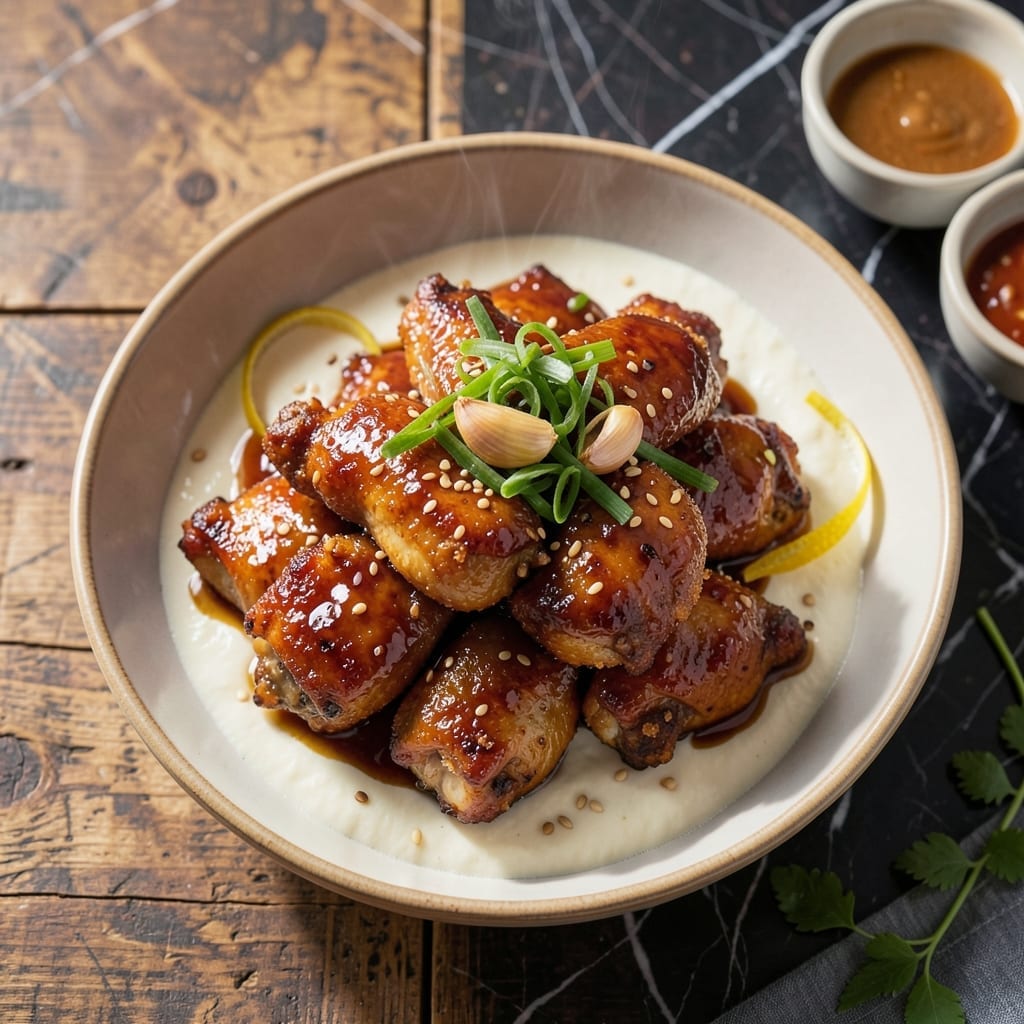
This recipe delivers the signature crispy texture that defines authentic Korean fried chicken. The double-frying technique creates a shatteringly thin crust that stays crunchy long after cooking.
I’ve refined this method to achieve professional results at home without specialty equipment. The marinade infuses flavor deep into the meat while the batter ensures maximum crunch.
The first fry cooks the chicken through, while the second at higher heat creates that coveted crispy exterior. Each bite offers juicy meat encased in a delicate, crackling shell.
Serve immediately for best results, as the texture is most impressive fresh from the oil.
Ingredients for Bonchon Chicken
Double-frying delivers that signature shatteringly crisp crust with juicy meat inside every piece.
| Ingredient | Amount | Notes |
|---|---|---|
| Boneless Chicken Thighs 🍗 | 2 lb | Skin-on, cut into bite-sized pieces |
| Soy Sauce 🥄 | ¼ cup | Low-sodium preferred for balance |
| Rice Wine 🍶 | 2 tbsp | Or substitute dry sherry |
| Ginger 🌿 | 1 tbsp | Freshly grated for marinade |
| Garlic Cloves 🧄 | 4 cloves | Minced finely for depth |
| Brown Sugar 🍚 | 2 tbsp | Light or dark for caramelization |
| Potato Starch 🥔 | ¾ cup | Essential for ultra-crispy coating |
| All-Purpose Flour 🌾 | ½ cup | For batter structure and crunch |
| Baking Powder 🧂 | 1 tsp | Creates airy, light texture |
| Vodka 🍹 | ¼ cup | Makes batter extra crispy (optional but recommended) |
| Salt 🧂 | 1 tsp | Fine sea salt for seasoning |
| Black Pepper 🌶️ | ½ tsp | Freshly ground for best flavor |
| Vegetable Oil 🛢️ | 4 cups | High smoke point for frying |
| Gochujang Sauce 🌶️ | ¼ cup | For authentic Korean glaze |
| Honey 🍯 | 2 tbsp | Balances spicy and savory notes |
The chicken is non-negotiable here—boneless thighs stay juicy through double-frying, while breasts dry out. Skin-on adds fat for extra crunch. For the starch, potato starch (found in the baking aisle at Whole Foods or Asian markets) is key—cornstarch won’t give you the same delicate, crackling texture. Korean rice wine (mirin) is traditional, but dry sherry works in a pinch. Always use fresh ginger and garlic for the marinade.
No vodka? Sparkling water or cold beer can substitute in the batter for similar crispiness. For the glaze, sriracha mixed with honey is a quick stand-in for gochujang if you’re in a bind. Peanut or canola oil works if you don’t have vegetable oil, but avoid olive oil—its low smoke point burns at frying temps. The baking powder in the batter is what creates those tiny air pockets for maximum crunch.
Fry in batches to avoid crowding—this keeps the oil temp steady for that perfect crisp. Leftovers? Reheat in a 400°F oven for 10-12 minutes to revive the crunch. The marinade can sit overnight for deeper flavor, but don’t exceed 24 hours or the ginger and garlic can overpower. Serve immediately for that restaurant-quality crackle.
Why You’ll Love This Recipe
- One Pan Wonder: I just toss everything in—chicken, soy sauce, rice wine, ginger, garlic—and let the oven do the work.
- Finger-Licking Good: The soy and garlic caramelize into this sticky, savory glaze that makes every bite irresistible.
- Crowd Pleaser: I serve it at parties and potlucks, and it’s always the first dish to disappear.
- Budget Stretch: Boneless thighs are cheap, and this recipe turns them into something restaurant-worthy with zero waste.
Step-by-Step Instructions for Korean Double-Fried Crispy Chicken
Master this technique and you’ll achieve restaurant-quality crispiness with a perfect crunch every time.
Step 1: Marinate the Chicken for Maximum Flavor
In a large bowl, combine the 2 lb Boneless Chicken Thighs with 0.25 cup Soy Sauce, 2 tbsp Rice Wine, 1 tbsp Ginger, 4 cloves Garlic Cloves, and 2 tbsp Brown Sugar. Mix thoroughly to ensure every piece is evenly coated.
The marinade should cling to the chicken, creating a glossy sheen. Cover and refrigerate for at least 1 hour, or ideally overnight. This step infuses the meat with deep umami flavors while tenderizing it. The longer it marinates, the more pronounced the taste will be.
Step 2: Prepare the Ultra-Crispy Battering Station
In a separate large bowl, whisk together the 0.75 cup Potato Starch, 0.5 cup All-Purpose Flour, 1 tsp Baking Powder, 1 tsp Salt, and 0.5 tsp Black Pepper. The potato starch is non-negotiable—it’s what creates that signature shatteringly crisp texture.
Pour the 0.25 cup Vodka into the dry mix and stir until just combined. The batter should be lumpy and thick, resembling wet sand. The vodka evaporates quickly during frying, creating a lighter, crunchier coating. Let the batter rest for 5 minutes while you heat the oil.
Step 3: First Fry for Structure and Crispness
Heat the 4 cups Vegetable Oil in a heavy-bottomed pot to 325°F. Use a deep-fry thermometer for accuracy—temperature control is critical. Working in batches to avoid overcrowding, dip each piece of chicken into the batter, allowing excess to drip off, then carefully lower into the hot oil.
Fry for 6-8 minutes until the coating turns a pale golden color and becomes crisp. The pieces should float and sizzle steadily. Remove with a slotted spoon and drain on a wire rack. This first fry sets the structure while cooking the chicken through without over-browning.
Step 4: Second Fry for Maximum Crunch
Increase the oil temperature to 375°F. Return the chicken to the oil in batches and fry for an additional 3-4 minutes until deep golden brown and ultra-crispy. The double-fry technique creates a shatteringly crisp exterior while keeping the meat juicy inside.
Drain again on the wire rack. The chicken should have an audibly crisp texture when tapped. This second fry is what transforms good fried chicken into exceptional Korean-style bonchon chicken with its characteristic crunch.
Step 5: Toss in the Signature Glaze
In a clean bowl, whisk together the 0.25 cup Gochujang Sauce and 2 tbsp Honey until smooth. The glaze should be thick but pourable. Add the hot chicken to the bowl and toss gently until every piece is evenly coated with the sticky, spicy-sweet sauce.
Serve immediately while the chicken is still at its crispest. The glaze will slightly soften the coating, but the double-fry ensures it maintains its crunch. Each bite should deliver a perfect balance of heat, sweetness, and that unmistakable Korean fried chicken texture.
Pro Tips For Making Bonchon Chicken
- Double fry for crisp: Fry the chicken once at 325°F for 8 minutes, rest it, then fry again at 375°F for 3-4 minutes. I learned this the hard way—skipping the second fry leaves the coating sad and soggy.
- Velvet the chicken: Toss the boneless thighs with 1 tsp baking soda and 1 tbsp water before marinating. Sounds weird, but it works: the meat stays juicy even after double frying.
- Grate the ginger: Use a microplane for the ginger instead of mincing—it blends seamlessly into the soy-rice wine marinade and coats every piece evenly. After burning three batches, I finally figured out uneven ginger means uneven flavor.
- Warm the marinade: Microwave the soy sauce, rice wine, and garlic for 20 seconds before adding to the chicken. My grandmother swore by this, and she was right: warm liquid penetrates the meat faster and deeper.
Health Benefits of This Dish
High-Protein Powerhouse
This dish delivers a significant protein boost with 2 lb of boneless chicken thighs providing about 80 grams of protein per serving. Chicken thighs are rich in essential amino acids that support muscle growth and repair. 💪
Healthy Fats Balance
The skin-on thighs contain monounsaturated fats that support heart health when consumed in moderation. The marinade with soy sauce and ginger adds antioxidants without excessive calories.
Energy-Boosting Carbs
Using potato starch in the batter provides complex carbohydrates for sustained energy. The small amount of brown sugar in the marinade offers a quick energy source without spiking blood sugar.
Nutrient-Rich Additions
The garlic and ginger in the marinade offer anti-inflammatory benefits while enhancing flavor. Gochujang sauce contains fermented soybean paste, which supports gut health through probiotics.
Vitamin and Mineral Content
Chicken thighs are rich in B vitamins, particularly B6 and B12, essential for energy metabolism. The dish also provides iron and zinc, supporting immune function and overall vitality.
Moderation Matters
While this creation is indulgent due to frying, the double-fry method actually reduces oil absorption compared to single-frying. Enjoy as part of a balanced diet with plenty of vegetables. ✨
Nutrition Facts
Frequently Asked Questions
Can I use chicken breast instead of thighs?
Thighs are strongly recommended for their fat content and moisture. Breast meat tends to dry out during double-frying.
Why is potato starch essential in the batter?
It creates the signature ultra-crispy, delicate texture that cornstarch can’t match. The starch also helps the coating adhere better to the meat.
Can I skip the vodka in the batter?
Yes, substitute sparkling water or cold beer. Vodka helps create a lighter, crunchier coating but isn’t mandatory.
How do I keep the chicken crispy after frying?
Drain on a wire rack, not paper towels, to prevent steam buildup. Serve immediately for maximum crunch.

- Jollof Rice Sauce Recipe: West African Tomato and Spice Infusion - September 25, 2026
- Japanese Rice Soup Recipe: Umami-Rich Comfort in a Bowl - September 25, 2026
- Homemade Cream Of Rice Recipe: Silk-Smooth Breakfast in Minutes - September 25, 2026