
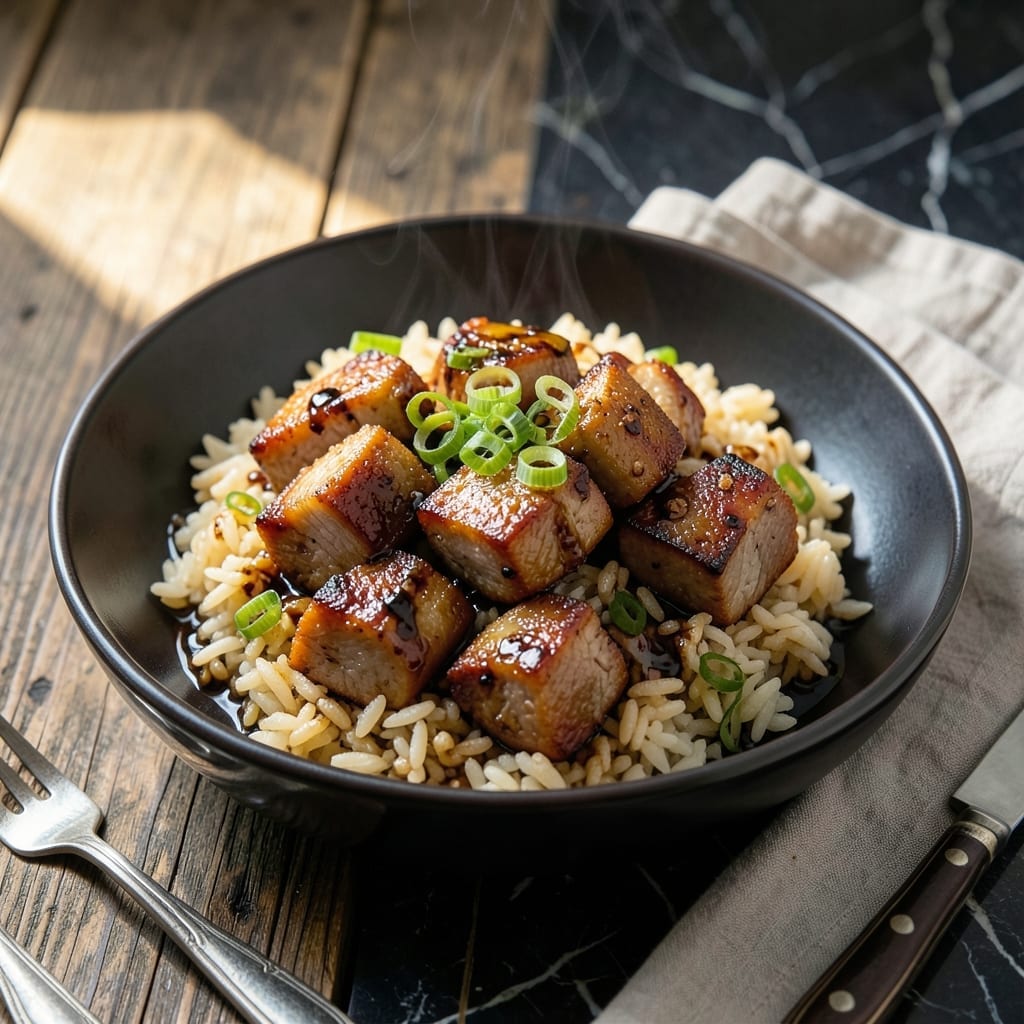
This dish transforms humble ingredients into something extraordinary through slow cooking. The pork becomes fall-off-the-bone tender while absorbing rich, savory flavors from the braising liquid.
Every bite delivers perfectly cooked rice infused with the pork’s essence, creating a comforting one-bowl meal. The technique is simple but yields restaurant-quality results every time.
Ingredients for Braised Pork Rice
Transform humble pantry staples into restaurant-quality comfort with these carefully selected ingredients.
| Ingredient | Amount | Notes |
|---|---|---|
| Pork Shoulder 🥩 | 1 ½ lb | Boneless, cut into chunks |
| Jasmine Rice 🍚 | 2 cups | Rinsed until water runs clear |
| Soy Sauce 🥫 | ⅓ cup | Low-sodium preferred for balance |
| Dark Soy Sauce 🥫 | 1 tbsp | For depth and color |
| Shaoxing Wine 🍷 | ¼ cup | Or dry sherry substitute |
| Brown Sugar 🍚 | 2 tbsp | Light or dark variety |
| Garlic Cloves 🧄 | 6 cloves | Minced for even distribution |
| Fresh Ginger 🌿 | 1 tbsp | Peeled and minced |
| Green Onions 🧅 | 4 whole | Thinly sliced, whites and greens separated |
| Star Anise Pods ⭐ | 2 whole | Optional for aromatic depth |
| Bay Leaf 🍃 | 1 whole | Dried, for braising liquid |
| Chicken Stock 🍲 | 2 cups | Low-sodium for control |
| Vegetable Oil 🫒 | 2 tbsp | Neutral flavor, high smoke point |
| Sesame Oil 🫒 | 1 tsp | Toasted, for finishing |
The pork shoulder is non-negotiable for that fall-off-the-bone texture. Look for well-marbled cuts at your butcher or Whole Foods—avoid pre-cut stew meat, as it’s often leaner. For the rice, jasmine is traditional (its floral aroma complements the pork), but long-grain white works in a pinch. The Shaoxing wine is key for authenticity; Amazon or Asian markets carry it if your local store doesn’t.
No Shaoxing wine? Dry sherry at a 1:1 ratio is the closest substitute. For a quicker braise, swap pork shoulder for country-style ribs (reduce cooking time by half). Light soy sauce can replace low-sodium in a pinch, but reduce added salt. Star anise missing? A pinch of five-spice powder adds similar warmth. The green onions are flexible—scallions or chives work too.
This dish tastes even better the next day—3-4 days in the fridge, 3 months frozen. Store rice and pork together for convenience. Reheat gently with a splash of water to revive the texture. For meal prep, portion before freezing for easy grab-and-go lunches.
Why You’ll Love This Recipe
- One Pot Wonder: I toss everything in and let the pork shoulder simmer with the soy sauces and Shaoxing wine while the rice soaks up all that flavor.
- Deep Umami Bomb: The combo of dark soy and regular soy creates this rich, caramelized sauce that coats every grain of jasmine rice.
- Meal Prep MVP: I make a big batch on Sunday and it reheats beautifully for lunches all week—no dry leftovers here.
- Budget Stretcher: Pork shoulder is cheap, and this feeds my family for two nights without skimping on taste. Honestly, it’s my wallet’s favorite meal.
Step-by-Step Instructions for Braised Pork Rice
Master the technique for tender pork and fragrant rice with this professional approach.
Step 1: Sear and Aromatize the Pork
Heat the 2 tbsp vegetable oil in a heavy pot over medium-high heat until it shimmers. Add the 1.5 lb pork shoulder chunks in a single layer, ensuring they don’t overlap. Sear for 5-6 minutes until deep golden brown on all sides, turning only when each side releases easily from the pot.
Push the pork to one side and add the 6 cloves garlic cloves, 1 tbsp fresh ginger, and the white portions of the 4 whole green onions. Stir for 1-2 minutes until fragrant and slightly softened. This builds the aromatic foundation that defines the dish.
Step 2: Build the Braising Liquid
Pour in the 0.25 cup shaoxing wine to deglaze, scraping up any browned bits from the bottom of the pot. Add the 0.33 cup soy sauce, 1 tbsp dark soy sauce, 2 tbsp brown sugar, 2 whole star anise pods, and 1 whole bay leaf. Stir to dissolve the sugar completely.
Pour in the 2 cups chicken stock and bring to a gentle simmer. The liquid should just cover the pork. Reduce heat to medium-low and let it simmer uncovered for 5 minutes to allow the flavors to meld and the alcohol to cook off.
Step 3: Braise the Pork to Tenderness
Cover the pot and reduce heat to low. Braise for 1.5 to 2 hours, turning the pork occasionally, until the meat is fork-tender and easily pulls apart. The liquid should reduce slightly but remain saucy.
During this time, check every 30 minutes and add a splash of water if the liquid level drops too low. The pork is done when a fork slides in with no resistance and the sauce has developed a rich, glossy sheen from the rendered fat and reduced braising liquid.
Step 4: Cook the Rice and Finish
While the pork braises, cook the 2 cups jasmine rice according to package instructions using water, not stock. Once the pork is tender, remove and discard the star anise pods and bay leaf. Taste the sauce and adjust seasoning if needed.
To serve, fluff the rice and transfer to a large serving bowl. Top with the braised pork and its sauce. Drizzle with the 1 tsp sesame oil and garnish with the green portions of the green onions. The rice should absorb some of the sauce, creating a harmonious blend of flavors in every bite.
Pro Tips For Making Braised Pork Rice
- Brown the Pork: I learned this the hard way—searing the pork shoulder in batches over medium-high heat until deeply browned adds a ton of flavor to the final braise.
- Bloom the Sauces: After browning the pork, pour in the Shaoxing wine and soy sauces, then scrape up all those stuck bits—they’re pure flavor for your braising liquid.
- Use Cold Jasmine Rice: Rinse your jasmine rice until the water runs clear, then soak it for 15-20 minutes—this keeps the grains separate and fluffy when cooked in the pork broth.
- Simmer Low and Slow: Once the pork is tender, keep the heat at a gentle simmer, not a rolling boil, or the meat will toughen up and the liquid will reduce too fast.
Regional Styles of This Dish
Taiwanese Style
This version is the most traditional, using 1.5 lb pork belly instead of shoulder for extra richness. The key is adding 1 cup dried shiitake mushrooms to the braise, which infuse the sauce with umami depth. I also include 1 tsp five-spice powder for that authentic Taiwanese aroma. 🌟
Cantonese Approach
In Cantonese cuisine, this dish often features lap cheong (Chinese sausage) alongside the pork. Add 2 sliced sausages when you sear the pork for a sweet-savory contrast. The rice is typically cooked separately and served with the braising liquid ladled over the top.
Sichuan Spicy
For heat lovers, add 1 tbsp Sichuan peppercorns and 2-3 dried red chilies to the braising liquid. The result is a numbing-spicy version that pairs perfectly with plain jasmine rice. I also stir in 1 tbsp chili oil at the end for extra kick.
Hokkien Variation
Hokkien-style uses hard-boiled eggs that soak up the braising liquid. Add 4 peeled eggs during the last 30 minutes of cooking. The eggs turn a beautiful brown color and become incredibly flavorful. This version often includes 1 cup bamboo shoots for texture.
Vietnamese Adaptation
Vietnamese cooks often use coconut water instead of stock for a lighter, slightly sweet braise. Add 1 can coconut water with 1 stalk lemongrass (bruised) for a fragrant twist. The pork becomes incredibly tender with a subtle tropical note.
Japanese Twist
Japanese versions often include 1 cup dashi stock and 2 tbsp mirin in the braising liquid. The result is a lighter, more delicate flavor profile. I like to top mine with soft-boiled eggs and nori strips for a fusion touch. 💛
Nutrition Facts
Frequently Asked Questions
What cut of pork works best for braising?
Pork shoulder is ideal for its marbling and connective tissue. It becomes fall-off-the-bone tender after 1.5-2 hours of slow cooking. Pork belly works too but is richer.
Can I use regular soy sauce instead of low-sodium?
Yes, but reduce added salt elsewhere in the recipe. The dish will be saltier, so taste before adjusting seasoning. Low-sodium gives better control over flavor balance.
How do I know when the pork is done?
A fork should slide in with no resistance, and the meat should pull apart easily. The sauce will also develop a rich, glossy sheen from the rendered fat.
What if my braising liquid reduces too much?
Add splashes of water or stock as needed during cooking. The liquid should just cover the pork until the final 30 minutes. This prevents burning and keeps the meat moist.

- Jollof Rice Sauce Recipe: West African Tomato and Spice Infusion - September 25, 2026
- Japanese Rice Soup Recipe: Umami-Rich Comfort in a Bowl - September 25, 2026
- Homemade Cream Of Rice Recipe: Silk-Smooth Breakfast in Minutes - September 25, 2026