
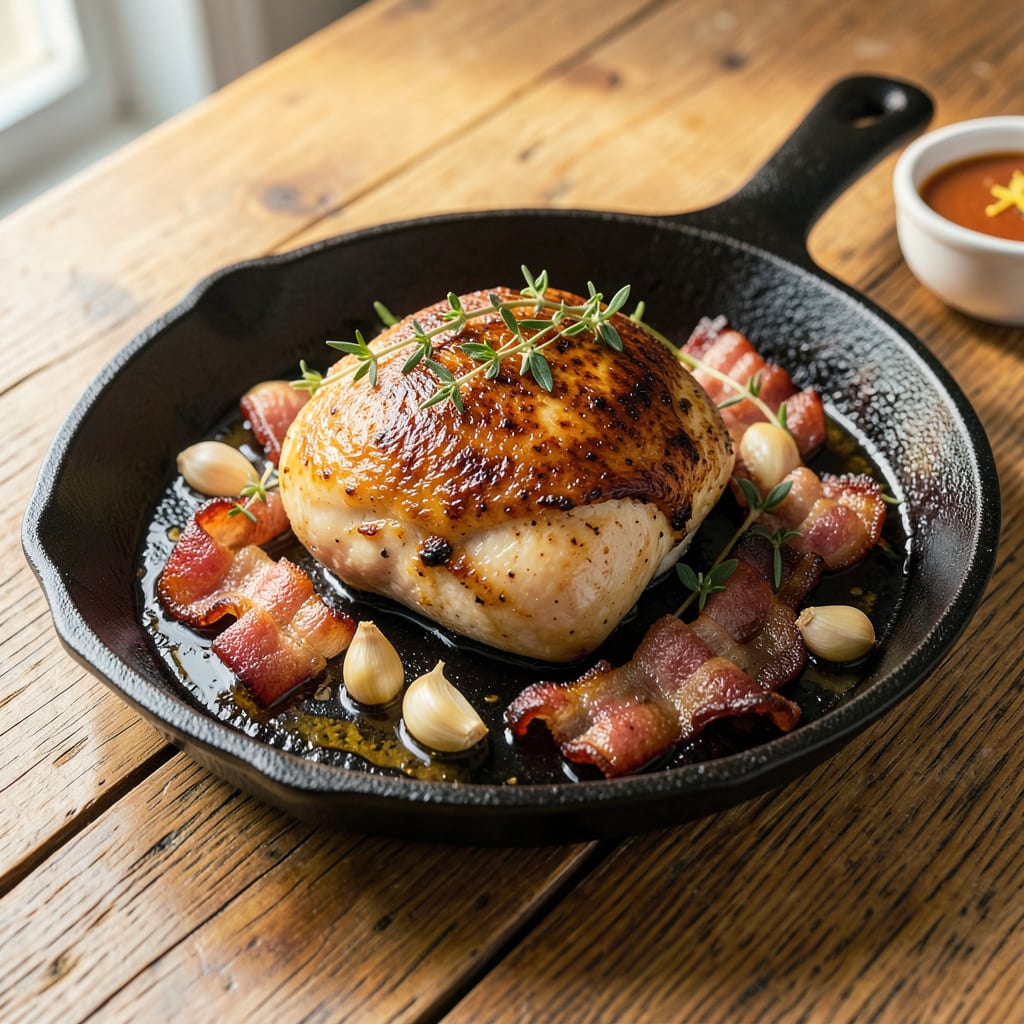
Yes, cooking chicken in bacon grease adds rich, smoky flavor and creates crispy skin. Just ensure the grease isn’t burned and monitor temperature to avoid overcooking. Use fresh grease for best results and safety.
This technique works because bacon fat has a lower smoke point (325°F) than many oils, which helps create that perfect golden-brown crust through the Maillard reaction. 🔥 The rendered fat also carries deep, savory notes that neutral oils simply can’t match—think of it as a built-in flavor enhancer for your poultry. I’ve found it particularly effective with dark meat cuts like thighs, where the fat content complements the chicken’s natural richness.
What’s crucial here is proper grease management. Always strain out any food particles before reuse, and never let it sit at room temperature for more than 2 hours. A quick fridge test can reveal if your stored grease has gone bad—if it smells off or develops a cloudy appearance, it’s time to discard it. ✨
💡 In This Article
- Why Bacon Grease Enhances Chicken Flavor and Texture
- Safety and Storage Tips for Cooking Chicken in Bacon Fat
Why Bacon Grease Enhances Chicken Flavor and Texture
The magic happens through a combination of fat composition and chemical reactions. Bacon grease contains about 40% saturated fat and 50% monounsaturated fat, which gives it a lower smoke point (325°F) than vegetable oils. This means it browns chicken skin faster while infusing it with smoky, meaty notes that neutral oils can’t replicate.
The fat also carries flavor compounds like guaiacol (from smoked bacon) that adhere beautifully to poultry proteins. 🔥
When you cook chicken in bacon grease, you’re leveraging the Maillard reaction—the same process that creates crust on steak. The grease’s proteins and sugars caramelize at lower temperatures than with vegetable oil, producing a deeper golden color and more complex flavor profile.
I’ve noticed this works particularly well with chicken thighs, where the fat renders slowly and creates an almost confit-like texture while keeping the meat juicy.
Here’s what’s actually happening at the molecular level: The bacon fat’s phospholipids interact with chicken proteins to form new flavor compounds through lipid oxidation. This creates that irresistible “umami bomb” effect you taste. Unlike butter (which burns at 300°F), bacon grease maintains stability just long enough to develop perfect crispiness without bitterness.
The result is skin that shatters like glass while the meat stays tender. ✨
Temperature control becomes your secret weapon. At 350°F, bacon grease achieves optimal browning without smoking excessively. The fat’s viscosity at this temperature allows it to cling to the chicken surface, creating more contact points for flavor development.
Compare this to olive oil, which has a higher smoke point but lacks the meaty depth that makes bacon grease so special for poultry.
What most people don’t realize is that bacon grease contains natural antioxidants from the curing process. These help stabilize the fat during cooking, preventing off-flavors that can develop with repeated use.
Fresh grease will have a clean, slightly sweet aroma, while older grease may develop a sharper, more acidic scent—your nose is the best quality control tool here. 💫
For maximum flavor transfer, pat your chicken dry before cooking. The less moisture on the surface, the more the bacon fat can interact directly with the proteins. I recommend using about 2 tablespoons of grease per pound of chicken for even coverage without making the dish overly greasy.
The fat should sizzle gently when the chicken hits the pan—that’s your cue the temperature is perfect.
The science confirms what home cooks have known for generations: bacon grease isn’t just a cooking medium—it’s a flavor multiplier. The combination of rendered pork fat and poultry creates a synergy where the whole becomes greater than the sum of its parts.
That’s why this technique produces results you simply can’t achieve with standard cooking oils. ⚡

- Jollof Rice Sauce Recipe: West African Tomato and Spice Infusion - September 25, 2026
- Japanese Rice Soup Recipe: Umami-Rich Comfort in a Bowl - September 25, 2026
- Homemade Cream Of Rice Recipe: Silk-Smooth Breakfast in Minutes - September 25, 2026