
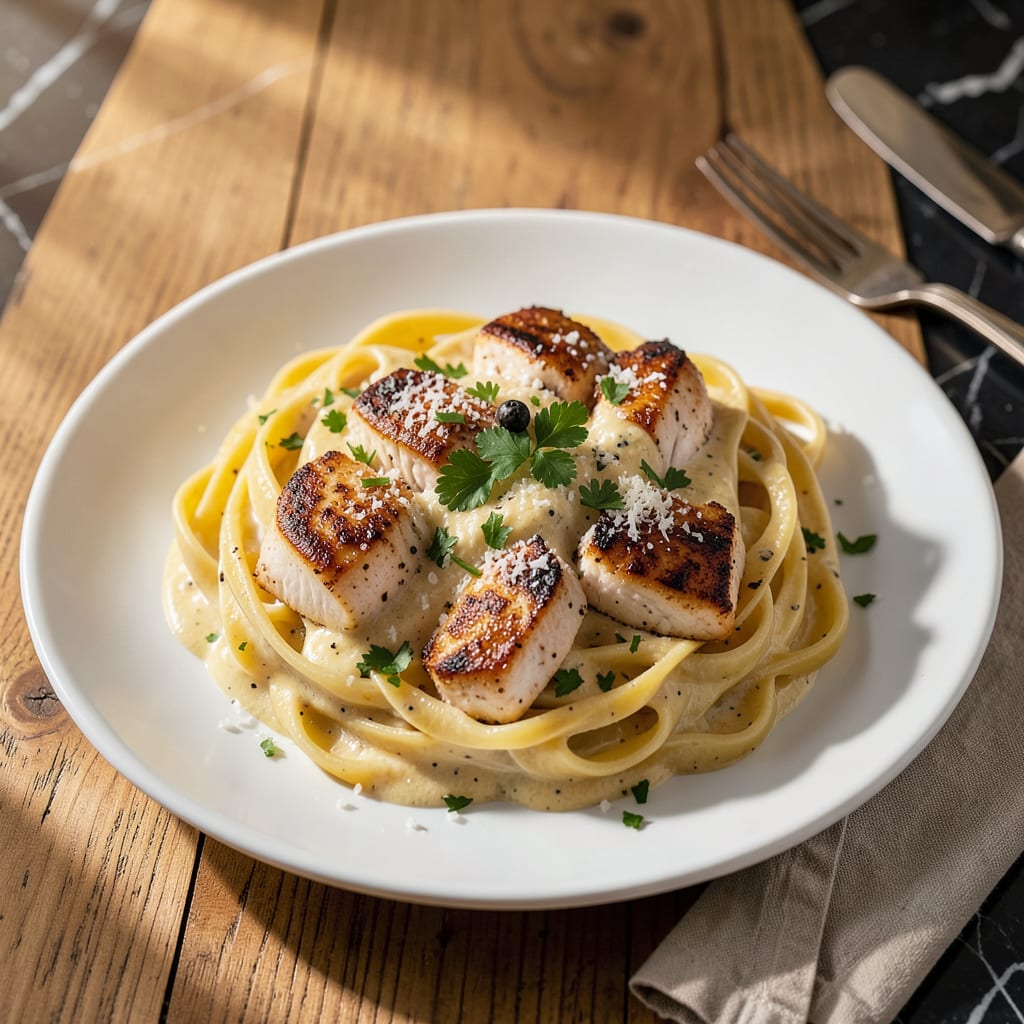
Yes, Costco chicken alfredo can be frozen for up to 3 months if stored properly in airtight containers. The creamy texture may separate slightly when thawed, but reheating with a splash of milk or cream helps restore its consistency.
Freezing this dish works because the high-fat content in Alfredo sauce acts as a natural preservative, though the dairy components do become more sensitive to temperature changes. 🔥 I’ve found that portioning it into single-serving containers makes reheating easier and prevents waste—just be sure to leave about ½-inch headspace for expansion. The key to success lies in how you thaw it: slow fridge thawing overnight maintains texture better than quick microwave methods, which can make the sauce grainy.
What many don’t realize is that Costco’s version holds up particularly well due to its stabilizers, unlike homemade versions that might curdle more easily. ✨ For best results, I recommend adding a pat of butter while reheating—this helps re-emulsify the sauce and brings back that restaurant-quality creaminess.
💡 In This Article
- How Freezing Affects Costco Chicken Alfredo Quality
- Step-by-Step Guide to Freezing and Reheating Costco Chicken Alfredo
How Freezing Affects Costco Chicken Alfredo Quality
The moment creamy pasta hits freezing temperatures, the dairy fats and starches begin a delicate transformation. Alfredo sauce contains approximately 30-40% fat from cream and butter, which solidifies into tiny crystals when frozen. These fat crystals disrupt the sauce’s emulsion—the normally smooth blend of fat and water—which is why you’ll often see separation after thawing.
Costco’s version handles this better than homemade because it includes stabilizers like xanthan gum that help maintain structure.
What’s fascinating is how the starches in the pasta behave differently than the sauce. The pasta itself becomes slightly more absorbent after freezing, which can make it seem softer when reheated. Meanwhile, the sauce’s proteins (from both dairy and chicken) may denature slightly, potentially causing minor graininess.
This is why reheating at low temperatures (below 160°F) helps—it gives the fats time to re-emulsify without overcooking the proteins. 🔥
Flavor retention is surprisingly good for the first 4-6 weeks, but begins declining after that. The herbs and garlic in Costco’s recipe are freeze-stable, but the parmesan cheese can develop a slightly sharper taste over time.
I’ve noticed that dishes frozen in shallow containers (1-2 inches deep) maintain better flavor because they freeze and thaw more evenly than deep blocks.
Here’s what most people overlook: the chicken’s texture changes more dramatically than the pasta. Freezing causes the muscle fibers to contract, which can make the chicken slightly chewier. Costco’s chicken is pre-cooked to 165°F, so it’s already at its peak tenderness before freezing.
Adding a splash of chicken broth when reheating helps counteract this effect by reintroducing moisture. ✨
The freezer’s temperature consistency matters more than you’d think. Every time the temperature fluctuates (like during power outages or frequent door opening), ice crystals form and melt, accelerating texture degradation. That’s why commercial freezers at 0°F or below preserve quality better than home freezers that typically run at 10-15°F.
For best results, place your container in the coldest part of the freezer—usually the back wall.
One pro tip I’ve learned: if you’re freezing for longer than 6 weeks, consider adding an extra 1-2 tablespoons of cream to each portion before freezing. This creates a “fat buffer” that helps maintain creaminess during the freeze-thaw cycle. The sauce might look slightly thinner when frozen, but it reheats beautifully with this adjustment. 💫

- Jollof Rice Sauce Recipe: West African Tomato and Spice Infusion - September 25, 2026
- Japanese Rice Soup Recipe: Umami-Rich Comfort in a Bowl - September 25, 2026
- Homemade Cream Of Rice Recipe: Silk-Smooth Breakfast in Minutes - September 25, 2026