
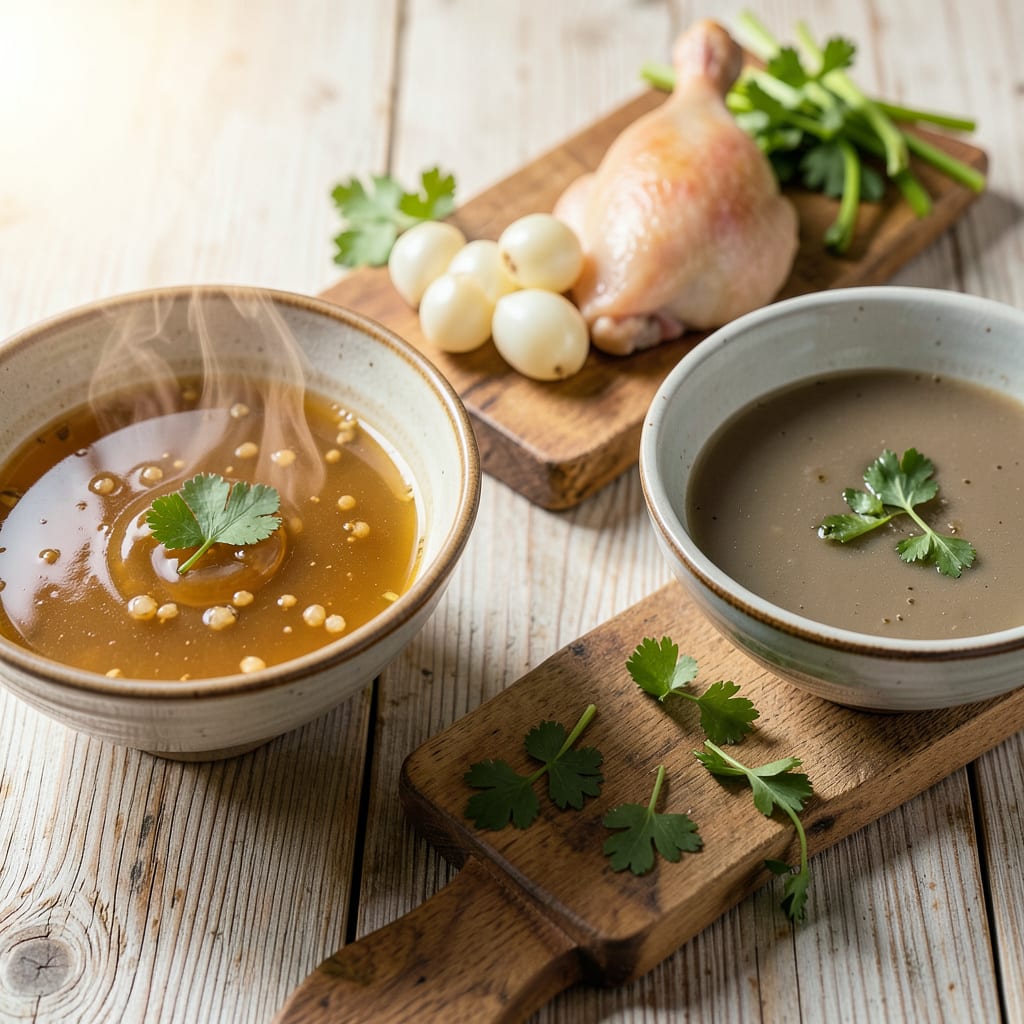
Unrefrigerated chicken broth spoils quickly—homemade lasts 2 hours at room temperature, while unopened store-bought lasts up to 1 year. Signs of spoilage include sour smell, mold, or cloudy appearance. Always refrigerate after opening.
This rapid spoilage happens because chicken broth is a protein-rich liquid that becomes a breeding ground for bacteria when left in the danger zone (between 40°F and 140°F). 🔥 The difference between homemade and store-bought comes down to processing—commercial versions are pasteurized and often contain preservatives that extend shelf life. I’ve seen unopened shelf-stable broths last months in the pantry, but once that seal breaks, you’re racing against the clock to keep it safe.
💡 In This Article
- How Chicken Broth Spoils Without Refrigeration
- Safe Storage and Handling for Unrefrigerated Chicken Broth
How Chicken Broth Spoils Without Refrigeration
Chicken broth becomes a bacterial playground when left unrefrigerated because it’s packed with proteins, fats, and nutrients that microorganisms love. The danger zone between 40°F and 140°F is where bacteria like Salmonella and E. coli multiply fastest—doubling every 20 minutes in ideal conditions.
Homemade broth lacks preservatives, so harmful bacteria can reach dangerous levels within 2 hours at room temperature. ✨
The spoilage process starts with protein breakdown. Enzymes and bacteria attack the collagen and amino acids in the broth, producing foul-smelling compounds like ammonia and hydrogen sulfide. You’ll first notice a sour, almost “rotten egg” aroma—this is the sulfur compounds forming.
Store-bought broths resist longer due to pasteurization (heating to 160°F+) and additives like sodium benzoate, which inhibit microbial growth for months. 🔥
Oxygen exposure accelerates spoilage dramatically. Every time you open a container, you introduce fresh oxygen that fuels aerobic bacteria and mold growth. Commercial aseptic packaging (like Tetra Paks) removes 99% of oxygen during sealing, which is why unopened shelf-stable broths can last 6-12 months at room temperature.
Once opened, that clock starts ticking—USDA guidelines mandate refrigeration within 2 hours to prevent foodborne illness. ⚡
Temperature fluctuations make matters worse. A broth left at 70°F spoils twice as fast as one at 50°F because heat speeds up chemical reactions. I’ve seen cloudy broth develop in just 4 hours when left in a warm kitchen—the proteins coagulate and fats separate as bacteria consume the nutrients.
The USDA’s 2-hour rule isn’t arbitrary; it’s based on how quickly pathogenic bacteria can produce toxins that cooking won’t destroy. 💫
Even acidity plays a role. Chicken broth’s near-neutral pH (6.0-6.5) makes it more susceptible to spoilage than acidic foods like tomato sauce (pH 4.6 or lower). Some commercial broths add citric acid to lower pH slightly, but not enough to make them shelf-stable after opening.
The combination of moisture, nutrients, and neutral pH creates perfect conditions for microbial growth when refrigeration fails. 🌟
Here’s what’s happening at the microbial level: Psychrotrophic bacteria (cold-loving types) start growing immediately, while mesophilic bacteria (room-temperature lovers) take over as the broth warms. Within 4-6 hours, you’ll often see visible changes—surface film from bacterial colonies or cloudiness from protein degradation.
Store-bought broths buy you more time, but none are immune to physics: heat + time + nutrients always equals spoilage. 💛

- Jollof Rice Sauce Recipe: West African Tomato and Spice Infusion - September 25, 2026
- Japanese Rice Soup Recipe: Umami-Rich Comfort in a Bowl - September 25, 2026
- Homemade Cream Of Rice Recipe: Silk-Smooth Breakfast in Minutes - September 25, 2026