
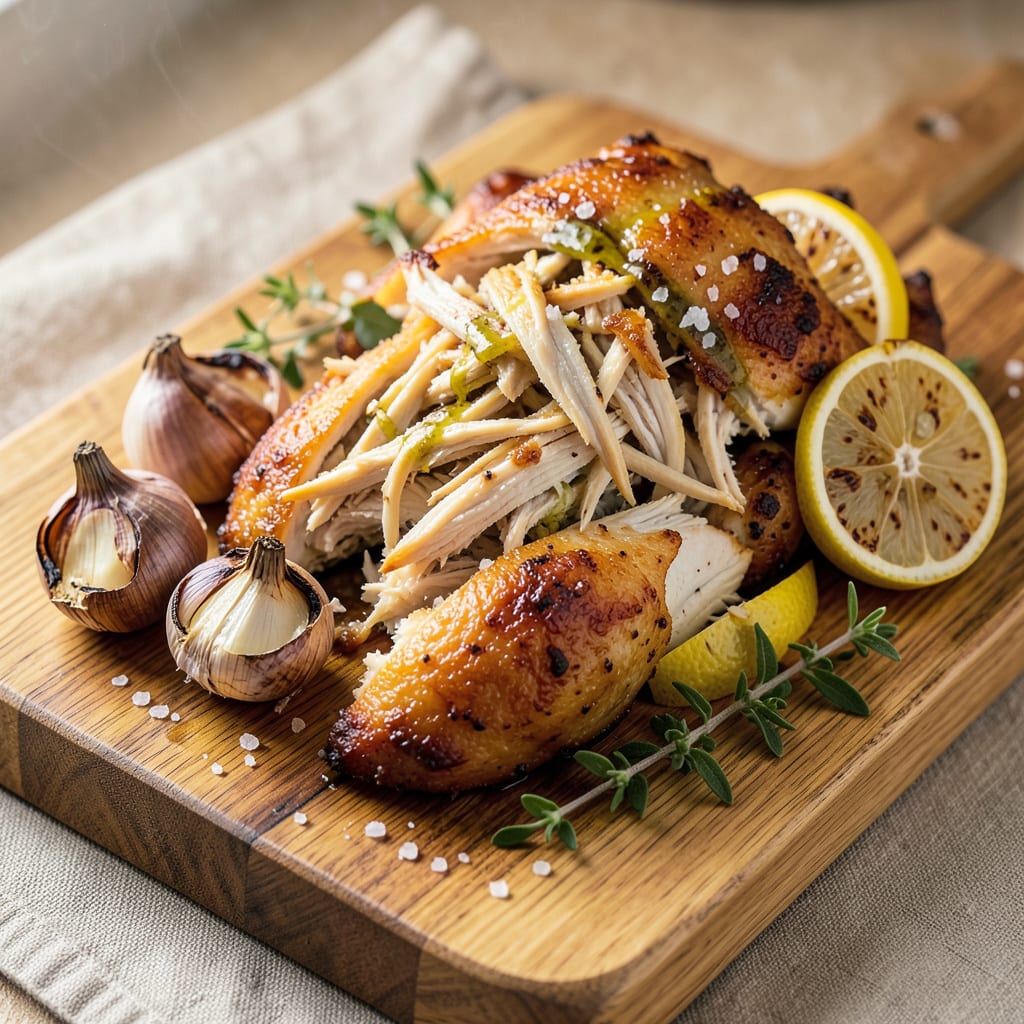
Yes, you can safely freeze shredded or chopped rotisserie chicken for up to 4 months. Store it in airtight containers or heavy-duty freezer bags, removing as much air as possible to prevent freezer burn and preserve quality.
This method works because freezing halts bacterial growth while locking in moisture—if you package it correctly. 🔥 I always recommend dividing the meat into meal-sized portions before freezing, which makes thawing quicker and reduces waste. The key is minimizing air exposure, as oxygen is what causes those unpleasant icy crystals and dry textures over time.
What many don’t realize is that pre-cooked poultry like rotisserie chicken actually freezes better than raw. ✨ The cooking process stabilizes the proteins, so you’ll notice less texture degradation when you reheat it later. Just be sure to label your containers with dates—this simple step prevents the “mystery meat” scenario months down the road.
💡 In This Article
- How Freezing Affects Rotisserie Chicken Quality and Safety
- Best Practices for Freezing and Reheating Shredded Rotisserie Chicken
How Freezing Affects Rotisserie Chicken Quality and Safety
Freezing cooked poultry like rotisserie chicken works because it dramatically slows molecular activity. At temperatures below 0°F (-18°C), water molecules in the meat form ice crystals, which halts bacterial growth entirely.
This is why the USDA confirms frozen cooked chicken remains safe indefinitely—though quality starts declining after 4 months due to gradual moisture loss and protein breakdown. 🔥
The real challenge is preventing freezer burn, which occurs when moisture evaporates from the meat’s surface. Oxygen exposure causes this—each cubic inch of air in your container accelerates dehydration. Heavy-duty freezer bags with zipper seals reduce air by 90% compared to regular storage bags.
For maximum protection, vacuum-sealing removes 99.9% of oxygen, preserving texture and flavor for the full 4-month window. ✨
Texture changes happen because ice crystals physically disrupt muscle fibers. Larger crystals (formed during slow freezing) create more damage than small ones. This is why spreading chicken in thin layers freezes faster and better than thick clumps.
The difference is noticeable when reheated—properly frozen chicken retains about 85% of its original moisture, while poorly frozen can lose up to 40%. ⚡
USDA guidelines emphasize thawing safety as much as freezing. The “danger zone” between 40°F-140°F (4°C-60°C) allows bacteria to multiply rapidly. Fridge thawing (taking 12-24 hours) keeps meat safely cold, while cold water thawing (changing water every 30 minutes) works faster without temperature spikes.
Never use hot water—it can raise surface temps into the danger zone while the center stays frozen. 💫
What surprises most people is that pre-cooked chicken often reheats better than raw. The initial cooking process denatures proteins, making them more stable during freezing. This means your rotisserie chicken will maintain its shredded texture better than if you’d frozen raw breast and cooked it after thawing.
The flavor compounds also bind more tightly to the meat fibers, preventing that “watered down” taste common in frozen dishes. 🌟
For best results, consider adding a moisture barrier before freezing. A light toss with olive oil or chicken broth creates a protective coating that reduces ice crystal formation. When reheating, adding 2 tablespoons of liquid per cup of chicken restores lost moisture—try broth for savory dishes or apple juice for BBQ preparations.
This simple step can make frozen chicken taste nearly fresh-prepared. 💛

- Jollof Rice Sauce Recipe: West African Tomato and Spice Infusion - September 25, 2026
- Japanese Rice Soup Recipe: Umami-Rich Comfort in a Bowl - September 25, 2026
- Homemade Cream Of Rice Recipe: Silk-Smooth Breakfast in Minutes - September 25, 2026