
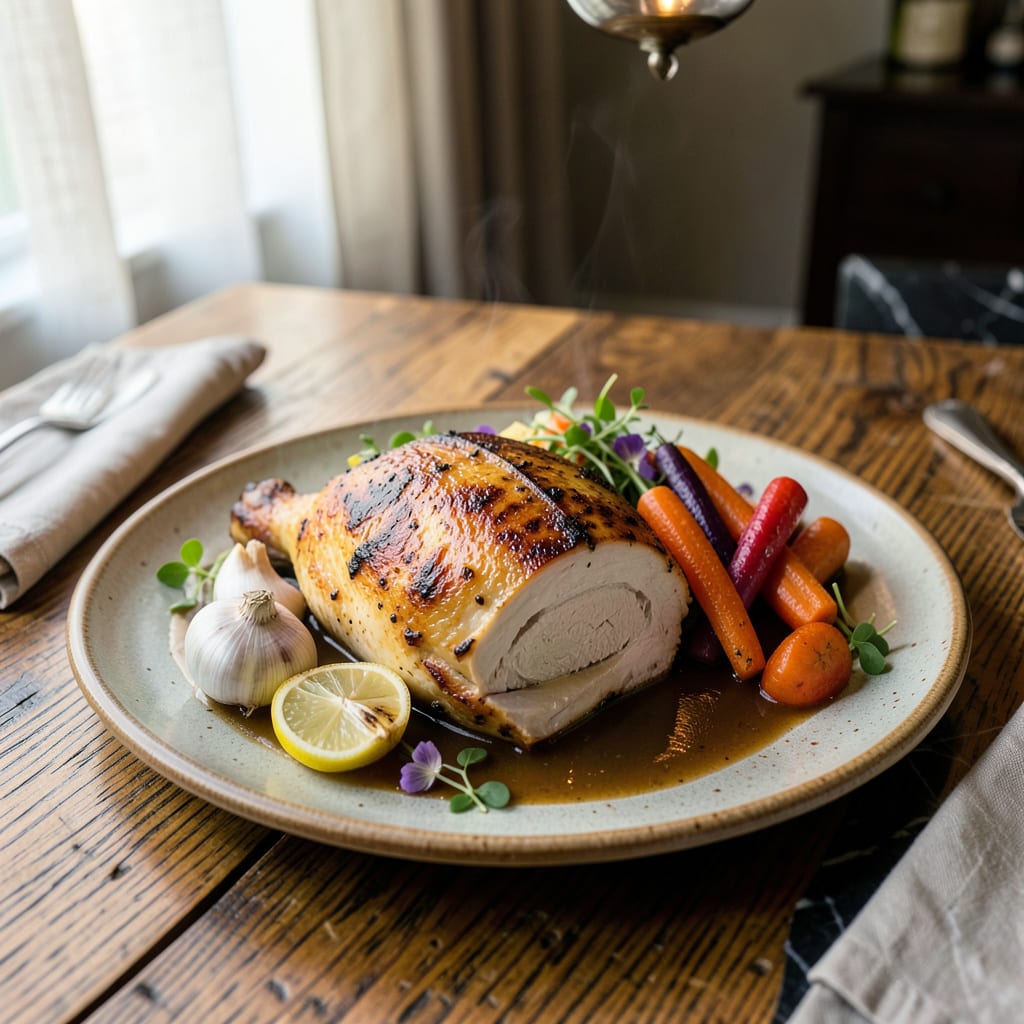
Cooked chicken should never sit at room temperature for more than 2 hours (or 1 hour if above 90°F). Beyond this, harmful bacteria like Salmonella and Campylobacter multiply rapidly, making it unsafe to eat.
This timeframe isn’t arbitrary—it’s based on how quickly bacteria thrive in the “danger zone” between 40°F and 140°F. I’ve seen too many people assume leftovers are fine if they “look okay,” but invisible pathogens don’t wait for visible spoilage. 🔥 The USDA’s guidelines account for real-world scenarios like picnics or buffets where temperature control is tricky. What surprises most folks is that even properly cooked chicken becomes a breeding ground for bacteria if left unrefrigerated too long.
Think of it like a race against time: every minute counts when chicken sits out. The warmer the environment, the faster bacteria double—this is why outdoor gatherings in summer demand extra vigilance. ✨ I always recommend setting a timer when serving chicken, especially if you’re distracted hosting. It’s not just about food waste; it’s about protecting your guests from potential foodborne illness.
💡 In This Article
- Why the 2-Hour Rule for Cooked Chicken Matters
- Safe Handling Tips for Leftover Cooked Chicken
Why the 2-Hour Rule for Cooked Chicken Matters
The “danger zone” between 40°F and 140°F is where bacteria like Salmonella and Campylobacter thrive exponentially. At room temperature (70°F), these pathogens can double every 20-30 minutes—meaning a single bacterium becomes millions in just hours. This rapid multiplication happens because cooked chicken’s moisture and protein content create an ideal breeding ground.
The USDA’s 2-hour limit accounts for this explosive growth curve before bacterial levels reach unsafe concentrations.
Temperature accelerates this process dramatically. At 90°F (like a summer picnic), bacteria grow twice as fast, which is why the safe window shrinks to 1 hour. 🔥 Research shows that poultry left in this range for 4+ hours has a 90% higher risk of causing foodborne illness.
The proteins in chicken begin breaking down as bacteria metabolize them, releasing toxins that cooking won’t destroy—even if you reheat to 165°F later.
What most people miss is that spoilage isn’t always visible. While slimy texture or sour smells are obvious red flags, dangerous bacteria often leave no detectable signs.
💫 The USDA’s guidelines are based on laboratory studies where chicken samples showed 10,000+ bacteria per gram after just 3 hours at room temperature—well before any odor or color changes appeared.
The science behind this involves water activity (aw)—a measure of how available moisture is for microbial growth. Cooked chicken typically has an aw of 0.95-0.99, which is perfect for bacteria (they need >0.91 to thrive).
Unlike dried meats, cooked chicken retains enough moisture to support rapid bacterial colonization, especially in its porous structure where pathogens can penetrate deeply.
Real-world testing confirms this: In USDA experiments, chicken left at 75°F for 2 hours showed no significant bacterial growth, but by 3 hours, Salmonella counts exceeded safety thresholds. ✨ This isn’t just theoretical—it’s why food safety agencies worldwide enforce strict time limits for perishable foods, with poultry being one of the highest-risk categories.
Consider this: A single Campylobacter cell can multiply to 2 million in 6 hours at room temperature. The 2-hour rule gives you a buffer before this exponential growth begins.
It’s not about the chicken “going bad” in the traditional sense—it’s about invisible pathogens reaching levels that your immune system can’t handle, even if the chicken still looks and smells normal.
The takeaway? Time and temperature work against you once chicken leaves the fridge. Those 120 minutes aren’t arbitrary—they’re the difference between a safe meal and a potential trip to the emergency room. 💛 When in doubt, remember: When it’s out, count it down—and refrigerate before the clock runs out.

- Jollof Rice Sauce Recipe: West African Tomato and Spice Infusion - September 25, 2026
- Japanese Rice Soup Recipe: Umami-Rich Comfort in a Bowl - September 25, 2026
- Homemade Cream Of Rice Recipe: Silk-Smooth Breakfast in Minutes - September 25, 2026