
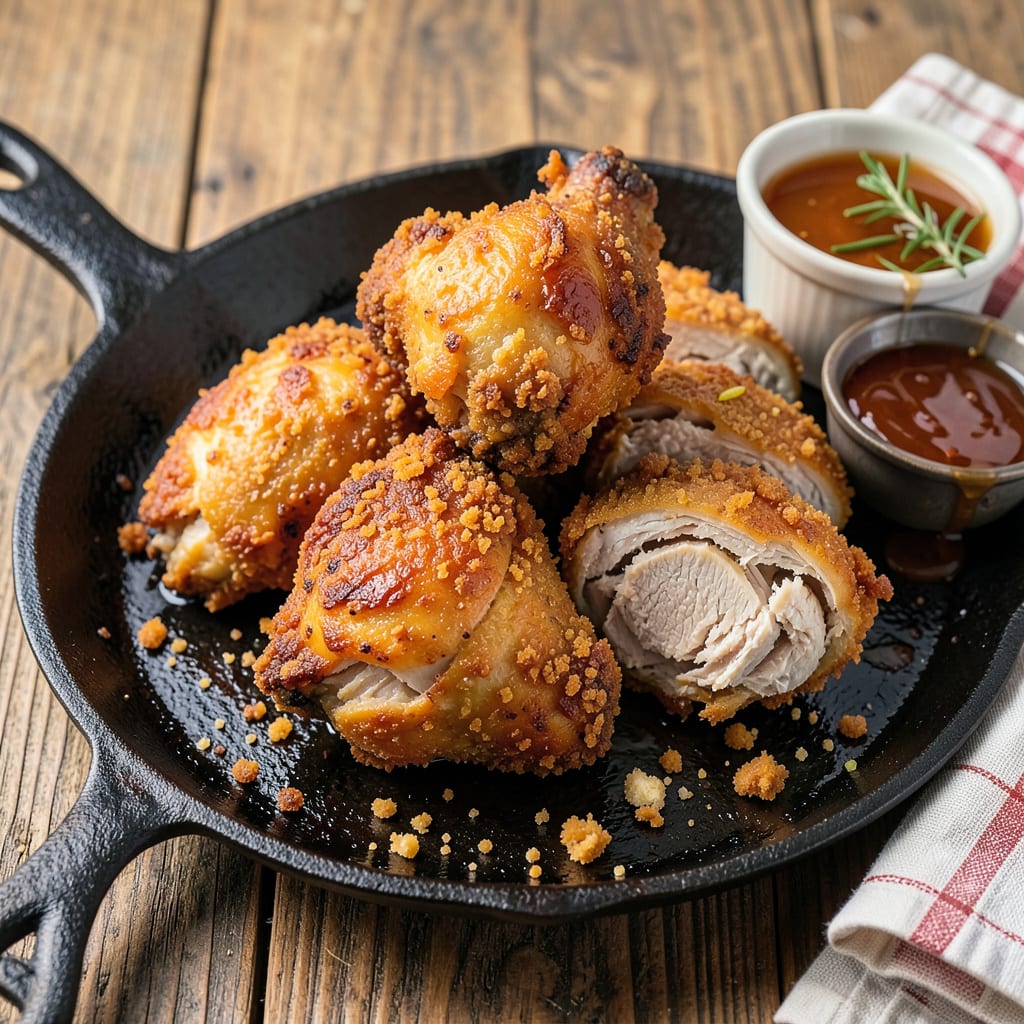
Yes, wheat flour works for frying chicken but creates a softer crust than cornstarch or cornmeal. For extra crispiness, mix it with a starch or double-fry. All-purpose wheat flour is the best choice for even browning and texture.
Wheat flour’s gluten content gives fried chicken a satisfying chew, but it absorbs more moisture during frying than pure starches. That’s why professional cooks often blend it with cornstarch (2:1 ratio) to balance crispness and structure. The protein in wheat flour also promotes deeper browning through Maillard reactions, creating that golden hue we all love. 🔥
What most home cooks overlook is the flour’s hydration level – too wet a batter with wheat flour can create a gummy coating rather than a crisp one. I’ve found that chilling the floured chicken for 15-20 minutes before frying helps the coating set properly, preventing it from sliding off during cooking.
💡 In This Article
- How Wheat Flour Affects Fried Chicken Texture and Crispiness
- Best Flour Blends and Alternatives for Crispier Fried Chicken
How Wheat Flour Affects Fried Chicken Texture and Crispiness
Wheat flour’s gluten proteins create a fundamentally different crust than pure starches. When mixed with liquid, glutenin and gliadin proteins form elastic strands that stretch and set during frying. This gives wheat-flour coatings that signature chewy quality, but also makes them more prone to moisture absorption.
At frying temperatures (350-375°F), these proteins coagulate quickly, forming a network that traps steam – which is why wheat-flour crusts often feel denser than cornstarch-based ones. ✨
The protein content (typically 10-12% in all-purpose flour) also drives deeper browning through Maillard reactions. These complex chemical processes between amino acids and sugars create hundreds of flavor compounds, giving wheat-flour fried chicken its rich, toasty notes.
However, the same proteins that create flavor also absorb about 30% more oil than pure starch coatings, which can make the crust feel heavier if not managed properly. 🔥
Moisture management is the biggest challenge with wheat flour. The gluten network acts like a sponge during frying, absorbing both oil and steam. This is why professional kitchens often use a two-stage frying process: an initial 325°F fry to cook through, followed by a 375°F finish to drive off excess moisture and crisp the exterior.
Without this technique, wheat-flour coatings can develop a soft, bready texture rather than a shatteringly crisp one.
What most home cooks miss is the resting period’s critical role. Letting floured chicken rest for 15-20 minutes before frying allows the gluten to relax and the coating to dry slightly. This prevents the “gummy layer” effect where the crust sticks to the meat instead of forming a distinct, crisp shell.
The resting also gives starches in the flour time to begin absorbing surface moisture, which helps create those desirable crispy pockets during frying. 💫
For comparison, cornstarch contains virtually no protein, so it forms a much more brittle, glass-like crust. When you blend wheat flour with cornstarch (typically 2:1 ratio), you get the best of both worlds: the structure and flavor from wheat proteins with the shatteringly crisp texture from cornstarch.
This hybrid approach reduces oil absorption by about 20% while maintaining the golden color development that makes fried chicken so visually appealing.
The double-frying technique works particularly well with wheat flour because it addresses the moisture issue head-on. The first fry at lower temperature cooks the chicken through while starting the crust formation. The second fry at higher heat then drives off accumulated steam and completes the Maillard reactions.
This is why Korean fried chicken, which often uses wheat flour, achieves such remarkable crispness despite the flour’s inherent moisture absorption tendencies. ⚡
One pro tip I’ve learned: adding a small amount of baking powder (1 tsp per cup of flour) creates tiny air pockets in the crust. These micro-bubbles help steam escape during frying, preventing that dreaded soggy layer between meat and crust.
The alkaline baking powder also helps neutralize some of the flour’s acidity, promoting even browning and a more complex flavor profile in the finished crust.

- Jollof Rice Sauce Recipe: West African Tomato and Spice Infusion - September 25, 2026
- Japanese Rice Soup Recipe: Umami-Rich Comfort in a Bowl - September 25, 2026
- Homemade Cream Of Rice Recipe: Silk-Smooth Breakfast in Minutes - September 25, 2026