
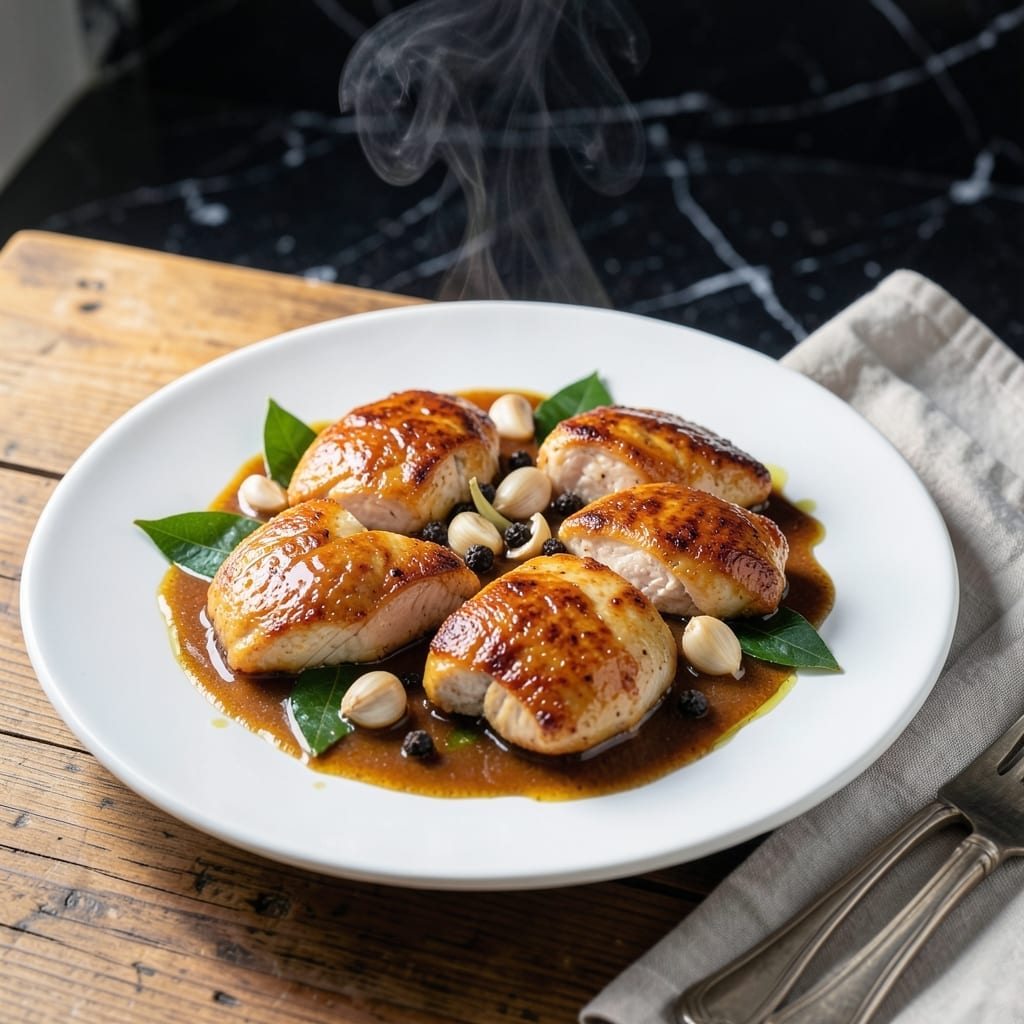
This Filipino braise delivers bold, tangy flavor with minimal effort. The vinegar and soy sauce combination creates a perfect balance of sour and savory that defines authentic adobo.
Using chicken breast keeps the dish light while maintaining the traditional taste profile. The meat stays tender as it absorbs the rich sauce during the braising process.
The sauce reduces to a glossy coating that clings to every piece. A touch of garlic and black peppercorns adds depth without overpowering the main flavors.
This method ensures consistent results with simple ingredients. The dish tastes even better the next day as the flavors continue to develop.
Ingredients for Chicken Adobo Recipe with Chicken Breast
Simple ingredients create this bold, tangy Filipino braise with minimal effort.
| Ingredient | Amount | Notes |
|---|---|---|
| Boneless, Skinless Chicken Breast 🍗 | 1 ½ lb | Cut into even pieces |
| Soy Sauce 🫒 | ½ cup | Regular or low-sodium |
| White Vinegar 💧 | ½ cup | Or cane vinegar |
| Garlic Cloves 🧄 | 6 cloves | Peeled and smashed |
| Black Peppercorns 🌶️ | 1 tsp | Whole or cracked |
| Bay Leaves 🍃 | 3 pieces | Dried or fresh |
| Brown Sugar 🫙 | 1 tbsp | Optional for balance |
| Water 💧 | ½ cup | To thin sauce |
| Vegetable Oil 🫒 | 2 tbsp | For searing chicken |
| Onion 🧅 | 1 whole | Medium, sliced |
| Salt 🧂 | ½ tsp | Adjust to taste |
The soy sauce is non-negotiable for authentic flavor. Silver Swan or Datu Puti are Filipino brands to seek out at Asian markets. Chicken breast stays tender if you don’t overcook it—cut pieces evenly so they finish at the same time. The vinegar should be white or cane; apple cider works but changes the flavor slightly. Look for fresh black peppercorns in the spice aisle for the best aroma.
Short on soy sauce? Tamari at a 1:1 ratio works, but it’s gluten-free so the texture might differ. No fresh garlic? Garlic powder at one-third the amount in a pinch. Bay leaves are key—don’t skip them, but dried are fine. The brown sugar can be omitted if you prefer a more savory adobo. For extra depth, a splash of coconut aminos deepens the umami.
This tastes better the next day as the flavors meld. Keeps for 4-5 days in the fridge, freezes for 3 months. Reheat gently to avoid drying the chicken. The sauce will thicken as it cools—just thin with a splash of water when reheating.
Why You’ll Love This Recipe
- One-Pot Wonder: I toss everything in a single pan—chicken, soy sauce, vinegar, garlic—and walk away while it simmers.
- Tangy Garlic Punch: The soy-vinegar combo with garlic cloves hits that sweet-savory-tangy spot I crave every time.
- Meal Prep MVP: I make a big batch on Sunday and it tastes even better reheated for lunches all week.
- Budget Stretcher: Boneless chicken breast stays affordable, and the sauce soaks in so well that cheap cuts taste amazing.
Step-by-Step Instructions for Chicken Adobo
This method ensures deeply flavored, fall-off-the-bone chicken with a perfect balance of tangy and savory notes.
Step 1: Sear the Chicken Breast
Heat the 2 tbsp vegetable oil in a large, heavy-bottomed pot over medium-high heat. Once shimmering, add the 1.5 lb boneless, skinless chicken breast pieces in a single layer. Sear undisturbed for 3-4 minutes per side until golden brown and just cooked through.
The chicken should release easily from the pot when properly seared. Avoid overcrowding the pot to ensure even browning. Transfer the seared chicken to a plate and set aside.
Step 2: Sauté Aromatics and Build the Base
In the same pot, reduce heat to medium and add the sliced onion. Sauté for 2-3 minutes until softened and translucent. Add the 6 cloves garlic cloves, 1 tsp black peppercorns, and 3 pieces bay leaves, stirring for 30 seconds until fragrant.
This foundation of aromatics will infuse the dish with its signature depth. The garlic should turn lightly golden but not brown, as burnt garlic can impart bitterness to the final dish.
Step 3: Create the Adobo Sauce
Pour in the 0.5 cup soy sauce, 0.5 cup white vinegar, 1 tbsp brown sugar, and 0.5 cup water. Stir to combine, scraping up any browned bits from the bottom of the pot. These bits, or fond, add rich, caramelized flavors to the sauce.
Bring the mixture to a gentle simmer. The vinegar’s sharpness will mellow as it cooks, balancing the soy sauce’s saltiness. Taste and adjust seasoning with the 0.5 tsp salt if needed, though the soy sauce may already provide sufficient saltiness.
Step 4: Braise the Chicken to Tenderness
Return the seared chicken to the pot, ensuring each piece is mostly submerged in the sauce. Reduce heat to low, cover, and let it braise for 25-30 minutes. The chicken should become tender and absorb the rich flavors of the sauce.
Occasionally spoon the sauce over the chicken during braising to ensure even flavor distribution. The sauce will reduce slightly, intensifying its tangy and savory notes. The chicken is done when it reaches an internal temperature of 165°F and easily pulls apart with a fork.
Step 5: Reduce and Serve
Once the chicken is tender, uncover the pot and increase heat to medium. Simmer for an additional 5-7 minutes to thicken the sauce slightly. The sauce should coat the back of a spoon but remain pourable.
Discard the bay leaves before serving. Plate the chicken with the reduced sauce spooned over the top. This dish pairs well with steamed rice, which soaks up the flavorful adobo sauce beautifully.
Pro Tips For Making Chicken Adobo Recipe With Chicken Breast
- Pound the Breast: I learned this the hard way—chicken breast turns dry if left whole. Pound it to an even ½-inch thickness so it cooks through without drying out.
- Balance the Vinegar: Sounds weird, but it works: if the vinegar taste is too sharp, add a pinch of brown sugar—just enough to round out the acidity without sweetening the dish.
- Skip the Early Boil: Resist the urge to boil the sauce right away. Simmer it gently first to let the garlic and peppercorns infuse, or you’ll end up with a harsh, one-note flavor.
- Rest in the Sauce: After cooking, let the chicken sit in the warm adobo sauce for 5-10 minutes off the heat. My grandmother swore by this, and she was right—it soaks up way more flavor.
Health Benefits of chicken adobo recipe with chicken breast
Rich in Protein
Chicken breast is one of the leanest protein sources, with a 6-ounce serving providing about 53 grams of protein. This supports muscle repair and growth, making it ideal for active lifestyles. The braising method keeps the meat juicy and flavorful. 💪
Low in Saturated Fat
This dish uses skinless chicken breast, which contains only 1 gram of saturated fat per serving. That’s significantly less than darker meat cuts, making it heart-healthy while still delivering rich, tangy flavor from the adobo sauce.
Vitamin B Boost
You’ll get a healthy dose of B vitamins, particularly B6 and niacin, from the chicken. These nutrients support energy metabolism and nervous system function. The garlic in the recipe adds additional vitamin B6 and immune-boosting properties.
Antioxidant Properties
The vinegar in adobo isn’t just for flavor—it contains acetic acid, which has antioxidant properties. Combined with the garlic’s allicin, this dish supports immune health. A ½ cup serving of the sauce provides these benefits.
Low Calorie Option
Each serving contains roughly 250-300 calories, making it a satisfying yet calorie-conscious choice. The soy sauce adds depth without excess calories, and the vinegar helps balance blood sugar levels. 🥗
Bone Health Support
The dish includes small amounts of calcium and phosphorus from the chicken, supporting bone health. While not a primary source, regular consumption contributes to your daily needs. The black peppercorns also enhance calcium absorption.
Nutrition Facts
Frequently Asked Questions
Can I use chicken thighs instead of breast?
Yes, thighs work well and stay juicier. They need 5-10 more minutes of braising to reach 165°F. The flavor will be richer due to the higher fat content.
Why is my adobo sauce too sour?
Balance is key. If it’s too tangy, add 1 tsp brown sugar or a pinch of salt. Simmer for 5 minutes to mellow the vinegar. The flavors deepen as it cooks.
How do I prevent dry chicken breast?
Don’t overcook! Braise just until 165°F internal temp. Sear first to lock in juices, and keep pieces similar in size. Rest 5 minutes before serving.
Can I make this in a slow cooker?
Combine all ingredients and cook on low for 4-5 hours or high for 2-3 hours. Sear the chicken first for best texture.

- Jollof Rice Sauce Recipe: West African Tomato and Spice Infusion - September 25, 2026
- Japanese Rice Soup Recipe: Umami-Rich Comfort in a Bowl - September 25, 2026
- Homemade Cream Of Rice Recipe: Silk-Smooth Breakfast in Minutes - September 25, 2026