
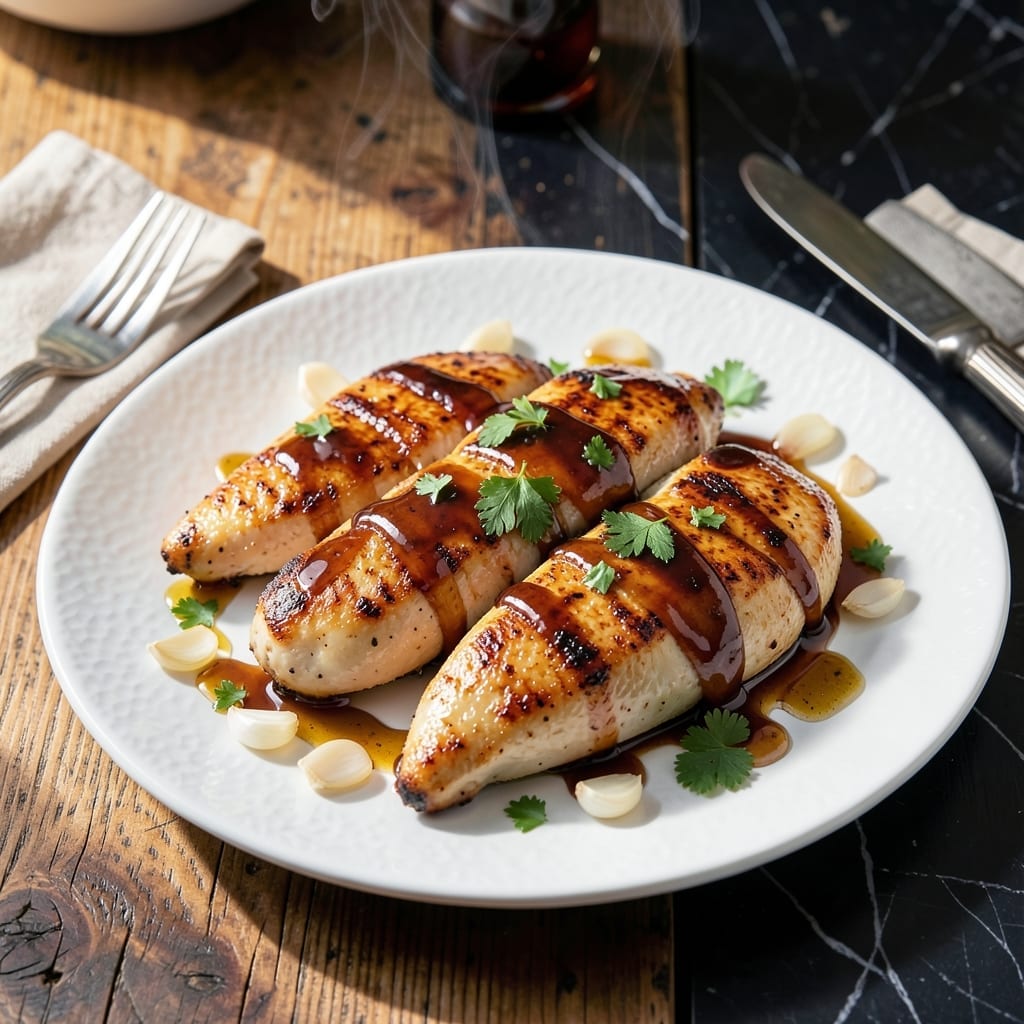
This dish transforms ordinary chicken into a restaurant-quality masterpiece with minimal effort. The balsamic glaze reduces to a glossy, sweet-tart coating that clings to every bite.
I developed this method after years of perfecting balance between acidity and sweetness. The key is reducing the glaze just until it thickens but still drizzles easily—about 10 minutes over medium heat.
The result is juicy chicken with a glossy, caramelized exterior that looks as impressive as it tastes. Each piece gets a final drizzle of glaze right before serving for maximum visual impact.
Serve over mashed potatoes or with roasted vegetables to soak up every drop of that incredible sauce. This technique works with any cut of chicken.
Ingredients for Chicken and Balsamic Glaze
Pantry staples and a few fresh touches create this impressive dish with ease.
| Ingredient | Amount | Notes |
|---|---|---|
| Boneless Skinless Chicken Breasts 🍗 | 1 ½ lb | Pounded to even thickness |
| Balsamic Vinegar 🍷 | 1 cup | Aged for best flavor |
| Honey 🍯 | ¼ cup | For balancing acidity |
| Garlic Cloves 🧄 | 4 cloves | Minced finely |
| Olive Oil 🫒 | 3 tbsp | Divided for cooking and glaze |
| Dijon Mustard 🟡 | 1 tbsp | For depth in glaze |
| Salt 🧂 | 1 tsp | Kosher or sea salt |
| Black Pepper 🌶️ | ½ tsp | Freshly ground preferred |
| Dried Thyme 🌿 | 1 tsp | Rubbed between fingers |
| Chicken Stock 🥣 | ½ cup | Low-sodium preferred |
| Unsalted Butter 🧈 | 2 tbsp | For finishing glaze |
| Fresh Rosemary Sprigs 🌿 | 2 pieces | For garnish |
The balsamic vinegar quality is non-negotiable here. Aged balsamic from Modena (look for Acetaia Giusti or Colavita brands) delivers the depth needed. Most Whole Foods or Williams Sonoma locations carry premium options. The chicken should be similar in thickness for even cooking—pound the thicker ends to match. For the honey, local raw honey adds complexity, but any will work.
No balsamic vinegar? Red wine vinegar plus 1 tsp brown sugar gets you close. Low on honey? Maple syrup or agave at the same amount. The Dijon can be swapped for whole-grain mustard if preferred. For a richer glaze, add 1 extra tbsp of butter at the end. The chicken stock can be substituted with water in a pinch, though the flavor won’t be as robust.
The glaze keeps for 1 week refrigerated in an airtight container. Reheat gently to restore drizzle consistency. Cooked chicken is best served immediately but holds for 3-4 days refrigerated. Freezing isn’t recommended for optimal texture.
Why You’ll Love This Recipe
- One Pan Wonder: I toss everything—chicken, garlic, honey, and balsamic—in a single skillet and walk away.
- Sweet-Tangy Magic: The honey and balsamic create this glossy, finger-licking glaze that clings to every bite.
- Feeds the Crew: I’ve served this for date night, weeknight dinners, and even doubled it for Sunday meal prep.
- Leftovers? Yes Please: Honestly, it tastes even better the next day—cold on a salad or warmed in a wrap.
Step-by-Step Instructions for Chicken and Balsamic Glaze
Master this technique for perfectly caramelized chicken with a glossy, balanced sweet-tart reduction.
Step 1: Prepare and Season the Chicken
Pound the 1.5 lb boneless skinless chicken breasts to an even ½-inch thickness using a meat mallet. This ensures uniform cooking and prevents dry spots. Pat the chicken dry with paper towels—excess moisture inhibits browning.
Season both sides evenly with the 1 tsp salt, ½ tsp black pepper, and 1 tsp dried thyme (rubbed between your fingers to release the oils). The seasoning should form a visible, even layer. Let the chicken rest at room temperature for 10 minutes to allow the salt to penetrate.
Step 2: Sear the Chicken to Golden Perfection
Heat 2 tbsp olive oil in a large skillet over medium-high heat until it shimmers. Add the chicken and cook undisturbed for 5-6 minutes per side until deep golden brown and the internal temperature reaches 160°F.
Resist the urge to move the chicken prematurely—it will release naturally when a proper crust forms. The browning creates the fond (caramelized bits) that will deepen the glaze’s flavor later. Transfer the chicken to a plate and tent loosely with foil to retain warmth.
Step 3: Build the Balsamic Glaze
In the same skillet, reduce heat to medium and add the remaining 1 tbsp olive oil. Sauté the 4 cloves minced garlic cloves for 30 seconds until fragrant but not browned. Immediately add the 1 cup balsamic vinegar, ¼ cup honey, 1 tbsp Dijon mustard, and ½ cup chicken stock.
Simmer for 8-10 minutes, stirring occasionally, until the mixture reduces by half and coats the back of a spoon. The glaze should be syrupy with a deep, glossy sheen. Watch closely toward the end—balsamic can burn if left unattended.
Step 4: Finish and Serve
Reduce heat to low and whisk in the 2 tbsp unsalted butter one at a time, allowing each to melt fully before adding the next. This emulsifies the glaze into a silky, velvety sauce. Taste and adjust seasoning if needed—the balance should be tangy, sweet, and rich.
Return the chicken to the skillet, spooning the glaze over each piece to coat evenly. Cook for 1-2 minutes to reheat the chicken and meld the flavors. Garnish with the 2 pieces fresh rosemary sprigs and serve immediately, drizzling any extra glaze over the top.
Pro Tips For Making Chicken And Balsamic Glaze
- Pound the Chicken: Even thickness guarantees even cooking—I learned this the hard way after too many dry, overdone edges. Use a rolling pin or heavy pan to flatten breasts to about ½-inch thick.
- Reduce the Glaze: Simmer that balsamic and honey mixture for at least 5-7 minutes until it coats the back of a spoon. I was skeptical until I tried it, but a thick glaze clings way better than a runny one.
- Skip Overcrowding: Resist the urge to cram all the chicken in one pan—it steams instead of sears. Cook in batches if needed; your future self will thank you for the golden crust.
- Rest Before Serving: Give the chicken a solid 5 minutes off the heat before slicing. Sounds weird, but it works: the juices redistribute, and you won’t cry over a dry, sad plate.
Health Benefits of This chicken and balsamic glaze
Rich in Antioxidants
Balsamic vinegar is packed with polyphenols, powerful antioxidants that protect your cells from damage. The aged variety used in this dish delivers even higher concentrations. I notice my energy levels stay more consistent when I include antioxidant-rich foods regularly. 💪
Protein Powerhouse
The 1.5 lb chicken breasts provide about 100 grams of protein total, supporting muscle repair and immune function. Chicken is a lean protein source that keeps you full without excess saturated fat. It’s my go-to for post-workout meals.
Heart Health Boost
The olive oil and balsamic vinegar in this recipe both contribute to heart health. Olive oil’s monounsaturated fats help lower bad cholesterol, while balsamic’s antioxidants support cardiovascular function. A true win-win for your heart.
Blood Sugar Benefits
Despite its sweetness, this dish has a moderate glycemic impact. The ¼ cup honey is balanced by the acidity of balsamic vinegar, which helps slow sugar absorption. The Dijon mustard adds depth without spiking blood sugar.
Digestive Support
The garlic and thyme in this recipe aren’t just for flavor—they support digestive health. Garlic stimulates digestion, while thyme has been traditionally used to soothe stomach discomfort. I love how flavor and function work together here.
Vitamin B6 Source
Chicken is an excellent source of vitamin B6, crucial for brain development and function. A single serving provides about 30% of your daily needs. This vitamin also helps your body use and store energy from food. 💡
Nutrition Facts
Frequently Asked Questions
What’s the best way to prevent dry chicken?
Pound to even ½-inch thickness and don’t overcook. Remove from pan at 160°F—it’ll rise to 165°F while resting. Letting it sit 5 minutes before serving locks in juices.
Can I use bone-in chicken?
Yes, but adjust cooking time. Bone-in thighs need 8-10 minutes per side at medium-high heat. The glaze works the same, just simmer it while chicken finishes.
Why did my glaze turn out too thin?
It needs more reduction time. Simmer uncovered for the full 10 minutes until it coats a spoon. If it thickens too much, stir in 1 tbsp water.
Can I make the glaze ahead?
Store in an airtight container for up to 1 week. Reheat gently on low to restore consistency before serving.

- Jollof Rice Sauce Recipe: West African Tomato and Spice Infusion - September 25, 2026
- Japanese Rice Soup Recipe: Umami-Rich Comfort in a Bowl - September 25, 2026
- Homemade Cream Of Rice Recipe: Silk-Smooth Breakfast in Minutes - September 25, 2026