
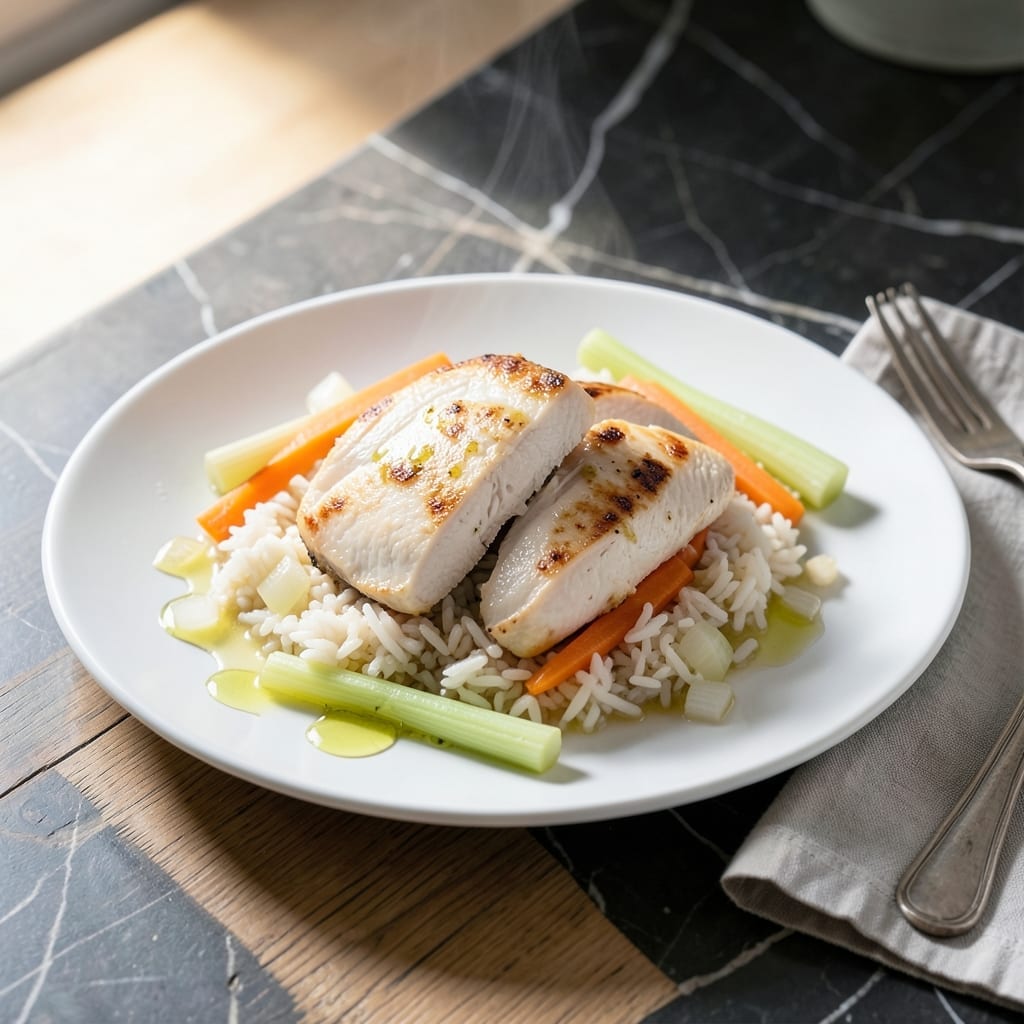
This gentle one-pot meal offers comfort without the trigger ingredients that often cause discomfort. I developed this recipe after years of trial and error, focusing on mild flavors and easy digestion.
The beauty of this dish lies in its simplicity—tender chicken, fluffy rice, and soothing broth cook together in a single pot. No complex techniques, just straightforward cooking that delivers consistent results.
What you’ll get is a nourishing meal that’s light on the stomach yet satisfying. The chicken stays moist, the rice absorbs just enough flavor, and the entire dish comes together with minimal effort.
Perfect for sensitive systems, this recipe proves that eating for digestion doesn’t mean sacrificing taste.
Ingredients for Chicken and Rice Recipe for Acid Reflux
Mild flavors and gentle ingredients create this soothing one-pot meal for sensitive digestion.
| Ingredient | Amount | Notes |
|---|---|---|
| Boneless Skinless Chicken Breasts 🍗 | 1 ½ lb | Pounded to even thickness |
| Long-Grain White Rice 🍚 | 1 ½ cups | Rinsed until water runs clear |
| Low-Sodium Chicken Broth 🥣 | 3 cups | Mild flavor preferred |
| Olive Oil 🫒 | 2 tbsp | Light or extra-light variety |
| Carrots 🥕 | 2 whole | Peeled and diced small |
| Celery Stalks 🌿 | 2 whole | Finely chopped for mild flavor |
| Sweet Onion 🧅 | ½ whole | Diced small for subtle sweetness |
| Garlic Cloves 🧄 | 2 cloves | Minced for aromatic base |
| Dried Thyme 🌿 | ½ tsp | Mild herb for gentle seasoning |
| Dried Parsley 🍃 | ½ tsp | For color and mild flavor |
| Bay Leaf 🍃 | 1 whole | Removed before serving |
| Sea Salt 🧂 | ½ tsp | Adjust to taste carefully |
| Freshly Ground Black Pepper 🌶️ | ¼ tsp | Sparingly for mild heat |
The chicken should be high-quality—look for air-chilled at Whole Foods or Trader Joe’s for better texture and purity. Avoid any pre-seasoned or marinated varieties, as these often contain trigger ingredients. The rice is crucial: long-grain white has the mildest flavor and easiest digestion. For broth, low-sodium varieties from Pacific Foods or Imagine ensure no hidden acids or spices.
Need to swap the chicken? Boneless turkey breast works identically. For vegetable variations, add zucchini or green beans (both mild). No fresh herbs? Dried at one-third the amount is fine. The onion can be omitted if needed, but it adds important base flavor. Always check broth labels for onion or garlic powder if you’re highly sensitive.
This keeps beautifully for 4-5 days refrigerated. The flavors actually mellow further, making it even more soothing. Freezes well for 3 months (portion before freezing). Reheat gently with a splash of water to restore moisture.
Why You’ll Love This Recipe
- One Pot Meal: I love that everything—chicken, rice, carrots—cooks together in a single pot with minimal cleanup.
- Gentle Flavor: The low-sodium broth and tender chicken create a mild, comforting taste that’s easy on digestion.
- Meal Prep Ready: Honestly, this keeps perfectly in the fridge for days, so I can prep it Sunday and eat stress-free all week.
- Budget Stretcher: A few affordable ingredients feed my whole family, and leftovers taste just as good the next day.
Step-by-Step Instructions for Chicken and Rice
This one-pot method ensures gentle flavors and easy cleanup for a soothing meal.
Step 1: Prepare the Aromatic Base
Heat 2 tbsp olive oil in a large pot or Dutch oven over medium heat. Add the diced sweet onion, carrots, and celery stalks, cooking for 5-6 minutes until softened but not browned.
Stir in the minced garlic cloves and cook for an additional 30 seconds until fragrant. This gentle sauté develops the vegetables’ natural sweetness without creating harsh flavors that might trigger discomfort. Watch for the onions to turn translucent—this signals they’re ready for the next step.
Add 0.5 tsp dried thyme, 0.5 tsp dried parsley, 0.5 tsp sea salt, and 0.25 tsp freshly ground black pepper, stirring to coat the vegetables evenly. The herbs should release their aroma, indicating they’re properly toasted.
Step 2: Brown the Chicken Lightly
Increase the heat to medium-high and add the pounded 1.5 lb boneless skinless chicken breasts to the pot. Sear for 3-4 minutes per side until just lightly golden—avoid deep browning to keep the dish mild.
The chicken should release easily from the pot when it’s ready to flip. If it sticks, let it cook for another 30-60 seconds before attempting to turn. This light sear locks in juices without creating a heavy fond that could overpower the dish.
Remove the chicken and set aside. The goal here is subtle flavor development, not aggressive browning, which aligns with the gentle nature of this recipe.
Step 3: Toast the Rice and Deglaze
Reduce heat to medium and add 1.5 cups long-grain white rice to the pot. Stir for 1-2 minutes to lightly toast the grains, which enhances their nutty flavor without adding bitterness.
Pour in 3 cups low-sodium chicken broth and add 1 whole bay leaf, stirring to scrape up any light browned bits from the bottom. The liquid should come to a gentle simmer—if it boils too vigorously, reduce the heat slightly.
This step ensures the rice absorbs maximum flavor while maintaining a mild profile. The broth should look slightly cloudy from the starch release, which is normal.
Step 4: Simmer Until Tender
Return the chicken to the pot, nestling it into the rice mixture. Cover with a tight-fitting lid and reduce heat to low. Simmer for 20-25 minutes until the rice is tender and the chicken reaches 165°F internally.
Avoid lifting the lid during cooking—steam is crucial for even cooking. The rice should absorb all the liquid, and the chicken should be opaque throughout with no pink remaining. If the mixture looks dry before the rice is done, add ¼ cup water and continue cooking.
Remove from heat and let sit, covered, for 5-10 minutes. This resting period allows the rice to steam finish and the flavors to meld harmoniously.
Step 5: Finish and Serve
Discard the bay leaf and fluff the rice gently with a fork. The grains should be separate and tender, with the chicken easily pulling apart into moist, delicate shreds.
Taste and adjust seasoning if needed, though the mild flavors should already be well-balanced. Serve warm, ensuring each portion includes both chicken and rice for a comforting, cohesive bite.
Pro Tips For Making Chicken And Rice Recipe For Acid Reflux
- Poach the Chicken: Simmer the boneless skinless chicken breasts in the low-sodium chicken broth instead of searing—keeps the meat tender and avoids any extra oil that could trigger reflux.
- Rinse the Rice: Give the long-grain white rice a quick rinse before cooking to remove excess starch, which makes the final dish lighter and easier to digest.
- Dice Carrots Small: Cut the carrots into tiny pieces so they soften quickly and blend into the dish without needing long cooking times that can overcook the chicken.
- Skip the Onions: I learned this the hard way—onions are a common reflux trigger, so leave them out even if the recipe suggests them.
Flavor Customization for This Dish
Herb Variations
Swap the dried thyme and parsley for ½ tsp dried oregano or ½ tsp dried basil for a subtle Mediterranean twist. Both herbs are gentle on digestion while adding a new flavor dimension to this dish.
Vegetable Additions
Add 1 cup diced zucchini or 1 cup green beans when you sauté the onions. Both vegetables are mild, easy to digest, and complement the chicken beautifully. I love using zucchini from my Portland garden in summer. 🌱
Grain Swaps
Replace the long-grain white rice with 1.5 cups jasmine rice for a slightly floral aroma. For a nuttier flavor, try 1.5 cups basmati rice. Both maintain the gentle profile while offering variety.
Broth Boosts
Stir in 2 tbsp unsalted butter with the broth for added richness without triggering discomfort. Alternatively, add ¼ cup low-fat milk for a creamier texture. Both options keep the dish mild while enhancing the flavor.
Spice-Free Flavor
For more depth, add 1 tsp fresh ginger (minced) when cooking the vegetables. Ginger is known for its soothing properties and pairs wonderfully with chicken. I always keep some in my kitchen for this very reason. 💛
Protein Alternatives
Use 1.5 lb boneless turkey breast instead of chicken for a slightly leaner option. The cooking time and method remain identical, and the flavor stays just as mild and comforting.
Nutrition Facts
Frequently Asked Questions
Is it okay to use chicken thighs?
Yes, but choose boneless skinless thighs and cook to 175°F for safety. They add richness while staying gentle on digestion. Trim visible fat for extra sensitivity.
Why is this dish good for sensitive stomachs?
It avoids common triggers like spicy ingredients, citrus, and excessive fat. The mild herbs and gentle cooking method create an easily digestible meal that soothes rather than irritates.
Can I make this in a slow cooker?
Sauté the vegetables first, then combine all ingredients in the cooker. Cook on low for 4-5 hours or high for 2-3 hours. Add ¼ cup extra broth for steam.
How do I store leftovers?
Keep in an airtight container in the fridge for up to 4-5 days. Reheat gently with a splash of water to restore moisture. Avoid microwaving too hot.

- Jollof Rice Sauce Recipe: West African Tomato and Spice Infusion - September 25, 2026
- Japanese Rice Soup Recipe: Umami-Rich Comfort in a Bowl - September 25, 2026
- Homemade Cream Of Rice Recipe: Silk-Smooth Breakfast in Minutes - September 25, 2026