
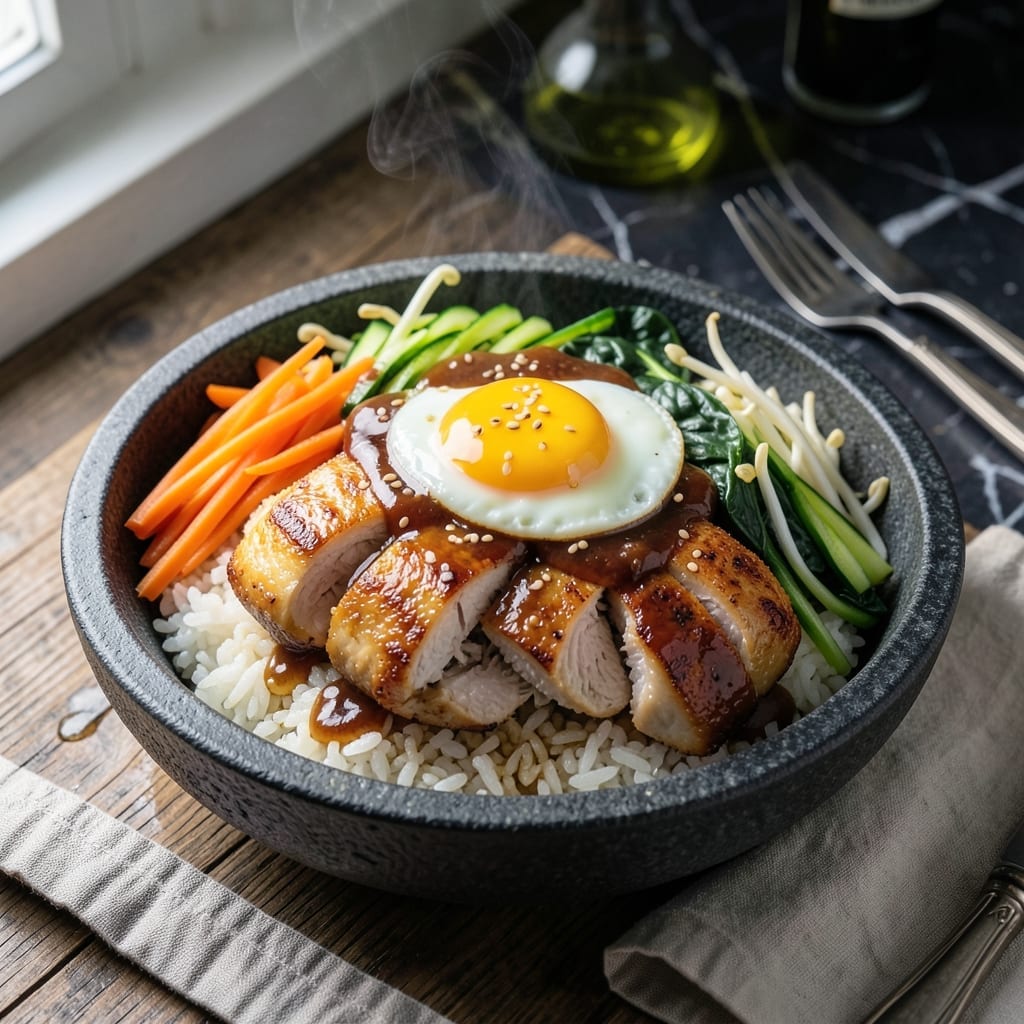
This Korean classic brings colorful vegetables, tender chicken, and fragrant rice together in one harmonious bowl. The dish balances sweet, savory, and spicy flavors with a precision that defines traditional Korean cooking.
I developed my version after studying authentic techniques, focusing on properly seasoned chicken and perfectly cooked vegetables. The key is preparing each component separately before combining them in the final assembly.
What emerges is a vibrant, restaurant-quality meal that’s as visually stunning as it is delicious. The gochujang sauce ties everything together, adding depth and a signature Korean spice.
Serve it hot with a fried egg on top for the complete experience. This recipe delivers on tradition without sacrificing simplicity.
Ingredients for Chicken Bibimbap
Bright veggies, tender chicken, and fragrant rice—this bowl has it all.
| Ingredient | Amount | Notes |
|---|---|---|
| White Rice 🍚 | 2 cups | Short-grain preferred for authentic texture |
| Boneless Chicken Thighs 🍗 | 1 ½ lb | Skinless, cut into bite-sized pieces |
| Carrots 🥕 | 2 whole | Julienned into thin strips |
| Zucchini 🥒 | 1 whole | Julienned into thin strips |
| Spinach 🌿 | 4 cups | Fresh, roughly chopped |
| Bean Sprouts 🌱 | 2 cups | Blanched for crisp texture |
| Shiitake Mushrooms 🍄 | 4 whole | Fresh, sliced thinly |
| Gochujang 🌶️ | ½ cup | Korean red pepper paste |
| Soy Sauce 🫙 | 3 tbsp | Low-sodium preferred for balance |
| Sesame Oil 🫒 | 1 tbsp | Toasted for nutty aroma |
| Garlic Cloves 🧄 | 4 cloves | Minced for marinade |
| Brown Sugar 🫙 | 1 tbsp | For sweetness in sauce |
| Sesame Seeds 🌰 | 2 tbsp | Toasted, for garnish |
| Vegetable Oil 🫒 | 2 tbsp | For cooking chicken and vegetables |
| Large Eggs 🥚 | 4 whole | For topping each bowl |
The chicken makes this dish. Thighs stay juicier than breasts during cooking—look for skinless, boneless at Whole Foods or your local Asian market (they usually stock the good stuff). Rice matters too: short-grain white gives that sticky, authentic texture. Most grocery stores carry it in the international aisle. Don’t skip the julienning for the veggies—it’s worth the extra minute for even cooking.
No gochujang? Sriracha mixed with a bit of miso paste gets you close (not perfect, but workable). Short on veggies? Swap in bell peppers or green beans—just keep the slices thin. Low-sodium soy sauce is key here; regular can overpower the dish. For the sesame oil, Kadoya or Ottogi brands are my go-tos. And if you’re missing sesame seeds, crushed peanuts add a nice crunch.
Leftover bibimbap keeps 3-4 days in the fridge—store components separately to avoid soggy rice. The gochujang sauce? Mix it fresh each time (takes 2 minutes). Freeze cooked chicken for up to 3 months if prepping ahead.
Why You’ll Love This Recipe
- One Pot Meal: I love that everything cooks together—rice, chicken, and veggies—so I’m not juggling multiple pans.
- Umami Bomb: The soy-garlic marinade on the chicken thighs makes each bite ridiculously good, and the spinach soaks up all that flavor.
- Meal Prep Star: Between us, this tastes even better the next day, so I make a big batch for lunches all week.
- Budget Friendly: Boneless thighs and seasonal veggies keep the cost low, and it still feels like a restaurant meal.
Step-by-Step Instructions for Chicken Bibimbap
Here’s my tested method for building this vibrant Korean rice bowl with perfect layers of flavor.
Step 1: Cook the Rice and Marinate the Chicken
Start by cooking the 2 cups White Rice according to package instructions, using slightly less water than usual for a firmer texture. I prefer short-grain rice for its sticky consistency that holds up well to the toppings.
While the rice cooks, combine the 1.5 lb Boneless Chicken Thighs (cut into bite-sized pieces) with 3 tbsp Soy Sauce, 1 tbsp Sesame Oil, 4 cloves Garlic Cloves (minced), and 1 tbsp Brown Sugar. Let it marinate for 15-20 minutes while you prep the vegetables—this builds incredible flavor depth.
Step 2: Prepare and Blanch the Vegetables
Julienne the 2 whole Carrots and 1 whole Zucchini into thin, even strips. Roughly chop the 4 cups Spinach and slice the 4 whole Shiitake Mushrooms thinly. For the 2 cups Bean Sprouts, blanch them in boiling water for 2 minutes until crisp-tender, then shock in ice water to preserve their bright color and texture.
This prep work ensures all your vegetables cook evenly and maintain their vibrant colors. The blanching step for bean sprouts is crucial—they’ll stay crisp even after final cooking.
Step 3: Cook the Chicken and Vegetables
Heat 1 tbsp Vegetable Oil in a large skillet over medium-high heat. Cook the marinated chicken in batches for 5-6 minutes until golden brown and cooked through. Remove and set aside.
In the same pan, add the remaining 1 tbsp Vegetable Oil and stir-fry the carrots, zucchini, and shiitake mushrooms for 3-4 minutes until just tender. Add the spinach and cook for 1 minute until wilted. The vegetables should retain some bite—they’ll continue cooking slightly when assembled.
Step 4: Mix the Gochujang Sauce and Fry the Eggs
In a small bowl, combine the 0.5 cup Gochujang with 1 tbsp Sesame Oil and 1 tbsp Brown Sugar. Thin with a little water if needed to reach a pourable consistency. This sauce should be sweet, spicy, and slightly nutty from the sesame oil.
Fry the 4 whole Large Eggs sunny-side up in a nonstick pan with a little oil for 2-3 minutes until the whites are set but yolks remain runny. The yolk is essential—it’ll mix beautifully with the rice and sauce when served.
Step 5: Assemble and Serve
Divide the cooked rice among four bowls. Arrange the chicken and vegetables in sections on top of the rice. Drizzle generously with the gochujang sauce and sprinkle with the 2 tbsp Sesame Seeds.
Place one fried egg on top of each bowl. Serve immediately while hot, encouraging everyone to mix all the components together before eating. The contrast of warm rice, crisp vegetables, tender chicken, and runny yolk with that spicy-sweet sauce is what makes this dish unforgettable.
Pro Tips For Making Chicken Bibimbap
- Marinate the Chicken: Let the chicken thighs soak in soy sauce, garlic, and a touch of sugar for at least 30 minutes—I learned this the hard way, bland chicken ruins the whole dish.
- Cut Veggies Thin: Slice the carrots and zucchini into thin matchsticks so they cook quickly and evenly in the pan—no one wants crunchy carrots in their bibimbap.
- Pre-cook the Spinach: Blanch the spinach in boiling water for 30 seconds then shock it in ice water, it keeps the color bright and prevents soggy bibimbap.
- Use Day-old Rice: Sounds weird, but it works: leftover rice that’s a day old and slightly dry absorbs the sauce better than fresh rice.
Health Benefits of This chicken bibimbap
Nutrient Powerhouse
This dish packs a serious nutritional punch with its rainbow of vegetables. The spinach and bean sprouts provide iron and folate, while carrots deliver vitamin A for eye health. I love how each veggie brings its own nutritional superpower to the bowl. 💪
Lean Protein Boost
The 1.5 lb chicken thighs offer lean protein without the saturated fat of red meat. At about 25g protein per 3 oz serving, it supports muscle repair and keeps you feeling full for hours. The marinade with garlic adds immune-boosting benefits too.
Complex Carb Energy
The 2 cups short-grain rice provides sustained energy from complex carbohydrates. Unlike refined grains, this rice maintains more fiber and nutrients. It’s the perfect base to fuel your day without the crash.
Healthy Fats Source
Both sesame oil and vegetable oil contribute heart-healthy unsaturated fats. The 1 tbsp sesame oil in particular contains antioxidants like sesamol. Even the egg yolks provide choline for brain health.
Antioxidant Rich
The gochujang and vegetables are loaded with antioxidants. Capsaicin in the chili paste may boost metabolism, while the colorful veggies fight inflammation. I notice I feel more energized after eating this balanced meal. ✨
Low Calorie Density
Despite its satisfying portions, this dish remains relatively light. A typical serving contains about 450-500 calories with a great macronutrient balance. The fiber from vegetables aids digestion while keeping calorie counts in check.
Nutrition Facts
Frequently Asked Questions
Can I use chicken breast instead of thighs?
Yes, but thighs stay juicier. If using breast, marinate for 30 minutes and cook for only 4-5 minutes to prevent dryness.
What can I substitute for gochujang?
Mix 2 tbsp sriracha with 1 tbsp miso paste and 1 tsp sugar. It won’t be identical but will provide similar spicy-sweet depth.
How do I keep the rice from getting soggy?
Use slightly less water when cooking and store components separately until serving. Assemble just before eating.
Can I make this vegetarian?
Swap chicken for tofu or tempeh. Marinate and cook the same way for 5-6 minutes until golden.

- Jollof Rice Sauce Recipe: West African Tomato and Spice Infusion - September 25, 2026
- Japanese Rice Soup Recipe: Umami-Rich Comfort in a Bowl - September 25, 2026
- Homemade Cream Of Rice Recipe: Silk-Smooth Breakfast in Minutes - September 25, 2026