
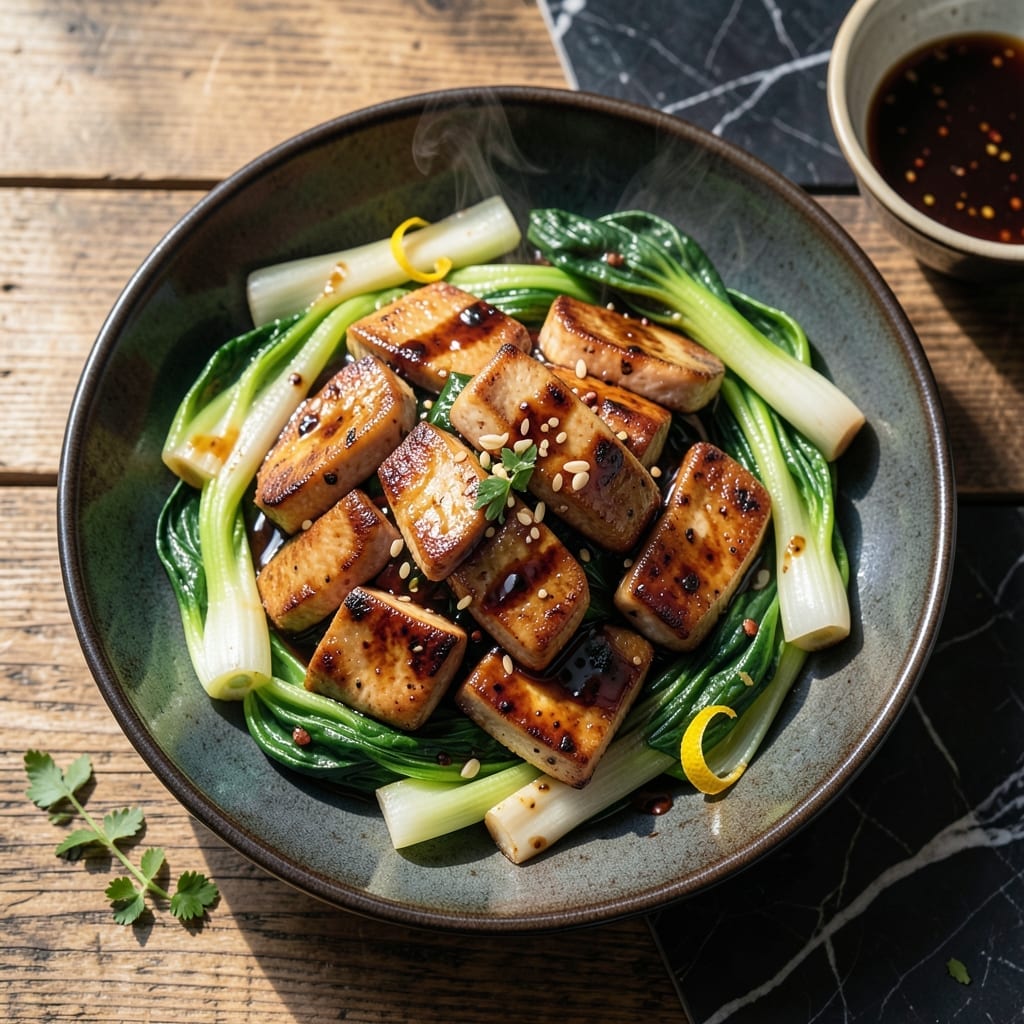
There’s a reason wok-seared chicken and bok choy remains a staple in my kitchen. The high heat creates tender chicken and crisp greens in minutes, locking in flavor without fuss.
This method relies on proper prep—thinly sliced chicken, separated bok choy leaves, and a hot wok. The sauce, a balance of soy, garlic, and ginger, ties everything together with minimal effort.
What emerges is a dish with vibrant color, bold aroma, and a texture contrast that keeps every bite exciting. The chicken stays juicy while the bok choy develops a slight char.
Serve it steaming hot over rice for a meal that feels both restaurant-quality and homemade.
Ingredients for Chicken Bok Choy
High-heat wok magic requires just these fresh, flavorful ingredients for restaurant-quality results at home.
| Ingredient | Amount | Notes |
|---|---|---|
| Boneless Chicken Thighs 🍗 | 1 ½ lb | Thinly sliced for even cooking |
| Bok Choy 🥬 | 6 whole | Baby or Shanghai variety |
| Soy Sauce 💧 | ⅓ cup | Low-sodium preferred for balance |
| Oyster Sauce 🫒 | 2 tbsp | Vegetarian oyster sauce if needed |
| Sesame Oil 🫒 | 1 tbsp | Toasted for depth of flavor |
| Garlic Cloves 🧄 | 4 cloves | Minced for maximum flavor |
| Fresh Ginger 🌿 | 1 tbsp | Peeled and grated |
| Rice Vinegar 🍚 | 1 tbsp | For brightness in sauce |
| Cornstarch 🌾 | 1 tbsp | Mixed with water for slurry |
| Neutral Oil 🫒 | 3 tbsp | High smoke point for wok-searing |
| Red Pepper Flakes 🌶️ | ½ tsp | Adjust to heat preference |
| Green Onions 🧅 | 3 whole | Thinly sliced for garnish |
| Sesame Seeds 🌾 | 1 tsp | Toasted for garnish |
The chicken must be thinly sliced—thighs work better than breasts here (they stay juicy under high heat). Baby bok choy (from Trader Joe’s or Asian markets) is ideal, but regular works too—just quarter it. For the soy sauce, Kikkoman low-sodium keeps things balanced without overpowering. Oyster sauce adds depth; vegetarian oyster sauce works if you’re avoiding seafood.
No oyster sauce? Hoisin mixed with a bit of soy gets you close. Fresh ginger is non-negotiable—powdered just doesn’t have the same zing. If you’re out of rice vinegar, apple cider vinegar at half the amount works. The cornstarch slurry thickens the sauce; skip it if you prefer a lighter consistency. Avocado oil is my go-to neutral oil for high-heat cooking.
Prep all ingredients before heating the wok—things move fast once cooking starts. Leftovers keep for 3-4 days in the fridge. The bok choy loses its crispness when reheated, so eat fresh if possible. Freeze the chicken separately if making ahead.
Why You’ll Love This Recipe
- One Pan Wonder: I toss everything in, and 20 minutes later—juicy chicken and tender bok choy with almost no cleanup.
- Umami Bomb: The soy, oyster sauce, and sesame oil combo hits that deep, savory note I crave in every bite.
- Weeknight Hero: Honestly, it’s my go-to after long days—faster than takeout and way more satisfying.
- Budget Stretcher: A pound of thighs and a head of bok choy feed my family for less than $10, with leftovers for lunch.
Step-by-Step Instructions for Wok-Seared Chicken and Bok Choy
This method delivers restaurant-quality results with a perfect balance of savory and aromatic flavors.
Step 1: Prepare the Chicken and Aromatics
Slice the 1.5 lb boneless chicken thighs into thin, even strips for quick cooking. In a bowl, combine the chicken with 0.33 cup soy sauce, 1 tbsp rice vinegar, 1 tbsp cornstarch, and 0.5 tsp red pepper flakes. I always let this marinate for 10 minutes—this tenderizes the meat and ensures every bite is flavorful.
While the chicken marinates, mince the 4 cloves garlic cloves and grate the 1 tbsp fresh ginger. Separate the 6 whole bok choy into individual leaves, keeping the stems intact. Thinly slice the 3 whole green onions. Having everything prepped before cooking is crucial for stir-fries—this dish comes together fast once it hits the wok.
Step 2: Wok-Sear the Chicken to Perfection
Heat 2 tbsp neutral oil in a wok or large skillet over high heat until shimmering. Add the marinated chicken in a single layer, working in batches if needed to avoid crowding. Let it sear undisturbed for 2-3 minutes until the edges turn golden brown and crisp.
Flip the chicken and cook for another 2 minutes until fully cooked through. The cornstarch in the marinade will create a light crust that locks in juices. Transfer the chicken to a plate and set aside. Don’t wipe the wok clean—those browned bits will add depth to your sauce.
Step 3: Stir-Fry the Bok Choy and Aromatics
Add the remaining 1 tbsp neutral oil to the wok and return it to high heat. Toss in the garlic and ginger, stirring constantly for 30 seconds until fragrant but not browned. Immediately add the bok choy and stir-fry for 3-4 minutes, until the leaves wilt and the stems become tender-crisp.
The bok choy should brighten in color and soften slightly but retain some bite. If the wok seems dry, add a splash of water to create steam. This step infuses the greens with the aromatic flavors of garlic and ginger, building layers of taste in every mouthful.
Step 4: Combine and Finish with Sauce
Return the cooked chicken to the wok along with any accumulated juices. Pour in the 2 tbsp oyster sauce and 1 tbsp sesame oil, then toss everything together for 1-2 minutes until the sauce coats the chicken and bok choy evenly. The oyster sauce adds a rich, umami depth that ties all the flavors together.
Taste and adjust seasoning if needed, though the soy and oyster sauces should provide plenty of flavor. The sauce should be glossy and lightly clinging to the ingredients. If it’s too thick, add a tablespoon of water to loosen it.
Step 5: Garnish and Serve Immediately
Transfer the stir-fry to a serving platter and garnish with the sliced green onions and 1 tsp sesame seeds. The sesame seeds add a nutty crunch and visual appeal, while the green onions bring a fresh, sharp contrast to the rich, savory dish.
Serve immediately while hot, over steamed rice if desired. Each bite should deliver tender chicken, crisp-tender bok choy, and a harmonious blend of savory, umami, and slightly spicy notes. The dish is best enjoyed fresh, as the textures and flavors are at their peak right after cooking.
Pro Tips For Making Chicken Bok Choy
- Sear Chicken First: Get your pan ripping hot before adding the chicken thighs—this gives you that golden crust and locks in juices. I learned this the hard way after too many soggy batches.
- Halve the Bok Choy: Cut each bok choy lengthwise into quarters so the sauce coats every leaf. Sounds fussy, but it actually changes the outcome and makes eating easier.
- Skip the Overcrowding: Cook the chicken in batches if needed—crowding the pan steams instead of sears, and you’ll end up with pale, sad meat.
- Finish with Sesame Oil: Stir in the sesame oil at the very end, off the heat. It keeps the nutty flavor bright instead of bitter, and about 1 teaspoon is all you need.
Serving Suggestions for This chicken bok choy
Over Steamed Rice
I always serve this stir-fry over jasmine or basmati rice—the fluffy texture soaks up the savory sauce perfectly. Use 1 cup uncooked rice for 4 servings, which gives you just the right ratio. The contrast between the tender chicken and crisp bok choy against the soft rice is irresistible. 💛
Family-Style Platter
For gatherings, I pile everything onto a large ceramic platter and let guests serve themselves. The vibrant green bok choy and golden chicken make for a stunning presentation. Add extra green onions on top for a pop of color.
Individual Bowls
For weeknight dinners, I portion the stir-fry into shallow bowls over rice. This keeps the bok choy crisp and prevents sogginess. A drizzle of extra sesame oil right before serving adds a final aromatic touch.
With Noodles
Swap rice for egg noodles or lo mein noodles if you want a heartier meal. Toss 8 oz cooked noodles with the stir-fry at the end to coat them in the sauce. The noodles absorb the flavors beautifully.
Low-Carb Option
For a lighter take, serve the chicken and bok choy over cauliflower rice. I sauté 4 cups riced cauliflower in the wok first, then set it aside before cooking the chicken. This keeps the dish gluten-free too. ✨
Garnish Like a Pro
Always finish with a sprinkle of toasted sesame seeds and thinly sliced green onions. For extra flair, add a few red pepper flakes or a drizzle of chili oil for heat. These small touches elevate the dish visually and flavor-wise.
Nutrition Facts
Frequently Asked Questions
Can I use chicken breast instead of thighs?
Yes, but thighs stay juicier. If using breast, slice thinly and reduce cooking to 2 minutes per side to prevent dryness. The marinade helps, but thighs are more forgiving.
How do I keep bok choy crisp?
Cook it last and briefly—just 3-4 minutes on high heat. Separate the leaves so they cook evenly and retain texture. Overcrowding the wok makes it steam instead of sear.
What if I don’t have a wok?
A large skillet works fine. Use high heat and cook in batches to avoid steaming. A cast iron pan is ideal for heat retention. Just keep the ingredients moving.
Can I make this ahead?
Prep ingredients in advance, but cook just before serving. Reheating softens the bok choy. Store leftovers in an airtight container for up to 3 days.

- Jollof Rice Sauce Recipe: West African Tomato and Spice Infusion - September 25, 2026
- Japanese Rice Soup Recipe: Umami-Rich Comfort in a Bowl - September 25, 2026
- Homemade Cream Of Rice Recipe: Silk-Smooth Breakfast in Minutes - September 25, 2026