
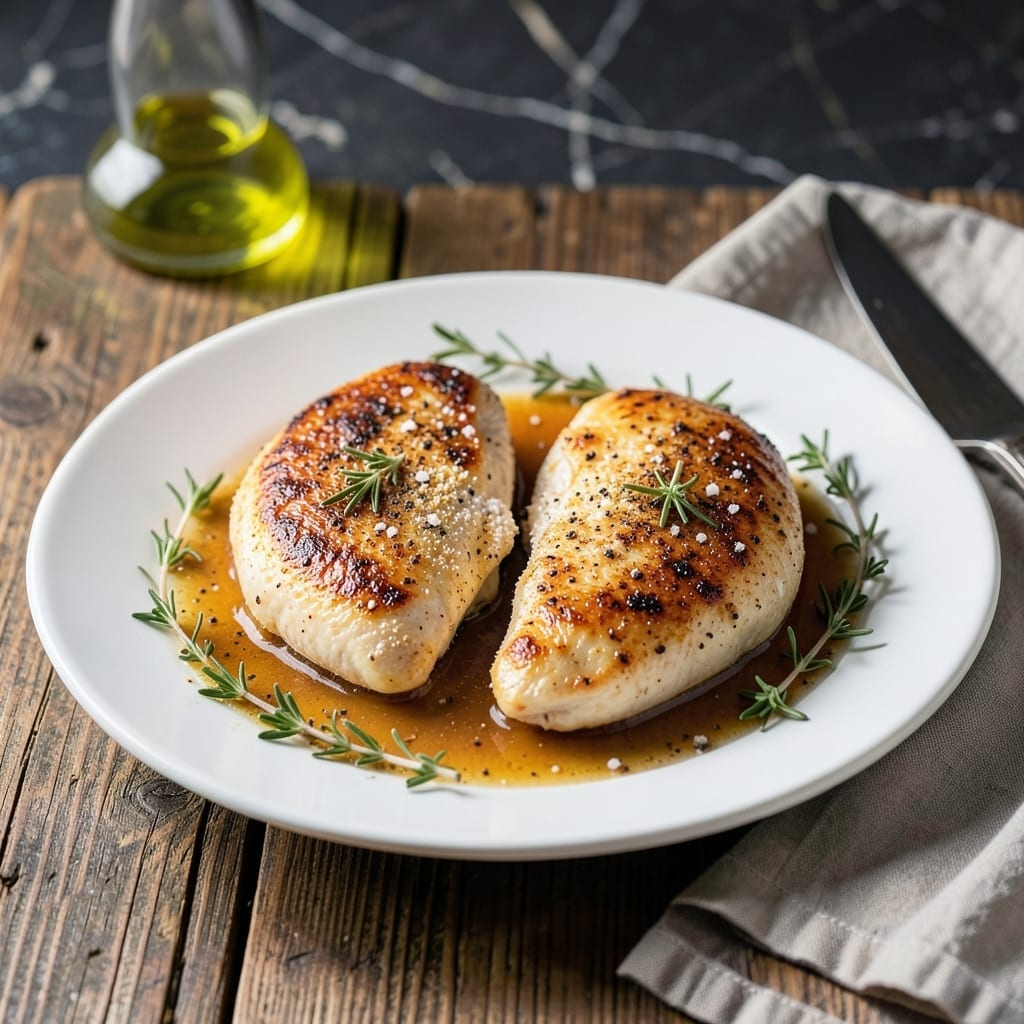
This one-pan chicken breast recipe transforms a simple weeknight dinner into something special. The secret lies in a hot skillet and a few key techniques that ensure juicy, flavorful results every time.
I developed this method to maximize flavor while minimizing cleanup. The chicken cooks quickly at high heat, developing a golden crust outside while staying tender inside. A simple pan sauce ties everything together.
You’ll have perfectly cooked chicken with a rich, savory sauce in under 30 minutes. The skillet does all the work, and the results rival any restaurant version.
Serve with roasted vegetables or over rice for a complete meal. This is weeknight cooking at its best.
Ingredients for Chicken Breast Skillet
Fifteen ingredients create this restaurant-quality one-pan chicken with savory pan sauce.
| Ingredient | Amount | Notes |
|---|---|---|
| Boneless Skinless Chicken Breasts 🍗 | 1 ½ lb | Pounded to even thickness |
| Kosher Salt 🧂 | 1 ½ tsp | Diamond Crystal preferred |
| Freshly Ground Black Pepper 🌶️ | 1 tsp | Coarsely ground for texture |
| Garlic Powder 🧄 | 1 tsp | Not garlic salt substitute |
| Smoked Paprika 🌶️ | 1 tsp | Adds depth to crust |
| All-Purpose Flour 🌾 | ½ cup | For dredging chicken |
| Extra-Virgin Olive Oil 🫒 | 3 tbsp | High smoke point preferred |
| Unsalted Butter 🧈 | 2 tbsp | For pan sauce base |
| Chicken Stock 🍲 | ¾ cup | Low-sodium recommended |
| Fresh Garlic Cloves 🧄 | 3 cloves | Minced for pan sauce |
| Fresh Thyme Sprigs 🌿 | 4 whole | Leaves stripped from stems |
| Dijon Mustard 🟡 | 1 tbsp | Smooth variety for sauce |
| Heavy Cream 🥛 | ¼ cup | Full-fat for richness |
| Lemon Juice 🍋 | 1 tbsp | Freshly squeezed preferred |
| Fresh Parsley 🌿 | 2 tbsp | Chopped for garnish |
The chicken breasts must be uniform in thickness for even cooking. Whole Foods or Costco often carry pre-trimmed, air-chilled breasts that brown beautifully. For the stock, Better Than Bouillon makes a superior concentrate—mix 1 tsp paste with warm water for each cup needed. The smoked paprika adds critical depth; Penzeys offers an excellent single-origin Hungarian variety.
No smoked paprika? Regular paprika plus a pinch of cayenne approximates the flavor. Substitute shallots for garlic if preferred, or use garlic scape puree at half the volume. For dairy-free, replace butter with refined coconut oil and heavy cream with full-fat coconut milk. The Dijon mustard can be swapped for whole-grain mustard, though the texture will be slightly different.
The pan sauce holds well at room temperature for 2 hours. Store cooked chicken and sauce together in an airtight container for up to 3 days. Reheat gently on the stovetop with a splash of water to restore the sauce’s consistency. Fresh parsley wilts quickly—store it stem-down in a glass of water.
Why You’ll Love This Recipe
- One Pan Wonder: I toss everything in a single skillet—no extra bowls, no fuss, just chicken, salt, pepper, and those warm spices doing their magic.
- Smoky Depth: The smoked paprika and garlic powder give the chicken this rich, almost barbecue-like flavor without any complicated marinades.
- Meal Prep MVP: I make a big batch on Sunday and it’s just as good sliced into salads or stuffed in wraps all week long.
- Budget Friendly: Boneless, skinless chicken breasts are affordable, and this recipe stretches them into multiple meals without skimp on taste.
Step-by-Step Instructions for Chicken Breast Skillet
This one-pan method delivers perfectly cooked chicken with a rich, flavorful sauce in minimal time.
Step 1: Pound and Season the Chicken
Place the 1.5 lb boneless skinless chicken breasts between two sheets of plastic wrap. Pound them to an even ½-inch thickness using a meat mallet. This ensures even cooking and prevents dryness in thicker portions.
Pat the chicken dry with paper towels—this step is crucial for achieving a proper sear. Season both sides evenly with 1.5 tsp kosher salt, 1 tsp freshly ground black pepper, 1 tsp garlic powder, and 1 tsp smoked paprika. The spices create a flavorful crust while the salt penetrates the meat.
Step 2: Dredge and Sear the Chicken
Dredge each piece of chicken in 0.5 cup all-purpose flour, shaking off any excess. The flour creates a light coating that will crisp up beautifully in the pan.
Heat 3 tbsp extra-virgin olive oil in a large skillet over medium-high heat until shimmering. Add the chicken and cook undisturbed for 4-5 minutes per side until golden brown and cooked through. The chicken should release easily from the pan when ready to flip. Transfer to a plate and tent with foil to keep warm.
Step 3: Build the Pan Sauce
Reduce heat to medium and add 2 tbsp unsalted butter to the same skillet. Once melted, add minced 3 cloves fresh garlic cloves and the leaves from 4 whole fresh thyme sprigs. Sauté for 30 seconds until fragrant but not browned.
Pour in 0.75 cup chicken stock, scraping up all the browned bits with a wooden spoon. Stir in 1 tbsp Dijon mustard and 0.25 cup heavy cream. Simmer for 2-3 minutes until the sauce thickens slightly and coats the back of a spoon.
Step 4: Finish and Serve
Return the chicken to the skillet along with any accumulated juices. Spoon the sauce over the chicken and simmer for 1-2 minutes to heat through. Stir in 1 tbsp lemon juice for brightness.
Garnish with 2 tbsp fresh parsley and serve immediately. The sauce should be rich and velvety, with the chicken perfectly tender. This dish comes together quickly, making it ideal for a weeknight meal with minimal cleanup.
Pro Tips For Making Chicken Breast Skillet
- Pound the Breasts: Use a meat mallet or rolling pin to even out the thickness to ½ inch—this guarantees even cooking and no dry, chewy edges. I learned this the hard way after pulling too many overcooked tips off the skillet.
- Season Twice: Hit the chicken with kosher salt, pepper, garlic powder, and smoked paprika before cooking, then give it another light dusting of garlic and paprika right as it goes in the pan. Sounds excessive, but it builds layers of flavor.
- Skip the Cold Pan: Get that skillet screaming hot before adding the chicken—about 2 minutes over medium-high heat with a tablespoon of oil. After burning three batches, I finally figured out that a cold start steams instead of sears.
- Rest Before Slicing: Tent the cooked chicken with foil and let it sit for 5-10 minutes before cutting. My grandmother swore by this, and she was right—it keeps all those juices from running onto the cutting board.
Troubleshooting This Dish
Dry Chicken Fix
If your chicken turns out dry, it likely overcooked. Use a meat thermometer and pull it at 160°F—it’ll rise to 165°F while resting. Pounding to even ½-inch thickness prevents thinner edges from drying out. 🌡️
Sauce Too Thin
If your pan sauce isn’t thickening, simmer it longer after adding 0.25 cup heavy cream. The flour from dredging helps, but sometimes it needs 2-3 extra minutes. If rushed, mix 1 tsp cornstarch with water and stir in.
Sauce Breaking
If your sauce separates, don’t panic. Remove from heat and whisk vigorously. If stubborn, add 1 tbsp cold butter while whisking—it’ll bring it back together. High heat often causes this, so keep it at medium after adding cream.
Sticking Chicken
Chicken sticking usually means the pan wasn’t hot enough or you moved it too soon. Heat 3 tbsp olive oil until shimmering, then let the chicken sear undisturbed for 4-5 minutes. Cast iron works best for this. 💡
Bland Flavor
If the dish tastes flat, boost it with 1 tbsp lemon juice right at the end. Also, don’t skimp on the 1.5 tsp kosher salt when seasoning. Fresh thyme and garlic in the sauce add layers of flavor.
Uneven Cooking
Uneven thickness causes this issue. Always pound to ½-inch thickness and check internal temp in the thickest part. If some pieces finish early, transfer to a plate and tent with foil while others cook.
Nutrition Facts
Frequently Asked Questions
What’s the best pan for this dish?
Use a heavy cast iron skillet or stainless steel pan for even heat distribution. Non-stick works but won’t develop the same depth of flavor. Ensure it’s large enough to fit all pieces without crowding.
Can I use chicken thighs instead?
Yes, but adjust cooking time. Bone-in thighs need 6-7 minutes per side, while boneless take 5-6 minutes. They stay juicier but have more fat. Change chicken stock to 1 cup to match richer flavor.
How do I prevent the sauce from curdling?
Keep heat at medium when adding heavy cream. Never boil vigorously. If it separates, remove from heat and whisk in 1 tbsp cold butter to emulsify.
What sides pair well?
Try mashed potatoes, roasted vegetables, or crusty bread to soak up the sauce. For lighter options, serve over quinoa or with a green salad.

- Jollof Rice Sauce Recipe: West African Tomato and Spice Infusion - September 25, 2026
- Japanese Rice Soup Recipe: Umami-Rich Comfort in a Bowl - September 25, 2026
- Homemade Cream Of Rice Recipe: Silk-Smooth Breakfast in Minutes - September 25, 2026