
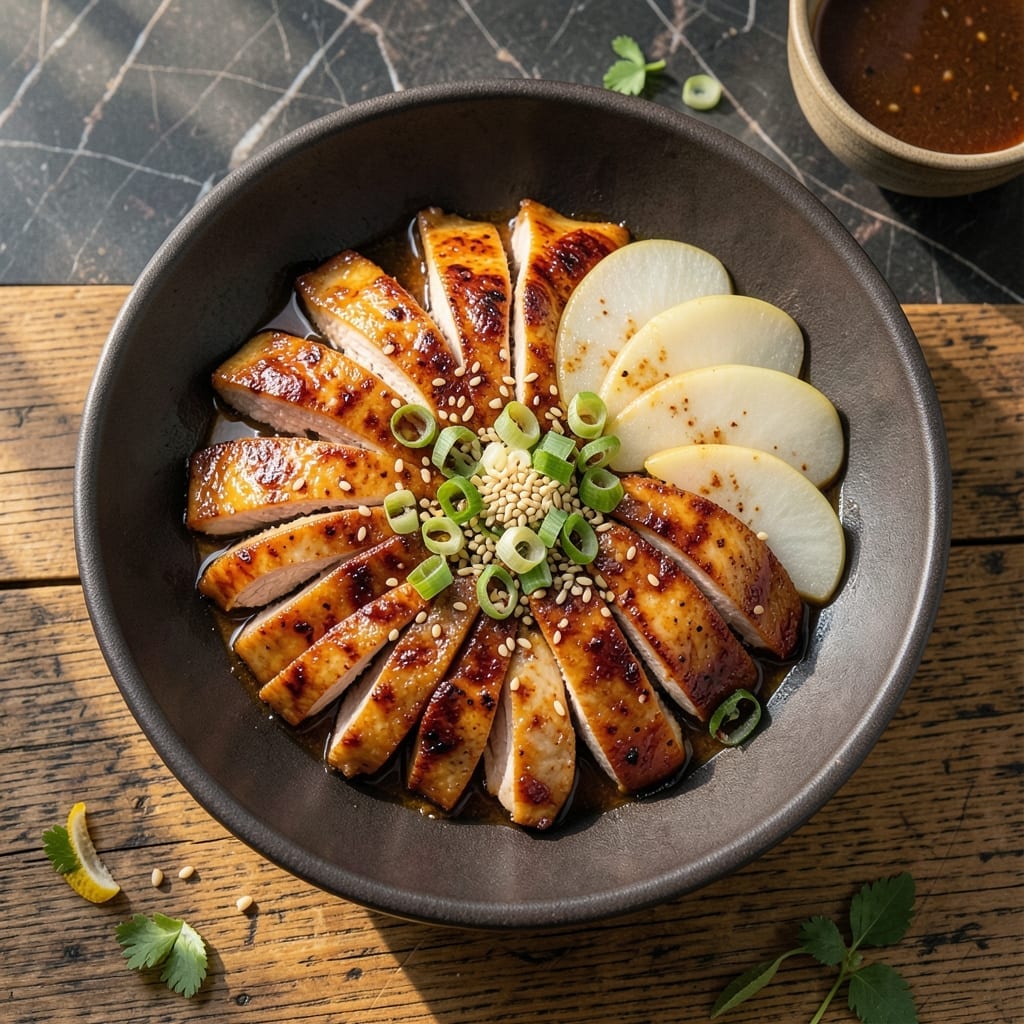
This Korean-inspired dish transforms ordinary chicken into something extraordinary with its perfect balance of sweet and savory flavors. The marinade works its magic in just 30 minutes, infusing the meat with deep, complex taste.
The secret lies in a carefully crafted blend of soy sauce, brown sugar, and Asian pear that tenderizes while adding authentic flavor. Cooking at high heat creates those signature caramelized edges that make bulgogi so irresistible.
What emerges is tender, juicy chicken with a glossy, sticky glaze that’s impossible to resist. The aroma alone will have everyone gathering around the table before it’s even plated.
Serve with steamed rice and quick-pickled vegetables for a complete meal that tastes like it came from your favorite Korean restaurant.
Ingredients for Chicken Bulgogi
Thin chicken, bold marinade, and that signature sweet-savory glaze everyone craves.
| Ingredient | Amount | Notes |
|---|---|---|
| Boneless Skinless Chicken Thighs 🍗 | 1 ½ lb | Thinly sliced for even cooking |
| Soy Sauce 🫒 | ½ cup | Low-sodium preferred for balance |
| Brown Sugar 🍯 | ¼ cup | Packed, for caramelization |
| Asian Pear 🍐 | ½ whole | Grated, with juices included |
| Garlic Cloves 🧄 | 5 cloves | Minced finely for marinade |
| Fresh Ginger 🌿 | 1 tbsp | Grated, peeled first |
| Sesame Oil 🫒 | 1 tbsp | Toasted, for depth of flavor |
| Rice Vinegar 🍚 | 2 tbsp | Unseasoned variety preferred |
| Gochujang 🌶️ | 1 tbsp | Korean chili paste, adjust to taste |
| Toasted Sesame Seeds 🌰 | 1 tbsp | For garnish and texture |
| Green Onions 🧅 | 3 whole | Thinly sliced for topping |
| Vegetable Oil 🫒 | 1 tbsp | High smoke point for cooking |
| Black Pepper 🌶️ | ½ tsp | Freshly ground for best flavor |
The chicken matters most here—thighs stay juicier than breasts through the high-heat cooking. Look for boneless, skinless to save prep time. H-Mart or Korean grocery stores carry the best Asian pears, but regular Bosc pears work in a pinch. The soy sauce should be Korean or Japanese (not Chinese) for the right flavor profile.
No Asian pear? Grate a Bosc pear or use 2 tbsp pineapple juice for the enzyme tenderizing effect. Gochujang at one-third the amount adds heat without overpowering. For gluten-free, swap soy sauce for tamari. The brown sugar can be coconut sugar for a deeper flavor. Fresh ginger is non-negotiable—ground ginger lacks the bright zing.
Marinate the chicken for exactly 30 minutes—longer makes it mushy. Leftovers keep 3-4 days in the fridge, but the glaze thickens as it cools. Freeze cooked chicken for 2 months (thaw overnight before reheating).
Why You’ll Love This Recipe
- One Pan Wonder: I marinate the chicken thighs with soy sauce and pear in the same bowl I’ll cook in—fewer dishes, same great taste.
- Sweet & Savory Bomb: The brown sugar caramelizes with the garlic while the pear keeps the meat ridiculously tender.
- Meal Prep Hero: I make a big batch on Sunday and it reheats beautifully for lunches all week.
- Budget Stretcher: Honestly, chicken thighs stay cheap and this recipe turns them into something special.
Step-by-Step Instructions for Korean-Style Chicken Bulgogi
This method transforms simple ingredients into tender, caramelized chicken with complex Korean flavors.
Step 1: Prepare the Marinade Base
In a large bowl, whisk together the 0.5 cup soy sauce, 0.25 cup brown sugar, 1 tbsp sesame oil, 2 tbsp rice vinegar, 1 tbsp gochujang, and 0.5 tsp black pepper until the sugar dissolves completely. The mixture should be smooth with a deep amber color.
Add the 0.5 whole Asian pear (grated with juices) to the bowl. The enzymes in the pear act as a natural tenderizer, breaking down proteins in the chicken for that melt-in-your-mouth texture. Stir to combine thoroughly.
Step 2: Infuse with Aromatics and Chicken
To the marinade, add the 5 cloves garlic cloves (minced) and 1 tbsp fresh ginger (grated). I always use freshly grated ginger rather than powdered—it delivers a brighter, more vibrant flavor that’s essential to authentic bulgogi.
Add the 1.5 lb boneless skinless chicken thighs (thinly sliced) to the marinade, ensuring each piece is fully coated. The thin slices guarantee quick marination and even cooking. Cover and refrigerate for at least 30 minutes, or up to 4 hours for maximum flavor penetration.
Step 3: Cook the Chicken to Caramelized Perfection
Heat 1 tbsp vegetable oil in a large skillet over medium-high heat until shimmering. Remove the chicken from the marinade (reserve the marinade) and cook in a single layer for 4-5 minutes until the edges turn deep golden brown.
Flip the chicken and pour in the reserved marinade. Cook for another 3-4 minutes until the chicken is fully cooked and the sauce has reduced to a glossy, slightly sticky consistency. You’ll see the sugars in the marinade caramelizing around the edges—that’s the flavor development you want.
Step 4: Garnish and Serve Immediately
Transfer the chicken to a serving platter and sprinkle with the 1 tbsp toasted sesame seeds and 3 whole green onions (thinly sliced). The sesame seeds add a nutty crunch while the green onions provide a fresh, bright contrast to the rich dish.
Serve immediately while hot, as the chicken will continue to absorb the sauce as it sits. The final dish should have a beautiful sheen from the caramelized marinade, with each piece of chicken glazed and tender. Pair with steamed rice to soak up every last bit of that incredible sauce.
Pro Tips For Making Chicken Bulgogi
- Slice Thin Against Grain: Cut the chicken thighs into 1/4-inch slices against the grain—this makes them tender and helps the marinade penetrate deeply.
- Grate the Pear: Use a fine grater for the Asian pear so it dissolves into the marinade, adding natural sweetness and tenderness without chunks.
- Don’t Overcrowd the Pan: Cook the chicken in batches to avoid steaming—you want those edges to caramelize, not boil in their own juices.
- Marinate 30 Minutes: I learned this the hard way—less than 30 minutes and the brown sugar and soy sauce won’t fully flavor the chicken.
Health Benefits of This Dish
Rich in Protein
This dish packs a serious protein punch with 1.5 lb boneless skinless chicken thighs, delivering about 30 grams of protein per serving. Protein is essential for muscle repair and growth, keeping you full and energized throughout the day. 💪
Low in Saturated Fat
Using chicken thighs instead of red meat means you enjoy rich flavor with less saturated fat. The marinade enhances taste without adding unhealthy fats, making it a heart-smart choice for regular meals.
Natural Tenderizer Benefits
The Asian pear in the marinade contains enzymes that naturally tenderize the meat, breaking down proteins for easier digestion. This traditional technique also means you can skip artificial tenderizers.
Antioxidant Boost
Garlic and ginger in the marinade provide powerful antioxidants that support your immune system. 5 cloves of garlic and 1 tbsp fresh ginger add both flavor and health benefits, reducing inflammation in the body.
Vitamin Enrichment
Green onions and sesame seeds add vitamins A, C, and E to your meal. 3 whole green onions provide a fresh crunch while contributing essential nutrients for skin health and immune function. 🌟
Balanced Flavor Profile
The combination of soy sauce, brown sugar, and rice vinegar creates a balanced dish that satisfies cravings without excessive calories. This harmony of flavors means you can enjoy a delicious meal that aligns with health-conscious eating.
Nutrition Facts
Frequently Asked Questions
Can I use chicken breast instead of thighs?
Yes, but thighs stay juicier. Breast meat dries out faster due to lower fat content. If using breast, reduce cooking time to 3-4 minutes per side to prevent toughness.
What can I substitute for Asian pear?
Use 2 tbsp pineapple juice or grated Bosc pear. These contain similar enzymes that tenderize the meat naturally. Avoid kiwi—it can over-tenderize.
How spicy is this dish with gochujang?
The 1 tbsp gochujang adds mild heat. For no spice, omit it. For extra kick, increase to 2 tbsp. Balance with extra brown sugar if needed.
Can I make this ahead of time?
Marinate the chicken up to 4 hours ahead, but don’t cook it in advance. Reheat leftovers gently to avoid drying out the meat.

- Jollof Rice Sauce Recipe: West African Tomato and Spice Infusion - September 25, 2026
- Japanese Rice Soup Recipe: Umami-Rich Comfort in a Bowl - September 25, 2026
- Homemade Cream Of Rice Recipe: Silk-Smooth Breakfast in Minutes - September 25, 2026