
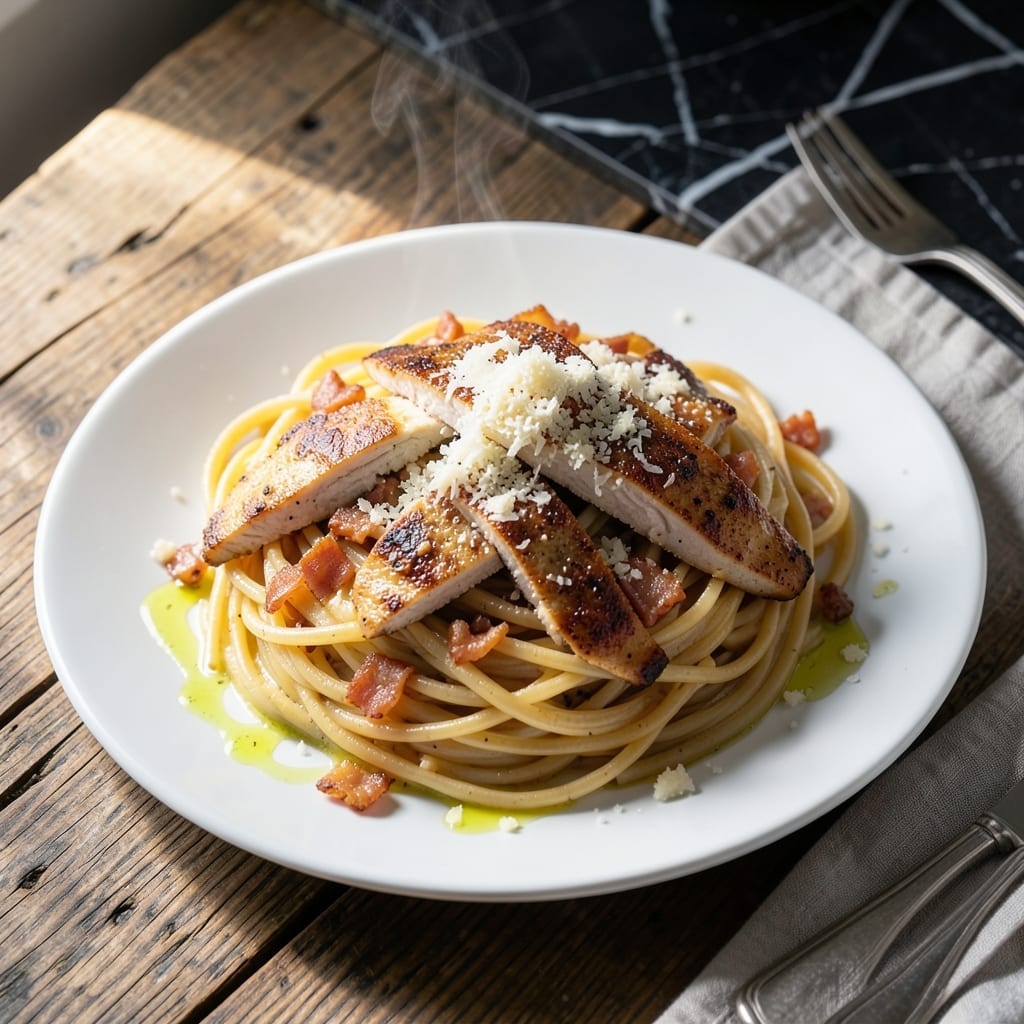
Authentic carbonara relies on eggs, not cream, for its signature silky texture. This version adds tender chicken and crispy pancetta for a hearty twist on the Roman classic.
I’ve tested this method extensively to ensure the egg mixture creates a velvety sauce without scrambling. The key is tempering the eggs with hot pasta water before combining with the other ingredients.
The pancetta renders its fat to coat the noodles, while the chicken adds protein without overpowering the dish. Every bite delivers rich, savory depth with that perfect egg-based creaminess.
Ready in 30 minutes, this recipe proves you don’t need heavy cream to achieve restaurant-quality results at home.
Ingredients for Chicken Carbonara Recipe No Cream
Pantry staples meet deli counter finds for this Roman classic with a hearty chicken addition.
| Ingredient | Amount | Notes |
|---|---|---|
| Spaghetti 🍝 | 1 lb | Dried, high-quality bronze-cut |
| Pancetta 🥓 | 4 oz | Diced, renders fat for sauce |
| Boneless Skinless Chicken Breast 🍗 | 1 lb | Cut into bite-sized pieces |
| Large Eggs 🥚 | 3 whole | Room temperature for silky texture |
| Pecorino Romano Cheese 🧀 | 1 cup | Freshly grated for authenticity |
| Parmesan Cheese 🧀 | ½ cup | Freshly grated, complements Pecorino |
| Garlic Cloves 🧄 | 4 cloves | Minced for aromatic base |
| Black Pepper 🌶️ | 1 ½ tsp | Freshly ground, essential for carbonara |
| Sea Salt 🧂 | 1 tsp | Adjust to taste during cooking |
| Extra-Virgin Olive Oil 🫒 | 2 tbsp | For sautéing and richness |
| Heavy Cream 🥛 | 0 cup | Excluded—eggs provide creaminess |
| Reserved Pasta Water 💧 | 1 cup | Starchy, for tempering eggs |
The pancetta is non-negotiable here. Look for diced pancetta at the deli counter—it renders beautifully and coats the noodles in savory fat. Whole Foods or Italian specialty markets carry the best quality. For the cheeses, Pecorino Romano and Parmesan are both essential; freshly grated from wedges is the only way to go (pre-shredded contains anti-caking agents that clump). The pasta should be bronze-cut for optimal sauce adhesion.
No pancetta? Thick-cut bacon works at a 1:1 ratio, though the flavor profile shifts slightly. For the chicken, thighs stay juicier than breasts—just increase cooking time slightly. Egg size matters: use large eggs for the right sauce consistency. If you’re worried about raw eggs, pasteurized eggs are a safe alternative (though they may thicken slightly more).
This dish is best served immediately—the egg sauce thickens as it cools. Leftovers keep for 2-3 days in the fridge but reheat gently with a splash of water. The pancetta and cheeses freeze well separately for up to 3 months.
Why You’ll Love This Recipe
- I’ll be real: chicken breast and pancetta go a long way here, and it feels indulgent without the price tag of a steak dinner.
- One Pot Magic: I toss everything into a single pan—spaghetti, pancetta, chicken—and let the eggs and Pecorino work their creamy magic without heavy cream.
- Rich Without Cream: Honestly, the egg and Pecorino Romano create this velvety sauce that clings to the pasta better than any cream ever could.
- Weeknight Winner: Between us, this is my go-to for busy evenings when I need something hearty and ready in under 30 minutes.
Step-by-Step Instructions for Chicken Carbonara No Cream
This method ensures silky sauce without heavy cream, relying on eggs and pasta water for richness.
Step 1: Prepare the Chicken and Pancetta Base
Heat 2 tbsp extra-virgin olive oil in a large skillet over medium-high heat. Add 4 oz pancetta and cook for 4-5 minutes, stirring occasionally, until the fat renders and the pancetta turns golden and crispy. This fat forms the flavor foundation of your sauce.
Remove pancetta with a slotted spoon, leaving the rendered fat in the pan. Add the 1 lb boneless skinless chicken breast, cut into bite-sized pieces, and season with 1 tsp sea salt and ½ tsp black pepper. Cook for 5-6 minutes until golden brown and cooked through, then set aside with the pancetta.
Step 2: Cook Pasta and Prepare Egg-Cheese Mixture
Bring a large pot of heavily salted water to a boil. Add 1 lb spaghetti and cook until 1 minute shy of al dente (check package time). Reserve 1 cup pasta water before draining—this starchy liquid is crucial for temering the eggs.
While pasta cooks, whisk 3 whole large eggs, 1 cup Pecorino Romano cheese, 0.5 cup Parmesan cheese, 1 tsp black pepper, and remaining ½ tsp sea salt in a bowl. The mixture should be thick and smooth, ready to coat the pasta evenly.
Step 3: Combine Ingredients Off Heat
Remove the skillet from heat and add drained pasta, pancetta, and chicken. Toss to coat in the rendered fat. Immediately pour in ½ cup reserved pasta water and stir vigorously for 30 seconds—this cools the pan slightly to prevent scrambling.
Add the egg-cheese mixture and toss constantly for 1-2 minutes until it forms a creamy, glossy sauce. The residual heat from the pasta gently cooks the eggs into a silky consistency. If needed, add more pasta water 1 tbsp at a time to reach desired texture.
Step 4: Rest and Serve Immediately
Let the carbonara rest for 1 minute off heat—this allows the sauce to thicken slightly. The pasta should glisten with a rich, eggy coating, and the pancetta and chicken should be evenly distributed.
Serve immediately on warmed plates. The sauce will continue to thicken as it cools, so work quickly. Each serving should have a balance of tender chicken, crispy pancetta, and pasta coated in the creamy, peppery sauce.
Pro Tips For Making Chicken Carbonara Recipe No Cream
- Temper the Eggs: Whisk your eggs with grated Pecorino Romano off the heat first, then slowly mix in hot pasta water—about 1/2 cup—before combining with the hot noodles. I learned this the hard way after scrambling eggs directly in the pan.
- Salt the Pasta Water: Use at least 1 tablespoon of salt per gallon of water for the spaghetti. Sounds like a lot, but it’s the only chance to season the pasta itself, and Pecorino can’t compensate for bland noodles.
- Rest the Chicken: Let the chicken breast rest 5 minutes after cooking before slicing. Skipping this makes it dry out fast, and dry chicken ruins the creamy texture you’re aiming for.
- Use Pancetta Fat: Render the pancetta first and use its fat to sear the chicken—no extra oil needed. The flavor it adds is what makes this dish taste authentic, not just creamy.
Common Mistakes When Making chicken carbonara recipe no cream
Overcooking the Eggs
Never add the egg-cheese mixture to hot pasta directly on the stove. The residual heat can scramble the eggs, turning your sauce into curdled disaster. Always remove the pan from heat and cool it slightly with ½ cup pasta water before adding eggs. 💡
Skipping Pasta Water
That starchy reserved pasta water is liquid gold for carbonara. It tempers the eggs and helps create the signature silky texture. Without it, your sauce will be thick and clumpy. I keep a measuring cup right by the colander to catch it.
Wrong Cheese Choice
Pre-shredded cheese contains anti-caking agents that prevent proper melting. Always use freshly grated Pecorino Romano and Parmesan for smooth, creamy results. The authentic flavor depends on these specific cheeses.
Cold Eggs Straight From Fridge
Room temperature eggs blend more smoothly into the sauce. Take your 3 large eggs out of the fridge 30 minutes before starting. Cold eggs can shock when meeting hot pasta, making them more likely to curdle.
Undercooked Pasta
Your pasta must be 1 minute shy of al dente when drained. It finishes cooking in the hot sauce, absorbing flavors while reaching perfect tenderness. Test a strand—it should have a slight bite.
Rushing the Rest
That 1-minute rest off heat is crucial. It lets the sauce thicken slightly and the flavors meld. Serve immediately after resting—the sauce continues to set as it cools on the plate.
Nutrition Facts
Frequently Asked Questions
Why don’t you need cream for carbonara?
The eggs create a silky sauce when tossed with hot pasta and starchy water. Authentic Roman carbonara never includes cream—it’s all about the egg and cheese emulsion.
Can I use bacon instead of pancetta?
Yes, thick-cut bacon works as a 1:1 substitute. The flavor will be slightly smokier, but it still renders fat beautifully for the sauce.
What if my sauce looks too thick?
Add reserved pasta water 1 tbsp at a time while tossing. The starch helps thin the sauce to the perfect creamy consistency.
How do I prevent scrambled eggs?
Remove the pan from heat and cool slightly with ½ cup pasta water before adding eggs. Constant tossing distributes heat evenly.

- Jollof Rice Sauce Recipe: West African Tomato and Spice Infusion - September 25, 2026
- Japanese Rice Soup Recipe: Umami-Rich Comfort in a Bowl - September 25, 2026
- Homemade Cream Of Rice Recipe: Silk-Smooth Breakfast in Minutes - September 25, 2026