
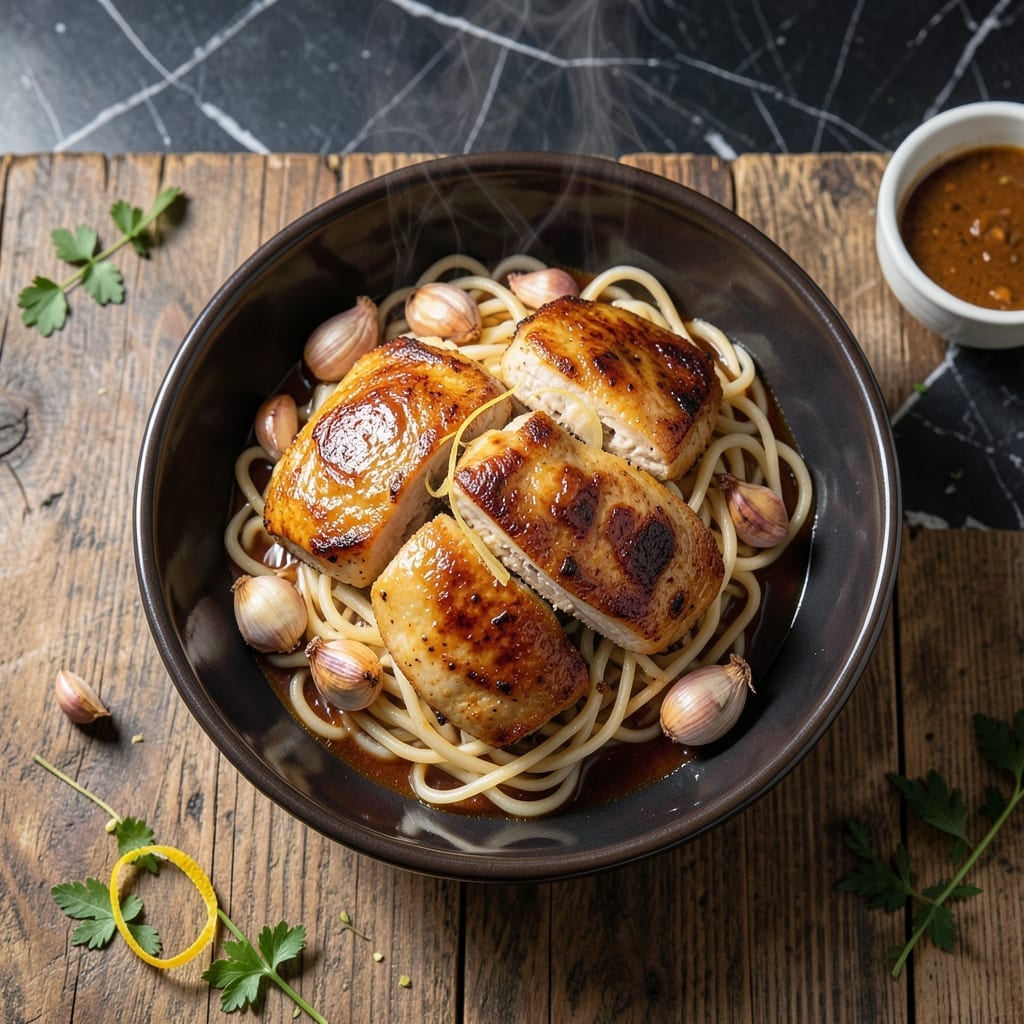
This garlic chicken noodles recipe delivers a restaurant-quality dish with minimal effort. The secret lies in the high-heat wok technique that creates tender chicken and silky sauce in minutes.
I developed this method after years of takeout disappointment, perfecting the balance between savory garlic and rich sauce. The noodles absorb every bit of flavor, making each bite satisfying.
The key is quick cooking at the right temperature, ensuring the chicken stays juicy while the sauce thickens just enough to coat. It’s a foolproof process that works every time.
Serve hot for a meal that’s as impressive as it is delicious. This is comfort food done right.
Ingredients for Garlic Chicken Noodles
High-heat wok essentials create tender chicken and silky noodles in minutes.
| Ingredient | Amount | Notes |
|---|---|---|
| Boneless Skinless Chicken Thighs 🍗 | 1 ½ lb | Cut into bite-sized pieces |
| Dried Egg Noodles 🍜 | 12 oz | Or fresh egg noodles |
| Garlic Cloves 🧄 | 8 cloves | Minced finely for maximum flavor |
| Soy Sauce 🥄 | ½ cup | Low-sodium preferred for balance |
| Oyster Sauce 🍶 | 2 tbsp | For depth and umami richness |
| Sesame Oil 🫒 | 1 tbsp | Toasted for nutty aroma |
| Neutral Oil 🛢️ | 3 tbsp | High smoke point, like peanut or vegetable |
| Brown Sugar 🧈 | 1 tbsp | Light or dark, for caramelized notes |
| Rice Vinegar 🍚 | 1 tbsp | Balances the richness of the sauce |
| Ginger Root 🌿 | 1 tbsp | Freshly grated, adds zing |
| Cornstarch 🌾 | 1 tbsp | For velvety sauce thickening |
| Green Onions 🧅 | 4 whole | Thinly sliced for garnish |
| Sesame Seeds 🌰 | 1 tsp | Toasted for garnish |
| Red Pepper Flakes 🌶️ | ½ tsp | Optional for heat |
The chicken thighs are non-negotiable here. Boneless, skinless ensures even cooking and maximum flavor absorption (avoid breast—it dries out). For the noodles, dried egg noodles are sturdy and widely available, but fresh works if you’re feeling fancy. Source your soy sauce from an Asian market—Kikkoman or Pearl River Bridge for consistency. The ginger and garlic should be fresh; pre-minced lacks the punch.
No oyster sauce? Hoisin or fish sauce can pinch-hit, though the flavor profile shifts slightly. Out of sesame oil? Toasted peanut oil offers a similar depth. Brown sugar can be swapped for honey or maple syrup (use 25% less). For gluten-free, tamari replaces soy sauce 1:1. The cornstarch slurry is critical—don’t skip it or your sauce won’t cling properly.
Prep everything before heating the wok—this moves fast. Leftover noodles keep 3-4 days in the fridge, but they’ll absorb sauce and thicken. Reheat with a splash of water or broth to revive. The dish doesn’t freeze well due to the noodles, but the sauce can be frozen alone for up to 3 months.
Why You’ll Love This Recipe
- I’ll be real: this works for weeknight dinners, potlucks, or even a solo feast with leftovers for days.
- One Pan Wonder: I toss everything in one skillet—chicken, garlic, noodles, sauces—and it’s done in 20 minutes flat.
- Umami Bomb: The oyster sauce and soy sauce combo with all that garlic? Ridiculously good, rich, and deep.
- Feeds Everyone: I’ll be real: this works for weeknight dinners, potlucks, or even a solo feast with leftovers for days.
Step-by-Step Instructions for Garlic Chicken Noodles
Master the wok technique for perfectly tender chicken and silky, clingy noodles every time.
Step 1: Prep Chicken and Aromatics
Cut the 1.5 lb Boneless Skinless Chicken Thighs into 1-inch pieces, ensuring uniform size for even cooking. I keep them slightly larger than bite-sized so they retain moisture during the high-heat cooking process.
Mince the 8 cloves Garlic Cloves and grate the 1 tbsp Ginger Root together on a cutting board. This creates a fragrant paste that will infuse the dish with deep, complex flavors. Thinly slice the 4 whole Green Onions, keeping the white and green parts separate for layered texture.
Step 2: Velouté the Sauce and Marinate Chicken
In a bowl, whisk together the 0.5 cup Soy Sauce, 2 tbsp Oyster Sauce, 1 tbsp Brown Sugar, 1 tbsp Rice Vinegar, and 1 tbsp Sesame Oil until the sugar dissolves completely. This balanced mixture delivers umami depth with a touch of sweetness and acidity.
Reserve 2 tablespoons of this sauce for the chicken marinade. Toss the chicken pieces with the reserved sauce and 1 tbsp Cornstarch, ensuring each piece is evenly coated. The cornstarch creates a velvety texture and helps the sauce cling to the chicken during cooking.
Step 3: Stir-Fry Chicken to Golden Perfection
Heat 2 tbsp Neutral Oil in a wok or large skillet over high heat until shimmering. Working in batches to avoid crowding, add the marinated chicken in a single layer. Let it sear undisturbed for 2-3 minutes until the edges turn golden brown and crisp.
Flip and cook for another 2 minutes until the chicken is cooked through and the coating becomes glossy. The cornstarch will create a light crust that locks in juices. Remove the chicken to a plate and repeat with the remaining 1 tbsp Neutral Oil and chicken.
Step 4: Build and Finish the Sauce
In the same wok, add the minced garlic and ginger. Stir-fry for 30-45 seconds until fragrant but not browned—burnt garlic turns bitter. Immediately pour in the remaining sauce mixture and bring to a simmer.
The sauce will thicken slightly as it reduces. Add the cooked 12 oz Dried Egg Noodles and return the chicken to the wok. Toss everything together for 1-2 minutes until the noodles are fully coated and the sauce has reduced to a glossy, clingy consistency that coats the back of a spoon.
Step 5: Garnish and Serve Immediately
Remove from heat and stir in the green onion tops. The residual heat will slightly wilt them while keeping their vibrant color and crisp texture. Divide among serving plates and garnish with the 1 tsp Sesame Seeds and 0.5 tsp Red Pepper Flakes for visual appeal and subtle heat.
Serve immediately while the noodles are at their silkiest. The dish should have a glossy sheen with chicken pieces glistening from the sauce, and each bite should deliver a perfect balance of savory, sweet, and umami flavors with a satisfying chew from the noodles.
Pro Tips For Making Garlic Chicken Noodles
- Velvet the Chicken: Cut the thighs into 1-inch pieces, then marinate with 1 tsp baking soda and 1 tbsp water for 15 minutes before cooking—I learned this the hard way after my chicken turned out rubbery more than once.
- Pre-cook the Noodles: Boil the egg noodles for just 2 minutes less than package instructions, then finish them in the sauce so they soak up all that garlic and oyster flavor without turning to mush.
- Low and Slow Garlic: Cook the minced garlic in oil on medium-low heat until just golden, not brown—I burned three batches before realizing high heat makes it bitter in seconds.
- Sauce Last: Toss the noodles and chicken in the soy-oyster sauce only at the very end, off the heat, to keep the sauce from reducing too much and coating everything evenly.
Regional Styles of These Flavors
Sichuan Spicy Style
For a bold twist, add 1 tbsp Sichuan peppercorns and 2 dried red chilies to the oil before stir-frying. The numbing heat of Sichuan peppercorns pairs perfectly with the garlic. I also increase the red pepper flakes to 1 tsp for extra kick. 🌶️
Cantonese Sweet Style
This version leans sweeter with 2 tbsp hoisin sauce added to the sauce mixture. Use char siu pork instead of chicken for authenticity. The sauce becomes richer and slightly caramelized, a hallmark of Cantonese flavors.
Thai Basil Version
Swap 1 tbsp fish sauce for oyster sauce and add 1 cup fresh Thai basil leaves at the end. The basil’s anise-like aroma transforms the dish. I love how the leaves wilt just enough to release their fragrance.
Korean Gochujang
Mix 1 tbsp gochujang into the sauce for a sweet-spicy depth. Add 1 tbsp honey to balance the heat. Garnish with toasted sesame seeds and extra green onions for a Korean-inspired take.
This version has a deeper red color and a sticky, slightly spicy glaze. 🔥
Japanese Garlic Ponzu
Replace soy sauce with ½ cup ponzu sauce and add 1 tbsp mirin. The citrusy ponzu brightens the dish, while mirin adds a subtle sweetness. Top with nori strips for umami depth.
Nutrition Facts
Frequently Asked Questions
Can I use chicken breast instead of thighs?
I don’t recommend it. Chicken breast dries out quickly at high heat and lacks the fat needed for rich flavor. Thighs stay juicy and absorb the sauce better.
How do I prevent the noodles from sticking?
Cook noodles al dente, drain immediately, and rinse under cold water to stop cooking. Toss with 1 tsp oil before adding to the wok to keep them separate.
Can I make this gluten-free?
Yes! Swap soy sauce for tamari and use rice noodles instead of egg noodles. Ensure all sauces are labeled gluten-free.
How long do leftovers keep?
Store in an airtight container for up to 3-4 days in the fridge. Reheat with a splash of water to restore the sauce’s consistency.

- Jollof Rice Sauce Recipe: West African Tomato and Spice Infusion - September 25, 2026
- Japanese Rice Soup Recipe: Umami-Rich Comfort in a Bowl - September 25, 2026
- Homemade Cream Of Rice Recipe: Silk-Smooth Breakfast in Minutes - September 25, 2026