
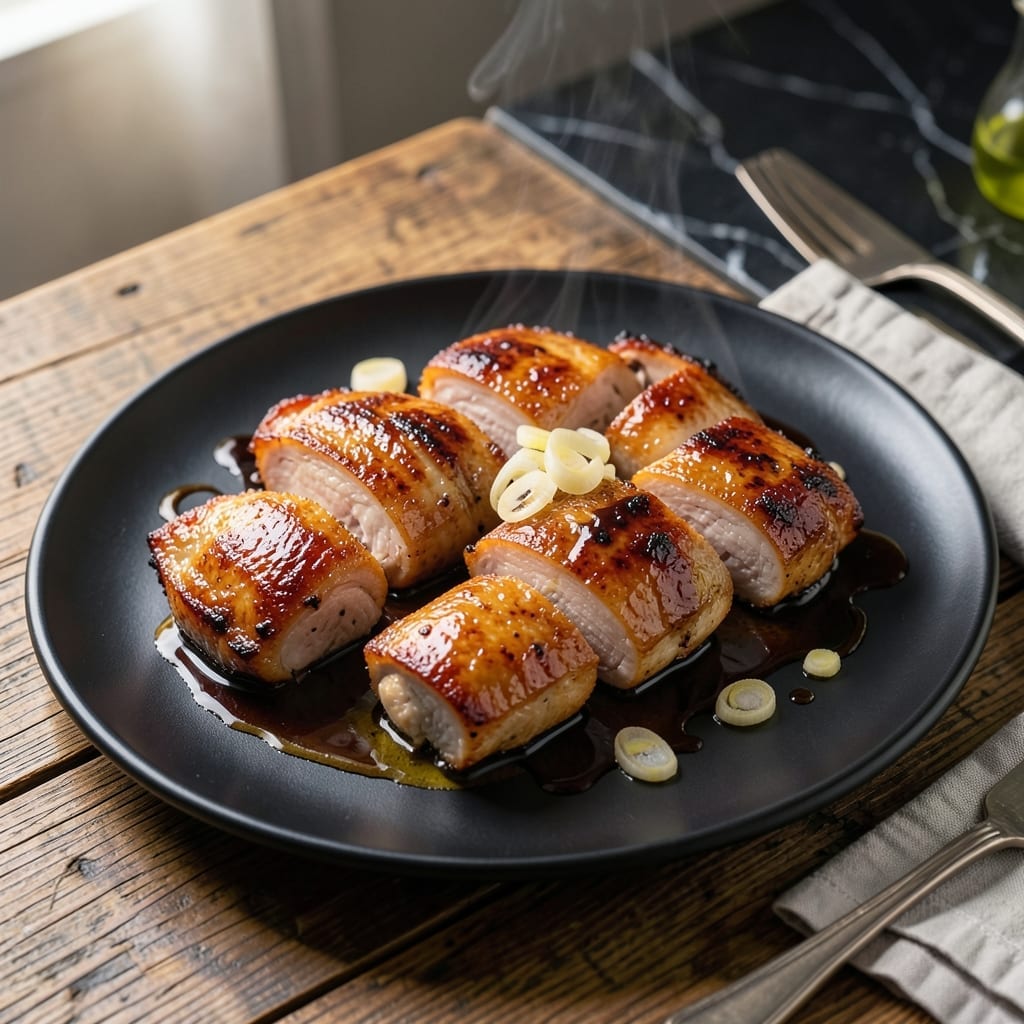
I’ve adapted the classic Japanese braised pork technique to create incredibly tender chicken thighs that absorb every bit of the savory-sweet marinade. This method transforms simple ingredients into restaurant-quality results.
The key is a precise balance of soy sauce, mirin, and aromatics simmered at just the right temperature. I’ve refined this process to ensure the chicken stays juicy while developing deep, complex flavors.
What emerges is fall-apart tender meat with a glossy, caramelized exterior that pairs perfectly with rice or ramen. The braising liquid reduces to a rich sauce that’s as delicious as the chicken itself.
This technique delivers consistent results every time, making it ideal for meal prep or special dinners. Here’s how to achieve it.
Ingredients for Chicken Chashu
Transform simple ingredients into restaurant-quality braised chicken with these pantry staples and aromatics.
| Ingredient | Amount | Notes |
|---|---|---|
| Boneless Skinless Chicken Thighs 🍗 | 2 lb | Trimmed of excess fat |
| Soy Sauce 🫒 | ¾ cup | Low-sodium preferred for balance |
| Mirin 🍶 | ½ cup | Sweet rice wine, not cooking mirin |
| Sake 🍶 | ½ cup | Dry Japanese rice wine |
| Brown Sugar 🍚 | ¼ cup | Light or dark, packed |
| Garlic Cloves 🧄 | 6 cloves | Smashed slightly for flavor release |
| Fresh Ginger 🌿 | 1 whole | 2-inch piece, sliced thick |
| Green Onions 🧅 | 4 whole | Cut into 2-inch pieces |
| Water 💧 | 1 cup | To regulate braising liquid |
| Neutral Oil 🫒 | 1 tbsp | For searing chicken thighs |
| Diamond Crystal Kosher Salt 🧂 | ½ tsp | Adjust to taste at end |
| Toasted Sesame Seeds 🌰 | 1 tbsp | For garnish before serving |
The chicken thighs are non-negotiable—boneless, skinless ensures even cooking and maximum marinade absorption. Source from Whole Foods or local butchers for superior quality. Mirin and sake are critical; avoid cooking mirin (too sweet) and opt for authentic brands like Takara or Gekkeikan. Fresh ginger and garlic should be plump and firm, not shriveled or soft.
No mirin? Substitute 1 tbsp sugar + 3 tbsp water per 1/4 cup mirin. Sake can be replaced with dry white wine in a pinch. Brown sugar alternatives: coconut sugar works well, but avoid granulated white sugar—it lacks depth. For a gluten-free version, use tamari instead of soy sauce. The green onions can be swapped with leeks if desired.
Braising liquid can be made 2 days ahead and refrigerated. Cooked chicken keeps for 4 days in the fridge or 3 months frozen. Reheat gently in the reduced sauce to maintain tenderness. Always bring to room temperature before serving for optimal texture.
Why You’ll Love This Recipe
- I’ll be real: leftovers taste even better the next day, and it’s budget-friendly since thighs are cheaper than breasts.
- One Pan Magic: I just toss the chicken thighs with soy sauce, mirin, sake, and brown sugar in a pan and let it simmer—hardly any cleanup.
- Sweet-Savory Balance: The brown sugar caramelizes with the soy and sake, creating this sticky, umami-rich glaze that’s honestly addictive.
- Weeknight Hero: Between us, this is my go-to for busy Tuesdays—ready in 45 minutes and pairs with rice, noodles, or even salad.
Step-by-Step Instructions for Chicken Chashu
This method ensures fall-off-the-bone tenderness with a rich, savory-sweet glaze every time.
Step 1: Sear the Chicken Thighs
Pat the 2 lb boneless skinless chicken thighs completely dry with paper towels. This ensures proper browning and prevents steaming. Heat the 1 tbsp neutral oil in a large pot or Dutch oven over medium-high heat until shimmering.
Add the chicken thighs in a single layer, working in batches if necessary to avoid crowding. Sear for 4-5 minutes per side until deep golden brown and the fat has rendered. Don’t move the pieces around too much—letting them develop a good crust creates the foundation for rich flavor in the finished dish.
Step 2: Build the Braising Liquid
Once all chicken is seared, remove it to a plate and set aside. Reduce heat to medium and add the 6 cloves garlic cloves, 1 whole fresh ginger (sliced), and 4 whole green onions (cut into 2-inch pieces) to the pot. Cook for 1-2 minutes until fragrant.
Pour in the 0.75 cup soy sauce, 0.5 cup mirin, 0.5 cup sake, 0.25 cup brown sugar, and 1 cup water. Stir to dissolve the sugar and scrape up any browned bits from the bottom of the pot. These fond bits add incredible depth to the braising liquid.
Step 3: Braise Until Tender
Return the chicken thighs to the pot along with any accumulated juices. The liquid should come about halfway up the chicken—add a splash of water if needed. Bring to a gentle simmer, then reduce heat to low.
Cover and braise for 45-60 minutes, turning the chicken occasionally, until the meat is fork-tender and easily pulls apart. The braising liquid will reduce slightly and intensify in flavor. If the liquid reduces too much, add a little water to maintain the level.
Step 4: Reduce and Glaze
Once the chicken is tender, remove the lid and increase heat to medium. Simmer uncovered for 10-15 minutes, turning the chicken frequently, until the sauce has thickened enough to coat the back of a spoon and the chicken is glazed and sticky.
Taste the sauce and adjust seasoning with 0.5 tsp diamond crystal kosher salt if needed. The sauce should be a balance of sweet, salty, and umami with a glossy sheen.
Step 5: Rest and Serve
Transfer the chicken to a cutting board and let it rest for 5 minutes. Slice into thick pieces or leave whole, depending on your preference. Spoon the thickened sauce over the top and sprinkle with 1 tbsp toasted sesame seeds.
Serve immediately while hot. The chicken should be incredibly tender with a beautiful lacquered glaze that clings to each piece. The sauce will continue to thicken slightly as it cools.
Pro Tips For Making Chicken Chashu
- Roll it tight: Tie your chicken thighs with kitchen twine into a compact cylinder—I learned this the hard way after mine unraveled and cooked unevenly.
- Simmer, don’t boil: Keep the heat low enough that the soy-mirin-sake mixture barely trembles; a rolling boil makes the chicken tough and the sauce bitter.
- Score the skin: Even with skinless thighs, shallow cuts across the surface help the glaze grab and give that classic chashu look.
- Use the marinade: Reduce the leftover braising liquid by half and brush it on the chicken at the end—sounds obvious, but I used to toss it and missed out on serious flavor.
Creative Variations of These Flavors
Spicy Miso Twist
Add 2 tbsp white miso paste and 1 tbsp gochujang to the braising liquid for a deeper umami kick with a spicy finish. This Korean-Japanese fusion works beautifully with the chicken’s natural richness. I love how the miso mellows the heat while adding complexity. 🔥
Citrus Glazed Version
Stir in ¼ cup orange juice and 1 tbsp zest with the braising liquid. The acidity brightens the dish and pairs wonderfully with the soy-mirin base. Finish with thin orange slices on top for presentation.
Honey Sriracha Style
Replace brown sugar with ¼ cup honey and add 1 tbsp sriracha for a sweet-spicy variation. This version has become a favorite at my dinner table. The honey creates a beautiful gloss while the sriracha adds just enough heat.
Coconut Curry Adaptation
Swap ½ cup water for ½ cup coconut milk and add 1 tbsp red curry paste. The coconut softens the soy’s saltiness while the curry adds aromatic depth. Garnish with fresh cilantro instead of green onions.
Five-Spice Variation
Add ½ tsp Chinese five-spice powder to the braising liquid for a warm, fragrant twist. This works particularly well when serving with steamed bao buns. I find it adds an exotic touch that surprises guests. ✨
Sesame-Ginger Boost
Increase ginger to 3 inches and add 2 tbsp toasted sesame oil to the braising liquid. This intensifies the Asian flavors and creates a more pronounced nutty aroma. Perfect for ramen topping or rice bowls.
Nutrition Facts
Frequently Asked Questions
Can I use chicken breast instead of thighs?
Thighs stay juicier, but breast works if cooked carefully. Reduce braising time to 30-35 minutes to prevent dryness. The lean meat won’t absorb flavors as deeply, but still tastes great.
How do I store leftovers?
Keep in an airtight container with the sauce for up to 4 days in the fridge. Reheat gently in a pan with a splash of water to maintain moisture. Freezes well for 3 months.
Why is my sauce too thin?
Uncover and simmer for 5-10 minutes longer on medium heat. Stir frequently to prevent burning. If still thin, mix 1 tsp cornstarch with water and stir in.
What can I serve with this?
Perfect over steamed rice or ramen noodles. Also great in tacos or with roasted veggies. The rich sauce pairs well with simple sides.

- Jollof Rice Sauce Recipe: West African Tomato and Spice Infusion - September 25, 2026
- Japanese Rice Soup Recipe: Umami-Rich Comfort in a Bowl - September 25, 2026
- Homemade Cream Of Rice Recipe: Silk-Smooth Breakfast in Minutes - September 25, 2026