
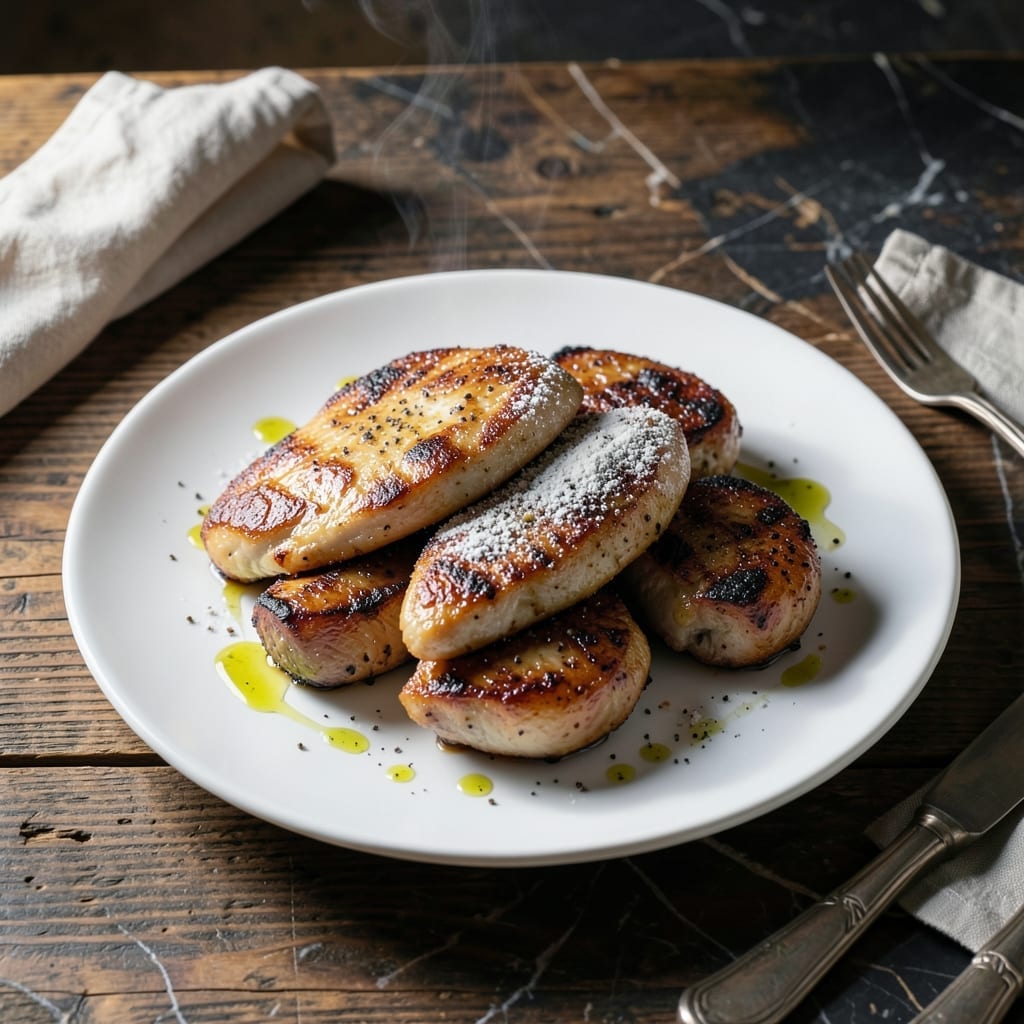
There’s a reason this double-chicken dish stands out from ordinary poultry recipes. It delivers bold flavor without complicated techniques or hard-to-find ingredients.
The secret lies in using two different chicken preparations in one pan. This creates layers of texture and taste that elevate a simple weeknight meal into something special. The method is straightforward yet produces impressive results.
What emerges is tender, juicy chicken with crispy elements, all bathed in a savory sauce that comes together naturally during cooking. The one-pan approach means easy cleanup too.
Serve this over rice or with roasted vegetables for a complete meal. The flavors work well with simple sides that let the chicken shine.
Ingredients for Chicken Chicken
Two chicken cuts, bold spices, and a savory pan sauce bring this dish to life effortlessly.
| Ingredient | Amount | Notes |
|---|---|---|
| Boneless Skinless Chicken Breasts 🍗 | 1 ½ lb | Pounded to even thickness |
| Boneless Skinless Chicken Thighs 🍗 | 1 ½ lb | Trimmed of excess fat |
| All-Purpose Flour 🌾 | ½ cup | For dredging chicken pieces |
| Kosher Salt 🧂 | 2 tsp | Diamond Crystal preferred |
| Freshly Ground Black Pepper 🌶️ | 1 tsp | Coarse grind ideal |
| Garlic Powder 🧄 | 1 tsp | Not garlic salt |
| Smoked Paprika 🌶️ | 1 tsp | Adds depth to sauce |
| Olive Oil 🫒 | 3 tbsp | Divided for cooking |
| Unsalted Butter 🧈 | 2 tbsp | For finishing sauce |
| Low-Sodium Chicken Broth 💧 | 1 cup | For deglazing pan |
| Fresh Thyme Sprigs 🌿 | 4 whole | Leaves stripped from stems |
| Fresh Rosemary Sprig 🍃 | 1 whole | Finely chopped |
| Lemon 🍋 | 1 whole | Zested and juiced |
The chicken quality matters here. Boneless, skinless breasts and thighs from a trusted butcher like Whole Foods ensure tenderness. For breasts, look for even thickness—pound thicker parts to match. Thighs should have visible marbling; trim excess fat but leave the skin if you prefer extra crispiness. Diamond Crystal kosher salt gives the cleanest seasoning without metallic aftertaste.
No smoked paprika? Regular paprika plus a pinch of cayenne mimics the smokiness. Fresh herbs can be swapped: sage or oregano for thyme, marjoram for rosemary. For a brighter sauce, white wine replaces half the chicken broth. The butter at the end is non-negotiable for silkiness—European-style if you want to splurge.
Leftovers reheat beautifully—store in airtight containers for 3-4 days in the fridge. The sauce thickens as it cools; thin with a splash of broth when reheating. Freezes for 3 months if tightly sealed. Always bring to room temperature before reheating to maintain texture.
Why You’ll Love This Recipe
- I’ll be real: using both breasts and thighs keeps costs down without sacrificing flavor.
- One Pan Wonder: I just toss the chicken with flour, salt, and pepper, then let the oven do the work.
- Crispy Outside, Juicy Inside: The thighs stay tender while the breasts get that golden crust—no dry bites here.
- Feeds a Crowd: Between us, this recipe stretches easily for family dinners or meal prep.
Step-by-Step Instructions for Chicken Chicken
Here’s the method. Straightforward, tested, works every time.
Step 1: Prep and Season the Chicken
Pat the 1.5 lb boneless skinless chicken breasts and 1.5 lb boneless skinless chicken thighs completely dry with paper towels. I pound the chicken breasts to an even ½-inch thickness and trim excess fat from the thighs—this ensures even cooking throughout.
In a shallow dish, combine the 0.5 cup all-purpose flour, 2 tsp kosher salt, 1 tsp freshly ground black pepper, 1 tsp garlic powder, and 1 tsp smoked paprika. Dredge each piece of chicken in the flour mixture, pressing gently to adhere. Shake off any excess—you want a light, even coating.
Step 2: Sear the Chicken to Golden Perfection
Heat 2 tbsp olive oil in a large, heavy skillet over medium-high heat until shimmering. Add half the chicken pieces, being careful not to overcrowd the pan. Cook for 5-6 minutes per side until deep golden brown and the chicken releases easily from the pan.
Transfer the seared chicken to a plate and tent loosely with foil. Repeat with the remaining 1 tbsp olive oil and chicken. The fond left in the pan from searing will form the base of your sauce—don’t discard it.
Step 3: Build the Pan Sauce
Reduce heat to medium and add the 2 tbsp unsalted butter to the skillet. Once melted, stir in the finely chopped fresh rosemary sprig and stripped leaves from the 4 whole fresh thyme sprigs. Cook for 30 seconds until fragrant.
Pour in the 1 cup low-sodium chicken broth, scraping up all the browned bits from the bottom of the pan. Add the lemon zest and juice from the 1 whole lemon, then simmer for 3-4 minutes until the liquid reduces by about half and begins to thicken.
Step 4: Finish and Serve
Return all the chicken pieces to the skillet, nestling them into the sauce. Spoon the sauce over the chicken to coat evenly. Reduce heat to low and let simmer for 2-3 minutes until the chicken is heated through and the sauce clings to the meat.
Taste and adjust seasoning if needed, though the initial salt in the dredge should be sufficient. Serve immediately, spooning any extra sauce over the top. The chicken should be tender and juicy with a rich, herb-infused sauce that ties every bite together.
Pro Tips For Making Chicken Chicken
- Pound the Breasts: Chicken breasts cook unevenly if left whole—pound them to an even ½-inch thickness with a rolling pin or heavy pan. I learned this the hard way after too many dry, rubbery bites.
- Pat Dry Thoroughly: Sounds tedious, but moisture on the surface steams the chicken instead of searing it. Grab a paper towel and dry every piece—yes, even the thighs—before dredging in flour.
- Skip the Overcrowding: Resist the urge to fit it all in one pan. Too much chicken lowers the temperature, and you’ll end up with pale, soggy pieces instead of that crisp, golden crust.
- Rest Before Serving: Give it a solid 5 minutes on a plate tented with foil. The juices redistribute, and you won’t lose half the flavor to the cutting board—my grandmother swore by this, and she was right.
Common Mistakes When Making Perfect Results
Overcrowding the Pan
This is the most common mistake I see. Crowding the pan steams the chicken instead of searing it, resulting in rubbery meat and a weak sauce. Cook in batches—2-3 pieces at a time—to maintain medium-high heat and get that golden crust. 🔥
Skipping the Dredge
That light flour coating isn’t just for texture—it thickens the pan sauce naturally. Don’t skip it or use too much. A thin, even layer of the flour-spice mix is perfect. Shake off the excess so it doesn’t burn in the pan.
Uneven Thickness
Chicken breasts often have thick and thin ends. Pound them to ½-inch thickness so they cook evenly. Thighs are more forgiving, but trim excess fat to prevent flare-ups. I use a meat mallet for consistent results every time.
Rushing the Sauce
After searing, reduce heat to medium and let the chicken broth simmer for 3-4 minutes. This builds flavor and thickens the sauce. If it reduces too quickly, add a splash of water and scrape up those browned bits.
Overcooking Thighs
Thighs cook faster than breasts. Remove them from the pan first if they’re done, then finish the breasts. Both should reach 165°F internal temperature. Use a meat thermometer—I trust my ThermoWorks for accuracy.
Neglecting the Rest
Let the chicken rest 5 minutes in the sauce before serving. This lets the juices redistribute and the flavors meld. Skip this step and you’ll lose tender, juicy meat to the cutting board.
Nutrition Facts
Frequently Asked Questions
Why use both breasts and thighs?
Breasts stay lean and tender while thighs add juicy richness. The combo creates perfect texture contrast in every bite.
Can I make this ahead of time?
Yes! Cook and refrigerate for up to 3 days. Reheat gently in a pan with a splash of broth to restore the sauce.
What if my sauce is too thin?
Simmer uncovered for 1-2 more minutes. The flour from dredging will thicken it as it cooks down.
Do I need to marinate the chicken first?
No marinade needed—the flour-spice dredge and pan sauce provide plenty of flavor. Saves time too!

- Jollof Rice Sauce Recipe: West African Tomato and Spice Infusion - September 25, 2026
- Japanese Rice Soup Recipe: Umami-Rich Comfort in a Bowl - September 25, 2026
- Homemade Cream Of Rice Recipe: Silk-Smooth Breakfast in Minutes - September 25, 2026