
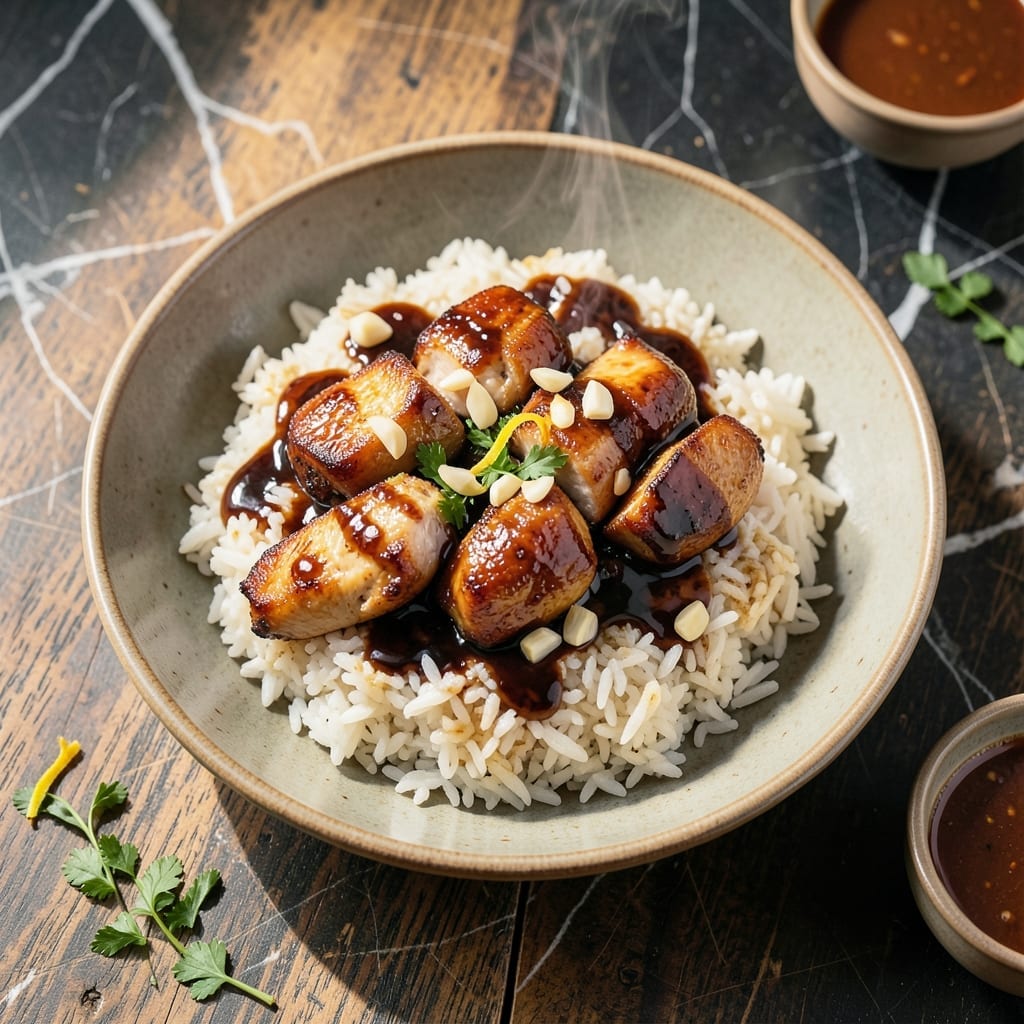
This wok-fried dish brings together tender chicken, fluffy rice, and a savory sauce in one satisfying plate. I’ve refined this method to ensure restaurant-quality results at home with minimal effort.
The chicken is marinated for maximum flavor, then seared until golden before being combined with rice and a rich, umami-packed sauce. Each bite delivers a perfect balance of textures and tastes.
What sets this apart is the technique—high heat, quick cooking, and precise timing. The result is a dish that’s hearty, flavorful, and ready in under 30 minutes.
Serve it hot, straight from the wok, for a meal that’s as comforting as it is delicious.
Ingredients for Chicken Chop Rice
Everything you need for a restaurant-quality wok-fried plate at home with minimal effort.
| Ingredient | Amount | Notes |
|---|---|---|
| Boneless Chicken Thighs 🍗 | 1 ½ lb | Cut into bite-sized pieces |
| Long-Grain White Rice 🍚 | 2 cups | Uncooked, rinsed thoroughly |
| Soy Sauce 🥢 | 3 tbsp | Low-sodium preferred |
| Oyster Sauce 🍶 | 2 tbsp | For umami depth |
| Dark Soy Sauce 🥢 | 1 tbsp | For color and richness |
| Garlic Cloves 🧄 | 4 cloves | Minced finely |
| Fresh Ginger 🌿 | 1 tbsp | Grated or minced |
| Brown Sugar 🍚 | 1 tbsp | For balancing flavors |
| Sesame Oil 🫒 | 1 tsp | Toasted for aroma |
| Vegetable Oil 🫒 | 2 tbsp | For high-heat cooking |
| Green Onions 🧅 | 3 whole | Sliced thinly for garnish |
| Large Egg 🥚 | 1 whole | Optional for topping |
| White Pepper 🌶️ | ½ tsp | Freshly ground |
| Salt 🧂 | ½ tsp | To taste |
| Cornstarch 🌾 | 1 tbsp | For velveting chicken |
The chicken is the star here. Boneless thighs stay juicy through high-heat cooking—breasts dry out too fast. Most Asian markets sell pre-cut pieces, or grab whole thighs from Whole Foods or Costco and trim yourself. Look for skin-on if you want extra richness (just remove the skin before cooking). The rice needs to be day-old or chilled—freshly cooked will turn mushy in the wok.
No oyster sauce? Hoisin or vegetarian oyster sauce works in a pinch. Swap dark soy for more light soy if that’s all you have (add a pinch of sugar to compensate). Fresh ginger is ideal, but ground ginger at half the amount gets you 80% there. The green onions can be swapped for regular onions if needed—just dice them finer so they cook through quickly.
Leftovers keep 3-4 days in the fridge and reheat beautifully in a skillet with a splash of water. The sauce thickens as it cools, so thin with a little stock if needed. This freezes well for up to 3 months—portion before freezing for easy weeknight meals.
Why You’ll Love This Recipe
- One Pan Magic: I sear the thighs, stir in the sauces, and let the rice soak up every last bit—minimal dishes, maximum flavor.
- Sauce Boss: That mix of soy, oyster, and dark soy? It coats the chicken in this sticky, savory glaze I could drink straight from the pan.
- Weeknight MVP: Between us, it’s my Tuesday night lifesaver—fills the kitchen with smell-good vibes and feeds the whole crew.
- Leftovers? Yes Please: The rice actually tastes better the next day, soaked through with all that sauce. I’ll be real: I make extra just for lunch.
Step-by-Step Instructions for Chicken Chop Rice
This wok-fried classic comes together quickly with the right technique and timing.
Step 1: Velvet the Chicken with Cornstarch
Cut the 1.5 lb boneless chicken thighs into bite-sized pieces and place them in a bowl. Add the 1 tbsp cornstarch, 1 tsp sesame oil, 0.5 tsp white pepper, and 0.5 tsp salt. Mix thoroughly until every piece is evenly coated.
This velveting process ensures the chicken stays tender and juicy during high-heat cooking. The cornstarch creates a light barrier that locks in moisture, while the sesame oil adds aroma. Let the chicken sit for 10 minutes to allow the cornstarch to absorb moisture from the meat.
Step 2: Cook the Rice
Rinse the 2 cups long-grain white rice thoroughly under cold water until the water runs clear. This removes excess starch and prevents the rice from becoming gummy. Cook the rice according to package instructions or in a rice cooker with the appropriate amount of water.
Once cooked, spread the rice on a baking sheet to cool and dry slightly. This step is crucial for achieving that signature texture where each grain remains separate yet absorbs the sauce beautifully.
Step 3: Stir-Fry the Chicken and Aromatics
Heat 1 tbsp vegetable oil in a wok or large skillet over high heat until shimmering. Add the velveted chicken in a single layer and cook undisturbed for 2-3 minutes until the bottoms are golden brown.
Flip the chicken and add the remaining 1 tbsp vegetable oil, 4 cloves minced garlic, and 1 tbsp grated fresh ginger. Stir-fry for 1-2 minutes until the garlic is fragrant and the chicken is cooked through. Remove the chicken from the wok and set aside.
Step 4: Combine Everything with Sauce
In the same wok, add the 3 tbsp soy sauce, 2 tbsp oyster sauce, 1 tbsp dark soy sauce, and 1 tbsp brown sugar. Stir and let it simmer for 30 seconds until the sugar dissolves and the sauce thickens slightly.
Return the chicken to the wok along with the cooked rice. Toss everything together over high heat for 2-3 minutes, ensuring the rice is evenly coated with the sauce and the chicken is distributed throughout.
Step 5: Garnish and Serve
Taste and adjust seasoning if needed. Transfer the chicken chop rice to serving plates. Top with the sliced 3 whole green onions for a fresh, crisp contrast. For an extra touch, fry the 1 whole large egg sunny-side up and place it on top of each serving.
Serve immediately while hot. The rice should be fragrant with a slightly crispy texture from the wok, and the chicken should be tender with a glossy, flavorful coating. Each bite delivers a perfect balance of savory, slightly sweet, and umami-rich flavors.
Pro Tips For Making Chicken Chop Rice
- Pound the Thighs: Use the flat side of a knife or a meat mallet to gently pound the chicken thighs to an even thickness—about 1/2 inch. I learned this the hard way after too many bites of chewy, unevenly cooked meat.
- Marinate 30 Minutes: Let the thighs soak in the soy-oyster sauce mix for at least 30 minutes (or overnight if you’re organized). Sounds weird, but it works: the flavors stick better and the meat stays juicier.
- High Heat First: Start searing the chicken on high heat to get that golden crust, then lower to medium to cook through. After burning three batches, I finally figured out this two-step method actually changes the outcome.
- Use Dark Soy: Swap half the regular soy sauce for dark soy in the marinade—about 1 tablespoon. My grandmother swore by this, and she was right: it adds depth and that signature caramel color.
Dietary Considerations for chicken chop rice
Gluten-Free Adaptation
Swap regular soy sauce for tamari or a certified gluten-free soy sauce like San-J. Oyster sauce can be replaced with a gluten-free version or hoisin sauce if it’s labeled gluten-free. Always check labels, as some brands use wheat in their brewing process. 💡
Lower Sodium Option
Use low-sodium soy sauce and reduce the total amount by 1 tbsp. Replace oyster sauce with a homemade mix of 1 tbsp fish sauce and 1 tbsp hoisin. This cuts sodium by about 40% while keeping the umami depth.
Dairy-Free and Egg-Free
This dish is naturally dairy-free, but if avoiding eggs, simply skip the sunny-side-up topping. The chicken and rice provide plenty of protein without it. For extra richness, add 1 tbsp toasted sesame seeds as a garnish instead.
High-Protein Variation
Boost protein by adding ½ cup diced firm tofu or 1 cup shelled edamame when stir-frying the chicken. Both absorb the sauce well and complement the dish’s texture. I often add tofu for a meatless version that’s just as satisfying.
Low-Carb Alternative
Replace white rice with cauliflower rice for a lower-carb option. Sauté 4 cups riced cauliflower in the wok for 3-4 minutes before adding the sauce and chicken. The texture differs, but the flavors remain bold and delicious. ⚡
Allergen Notes
This recipe contains soy and egg (if used). For soy allergies, substitute coconut aminos for soy sauce and skip oyster sauce. For nut allergies, ensure your sesame oil is processed in a nut-free facility.
Nutrition Facts
Frequently Asked Questions
Can I use chicken breast instead of thighs?
You can, but thighs stay juicier in this dish. If using breast, cut into smaller pieces and cook for 1-2 minutes less to prevent dryness. Brining the chicken first can help retain moisture.
What’s the best rice for this recipe?
Use day-old or chilled long-grain white rice for best texture. Freshly cooked rice can turn mushy. Jasmine or basmati work well too. Spread cooked rice on a tray to cool quickly.
How do I prevent the chicken from sticking to the wok?
Make sure your wok is very hot before adding oil and chicken. Use high smoke-point oil like vegetable or peanut. Don’t crowd the pan—cook in batches if needed.
Can I make this ahead of time?
Leftovers keep well for 3-4 days refrigerated. Reheat in a skillet with a splash of water or broth. The sauce thickens when cold, so thin as needed.

- Jollof Rice Sauce Recipe: West African Tomato and Spice Infusion - September 25, 2026
- Japanese Rice Soup Recipe: Umami-Rich Comfort in a Bowl - September 25, 2026
- Homemade Cream Of Rice Recipe: Silk-Smooth Breakfast in Minutes - September 25, 2026