
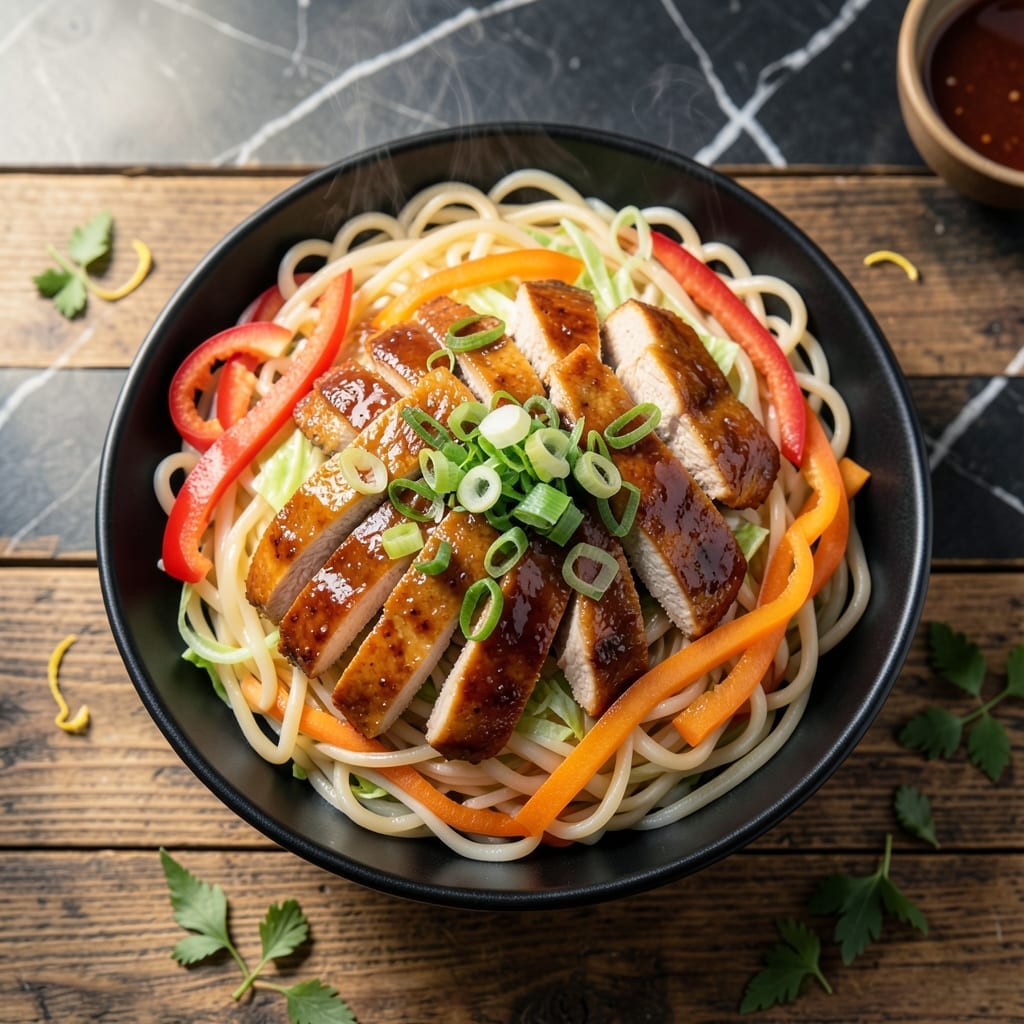
This recipe brings together tender chicken, crisp vegetables, and rice noodles in a savory wok-tossed dish that’s packed with umami flavor. I developed this version after testing multiple techniques in my small kitchen to capture authentic takeout texture at home.
The key is high heat and quick cooking to maintain the noodles’ chewy bite and the vegetables’ crisp freshness. A simple sauce ties everything together, balancing sweet, salty, and savory notes without overpowering the ingredients.
You’ll achieve restaurant-quality results with straightforward steps and accessible ingredients. The dish comes together in under 30 minutes, making it a practical weeknight option that doesn’t skimp on flavor.
Serve it straight from the wok for the best texture and aroma. Here’s how to make it perfectly every time.
Ingredients for Chicken Chow Mein Recipe with Rice Noodles
Tender chicken, crisp vegetables, and chewy rice noodles create this umami-packed wok-tossed dish at home.
| Ingredient | Amount | Notes |
|---|---|---|
| Boneless Skinless Chicken Breast 🍗 | 1 ½ lb | Thinly sliced against grain |
| Rice Noodles 🍜 | 8 oz | Dried, flat variety preferred |
| Napa Cabbage 🥬 | 2 cups | Thinly shredded for texture |
| Carrots 🥕 | 2 whole | Julienned for crispness |
| Red Bell Pepper 🌶️ | 1 whole | Thinly sliced for color |
| Green Onions 🧅 | 4 whole | Cut into 2-inch pieces |
| Garlic Cloves 🧄 | 4 cloves | Minced for maximum flavor |
| Fresh Ginger 🌿 | 1 tbsp | Grated for zesty punch |
| Soy Sauce 💧 | ⅓ cup | Low-sodium for balance |
| Oyster Sauce 🫒 | 2 tbsp | Vegetarian version available |
| Sesame Oil 🫒 | 1 tbsp | Toasted for aroma |
| Brown Sugar 🍚 | 2 tbsp | Light or dark works |
| Neutral Cooking Oil 🫒 | 3 tbsp | High smoke point essential |
| Cornstarch 🌾 | 1 tbsp | For velveting chicken |
| Salt 🧂 | ½ tsp | Adjust to taste |
The chicken texture is everything here. Boneless, skinless thighs work even better than breasts if you prefer juicier meat—just slice them thinly against the grain. Asian markets will have the best rice noodles, but Whole Foods or Trader Joe’s carry decent flat varieties too. Look for noodles labeled ‘stir-fry’ or ‘chow mein’—they hold up better to high heat than thin vermicelli. For the cabbage, Napa is ideal, but regular green cabbage (thinly sliced) works in a pinch.
Need to make this gluten-free? Swap the soy sauce for tamari and ensure your oyster sauce is labeled gluten-free. No oyster sauce? Hoisin sauce at half the amount adds similar depth. The brown sugar can be substituted with coconut sugar for a caramel note. If you’re missing ginger, ground ginger at one-quarter the amount works, but fresh is worth the effort. The sesame oil is non-negotiable for that authentic finish.
Prep all ingredients before heating the wok—things move fast once cooking starts. The rice noodles can be soaked in hot water for 10 minutes to soften before stir-frying. Leftovers keep in the fridge for 3-4 days, though the noodles lose some chew. Reheat quickly in a hot pan to revive the texture. For best results, serve immediately.
Why You’ll Love This Recipe
- One Pan Wonder: I just toss the chicken, rice noodles, and veggies in a single pan—no extra dishes, no fuss.
- Umami Bomb: The napa cabbage and carrots soak up the sauce so well, every bite is packed with flavor.
- Meal Prep Hero: I make a big batch on Sunday and it reheats perfectly for lunches all week.
- Budget Stretch: A little chicken goes a long way with all those fresh veggies filling it out.
Step-by-Step Instructions for Chicken Chow Mein With Rice Noodles
Master the wok technique for perfectly seared chicken and vegetables with an umami-rich sauce.
Step 1: Velvet the Chicken for Tenderness
Slice the 1.5 lb Boneless Skinless Chicken Breast thinly against the grain into ¼-inch strips. In a bowl, toss the chicken with 1 tbsp Cornstarch and 0.5 tsp Salt until evenly coated. This velveting process ensures the chicken stays moist and tender during high-heat cooking.
Let the chicken marinate for 10-15 minutes while you prepare the remaining ingredients. The cornstarch will create a light protective layer that locks in juices and promotes even browning when it hits the hot wok.
Step 2: Stir-Fry Aromatics and Proteins
Heat 2 tbsp Neutral Cooking Oil in a wok or large skillet over high heat until shimmering. Add the velveted chicken in a single layer and cook undisturbed for 2-3 minutes until the edges turn opaque and golden. Stir-fry for another 1-2 minutes until just cooked through, then transfer to a plate.
In the same wok, add the remaining 1 tbsp Neutral Cooking Oil and swirl to coat. Add 4 cloves Garlic Cloves and 1 tbsp Fresh Ginger, stir-frying for 30 seconds until fragrant. Be careful not to burn the aromatics—this builds the flavor foundation for the dish.
Step 3: Cook Vegetables to Crisp-Tender Perfection
Add the 2 whole Carrots, 1 whole Red Bell Pepper, and 2 cups Napa Cabbage to the wok. Stir-fry over high heat for 3-4 minutes until the vegetables are crisp-tender and the carrots begin to soften slightly. The high heat ensures they retain their vibrant color and texture.
Toss in the 4 whole Green Onions and cook for an additional 30 seconds. The green onions should remain bright green and slightly crunchy. This step requires constant motion—keep the ingredients moving to prevent burning.
Step 4: Combine with Sauce and Noodles
Return the chicken to the wok and pour in 0.33 cup Soy Sauce, 2 tbsp Oyster Sauce, 2 tbsp Brown Sugar, and 1 tbsp Sesame Oil. Stir well to coat everything evenly and cook for 1-2 minutes until the sauce begins to thicken slightly.
Add the 8 oz Rice Noodles (pre-soaked in hot water for 5-7 minutes until pliable) and toss everything together for 2-3 minutes. The noodles should absorb the sauce and become tender with a slight chew. Use tongs to lift and turn the mixture, ensuring even distribution of the sauce.
Step 5: Finish and Serve Immediately
Taste and adjust seasoning if needed—add a splash of soy sauce for saltiness or a pinch of sugar for balance. The dish should have a glossy, umami-rich sauce clinging to the noodles and vegetables, with the chicken perfectly tender.
Transfer to a serving platter and garnish with any remaining green onions. Serve immediately while hot—the rice noodles will continue to absorb the sauce as it sits, so timing is key to maintaining the ideal texture.
Pro Tips For Making Chicken Chow Mein Recipe With Rice Noodles
- Soak the Noodles: Cover rice noodles with hot water for 8-10 minutes until pliable but still firm—this prevents them from turning to mush when stir-fried. I learned this the hard way after ending up with a gummy clump instead of springy noodles.
- Slice Chicken Thin: Cut the boneless chicken breast into ¼-inch strips against the grain so it cooks through in 2-3 minutes on high heat. Sounds tedious, but it actually changes the outcome from chewy to tender.
- Skip Overcrowding: Stir-fry the chicken in batches if needed—crowding the pan steams the meat instead of searing it. After burning three batches, I finally figured out that patience here means better flavor.
- Prep Veggies First: Have your napa cabbage, carrots, and red bell pepper all sliced and ready before you start cooking. My grandmother swore by this, and she was right: the stir-fry moves too fast to chop as you go.
Flavor Customization for chicken chow mein recipe with rice noodles
Spicy Heat Boost
Add 1-2 tsp chili garlic sauce or ½ tsp red pepper flakes to the sauce for a Sichuan-inspired kick. I love how this balances the sweetness of the brown sugar. For extra depth, include 1 sliced jalapeño with the vegetables.
Extra Veggie Crunch
Swap in 1 cup snap peas or bok choy for the cabbage—they add vibrant color and a satisfying bite. I tested this in my tiny Boston kitchen and found the snap peas hold their texture perfectly. 🌱
Protein Swaps
Try shrimp or thinly sliced beef instead of chicken for variety. For shrimp, cook just 1-2 minutes per side. With beef, velvet it like the chicken for maximum tenderness. Both work beautifully with rice noodles.
Umami Deepening
Stir in 1 tbsp hoisin sauce or 1 tsp fish sauce for a richer, more complex flavor. I discovered this trick after a failed pot pie night—sometimes mistakes lead to the best discoveries. It adds that extra layer of depth.
Noodle Variations
Use udon noodles for chewier texture or egg noodles for a more traditional approach. Soak udon for 3-4 minutes before stir-frying. Egg noodles cook faster, so add them at the very end.
Sweet & Tangy Twist
Add 2 tbsp rice vinegar and 1 tbsp honey to the sauce for a sweet-tangy balance. This reminds me of the flavors from my Nonna’s kitchen—always that perfect harmony of tastes. 💛
Nutrition Facts
Frequently Asked Questions
Can I use regular noodles instead of rice noodles?
Yes, but texture will differ. Egg noodles work well and require 2-3 minutes less cooking. Udon noodles add chewiness but need 3-4 minutes of soaking before stir-frying.
How do I prevent the chicken from getting tough?
Slice against the grain and velvet with 1 tbsp cornstarch before cooking. Cook over high heat for just 2-3 minutes per side. Overcooking is the main culprit for dry chicken.
What if my sauce is too thin?
Mix 1 tsp cornstarch with 1 tbsp water and stir into the wok. Cook for 1-2 minutes until thickened. The sauce should coat the noodles lightly without pooling.

- Jollof Rice Sauce Recipe: West African Tomato and Spice Infusion - September 25, 2026
- Japanese Rice Soup Recipe: Umami-Rich Comfort in a Bowl - September 25, 2026
- Homemade Cream Of Rice Recipe: Silk-Smooth Breakfast in Minutes - September 25, 2026