
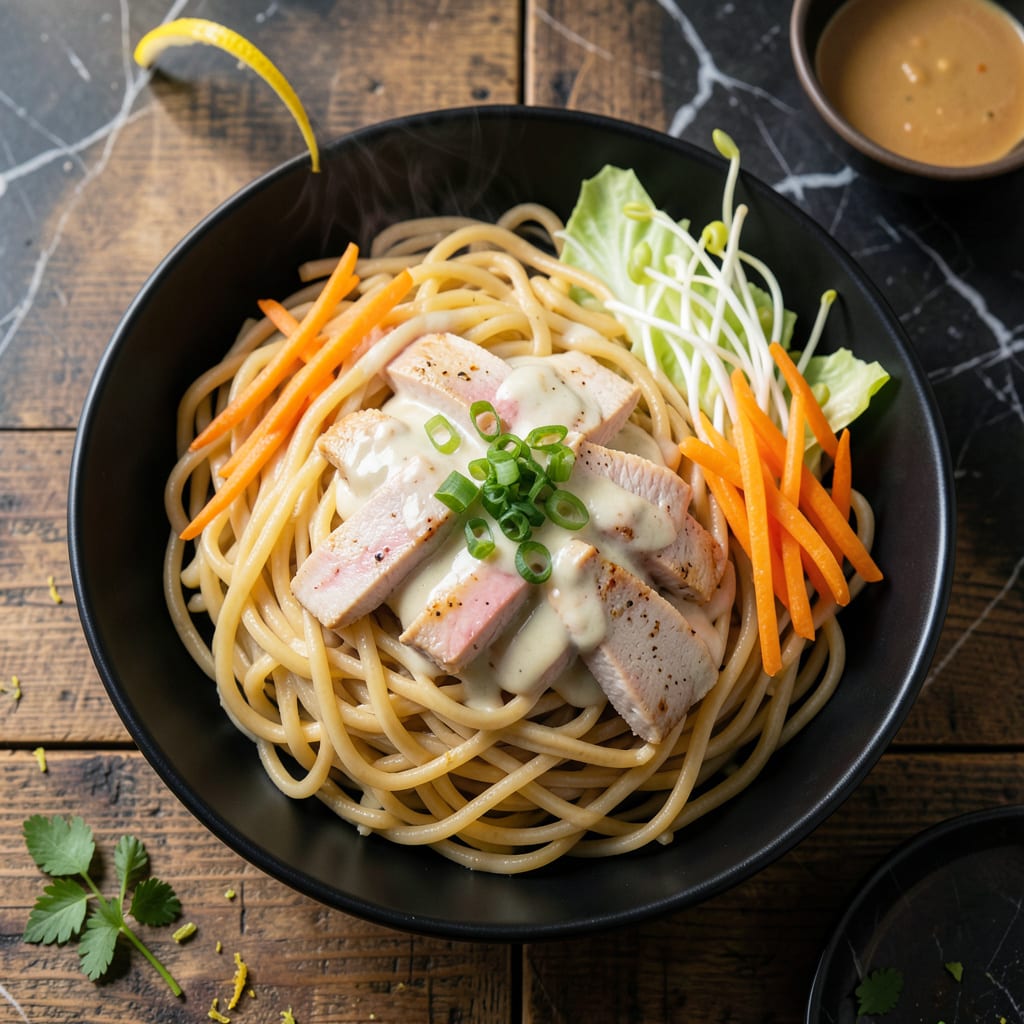
This chicken chow mein delivers restaurant-quality results with a velvety white sauce that clings perfectly to every noodle. The dish combines tender chicken, crisp vegetables, and springy noodles in a flavorful embrace.
The secret lies in the balance of textures and the savory white sauce base. High heat and quick cooking preserve the ingredients’ freshness while creating that signature wok-tossed character.
Ingredients for Chicken Chow Mein White Sauce
Tender chicken, crisp vegetables, and springy noodles unite in this savory wok-tossed delight with velvety white sauce.
| Ingredient | Amount | Notes |
|---|---|---|
| Chicken Breast 🍗 | 1 ½ lb | Boneless, skinless, thinly sliced |
| Chow Mein Noodles 🍜 | 8 oz | Dried or fresh, par-boiled |
| Napa Cabbage 🥬 | 2 cups | Thinly shredded |
| Carrots 🥕 | 2 whole | Julienned or matchstick cut |
| Bean Sprouts 🌱 | 1 cup | Rinsed and drained |
| Scallions 🧅 | 4 whole | Thinly sliced, whites and greens separated |
| Garlic Cloves 🧄 | 3 cloves | Minced finely |
| Fresh Ginger 🌿 | 1 tbsp | Peeled and grated |
| Chicken Stock 🍲 | 1 ½ cups | Low-sodium preferred |
| Oyster Sauce 🫒 | 2 tbsp | Or vegetarian oyster sauce |
| Soy Sauce 🫒 | 3 tbsp | Light or all-purpose variety |
| Sesame Oil 🫒 | 1 tsp | Toasted variety for depth |
| Cornstarch 🌾 | 2 tbsp | For thickening sauce |
| Neutral Cooking Oil 🛢️ | 3 tbsp | Peanut or vegetable oil |
| White Pepper 🧂 | ½ tsp | Ground, for authentic flavor |
[recipeingredientscaler]
The chicken must be sliced thinly for even cooking and maximum sauce absorption. Opt for boneless, skinless chicken breast from a trusted butcher or Whole Foods for consistent quality. Napa cabbage should have crisp, white stems—avoid any with wilting leaves. For the noodles, dried chow mein noodles from an Asian grocery store yield the best texture, though fresh egg noodles work in a pinch.
No oyster sauce? Vegetarian oyster sauce or hoisin sauce at equal amounts maintains depth. Tamari can replace soy sauce for gluten-free needs. If fresh ginger is unavailable, ground ginger at one-quarter the amount works—though fresh delivers superior brightness. Bean sprouts can be swapped with snow peas or bok choy for variation without sacrificing crunch.
Store raw chicken separately in the coldest part of the fridge for up to 2 days. Prepared noodles and sliced vegetables keep well in airtight containers for 3-4 days. The white sauce components can be pre-mixed and refrigerated for 24 hours before cooking.
Why You’ll Love This Recipe
- I’ll be real: this makes enough for seconds, and it reheats beautifully for lunch the next day.
- One Pot Magic: I love that everything—chicken, noodles, and veggies—cooks together in one pan, so cleanup’s a breeze.
- Creamy Umami Bomb: The white sauce with chicken and napa cabbage creates this rich, velvety flavor that’s honestly hard to resist.
- Feeds the Crew: I’ll be real: this makes enough for seconds, and it reheats beautifully for lunch the next day.
Instructions
Master the wok technique for perfectly balanced flavors and textures in this classic dish.
Step 1: Velvet the Chicken
Slice the 1.5 lb chicken breast into thin, even strips. In a bowl, combine the chicken with 1 tbsp fresh ginger, 3 cloves garlic cloves, 1 tsp sesame oil, and 1 tbsp soy sauce from the 3 tbsp soy sauce. Add 1 tbsp cornstarch from the 2 tbsp cornstarch and mix until the chicken is evenly coated.
This velveting process ensures the chicken stays tender and silky during high-heat cooking. Let it marinate for 10 minutes while you prepare the remaining ingredients. The cornstarch creates a protective layer that locks in moisture, while the soy sauce and aromatics build foundational flavor.
Step 2: Stir-Fry Aromatics and Vegetables
Heat 2 tbsp neutral cooking oil from the 3 tbsp neutral cooking oil in a wok or large skillet over high heat until shimmering. Add the marinated chicken in a single layer and sear undisturbed for 1-2 minutes until the edges turn opaque. Remove the chicken and set aside.
In the same wok, add the remaining 1 tbsp neutral cooking oil. Stir-fry the 2 whole carrots, 2 cups napa cabbage, and 1 cup bean sprouts for 3-4 minutes until the vegetables are crisp-tender but still vibrant. The carrots should soften slightly while the cabbage retains a slight crunch.
Step 3: Create the White Sauce and Combine
Add the 4 whole scallions (whites first) to the wok and cook for 30 seconds until fragrant. Pour in the 1.5 cups chicken stock, 2 tbsp oyster sauce, and remaining 2 tbsp soy sauce. Stir to combine and bring to a simmer.
In a small bowl, mix the remaining 1 tbsp cornstarch with 2 tbsp of cold water to create a slurry. Slowly add this to the simmering sauce while stirring constantly. Cook for 1-2 minutes until the sauce thickens to a velvety consistency that coats the back of a spoon.
Step 4: Finish and Serve
Return the chicken to the wok along with the 8 oz chow mein noodles. Toss everything together with the sauce for 2-3 minutes until the noodles are heated through and evenly coated. The noodles should be tender with a slight chew, absorbing the rich, savory sauce.
Stir in the 0.5 tsp white pepper and remaining scallion greens. Toss once more to distribute the pepper evenly. The white pepper adds a subtle, earthy heat that complements the dish’s depth. Serve immediately while hot, ensuring each serving has an even mix of noodles, chicken, and vegetables.
Pro Tips For Making Chicken Chow Mein White Sauce
- Velvet the Chicken: Slice the chicken breast against the grain, then marinate with 1 tsp cornstarch and 1 tbsp soy sauce for 15 minutes—I learned this the hard way after my first few batches turned out rubbery.
- Parcook the Noodles: Boil the chow mein noodles for just 2 minutes before stir-frying, or they’ll turn to mush when tossed with the sauce and veggies.
- Skip Raw Bean Sprouts: Blanch the bean sprouts in boiling water for 30 seconds first—sounds like an extra step, but it keeps them crisp and removes any bitter edge.
- Hot Wok, Cold Oil: Heat the wok until it’s smoking, then add the oil and let it shimmer for 10 seconds before adding anything—this prevents the chicken from steaming instead of searing.
Flavor Customization for These Flavors
Spicy Kick
Add 1-2 tsp chili garlic sauce or ½ tsp red pepper flakes to the white sauce while simmering for a subtle heat that builds with each bite. I love the depth Sriracha adds when stirred in at the end.
Umami Boost
Enhance the savory profile with 1 tbsp fish sauce or 1 tsp mushroom powder mixed into the sauce. These ingredients deepen the flavor without overpowering the dish’s balance.
Creamy Twist
For a richer texture, stir in ¼ cup heavy cream or 2 tbsp cream cheese after thickening the sauce. This creates a velvety finish that clings beautifully to the noodles. 💫
Vegetable Swaps
Add ½ cup bell peppers or 1 cup snap peas for extra crunch and color. These hold up well to stir-frying and add a fresh contrast to the tender chicken.
Protein Variations
Swap chicken for ½ lb shrimp or 1 lb tofu for different textures. Shrimp cooks in just 2-3 minutes, while tofu benefits from a quick pan-fry before adding to the wok.
Herb Garnish
Finish with 2 tbsp chopped cilantro or 1 tbsp Thai basil for a bright, aromatic note. I prefer cilantro for its citrusy zing that cuts through the richness. 🌿
Nutrition Facts
Frequently Asked Questions
Can I use chicken thighs instead of breast?
Boneless, skinless thighs stay juicier and are more forgiving during high-heat cooking. Just slice them thinly and adjust cooking to 2-3 minutes per side.
Why did my sauce turn out lumpy?
Lumps appear if the cornstarch isn’t fully dissolved before adding. Always mix the slurry with cold water first, then stir constantly while pouring into the hot liquid.
How do I keep noodles from sticking?
Rinse par-boiled noodles in cold water and toss with 1 tsp oil before stir-frying. Use high heat and keep them moving in the wok.
Can I make this gluten-free?
Swap regular soy sauce for tamari and use rice noodles or gluten-free chow mein noodles. Verify all sauces are labeled gluten-free.

- Jollof Rice Sauce Recipe: West African Tomato and Spice Infusion - September 25, 2026
- Japanese Rice Soup Recipe: Umami-Rich Comfort in a Bowl - September 25, 2026
- Homemade Cream Of Rice Recipe: Silk-Smooth Breakfast in Minutes - September 25, 2026