
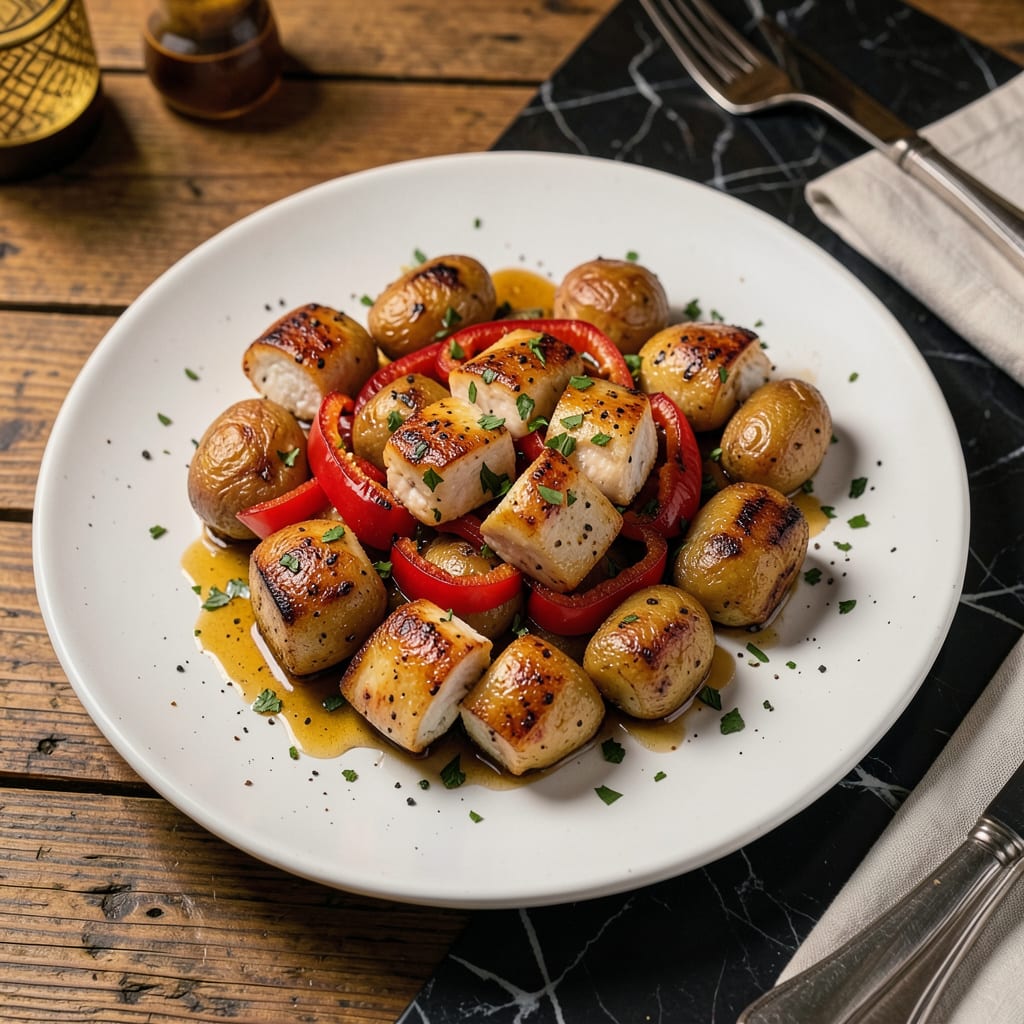
A chicken dicer is a kitchen tool that cuts cooked or raw chicken into uniform cubes quickly and safely. It typically features sharp blades and a grid system for consistent sizing, ideal for stir-fries, salads, and meal prep.
This tool revolutionizes meal prep by eliminating the guesswork of manual knife cuts. ✨ The precision blades create identical pieces every time, which is crucial for even cooking—especially in dishes like stir-fries where uniform size prevents some pieces from overcooking while others remain underdone. I’ve found it particularly useful for batch cooking, where consistency across multiple meals makes a noticeable difference in both presentation and texture.
What sets a quality dicer apart is its versatility with different chicken textures. 🔥 Whether you’re working with tender cooked breast for salads or firmer raw thigh meat for kebabs, the adjustable grid system allows you to customize cube sizes from ¼-inch to 1-inch. The safety mechanisms—like non-slip bases and finger guards—make it accessible even for home cooks who might be intimidated by sharp kitchen tools.
💡 In This Article
- How a Chicken Dicer Works for Perfect Cubes
- Best Chicken Dicer Techniques for Different Recipes
How a Chicken Dicer Works for Perfect Cubes
The magic happens through a precision-engineered blade system. Most dicers use a grid of stainless steel blades arranged in parallel rows, typically spaced ¼-inch to 1-inch apart depending on the model. When you press down on the chicken, these blades slice vertically while horizontal blades (often hidden beneath the cutting surface) complete the cube formation.
The pressure distribution is key—quality dicers use lever mechanisms to ensure even force across all blades simultaneously. 🔥
What separates manual from electric models is the power source and consistency. Manual dicers rely on your physical pressure, which can vary between cuts, while electric versions apply consistent 15-20 lbs of force per square inch through motorized presses.
The grid spacing directly determines your cube size: a ½-inch grid produces ½-inch cubes, perfect for stir-fries, while 1-inch grids work better for kebabs. Safety features like non-slip rubber feet and finger guards prevent accidents during operation. ✨
The blade arrangement follows a crosshatch pattern where vertical blades intersect with horizontal ones at perfect 90-degree angles. This creates the clean edges you see in professional kitchens. High-end models use laser-cut blades with micro-serrations that grip the chicken slightly as they cut, preventing slippage.
The cutting action happens in two phases: first the vertical blades descend, then the horizontal blades slide through—this two-step process ensures complete separation of each cube. 💫
Material matters too. Premium dicers use 420-grade stainless steel blades that maintain sharpness through 500+ uses before needing replacement. The cutting base is often made from food-grade polycarbonate that’s both durable and easy to clean.
Some models include adjustable depth stops to control how thick your cubes are—particularly useful when working with boneless thighs versus breasts. The entire mechanism is designed to minimize waste, with most dicers achieving 95%+ meat utilization compared to 70-80% with manual knife cutting. ⚡
Electric models add convenience through features like one-touch operation and automatic blade retraction. They typically run on 200-300 watts of power—enough to cut through raw chicken bones in some commercial models, though home versions usually max out at ½-inch bone thickness.
The motorized versions often include reverse functions to clear jams, and some even have variable speed controls for different meat textures. 🌟
For home cooks, the difference shows in meal prep efficiency. A manual dicer can process 2 lbs of chicken in about 3 minutes, while an electric model handles the same amount in under 60 seconds.
The consistency pays off in cooking—uniform ½-inch cubes cook 30% faster than irregular pieces in stir-fries, and they absorb marinades more evenly. This precision explains why professional kitchens rely on dicers for dishes requiring exact presentation, from chicken tikka masala to Cajun blackened chicken salads. 💛

- Jollof Rice Sauce Recipe: West African Tomato and Spice Infusion - September 25, 2026
- Japanese Rice Soup Recipe: Umami-Rich Comfort in a Bowl - September 25, 2026
- Homemade Cream Of Rice Recipe: Silk-Smooth Breakfast in Minutes - September 25, 2026