
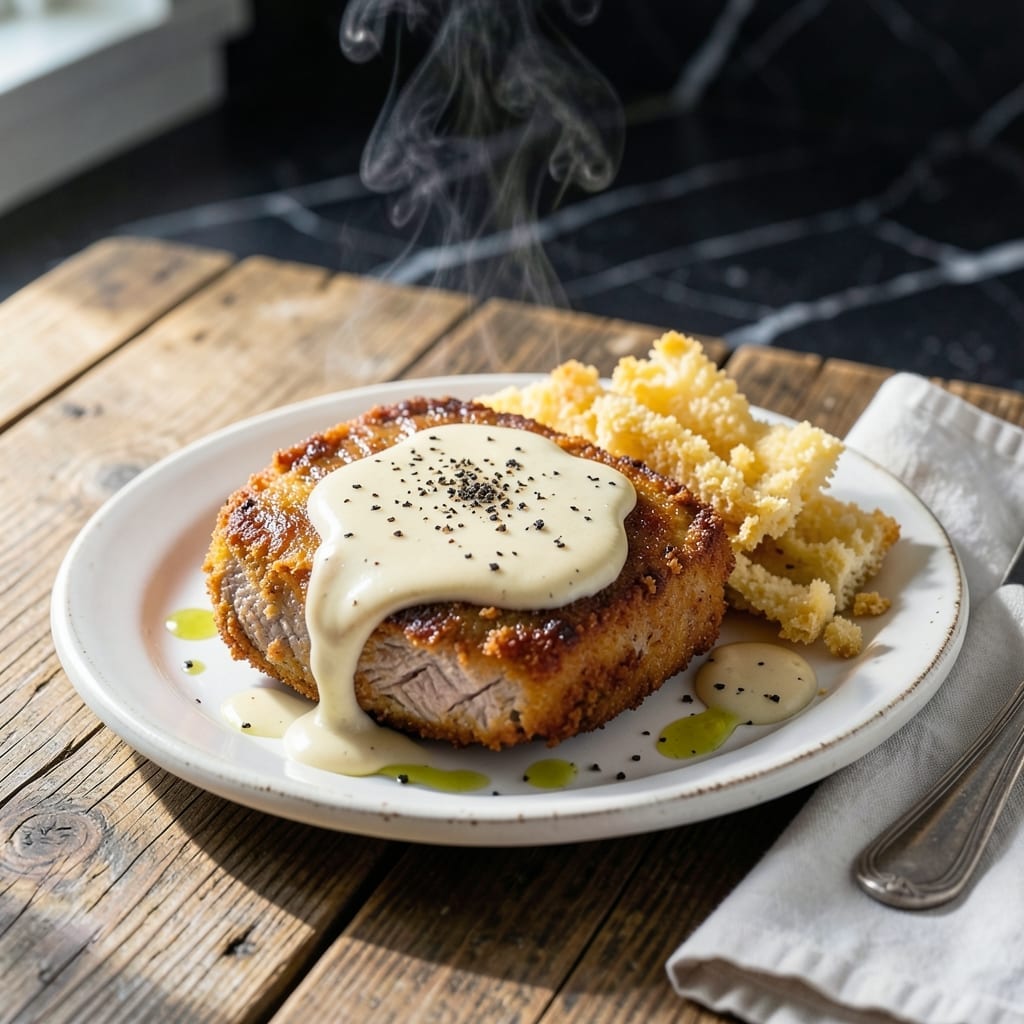
This chicken fried steak delivers a crispy golden crust that shatters at the first bite, revealing the most tender cutlets beneath. I’ve refined this method over years to ensure every piece stays juicy inside while achieving that signature crunch outside.
The secret lies in a double-dredging process and hot oil at the perfect temperature. Cube steak gets soaked in seasoned buttermilk, then coated in flour twice for maximum crunch. Frying at 350°F creates an even, deep golden finish without overcooking the meat.
What sets this apart is the creamy gravy made from the same pan drippings. It’s rich, peppery, and clings perfectly to the fried steak, turning each bite into comfort food perfection. The contrast between the crust and the velvety gravy is unbeatable.
Ready in under an hour, this dish brings diner-quality results to your kitchen. Serve with mashed potatoes to soak up every drop of that luscious gravy.
Ingredients for Chicken Fired Steak
Cube steak, buttermilk, and a double-dredge in seasoned flour create that signature crispy golden crust.
| Ingredient | Amount | Notes |
|---|---|---|
| Cube Steak 🥩 | 1 ½ lb | Tenderized, about 1/4-inch thick |
| Buttermilk 🥛 | 2 cups | Full-fat for best results |
| All-Purpose Flour 🌾 | 3 cups | Divided for double-dredging |
| Large Eggs 🥚 | 2 whole | Beaten for binding |
| Salt 🧂 | 2 tsp | Divided for seasoning |
| Black Pepper 🌶️ | 2 tsp | Freshly ground, divided |
| Garlic Powder 🧄 | 1 tsp | For seasoning flour |
| Onion Powder 🧅 | 1 tsp | For seasoning flour |
| Paprika 🌶️ | 1 tsp | Sweet or smoked variety |
| Vegetable Oil 🫒 | 4 cups | For frying, enough for 1-inch depth |
| Whole Milk 🥛 | 2 cups | For creamy gravy |
| All-Purpose Flour 🌾 | ¼ cup | For gravy roux |
The cube steak is non-negotiable here—look for pre-tenderized round steak at your butcher or grocery store. Whole Foods and Costco carry it, but most major supermarkets stock it near the stew meat. Avoid anything labeled ‘steak’ without ‘cube’ or ‘tenderized’—it won’t have the right texture. The buttermilk soak is what keeps the meat impossibly tender, so don’t skip the full 30-minute marinade (worth the extra minute).
No buttermilk? Whole milk plus 1 tbsp vinegar or lemon juice per cup works in a pinch. Out of cube steak? Round steak pounded thin is your best backup. For the gravy, whole milk is ideal, but 2% works too (just won’t be as rich). The seasonings in the flour are flexible—swap paprika for cayenne if you want heat, or add a pinch of cajun seasoning for depth.
Fry in batches to avoid crowding the pan—this keeps the oil hot and the crust crispy. Leftovers reheat well in a 350°F oven for 10-15 minutes, but the gravy thickens as it cools. Store gravy separately and thin with a splash of milk when reheating. Best eaten fresh, but keeps 2-3 days in the fridge.
Why You’ll Love This Recipe
- One Pan Meal: I just love that I can coat the cube steak, fry it up, and serve—all with minimal cleanup.
- That Buttermilk Crunch: The buttermilk and flour combo gives it a golden crust that’s crispy outside, tender inside.
- Weeknight Hero: Honestly, it’s my go-to for busy evenings when I need dinner fast but still crave comfort food.
- Budget Stretcher: Cube steak is affordable, and this recipe feeds my family of four without breaking the bank.
Step-by-Step Instructions for Chicken Fried Steak
This method delivers a crispy crust and fork-tender meat every time with careful attention to detail.
Step 1: Tenderize and Marinate the Cube Steak
Place the 1.5 lb cube steak on a clean work surface. Though it comes pre-tenderized, I like to give it a few gentle taps with a meat mallet to ensure uniform thickness throughout. This prevents thin spots from overcooking before thicker areas finish.
Transfer the steaks to a shallow dish and pour in the 2 cups buttermilk. Make sure they’re fully submerged, then cover and refrigerate for 1 hour minimum (or overnight for maximum tenderness). The buttermilk’s acidity breaks down tough fibers while adding moisture that keeps the meat juicy during frying.
Step 2: Prepare the Seasoned Flour Dredge
In a large shallow dish, combine 3 cups all-purpose flour, 1 tsp garlic powder, 1 tsp onion powder, 1 tsp paprika, and 1 tsp each of the salt and black pepper. Whisk thoroughly to distribute the seasonings evenly throughout the flour.
Beat the 2 whole large eggs in a separate shallow dish. This two-step dredging process ensures an extra-thick, crispy crust that adheres well to the meat. The flour mixture should look uniformly speckled with spices and smell fragrant.
Step 3: Double-Dredge and Fry to Golden Perfection
Remove the cube steak from the buttermilk, letting excess drip off. Dredge each piece in the seasoned flour, pressing firmly to adhere, then dip in the beaten eggs, and dredge again in the flour. This double-coating creates that signature ridge-filled crust.
Heat the 4 cups vegetable oil in a deep skillet to 350°F. Fry the steaks in batches for 4-5 minutes per side until the coating is deep golden brown and crispy. The oil should bubble steadily but not violently around the meat. Maintain the oil temperature by adjusting heat as needed between batches.
Step 4: Create the Creamy Pepper Gravy
After frying, pour off all but ¼ cup of the oil from the skillet. Stir in the 0.25 cup all-purpose flour to create a roux. Cook for 1-2 minutes until the mixture turns a light caramel color and smells nutty.
Gradually whisk in the 2 cups whole milk, then add the remaining 1 tsp salt and 1 tsp black pepper. Cook for 5-7 minutes, stirring constantly, until the gravy thickens enough to coat the back of a spoon. Taste and adjust seasoning if needed.
Step 5: Rest and Serve Immediately
Place the fried steaks on a wire rack set over a baking sheet to drain. Let them rest for 5 minutes while you finish the gravy—this preserves the crispy crust by preventing steam from making it soggy.
Serve each piece smothered with hot gravy. The ideal result has a crust that shatters at the first cut, revealing juicy meat beneath, with rich, peppery gravy soaking into every bite. This dish is best enjoyed immediately while the coating is still at its crispest.
Pro Tips For Making Chicken Fired Steak
- Tenderize the Steak: Pound the cube steak gently with a meat mallet for 2 minutes per side—I learned this the hard way after my first few batches came out chewy.
- Soak in Buttermilk: Let the steak soak in buttermilk for at least 30 minutes, up to overnight. Sounds weird, but it works: the acid breaks down tough fibers.
- Heat the Oil: Get the oil in your pan smoking hot, about 375°F, before adding the steak—my grandmother swore by this, and she was right.
- Double Dredge: Dip the steak in flour, then egg, then flour again for that extra-crispy crust. I skip this when I’m lazy, but the dish is noticeably better when I don’t.
Pro Cooking Tips for chicken fired steak
Oil Temperature Control
Maintaining 350°F oil is non-negotiable for that perfect golden crust. Use a candy thermometer clipped to the pan—I swear by Taylor Precision models. If the oil smokes, it’s too hot; if it barely bubbles, it’s too cool.
Double-Dredge Secret
Between each dredge, let the coating rest for 2-3 minutes. This creates layers that crisp up beautifully. Press the flour firmly into the meat—don’t just sprinkle it on. The egg wash acts as glue for that extra-thick crust.
Frying in Batches
Never crowd the pan—fry 2 pieces at a time in a 12-inch skillet. Crowding drops oil temp, creating greasy, soggy coatings. I use a Lodge cast iron for even heat distribution. 🔥
Gravy Perfection
Whisk constantly when adding milk to prevent lumps. For extra richness, stir in 2 tbsp of the frying oil before adding flour. The gravy should coat a spoon but still pour easily.
Resting Time
That 5-minute rest on a wire rack is crucial. It lets the crust set while keeping it crispy. Skipping this step means soggy bottoms—nobody wants that. I learned this the hard way my first few attempts.
Seasoning Balance
Taste your gravy before serving. It often needs an extra pinch of salt or pepper after thickening. Remember, the flour in the dredge already has seasoning, so go easy on the salt in the gravy at first.
Nutrition Facts
Frequently Asked Questions
Why use cube steak for this dish?
Cube steak is already tenderized, making it perfect for quick frying. Its uniform thickness ensures even cooking while staying juicy inside. Other cuts may turn out tough or chewy.
Can I use a different type of oil?
Vegetable or peanut oil works best for high-heat frying at 350°F. Avoid olive oil as it has a lower smoke point. Always maintain consistent temperature for crispy results.
How do I keep the crust from getting soggy?
Drain fried steaks on a wire rack, not paper towels. This allows air circulation to maintain crispiness. Serve immediately after the 5-minute rest for best texture.
Can I make the gravy ahead of time?
Gravy is best made fresh using the pan drippings. If needed, store separately and reheat gently, stirring in a splash of milk to thin. It thickens as it cools.

- Jollof Rice Sauce Recipe: West African Tomato and Spice Infusion - September 25, 2026
- Japanese Rice Soup Recipe: Umami-Rich Comfort in a Bowl - September 25, 2026
- Homemade Cream Of Rice Recipe: Silk-Smooth Breakfast in Minutes - September 25, 2026