
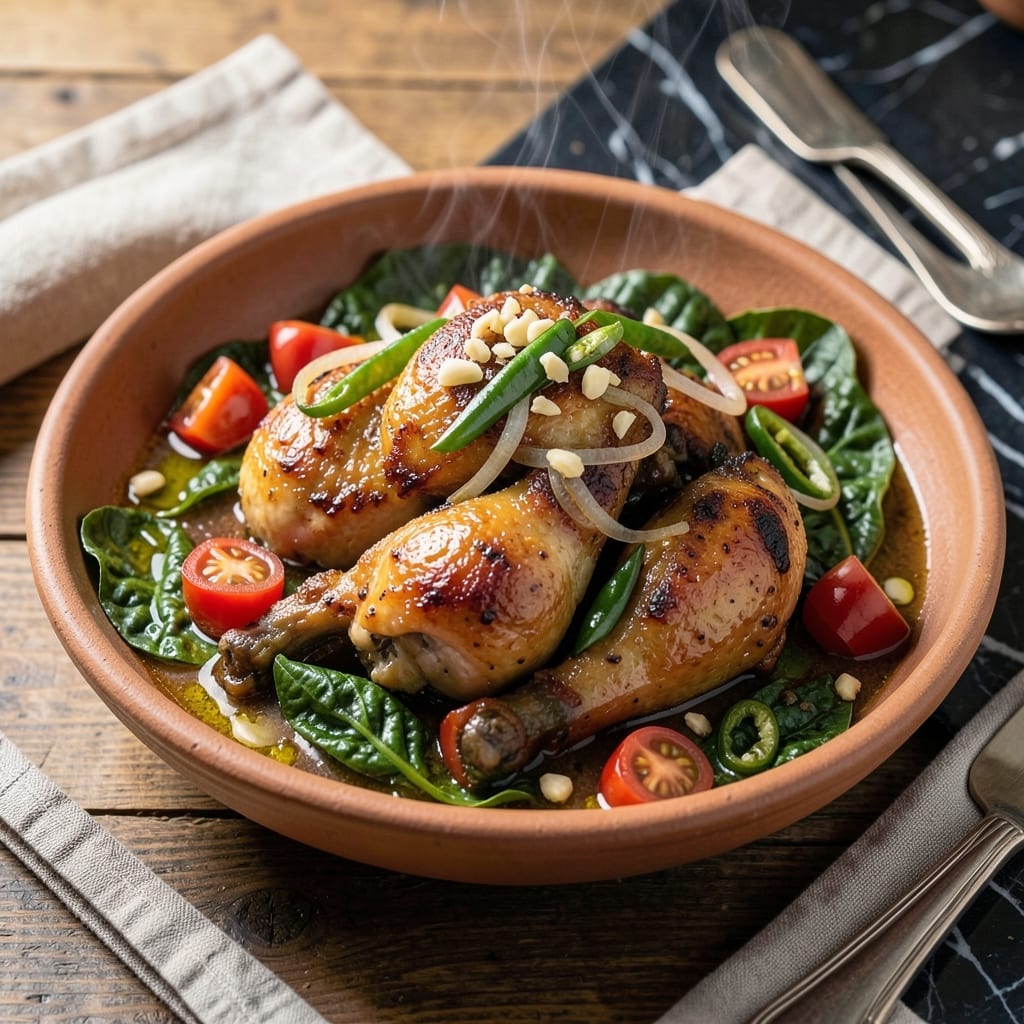
This Andhra-style chicken gongura brings bold, tangy flavors that define South Indian comfort food. The dish combines tender chicken with sorrel leaves for a unique sour note that balances rich spices perfectly.
The traditional method involves slow-cooking to develop deep, complex flavors. Fresh gongura leaves are essential, though dried can work in a pinch. The result is a thick, hearty stew that pairs beautifully with steamed rice.
Each bite delivers a perfect harmony of tender chicken, earthy sorrel, and aromatic spices. The tangy profile makes this stew stand out from typical Indian chicken dishes.
Serve hot for a truly authentic taste of Andhra cuisine. This recipe stays true to its roots while being simple to prepare.
Ingredients for Chicken Gongura
Bold South Indian flavors come from fresh gongura leaves and aromatic spices paired with tender chicken.
| Ingredient | Amount | Notes |
|---|---|---|
| Chicken Thighs 🍗 | 1 ½ lb | Boneless, skin-on preferred |
| Fresh Gongura Leaves 🍃 | 4 cups | Sorrel leaves, washed and chopped |
| Onion 🧅 | 1 whole | Medium, finely chopped |
| Tomatoes 🍅 | 2 whole | Medium, chopped |
| Green Chilies 🌶️ | 3 pieces | Slit lengthwise, adjust to taste |
| Garlic Cloves 🧄 | 6 cloves | Minced for depth |
| Fresh Ginger 🌿 | 1 tbsp | Grated or minced |
| Mustard Seeds 🧂 | 1 tsp | For tempering the dish |
| Cumin Seeds 🌿 | 1 tsp | Whole seeds for aroma |
| Turmeric Powder 🌶️ | ½ tsp | For color and earthiness |
| Red Chili Powder 🌶️ | 1 ½ tsp | Adjust to spice preference |
| Coriander Powder 🌿 | 1 tbsp | Ground coriander seeds |
| Salt 🧂 | 1 ½ tsp | Adjust to taste |
| Vegetable Oil 🫒 | 3 tbsp | For cooking, neutral flavor |
| Fresh Cilantro 🌿 | ¼ cup | Chopped, for garnish |
Fresh gongura leaves are non-negotiable here. Indian grocery stores in the produce section usually carry them in season, but ask for sorrel leaves if you’re at a Whole Foods or specialty market. The chicken thighs should be bone-in, skin-on for maximum flavor—Costco has great quality at a reasonable price. Look for vibrant green leaves without wilting.
No fresh gongura? Dried gongura leaves work in a pinch (soak them first to rehydrate). Substitute spinach for a milder taste, but you’ll lose that signature tang. For the chilies, serrano peppers are a good swap if green chilies aren’t available. The mustard and cumin seeds are essential for tempering, so don’t skip them.
This stew tastes even better the next day. Store in an airtight container in the fridge for up to 3 days. Freeze portions for up to 3 months—just thaw and reheat gently to preserve the textures. The flavors deepen beautifully over time.
Why You’ll Love This Recipe
- One Pan Meal: I toss everything in together—chicken, gongura, onions—and let the flavors meld while I set the table.
- Tangy Kick: The gongura leaves give this dish a sour punch that cuts through the richness of the chicken thighs.
- Weeknight Hero: Honestly, it’s my go-to when I need something hearty for dinner but don’t have hours to spend.
- Budget Stretcher: Chicken thighs stay juicy and affordable, and a little gongura goes a long way for big flavor.
Step-by-Step Instructions for Chicken Gongura
This traditional method ensures the tangy leaves and tender chicken come together perfectly every time.
Step 1: Temper the Spices and Aromatics
Heat the 3 tbsp vegetable oil in a heavy-bottomed pot over medium heat. Add the 1 tsp mustard seeds and 1 tsp cumin seeds, and let them sizzle for 30-45 seconds until the mustard seeds begin to pop and the cumin turns fragrant.
Immediately add the 1 whole onion (finely chopped) and sauté for 4-5 minutes until it turns translucent and light golden brown. Stir in the 6 cloves garlic cloves (minced), 1 tbsp fresh ginger (grated), and 3 pieces green chilies (slit), cooking for another 1-2 minutes until the raw aroma dissipates.
Step 2: Build the Flavor Base with Spices
Add the 2 whole tomatoes (chopped) to the pot and cook for 5-6 minutes, stirring occasionally, until they soften and break down into a thick pulp. This creates the foundation for the stew’s rich, tangy character.
Stir in the 0.5 tsp turmeric powder, 1.5 tsp red chili powder, and 1 tbsp coriander powder. Cook for 1-2 minutes until the spices darken slightly and their raw smell disappears. The mixture should look glossy and well-incorporated.
Step 3: Cook the Chicken Until Tender
Add the 1.5 lb chicken thighs to the pot, stirring to coat each piece evenly with the spice mixture. Cook for 5 minutes, allowing the chicken to sear lightly and absorb the flavors.
Pour in ½ cup of water, cover with a lid, and simmer over medium-low heat for 20-25 minutes. Check that the chicken is cooked through and tender, with no pink remaining in the center.
Step 4: Incorporate the Gongura Leaves
Add the 4 cups fresh gongura leaves (washed and chopped) to the pot, stirring well to combine. Cook uncovered for 8-10 minutes over medium heat, stirring occasionally, until the leaves wilt completely and the stew thickens slightly.
The leaves will reduce significantly and release their signature tangy flavor into the dish. Adjust the 1.5 tsp salt to taste at this stage, ensuring the flavors are balanced.
Step 5: Finish and Garnish
Turn off the heat and let the stew rest for 5 minutes to allow the flavors to meld together. The chicken should be fall-off-the-bone tender, and the sauce should have a vibrant, tangy profile with a rich, spiced depth.
Garnish with the 0.25 cup fresh cilantro (chopped) just before serving. This dish pairs beautifully with steamed rice or flatbreads, offering a perfect balance of heat, tang, and savory richness.
Pro Tips For Making Chicken Gongura
- Blanch the Gongura: Soak fresh gongura leaves in boiling water for 2-3 minutes to reduce their sharp sourness—I learned this the hard way after making a face the first time I skipped this step.
- Brown the Thighs First: Sear the chicken thighs on medium-high heat until golden before adding anything else. This builds flavor that simmering alone just can’t match.
- Skip Overcrowding the Pot: Cook the chicken in batches if needed—overcrowding steams instead of browns, and your gongura chicken will taste boiled, not rich.
- Add Tomatoes Early: Stir in the tomatoes right after the onions soften so they break down and thicken the gravy naturally—no extra flour or cornstarch needed.
Storing and Reheating This Dish
Refrigerator Storage
Let this stew cool for no more than 2 hours before transferring to airtight containers. I use glass containers with snap-tight lids to preserve freshness. Store at 40°F or below for up to 3 days. The flavors deepen overnight, making leftovers even tastier. ❄️
Freezer Storage
For longer storage, freeze in portion-sized containers for up to 3 months. Leave 1 inch of headspace for expansion. I recommend using quart-sized freezer bags—they stack efficiently and thaw faster than rigid containers.
Stovetop Reheating
Reheat gently over medium-low heat in a heavy-bottomed pot. Add ¼ cup water or chicken broth to prevent sticking. Stir occasionally for 10-12 minutes until reaching 165°F. The gongura leaves will soften beautifully. 🔥
Microwave Reheating
For quick meals, microwave single portions covered with a damp paper towel. Use 70% power for 2-3 minutes, stir, then continue in 1-minute intervals until heated through. Add a splash of water if needed.
Freshness Tip
If the stew thickens too much during storage, thin it with ¼ cup water while reheating. Always taste and adjust salt before serving—flavors concentrate during storage. The tangy profile should remain vibrant.
Nutrition Facts
Frequently Asked Questions
Can I use dried gongura leaves instead of fresh?
Yes, but soak dried leaves in warm water for 15-20 minutes first to rehydrate. Use 1 cup dried for every 4 cups fresh. The flavor will be more concentrated, so adjust salt accordingly.
Why is my stew bitter?
Gongura leaves can turn bitter if overcooked. Add them during the last 8-10 minutes only. Also, ensure you’re using the red-stemmed variety, as green-stemmed can be more bitter.
What’s the best way to clean gongura leaves?
Soak in cold water with 1 tsp salt for 10 minutes, then rinse thoroughly. This removes dirt and pests. Pat dry before chopping to prevent excess moisture in your dish.
Can I make this in a slow cooker?
Yes! Sauté aromatics first, then transfer everything to the slow cooker. Cook on low for 4-5 hours or high for 2-3 hours. Add gongura leaves in the last 30 minutes.

- Jollof Rice Sauce Recipe: West African Tomato and Spice Infusion - September 25, 2026
- Japanese Rice Soup Recipe: Umami-Rich Comfort in a Bowl - September 25, 2026
- Homemade Cream Of Rice Recipe: Silk-Smooth Breakfast in Minutes - September 25, 2026