
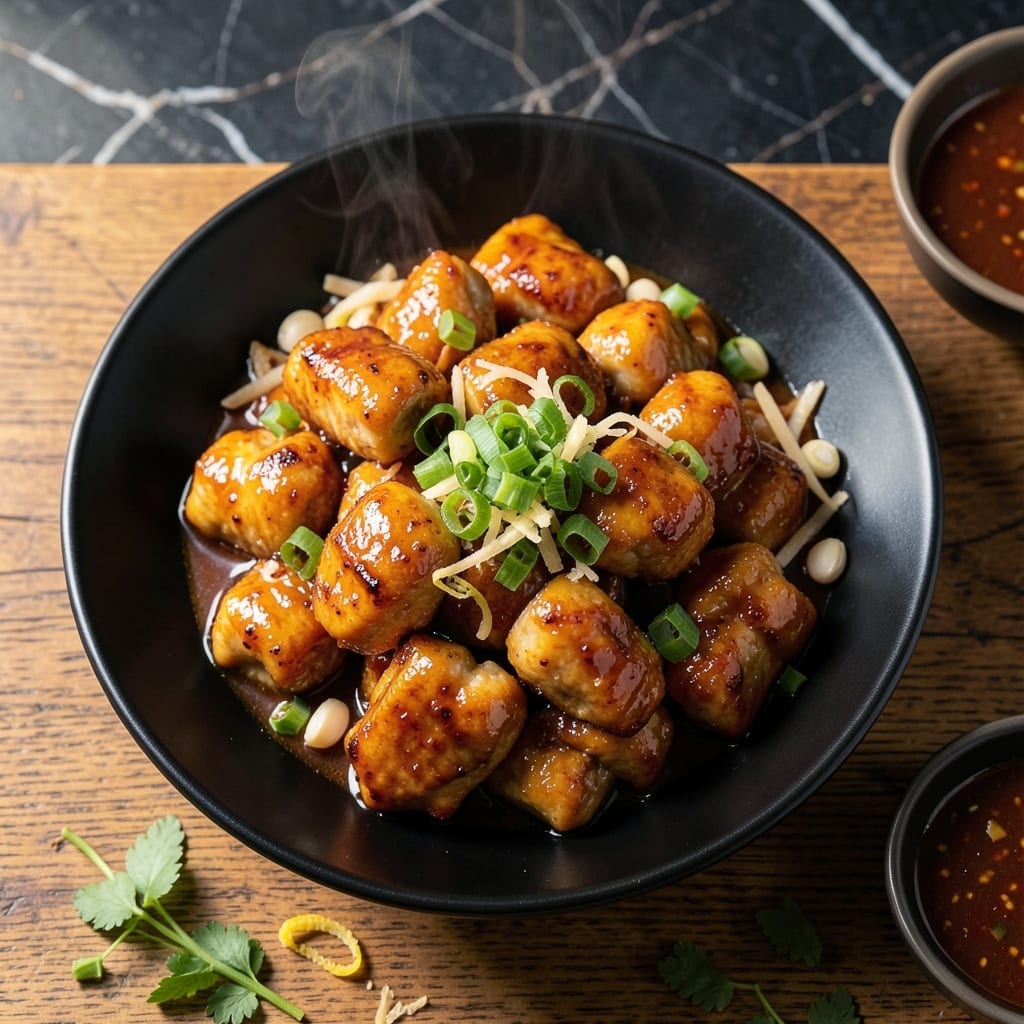
There’s something special about wok-seared chicken that achieves that perfect balance of crispy edges and tender meat. This method transforms ordinary chicken into a savory delight with minimal effort.
The key lies in high heat and proper technique. A screaming hot wok creates that signature crispy exterior while keeping the inside juicy and flavorful. The sauce comes together quickly, coating each piece with savory goodness.
What you get is a dish that’s both impressive and approachable. The chicken develops a golden crust that gives way to moist, tender meat, all bathed in a rich, aromatic sauce that clings to every bite.
Serve it steaming hot over rice for a complete meal. Here’s how to make it right.
Ingredients for Ta Chien Chicken
A few pantry staples and fresh ingredients bring this wok-seared dish to life with ease.
| Ingredient | Amount | Notes |
|---|---|---|
| Boneless Chicken Thighs 🍗 | 1 ½ lb | Skin-on for extra crispiness |
| Soy Sauce 🫒 | 3 tbsp | Low-sodium preferred |
| Rice Wine 🍶 | 2 tbsp | Shaoxing or dry sherry |
| Cornstarch 🌾 | 2 tbsp | For velvet coating |
| Garlic Cloves 🧄 | 4 cloves | Minced finely |
| Fresh Ginger 🌿 | 1 tbsp | Grated or minced |
| Green Onions 🧅 | 4 whole | Cut into 2-inch pieces |
| Red Bell Pepper 🌶️ | 1 whole | Sliced into strips |
| Neutral Oil 🫒 | ½ cup | High smoke point, like peanut or vegetable |
| Oyster Sauce 🫒 | 1 tbsp | Vegetarian oyster sauce if needed |
| Sesame Oil 🫒 | 1 tsp | For finishing |
| Granulated Sugar 🧂 | 1 tsp | Balances savory flavors |
| White Pepper 🌶️ | ½ tsp | Ground, for authentic flavor |
The chicken is the star here. Boneless, skin-on thighs give you that perfect crispy exterior while staying juicy inside. Costco or Whole Foods have great pre-packaged options. For the soy sauce, Kikkoman low-sodium is a solid choice—avoid the pre-mixed teriyaki varieties. Fresh ginger and garlic are non-negotiable (the jarred stuff just doesn’t cut it for this dish).
No Shaoxing wine? Dry sherry works in a pinch. For a gluten-free version, swap soy sauce for tamari. Skip the oyster sauce entirely if you’re vegetarian, or use a mushroom-based substitute. The cornstarch velvet coating is key—don’t skip it. If you’re out of sesame oil, a drop of toasted sesame oil at the end adds depth without overpowering.
The cooked chicken keeps well in the fridge for 3-4 days—reheat gently in a pan to crisp the skin. The sauce components can be prepped ahead, but don’t mix until ready to cook. Freezes for up to 3 months if stored separately from the chicken.
Why You’ll Love This Recipe
- One Pan Wonder: I toss everything in a skillet—chicken, soy sauce, rice wine—and let the cornstarch work its magic while I set the table.
- Umami Bomb: The garlic and soy sauce create this deep, savory flavor that makes the chicken taste like it’s been marinating all day.
- Meals for Days: I make a double batch on Sunday and it reheats beautifully for lunches—no soggy leftovers here.
- Budget’s Best Friend: Boneless thighs stay juicy and cost half what breasts do, and a little soy sauce stretches the flavor a long way.
Step-by-Step Instructions for Wok-Seared Chicken
Here’s the method. Straightforward, tested, works every time.
Step 1: Velvet the Chicken for Maximum Tenderness
Cut the 1.5 lb boneless chicken thighs into 1-inch pieces and place them in a bowl. Add 3 tbsp soy sauce, 2 tbsp rice wine, 2 tbsp cornstarch, 1 tsp granulated sugar, and 0.5 tsp white pepper.
Mix well until all pieces are evenly coated and the mixture looks slightly pasty. This velveting technique ensures the chicken stays incredibly tender and juicy during the high-heat cooking. Let it marinate for 15 minutes while you prepare the remaining ingredients.
Step 2: Prepare the Aromatics and Vegetables
Mince the 4 cloves garlic cloves and grate the 1 tbsp fresh ginger. Cut the 4 whole green onions into 2-inch pieces, separating the white and green parts. Slice the 1 whole red bell pepper into thin strips.
Keep all your prepped ingredients within arm’s reach of the stove. I arrange them in small bowls in the order they’ll be used—aromatics first, then vegetables. This mise en place approach is crucial for stir-frying, where every second counts once the cooking begins.
Step 3: Stir-Fry in Batches for Even Cooking
Heat a wok or large skillet over high heat until a drop of water sizzles and evaporates immediately. Add 0.5 cup neutral oil—it should shimmer but not smoke. Working in two batches to avoid crowding, add half the chicken in a single layer.
Cook undisturbed for 1-2 minutes until the bottoms are golden brown, then stir-fry for another 2-3 minutes until cooked through and crispy. Transfer to a plate and repeat with the remaining chicken. The chicken should be crispy on the outside and juicy inside.
Step 4: Combine Everything for the Final Toss
Return all the chicken to the wok along with the white parts of the green onions, garlic, and ginger. Stir-fry for 30 seconds until fragrant. Add the red bell pepper strips and cook for another 1-2 minutes until slightly softened but still crisp.
Pour in the 1 tbsp oyster sauce and toss everything together for 1 minute. The sauce should coat each piece of chicken and vegetable evenly, creating a glossy, savory finish. Remove from heat and stir in the green onion tops.
Step 5: Finish and Serve Immediately
Drizzle with 1 tsp sesame oil and give everything one final toss. The sesame oil adds a nutty aroma that rounds out the flavors beautifully. Taste and adjust seasoning if needed, though the marinade and oyster sauce should provide plenty of flavor.
Transfer to a serving plate and serve immediately while hot and crispy. The chicken should have a beautiful golden-brown crust with a tender, juicy interior. The vegetables should be vibrant and still have a slight crunch. This dish is best enjoyed fresh from the wok.
Pro Tips For Making Ta Chien Chicken
- Dry the Thighs: Pat the boneless chicken thighs completely dry with paper towels before coating in cornstarch—I learned this the hard way after my first few batches turned soggy instead of crispy.
- Velveting Matters: Marinate the chicken in 1 tablespoon cornstarch mixed with 1 tablespoon rice wine for 15 minutes before cooking; it keeps the meat absurdly tender even when cooked at high heat.
- Skip the Overcrowding: Cook the chicken in batches with space between pieces—steer clear of the urge to dump it all in at once, or you’ll end up steaming instead of frying.
- Toast the Garlic: Add minced garlic to the pan only after removing the chicken, then cook for 10-15 seconds until fragrant; sounds weird, but it works and prevents burnt bitter bits in your sauce.
Creative Variations of This Dish
Spicy Sichuan Twist
Add 1 tbsp Sichuan peppercorns and 1 tsp chili flakes to the oil before stir-frying the chicken. This creates a numbing, spicy kick that elevates the dish. I also toss in 2 dried red chilies for extra heat. The aroma alone is intoxicating. 🌶️
Honey Garlic Glaze
Mix 2 tbsp honey with 1 tbsp minced garlic and 1 tbsp soy sauce. After cooking the chicken, pour this glaze over and toss until everything is coated. The sweetness balances the savory perfectly, and it caramelizes beautifully in the wok.
Vegetable Medley
Swap the bell pepper for 1 cup broccoli florets and ½ cup snap peas. These vegetables hold up well to high heat and add a nice crunch. I like to blanch them first for 30 seconds to soften slightly before stir-frying.
Cashew Crunch
Toast ½ cup raw cashews in a dry pan for 2-3 minutes until golden. Add them to the wok at the end with the green onions. The nuts add a rich, buttery texture that contrasts wonderfully with the crispy chicken. 🔥
Coconut Curry Fusion
Stir in ½ cup coconut milk and 1 tbsp red curry paste after cooking the chicken. Simmer for 2-3 minutes until the sauce thickens. This Thai-inspired variation is creamy, aromatic, and deeply satisfying.
Lemon Basil Finish
After removing from heat, stir in ¼ cup fresh Thai basil and the zest of 1 lemon. The citrus brightens the dish, while the basil adds a fresh, herbaceous note. It’s a simple but game-changing addition.
Nutrition Facts
Frequently Asked Questions
Can I use chicken breast instead of thighs?
You can, but thighs stay juicier. For breast, reduce cooking to 2-3 minutes total to prevent dryness. The velvet coating helps, but dark meat is ideal for this method.
What if I don’t have a wok?
A large skillet works fine. Use high heat and cook in batches to avoid steaming. A cast-iron pan gives great crispiness too.
How do I know when the chicken is done?
Look for golden-brown crust and internal temp of 165°F. The pieces should be crispy outside, tender inside. No pink should remain.
Can I make this ahead of time?
Best served fresh, but leftovers keep 3-4 days refrigerated. Reheat in a pan to revive crispiness. Avoid microwaving.

- Jollof Rice Sauce Recipe: West African Tomato and Spice Infusion - September 25, 2026
- Japanese Rice Soup Recipe: Umami-Rich Comfort in a Bowl - September 25, 2026
- Homemade Cream Of Rice Recipe: Silk-Smooth Breakfast in Minutes - September 25, 2026