
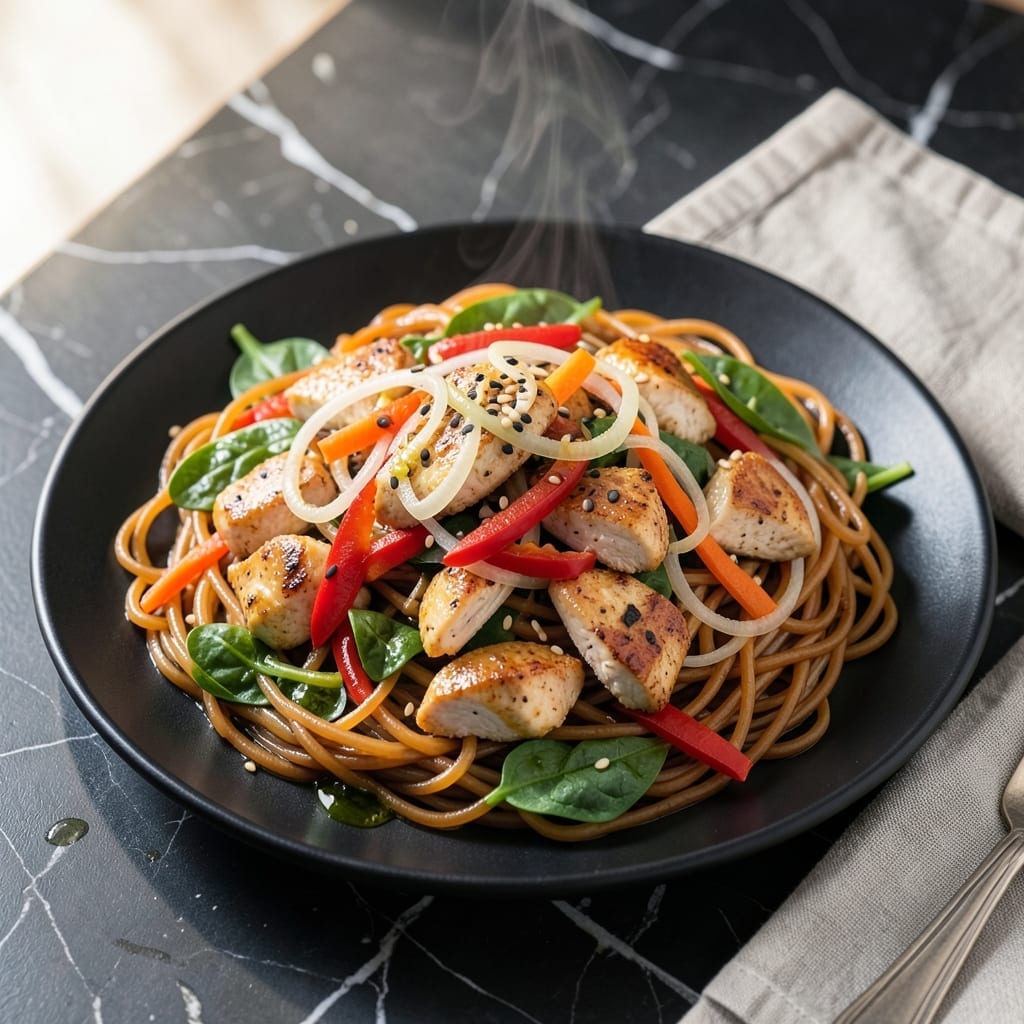
This Korean glass noodle dish brings together tender chicken, chewy sweet potato starch noodles, and colorful vegetables in a perfectly balanced sauce. I’ve refined this recipe over years of home cooking to capture the authentic flavors of traditional japchae.
The key is in the sauce—a sweet-savory blend of soy, sesame, and sugar that coats every strand of noodle. Each ingredient is cooked separately to preserve texture, then combined for a final toss that ensures even flavor distribution.
What results is a vibrant, slightly sticky dish with layers of texture and taste. The glass noodles glisten under the sauce, the chicken stays juicy, and the vegetables add fresh crunch.
Serve this at room temperature for the best experience, as the flavors deepen as it sits. This dish holds well, making it ideal for gatherings or meal prep.
Ingredients for Chicken Japchae
Sweet potato starch noodles meet juicy chicken and crisp vegetables in this authentic dish.
| Ingredient | Amount | Notes |
|---|---|---|
| Sweet Potato Starch Noodles 🍜 | 8 oz | Dangmyeon, dried glass noodles |
| Boneless Chicken Breast 🍗 | 1 lb | Thinly sliced for even cooking |
| Carrots 🥕 | 2 whole | Julienned into matchsticks |
| Red Bell Pepper 🌶️ | 1 whole | Thinly sliced into strips |
| Spinach 🥬 | 4 cups | Fresh, washed and trimmed |
| White Onion 🧅 | ½ whole | Thinly sliced into half-moons |
| Garlic Cloves 🧄 | 4 cloves | Minced for maximum flavor |
| Soy Sauce 🫒 | ⅓ cup | Low-sodium preferred for balance |
| Sesame Oil 🫒 | 2 tbsp | Toasted for nutty depth |
| Granulated Sugar 🍚 | 3 tbsp | Balances savory and umami notes |
| Toasted Sesame Seeds 🌰 | 2 tbsp | For garnish and texture |
| Vegetable Oil 🫒 | 2 tbsp | Neutral flavor for cooking |
| Salt 🧂 | ½ tsp | To taste for seasoning |
| Black Pepper 🌶️ | ¼ tsp | Freshly ground preferred |
The glass noodles are non-negotiable—look for dangmyeon (sweet potato starch noodles) in the Asian aisle at H Mart or Korean markets. Brands like Sempio or Ottogi are reliable. For the chicken, boneless thighs work too (more forgiving than breasts). Slice thinly against the grain for tenderness. Freshness matters most with the spinach—wilted leaves won’t hold up during cooking.
No sweet potato starch noodles? Cellophane noodles (mung bean) are the closest swap, though texture differs. For the sauce, coconut aminos can replace soy sauce in a pinch. Short on veggies? Zucchini or mushrooms add great texture. The sesame oil is key—don’t substitute with regular oil. If avoiding sugar, honey or brown sugar works (just adjust to taste).
Store uncooked noodles in a cool, dry place—they keep for months. Once cooked, the dish holds beautifully at room temperature for 2-3 hours (ideal for potlucks). Leftovers? Seal tightly and refrigerate for up to 3 days. Reheat gently to avoid drying the noodles.
Why You’ll Love This Recipe
- One Pot Wonder: I can cook the chicken, noodles, and veggies all in the same pan. Honestly, less cleanup than my morning coffee routine.
- Umami Bomb: The sweet potato starch noodles soak up that savory-sweet sauce, and the spinach adds just the right freshness.
- Meal Prep Hero: It reheats beautifully for lunch the next day—my coworkers always ask what smells so good.
- Budget Stretcher: A little chicken breast goes a long way with all those colorful veggies and noodles filling out the dish.
Step-by-Step Instructions for Chicken Japchae
This method ensures perfectly chewy noodles and tender chicken with a balanced sweet-savory sauce.
Step 1: Prepare the Chicken and Vegetables
Thinly slice the 1 lb Boneless Chicken Breast into bite-sized pieces. I keep them uniform so they cook evenly and absorb the sauce well. Season with 0.5 tsp Salt and 0.25 tsp Black Pepper, then set aside.
Julienne the 2 whole Carrots into matchsticks, thinly slice the 1 whole Red Bell Pepper into strips, and cut the 0.5 whole White Onion into half-moons. Mince the 4 cloves Garlic Cloves. Wash and trim the 4 cups Spinach. Having everything prepped first makes the cooking process smooth and efficient.
Step 2: Cook the Sweet Potato Starch Noodles
Boil the 8 oz Sweet Potato Starch Noodles in a large pot of water for 6-7 minutes until they turn translucent and are tender but still slightly chewy. Drain immediately and rinse under cold water to stop the cooking process and remove excess starch.
Drain well again, then toss with 1 tbsp Sesame Oil to prevent sticking. This step is crucial—undercooked noodles will be hard, while overcooked ones become mushy. The cold rinse also helps them maintain the right texture for stir-frying later.
Step 3: Cook the Chicken and Vegetables
Heat 1 tbsp Vegetable Oil in a large skillet or wok over medium-high heat. Add the chicken and cook for 5-6 minutes until it’s no longer pink and is lightly browned. Remove the chicken and set it aside.
In the same pan, add the remaining 1 tbsp Vegetable Oil if needed, then sauté the carrots, red bell pepper, and onion for 3-4 minutes until slightly softened but still crisp. Add the garlic and spinach, cooking for 1-2 minutes until the spinach wilts. Remove the vegetables and set aside with the chicken.
Step 4: Make the Sweet-Savory Sauce and Combine
In a small bowl, whisk together the 0.33 cup Soy Sauce, 3 tbsp Granulated Sugar, and 2 tbsp Sesame Oil until the sugar dissolves. This balance of savory, sweet, and nutty flavors is what makes japchae so addictive.
Return the chicken and vegetables to the pan over medium heat. Add the cooked noodles and pour the sauce over everything. Toss gently with tongs for 2-3 minutes until all ingredients are evenly coated and heated through. The noodles should glisten with the sauce, and the chicken should be tender and flavorful.
Step 5: Garnish and Serve
Transfer the japchae to a serving platter and sprinkle with 2 tbsp Toasted Sesame Seeds. The sesame seeds add a nutty crunch and a beautiful visual contrast. Serve warm, with extra sesame seeds on the side if desired.
Each serving should have a mix of chewy noodles, tender chicken, and crisp vegetables, all coated in that glossy, umami-rich sauce. This dish is best enjoyed fresh but can be reheated gently if needed.
Pro Tips For Making Chicken Japchae
- Boil Noodles Separately: Sweet potato starch noodles cook unevenly if boiled with other ingredients, so give them their own pot of boiling water for exactly 6-7 minutes—any longer and they turn mushy.
- Slice Chicken Thin: Boneless chicken breast can get chewy in japchae, so cut it against the grain into ¼-inch strips for tender bites that soak up the sauce better.
- Blanch Spinach First: I learned this the hard way—spinach wilts fast, so blanch it in salted water for just 30 seconds, then shock in ice water to keep its bright green color and prevent sogginess.
- Use Hot Pan for Veggies: Carrots and red bell pepper need a screaming-hot pan with a little oil to stay crisp-tender; cook them in batches if your pan isn’t big enough to avoid steaming.
Health Benefits of These Flavors
Nutrient-Dense Glass Noodles
Sweet potato starch noodles provide complex carbohydrates for sustained energy, along with dietary fiber that aids digestion. They’re naturally gluten-free, making this dish suitable for those with gluten sensitivities. 💪
Lean Protein Boost
The 1 lb chicken breast delivers about 50 grams of protein per serving, supporting muscle maintenance and repair. Chicken is also rich in B vitamins, particularly B6 and B12, which are vital for metabolism and brain function.
Vitamin-Rich Vegetables
Carrots and red bell peppers bring a powerhouse of vitamin A and vitamin C. The 4 cups spinach adds iron and folate, essential for blood health and energy production. This colorful mix ensures a diverse nutrient profile.
Heart-Healthy Fats
The 2 tbsp sesame oil in the sauce contains polyunsaturated fats, including omega-6 fatty acids, which support heart health. Sesame seeds also provide calcium and magnesium, contributing to bone and muscle function.
Balanced Macros
Each serving offers a well-rounded mix of carbs, protein, and healthy fats. The dish clocks in at roughly 400-500 calories per serving, making it a satisfying yet moderate option for a balanced diet. 💛
Low Sodium Control
Using low-sodium soy sauce helps keep the dish’s sodium levels in check while still delivering rich umami flavor. This allows you to enjoy the dish without overloading on salt, especially important for those monitoring their intake.
Nutrition Facts
Frequently Asked Questions
Can I use chicken thighs instead of breast?
Chicken thighs stay juicier and are more forgiving if overcooked. Just trim excess fat and slice thinly for even cooking. They’ll absorb the sauce beautifully.
How do I prevent the noodles from sticking?
Rinse cooked noodles under cold water immediately, then toss with 1 tbsp sesame oil. This removes excess starch and creates a protective coating. Stir occasionally while prepping other ingredients.
Can I make this dish ahead of time?
Yes! Japchae actually tastes better after 2-3 hours at room temperature as flavors meld. Store in an airtight container for up to 3 days in the fridge. Reheat gently with a splash of water.
What if my sauce is too salty?
Balance it by adding 1 tsp sugar or a splash of water. Taste as you go—the sauce should be sweet-savory, not overpowering. Adjust gradually for best results.

- Jollof Rice Sauce Recipe: West African Tomato and Spice Infusion - September 25, 2026
- Japanese Rice Soup Recipe: Umami-Rich Comfort in a Bowl - September 25, 2026
- Homemade Cream Of Rice Recipe: Silk-Smooth Breakfast in Minutes - September 25, 2026