
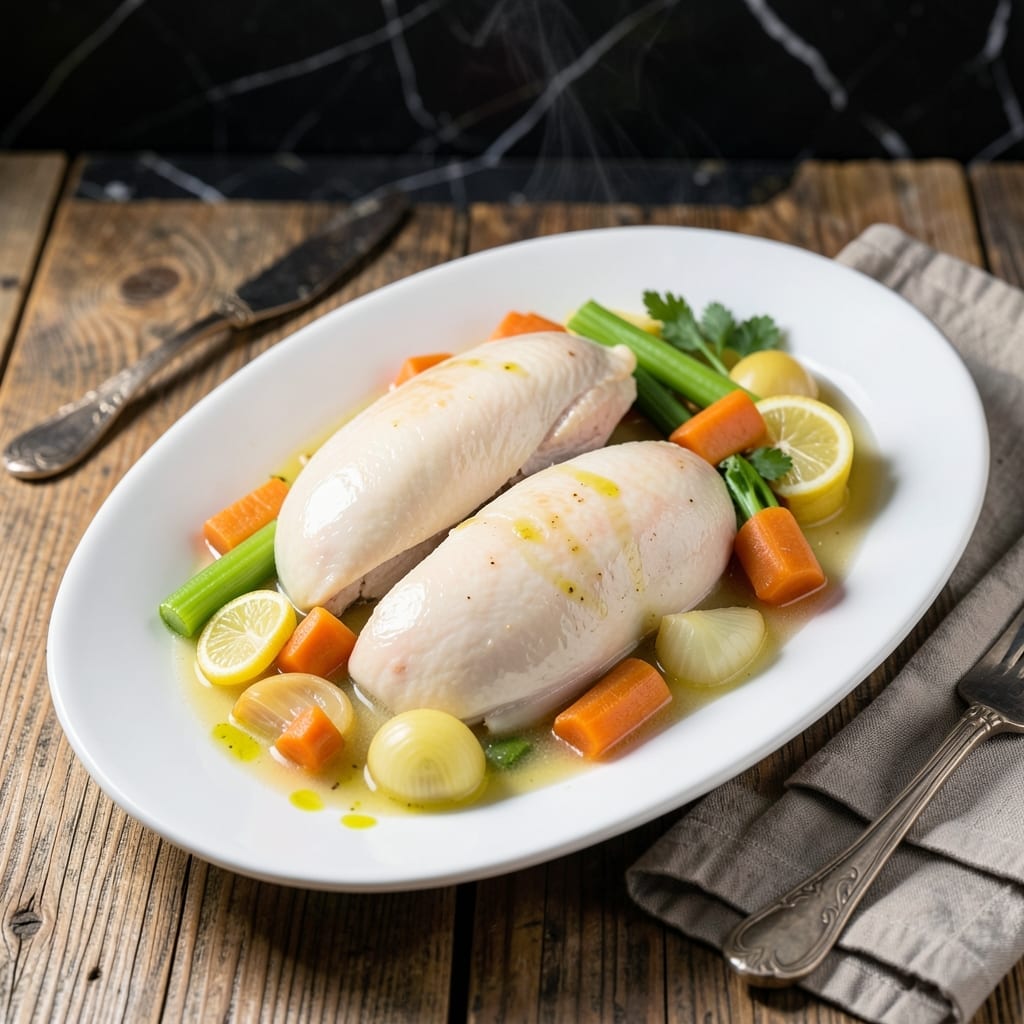
Poaching chicken is the secret to tender, moist meat every time, with a method that’s simpler than you might expect. This gentle cooking technique uses low heat and flavorful liquid to create perfectly cooked chicken that stays juicy and never dry.
I’ve tested this approach with various cuts, and the results are consistently impressive. The key is maintaining a steady temperature just below boiling, allowing the chicken to cook evenly without toughening. Aromatics like herbs, garlic, and lemon add subtle depth to the meat.
What you’ll get is chicken that’s ready to use in salads, soups, or sandwiches. The poaching liquid can even be saved for broth, making this a zero-waste method. It’s a technique every home cook should master for reliable results.
Serve it warm, chilled, or shredded for meal prep. This is a foundational recipe that elevates countless dishes.
Ingredients for Chicken Poaching
Simple ingredients transform chicken into tender, juicy perfection every time.
| Ingredient | Amount | Notes |
|---|---|---|
| Boneless, Skinless Chicken Breasts 🍗 | 1 ½ lb | Uniform thickness for even cooking |
| Water 💧 | 8 cups | Enough to fully submerge chicken |
| White Wine Vinegar 🍷 | 2 tbsp | Brightens poaching liquid |
| Kosher Salt 🧂 | 1 tbsp | Diamond Crystal preferred |
| Garlic Cloves 🧄 | 4 cloves | Lightly crushed, peeled |
| Fresh Lemon 🍋 | 1 whole | Sliced, plus juice for broth |
| Fresh Thyme Sprigs 🌿 | 4 sprigs | Or 1 tsp dried thyme |
| Fresh Parsley Stems 🌿 | 4 sprigs | Stems add flavor without waste |
| Bay Leaves 🍃 | 2 pieces | Dried, whole leaves |
| Black Peppercorns 🌶️ | 1 tsp | Whole, lightly crushed |
| Whole Carrot 🥕 | 1 whole | Roughly chopped for aroma |
| Whole Celery Stalk 🌱 | 1 whole | Roughly chopped for aroma |
| Yellow Onion 🧅 | ½ whole | Quartered, skin on |
The chicken quality matters most here. Boneless, skinless breasts give the most consistent results, but thighs work too (adjust cooking time). Look for air-chilled chicken at Whole Foods or Trader Joe’s—it retains moisture better. The water forms the base, but don’t skimp on the aromatics. Fresh herbs like thyme and parsley stems (save the leaves for garnish) add layers of flavor without overpowering.
No white wine vinegar? Apple cider vinegar works just as well. Missing fresh herbs? Dried herbs at one-third the amount will do—just add them directly to the liquid. The lemon can be swapped for lime if that’s what you have. For extra richness, add a splash of dry white wine (about 1/2 cup) to the poaching liquid. Skip the carrot and celery? No problem, but they do add subtle sweetness.
Poached chicken keeps 3-4 days in the fridge, submerged in its liquid. The broth can be strained and stored separately for 5 days or frozen for 3 months. Shred or slice just before serving for the best texture. Use the leftover broth in soups, sauces, or grains (it’s packed with flavor).
Why You’ll Love This Recipe
- Set and Forget: I toss everything into a pot, walk away, and come back to perfectly cooked chicken every time.
- Garlic-Kissed Flavor: The vinegar and garlic infuse the chicken with a bright, tangy depth that’s anything but boring.
- Meal Prep Magic: Shred it for tacos, slice it for salads—this chicken works in everything all week long.
- Budget Stretch: One pack of breasts, a few pantry staples, and suddenly I’ve got protein for four meals.
Step-by-Step Instructions for Poached Chicken
This method guarantees perfectly tender, moist chicken every time with minimal effort.
Step 1: Prepare the Poaching Liquid Base
In a large pot, combine the 8 cups water, 2 tbsp white wine vinegar, and 1 tbsp kosher salt. The vinegar helps break down proteins gently while the salt seasons the meat throughout the cooking process.
Add the 1 whole fresh lemon (sliced) and 1 tsp black peppercorns (lightly crushed) to the pot. These ingredients will infuse the liquid with bright, aromatic flavors that penetrate the chicken as it poaches.
Step 2: Add Aromatic Vegetables and Herbs
Roughly chop the 1 whole carrot, 1 whole celery stalk, and 0.5 whole yellow onion (quarter it, skin on) and add them to the pot. The skin on the onion adds a subtle earthiness to the broth.
Add the 4 cloves garlic cloves (lightly crushed and peeled), 4 sprigs fresh thyme sprigs, 4 sprigs fresh parsley stems, and 2 pieces bay leaves to the liquid. These aromatics create a flavorful foundation that keeps the chicken moist and tender during cooking.
Step 3: Poach the Chicken Gently
Bring the liquid to a gentle simmer over medium heat. The surface should shimmer with small bubbles, but not boil vigorously—this ensures the chicken cooks evenly without becoming tough.
Carefully add the 1.5 lb boneless, skinless chicken breasts to the pot, ensuring they are fully submerged. Maintain a gentle simmer and cook for 12-15 minutes, or until the internal temperature reaches 165°F and the meat is no longer pink in the center.
Step 4: Rest and Store the Poached Chicken
Using a slotted spoon, transfer the chicken to a plate or cutting board. Allow it to rest for 5-10 minutes before slicing or shredding. This resting period helps the juices redistribute, keeping the meat moist and flavorful.
If not using immediately, store the chicken in some of the poaching liquid in an airtight container in the refrigerator for up to 4 days. This preserves moisture and enhances the flavor of the chicken for future dishes.
Pro Tips For Making Chicken Poaching
- Keep It Simmering: Maintain the water at a gentle simmer, not a boil—boiling toughens the chicken. I learned this the hard way after ending up with rubbery breasts more times than I’d like to admit.
- Pound the Thickness: Lightly pound the chicken breasts to an even thickness (about 1 inch) so they cook uniformly. Sounds like extra work, but it prevents the thin ends from drying out while waiting for the thick parts to finish.
- Salt the Water Well: Use about 1 tablespoon of kosher salt per quart of water—this isn’t just for seasoning, it actually changes the outcome by keeping the meat juicy. My grandmother swore by this, and she was right.
- Use Vinegar Wisely: Add the white wine vinegar at the start (about 2 tablespoons per quart of water) to help tenderize the chicken and brighten the flavor. Skip it, and the poached chicken tastes flat.
Best Sauces and Condiments for chicken poaching
Classic French Sauce
I love pairing poached chicken with a velouté sauce made from the poaching liquid. Reduce 2 cups of the broth with 2 tbsp butter and 2 tbsp flour for a smooth, rich finish. A pinch of nutmeg adds warmth.
Bright Herb Sauce
Blend ½ cup fresh parsley, ¼ cup olive oil, 1 tbsp lemon juice, and 1 garlic clove for a vibrant gremolata-style sauce. It’s fresh and light, perfect for summer dishes. 🌿
Creamy Dill Option
Mix ½ cup Greek yogurt, 1 tbsp chopped dill, and 1 tsp lemon zest for a tangy, herby sauce. I use Fage 2% for the best texture. This pairs wonderfully with chilled chicken.
Spicy Mayo Twist
Combine ½ cup mayo with 1 tbsp sriracha and 1 tsp honey for a sweet-spicy kick. It’s my go-to for sandwiches and wraps. Adjust the heat to your taste by adding more or less sriracha.
Asian-Inspired Glaze
Simmer ¼ cup soy sauce, 2 tbsp honey, 1 tbsp rice vinegar, and 1 tsp grated ginger until thickened. Brush it over shredded chicken for a sticky, umami-packed topping. 🔥
Mediterranean Salsa
Dice 1 cup cucumber, ½ cup cherry tomatoes, and ¼ cup red onion, then toss with 2 tbsp olive oil and 1 tbsp red wine vinegar. This refreshing salsa brightens up any poached chicken dish.
Nutrition Facts
Frequently Asked Questions
What liquid works best for poaching?
Water with aromatics is classic, but chicken or vegetable broth adds extra flavor. A splash of white wine or apple cider vinegar brightens the liquid beautifully.
How do I keep chicken from drying out?
Maintain a gentle simmer, never a boil, and ensure the chicken stays fully submerged. Cook until it reaches 165°F internally, then rest for 5-10 minutes before slicing.
Can I reuse the poaching liquid?
Strain and use it as broth for soups, sauces, or cooking grains. It keeps in the fridge for 5 days or freezes for 3 months.
What cuts work besides breasts?
Thighs and legs are great too—just extend cooking time to 20-25 minutes. Bone-in pieces add more flavor to the liquid but may need skimming.

- Jollof Rice Sauce Recipe: West African Tomato and Spice Infusion - September 25, 2026
- Japanese Rice Soup Recipe: Umami-Rich Comfort in a Bowl - September 25, 2026
- Homemade Cream Of Rice Recipe: Silk-Smooth Breakfast in Minutes - September 25, 2026