
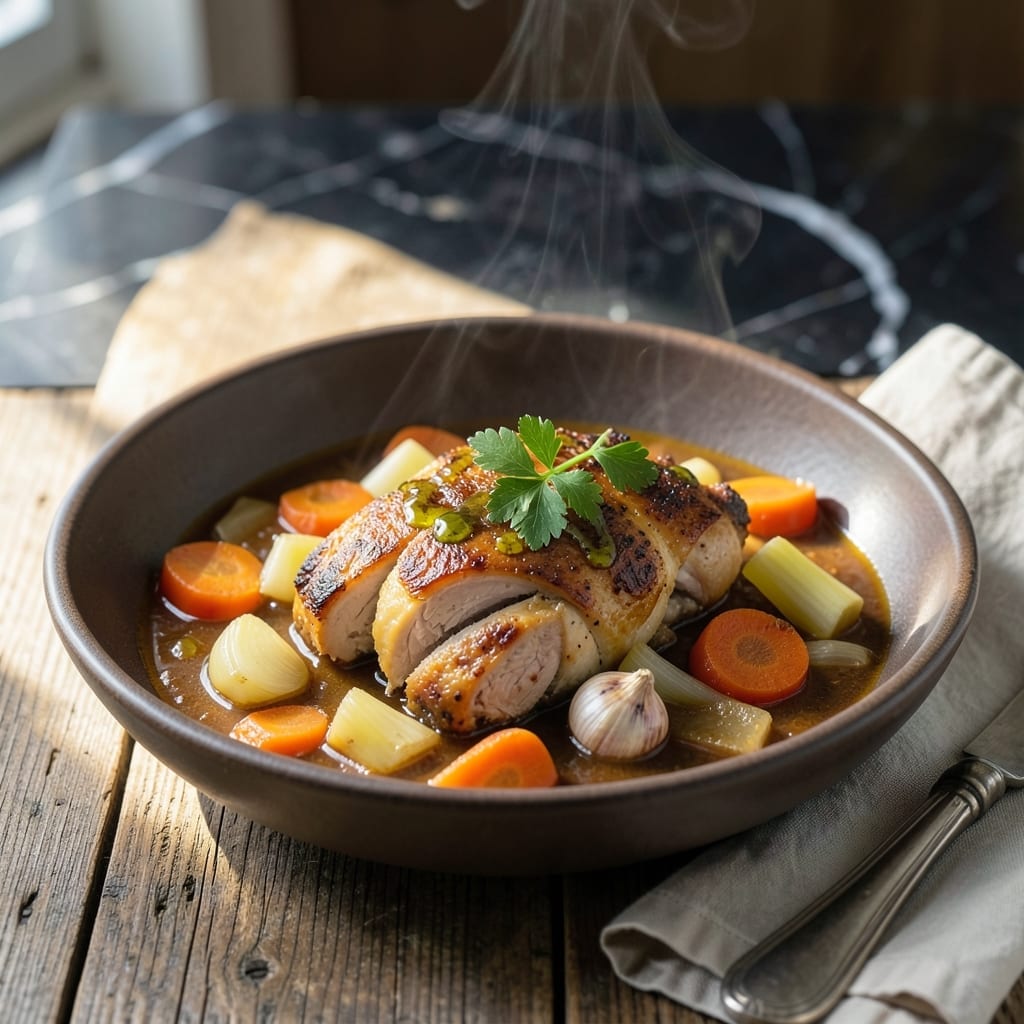
There’s a reason chicken ragu remains a timeless Italian classic—it transforms simple ingredients into something deeply satisfying. This dish builds rich, complex flavors through a slow simmer, allowing the chicken to become fork-tender while the sauce develops its signature depth.
What makes this recipe special is its balance of rustic simplicity and restaurant-quality results. The sauce clings beautifully to pasta, with every bite delivering a perfect ratio of meat, tomatoes, and aromatic herbs. It’s the kind of dish that tastes even better the next day.
With just one pot and a handful of pantry staples, you’ll create a meal that feels like a labor of love without the fuss. The aroma alone will have everyone gathering around the table before it’s even ready.
The final result is a hearty, saucy ragu that coats each strand of pasta, proving that great Italian cooking doesn’t require complicated techniques—just patience and a few quality ingredients.
Ingredients for Chicken Ragu
Quality ingredients plus patience create this rich, deeply satisfying Italian classic with complex flavors.
| Ingredient | Amount | Notes |
|---|---|---|
| Chicken Thighs 🍗 | 2 lb | Boneless, skinless, trimmed of fat |
| Olive Oil 🫒 | 2 tbsp | Extra-virgin preferred for depth |
| Yellow Onion 🧅 | 1 whole | Finely diced for even cooking |
| Carrots 🥕 | 2 whole | Peeled and finely diced |
| Celery Stalks 🌿 | 2 pieces | Finely diced for mirepoix |
| Garlic Cloves 🧄 | 4 cloves | Minced for aromatic base |
| Dry White Wine 🍷 | ½ cup | Sauvignon Blanc or Pinot Grigio |
| Canned San Marzano Tomatoes 🍅 | 28 oz | Crushed by hand for texture |
| Tomato Paste 🍅 | 2 tbsp | For concentrated umami depth |
| Chicken Stock 🥫 | 1 cup | Low-sodium preferred for control |
| Fresh Rosemary 🌿 | 2 tsp | Chopped, stems discarded |
| Fresh Thyme 🌿 | 2 tsp | Chopped, stems discarded |
| Bay Leaf 🍃 | 1 whole | For slow infusion, remove before serving |
| Dried Oregano 🌿 | 1 tsp | Dried for potency and concentration |
| Red Pepper Flakes 🌶️ | ½ tsp | Adjust for desired heat level |
The chicken thighs are non-negotiable for that fork-tender texture. Boneless, skinless from Whole Foods or your local butcher ensures consistent sizing. Look for vibrant color and minimal fat marbling. For the tomatoes, San Marzano cans from Eataly or specialty grocers provide the sweet, low-acid base this dish demands. Fresh herbs should be bright green and fragrant—avoid any with wilting or yellowing.
No white wine? Extra chicken stock with a splash of lemon juice mimics the acidity. Out of fresh rosemary or thyme? Use dried at one-third the amount. Trader Joe’s has excellent dried herbs if your local store’s selection is sad. Short on time? Pre-diced mirepoix (onion, carrot, celery) from Whole Foods works in a pinch, though fresh is always better.
Ragu improves overnight as flavors meld. Store in an airtight container in the fridge for up to 4 days, or freeze for 3 months. Portion before freezing for easy reheating. The sauce thickens as it cools, so thin with a splash of stock when reheating.
Why You’ll Love This Recipe
- One Pan Wonder: I toss the chicken thighs with onions, carrots, and celery in a single pot—minimal cleanup, maximum flavor.
- Rich and Hearty: The slow-cooked chicken and veggies soak up the olive oil, creating a sauce so good I mop it up with bread.
- Feeds a Crowd: Honestly, it’s my go-to for Sunday dinner or when the whole family’s over.
Step-by-Step Instructions for Chicken Ragu
Master the technique for building deep, layered flavor in this classic Italian preparation.
Step 1: Sear and Brown the Chicken Thighs
Heat the 2 tbsp Olive Oil in a large Dutch oven over medium-high heat until shimmering. Pat the 2 lb Chicken Thighs dry with paper towels—this ensures proper browning rather than steaming. Season generously with salt and pepper, then sear in batches to avoid crowding the pan.
Cook the chicken for 4-5 minutes per side until deep golden brown and easily released from the pot. The fond created during this process will form the flavor foundation of your ragu. Remove the chicken to a plate and set aside—it will continue cooking later.
Step 2: Build the Aromatic Base
In the same pot, add the 1 whole Yellow Onion, 2 whole Carrots, and 2 pieces Celery Stalks, all finely diced as specified. Cook over medium heat for 6-8 minutes, stirring occasionally, until the vegetables soften and the onion becomes translucent.
Add the 4 cloves Garlic Cloves and cook for 1 minute until fragrant. Stir in the 2 tbsp Tomato Paste and cook for 2 minutes, allowing it to caramelize slightly on the bottom of the pot. This step intensifies the umami depth significantly.
Step 3: Deglaze and Develop the Sauce
Pour in the 0.5 cup Dry White Wine and scrape up all the browned bits from the bottom of the pot with a wooden spoon. Simmer for 3-4 minutes until the liquid reduces by half. This deglazing step captures all the concentrated flavor from the searing process.
Add the 28 oz Canned San Marzano Tomatoes (crushed by hand), 1 cup Chicken Stock, 2 tsp Fresh Rosemary, 2 tsp Fresh Thyme, 1 whole Bay Leaf, 1 tsp Dried Oregano, and 0.5 tsp Red Pepper Flakes. Stir to combine thoroughly, then return the chicken to the pot with any accumulated juices.
Step 4: Simmer to Perfection
Bring the mixture to a gentle simmer, then reduce the heat to low. Partially cover the pot and let it cook for 45-60 minutes, stirring occasionally. The ragu should thicken slightly, with the chicken becoming fork-tender and nearly falling off the bone.
Remove the Bay Leaf and discard it. Taste and adjust seasoning with salt and pepper as needed. The sauce should have a rich, velvety texture with the flavors of the herbs and wine fully integrated. Serve over fresh pasta or polenta for an authentic presentation.
Pro Tips For Making Chicken Ragu
- Brown the Thighs Well: Sear the chicken thighs in olive oil over medium-high heat until deeply golden—about 5-7 minutes per side. I learned this the hard way: under-browned meat gives a pale, flavorless ragu.
- Fine Dice the Veggies: Chop the onion, carrots, and celery into small, even pieces (about ¼-inch). Sounds tedious, but it melts into the sauce and thickens it naturally.
- Skip the Crowding: Brown the chicken in batches if needed—overcrowding steams instead of sears, and you’ll end up with a watery, sad ragu.
- Use Thighs with Skin: Bone-in, skin-on thighs add rich gelatin and fat to the sauce. I was skeptical until I tried it, but the difference is noticeable.
Essential Equipment for Perfect Results
Dutch Oven Essentials
A heavy 5-6 quart Dutch oven is non-negotiable for this dish. I swear by my Le Creuset—it distributes heat evenly and retains it perfectly for the long simmer. The enameled cast iron also prevents the acidic tomatoes from reacting with the pot. 🔥
Wooden Spoon Magic
Use a wooden spoon for stirring to prevent scratching your Dutch oven. It’s also ideal for scraping up all those flavorful browned bits during deglazing. I keep a 12-inch spoon dedicated just for braising.
Quality Knife Set
A sharp 8-inch chef’s knife makes quick work of dicing the mirepoix. I recommend Wüsthof or Victorinox for home cooks. The precision cuts ensure even cooking and better flavor distribution in your ragu.
Herb Tools
For the fresh herbs, a herb stripper (like the OXO model) saves time removing rosemary and thyme from stems. It’s a small investment that makes prep faster and more enjoyable.
Measuring Accuracy
Use liquid measuring cups for the wine and stock. I like the Pyrex glass set with clear markings. For dry ingredients like tomato paste, standard measuring spoons ensure you’re using the exact amounts.
Optional but Helpful
A splash guard prevents messy stovetop cleanups when simmering. And if you’re serious about temperature control, a clip-on candy thermometer helps monitor the simmer point precisely.
Nutrition Facts
Frequently Asked Questions
Can I use chicken breasts instead of thighs?
Thighs are ideal for ragu because they stay juicy during the 45-60 minute simmer. Breasts will dry out. If you must use them, reduce cooking time to 25-30 minutes max.
What pasta pairs best with this sauce?
Wide, flat noodles like pappardelle or fettuccine hold the rich sauce beautifully. For a rustic touch, try pappardelle or rigatoni for sauce trapped in the ridges.
My sauce is too thin—how do I fix it?
Simmer uncovered for 10-15 minutes to reduce. For quicker results, mix 1 tbsp cornstarch with 1 tbsp water, stir into sauce, and cook for 2 minutes.
Can I make this in a slow cooker?
Yes! Brown chicken first, then transfer everything to the slow cooker. Cook on low for 6-8 hours or high for 3-4 hours.

- Jollof Rice Sauce Recipe: West African Tomato and Spice Infusion - September 25, 2026
- Japanese Rice Soup Recipe: Umami-Rich Comfort in a Bowl - September 25, 2026
- Homemade Cream Of Rice Recipe: Silk-Smooth Breakfast in Minutes - September 25, 2026