
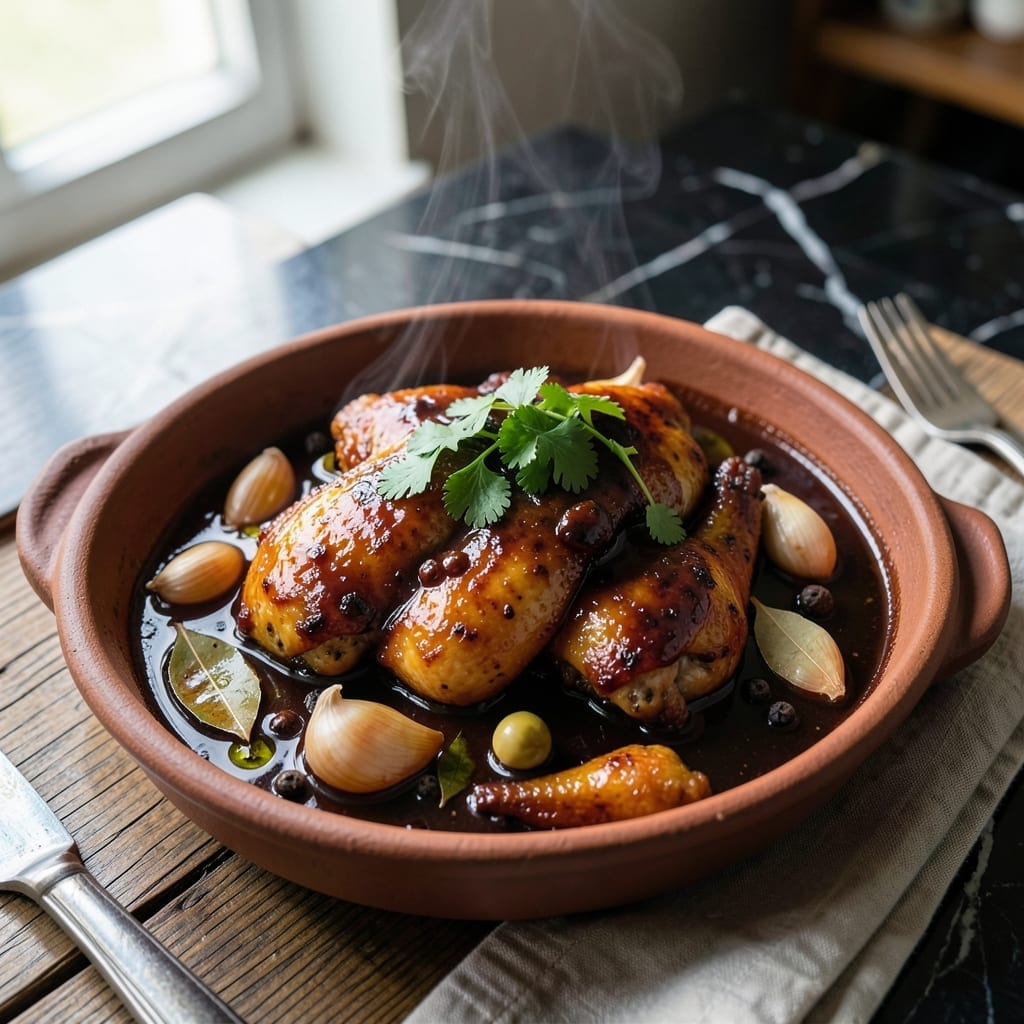
This Filipino-inspired chicken dish brings bold flavors to your kitchen with minimal effort. The combination of tangy vinegar, rich soy sauce, and aromatic garlic creates a sauce that’s both deeply savory and perfectly balanced.
I’ve refined this method over years to ensure the chicken stays tender while absorbing every bit of the marinade. A simple simmer transforms the ingredients into a glossy, flavorful glaze that clings to each piece.
What emerges is juicy, fall-off-the-bone chicken with a sauce so good, you’ll want to soak it up with rice. The dish is hearty, comforting, and ready in under an hour.
Perfect for weeknight dinners or special occasions, this recipe delivers authentic taste without complexity. Here’s how to make it at home.
Ingredients for Chicken Recipe Philippines
These authentic ingredients deliver bold Filipino flavors with minimal effort and maximum payoff.
| Ingredient | Amount | Notes |
|---|---|---|
| Chicken Thighs 🍗 | 2 lb | Boneless, skinless, trimmed of excess fat |
| Soy Sauce 🫒 | ¾ cup | Low-sodium preferred for balance |
| White Vinegar 🧂 | ½ cup | Cane vinegar for authenticity |
| Garlic Cloves 🧄 | 8 cloves | Peeled and minced finely |
| Bay Leaves 🍃 | 3 whole | Dried, for aromatic depth |
| Black Peppercorns 🌶️ | 1 tsp | Freshly cracked for best flavor |
| Brown Sugar 🧈 | 2 tbsp | Light or dark, optional for balancing acidity |
| Onion 🧅 | 1 whole | Medium, thinly sliced |
| Olive Oil 🫒 | 2 tbsp | For searing chicken |
| Water 💧 | ½ cup | To adjust sauce consistency |
| Green Onions 🌱 | 4 whole | Thinly sliced, for garnish |
| Jasmine Rice 🍚 | 1 ½ cups | Uncooked, for serving |
The soy sauce and vinegar are non-negotiable for authenticity. San Miguel or Datu Puti brands for soy sauce if you can find them at an Asian market. Cane vinegar is traditional, but white vinegar works in a pinch. Chicken thighs stay juicier than breasts during the long simmer—look for skin-on, bone-in for even more flavor, though boneless works too. The garlic should be fresh, not jarred, for the best aromatic punch.
No cane vinegar? Apple cider vinegar at a 1:1 ratio gets you close. Out of soy sauce? Tamari or coconut aminos with a pinch of salt can substitute. Bay leaves are key—don’t skip them, but dried laurel leaves work if fresh aren’t available. For heat, add a sliced chili or red pepper flakes to taste. The brown sugar balances the acidity, but you can omit it if you prefer a sharper flavor.
This keeps beautifully. The chicken and sauce actually improve overnight as the flavors meld. Store in an airtight container for up to 4 days in the fridge, or freeze for 3 months. Reheat gently to avoid drying out the meat. Always serve with steamed rice to soak up that incredible sauce.
Why You’ll Love This Recipe
- One Pan Wonder: I toss everything in a single pot and let the soy sauce and vinegar work their magic.
- Garlic Bomb: The cloves infuse the chicken thighs with a rich, savory depth that’s ridiculously good.
- Feeds a Crowd: Honestly, it’s my go-to for family dinners—everyone cleans their plate.
- Next-Day Magic: Leftovers taste even better, and the flavors just keep getting bolder.
Step-by-Step Instructions for Adobo-Style Chicken
This method delivers authentic flavor with a perfect balance of tangy and savory notes.
Step 1: Sear the Chicken Thighs
Heat the 2 tbsp olive oil in a large skillet over medium-high heat until it shimmers. Add the 2 lb chicken thighs and sear for 4-5 minutes per side until golden brown and the skin develops a crisp texture.
Work in batches if necessary to avoid overcrowding the pan, which would cause the chicken to steam rather than sear. The Maillard reaction during this step creates deep, complex flavors that define the dish.
Transfer the seared chicken to a plate and set aside. The residual oil in the pan will serve as the base for building the adobo sauce.
Step 2: Build the Aromatic Base
In the same skillet, add the thinly sliced onion and sauté over medium heat for 3-4 minutes until softened and translucent. Add the 8 cloves minced garlic and cook for 30 seconds until fragrant, stirring constantly to prevent burning.
Add the 3 whole bay leaves and 1 tsp cracked black peppercorns, stirring to release their aromatic oils. This combination forms the flavor foundation of the adobo, infusing the oil with layers of savory depth.
Pour in the 0.75 cup soy sauce and 0.5 cup white vinegar, using a wooden spoon to deglaze the pan and lift any browned bits from the bottom. These fond bits dissolve into the sauce, enhancing its richness.
Step 3: Braise the Chicken to Tenderness
Return the seared chicken to the skillet along with any accumulated juices. Add the 2 tbsp brown sugar and 0.5 cup water, stirring to dissolve the sugar completely. The liquid should come about halfway up the chicken thighs.
Bring the mixture to a gentle simmer, then reduce the heat to low. Cover the skillet and let it braise for 30-35 minutes, turning the chicken occasionally to ensure even cooking and absorption of flavors.
You’ll know the chicken is done when it reaches an internal temperature of 165°F and the meat easily pulls away from the bone. The sauce should have reduced slightly, coating the back of a spoon with a glossy sheen.
Step 4: Reduce the Sauce and Serve
Once the chicken is cooked, transfer it to a serving platter. Increase the heat to medium-high and let the sauce simmer uncovered for 5-7 minutes until it thickens to your desired consistency.
Taste the sauce and adjust the seasoning if needed. The balance should lean slightly tangy with a deep umami backbone from the soy sauce. Discard the bay leaves before serving, as they’ve already infused their flavor.
Spoon the reduced sauce over the chicken and garnish with the thinly sliced green onions. Serve immediately with steamed 1.5 cups jasmine rice to soak up the rich, flavorful sauce.
Pro Tips For Making Chicken Recipe Philippines
- Brown the Thighs: Sear the chicken thighs first in a hot pan until golden—about 3-4 minutes per side. I learned this the hard way: skipping this step leaves the meat pale and the sauce watery.
- Marinate Overnight: Let the chicken soak in the soy-vinegar-garlic mix for at least 4 hours, but overnight is even better. Sounds like a hassle, but it actually changes the outcome—deep flavor all the way through.
- Simmer Low and Slow: Once the liquid is in, keep the heat low and let it bubble gently for 30-40 minutes. After burning three batches, I finally figured out high heat just makes the sauce bitter and the chicken tough.
- Use More Garlic: Double the garlic cloves—yes, even if the recipe says 4, use 8. My grandmother swore by this, and she was right: the dish tastes richer and more authentic.
Perfect Pairings for This Dish
Rice Pairings
Steamed jasmine rice is the classic partner for this dish, soaking up the tangy adobo sauce beautifully. I cook 1.5 cups uncooked rice with a 1:1.5 rice-to-water ratio for perfect fluffiness. The subtle floral aroma complements the bold flavors without overpowering them.
Vegetable Sides
A simple cucumber and tomato salad with a light vinegar dressing adds freshness to balance the richness. Toss 2 cups sliced cucumbers and 1 cup cherry tomatoes with 1 tbsp vinegar and a pinch of salt. Alternatively, steamed bok choy with garlic keeps the Filipino theme going. 🥗
Pickled Accompaniments
Atchara (Filipino pickled papaya) cuts through the richness with its sweet-tangy crunch. You can find it at most Asian markets. If unavailable, quick-pickled radishes and carrots in vinegar with 1 tsp sugar and ½ tsp salt works in a pinch.
Beverage Pairings
An ice-cold San Miguel beer is my go-to—its crisp, light body refreshes your palate between bites. For non-alcoholic options, calamansi juice (Filipino limeade) with 2 tbsp honey per 1 cup water offers a zesty contrast. 🍺
Bread Options
Warm pandesal (Filipino bread rolls) are perfect for mopping up the sauce. If you can’t find them, crusty French bread or dinner rolls work well. Toast lightly and serve alongside the chicken for a heartier meal.
Nutrition Facts
Frequently Asked Questions
Can I use chicken breasts instead of thighs?
Yes, but thighs stay juicier during the 30-35 minute braise. If using breasts, reduce cooking time to 20-25 minutes to prevent dryness.
What if I don’t have cane vinegar?
White or apple cider vinegar work at a 1:1 ratio. The flavor will be slightly different but still delicious. Avoid balsamic as it’s too sweet.
How do I store leftovers?
Keep in an airtight container in the fridge for up to 4 days. Reheat gently to maintain moisture. The flavors deepen overnight.
Can I make this in a slow cooker?
Yes! Combine all ingredients and cook on low for 6-7 hours or high for 3-4 hours. Skip the searing step for convenience.

- Jollof Rice Sauce Recipe: West African Tomato and Spice Infusion - September 25, 2026
- Japanese Rice Soup Recipe: Umami-Rich Comfort in a Bowl - September 25, 2026
- Homemade Cream Of Rice Recipe: Silk-Smooth Breakfast in Minutes - September 25, 2026