
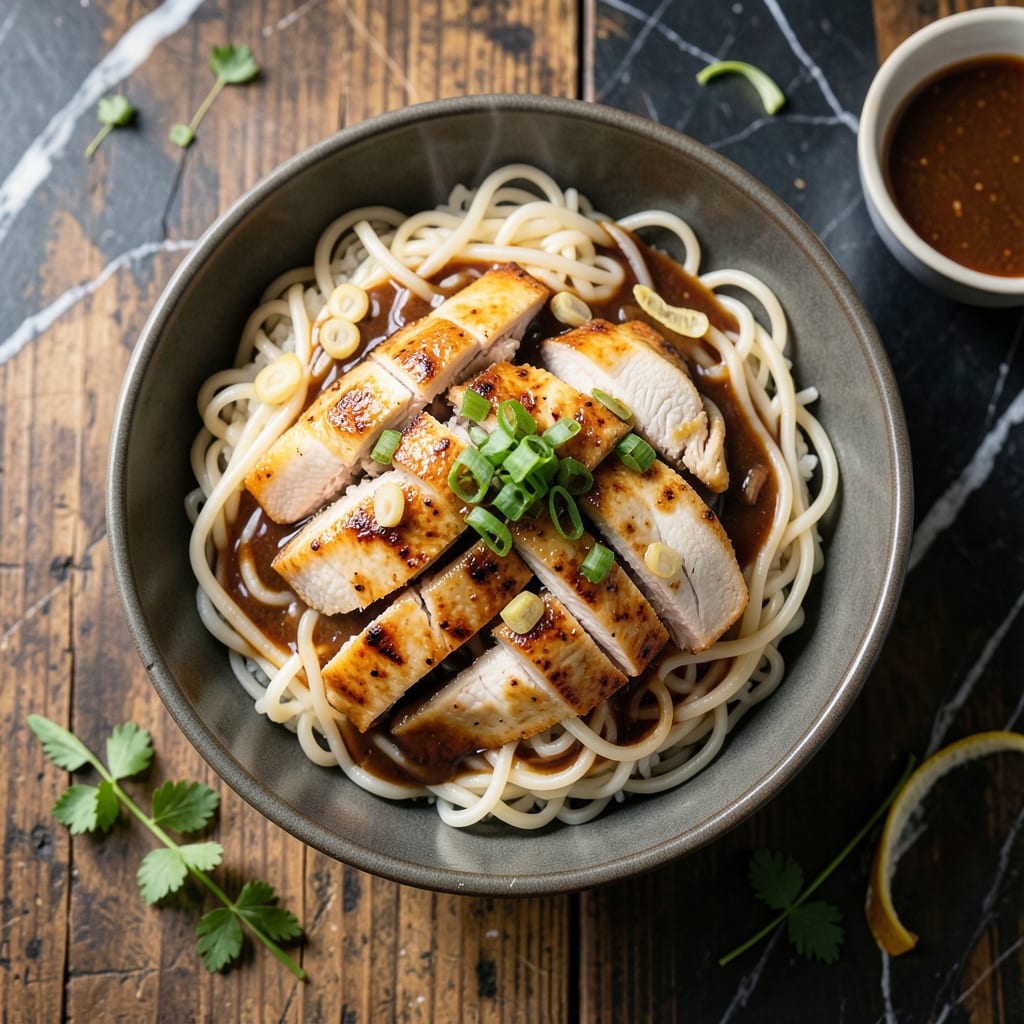
This wok-tossed dish brings authentic street food flavor to your kitchen with minimal effort. The key is high heat and proper timing to achieve perfectly cooked rice noodles and tender chicken.
I developed this method after years of experimenting with Asian takeout techniques at home. The secret lies in prepping all ingredients before cooking begins, allowing the wok to maintain its high temperature throughout the process.
What emerges is a plate of springy rice noodles coated in a savory sauce, studded with juicy chicken pieces and crisp vegetables. The texture contrast between the noodles and toppings creates that signature street food experience.
Ready in 20 minutes, this recipe proves you don’t need a food truck to enjoy restaurant-quality results.
Ingredients for Chicken Rice Noodle
High heat, bold flavors, and a handful of fresh ingredients bring this street food classic to life.
| Ingredient | Amount | Notes |
|---|---|---|
| Rice Noodles 🍜 | 8 oz | Dry, flat variety preferred |
| Boneless Chicken Breast 🍗 | 1 lb | Thinly sliced against grain |
| Soy Sauce 🫒 | ¼ cup | Low-sodium for control |
| Oyster Sauce 🫒 | 2 tbsp | Vegetarian substitute available |
| Sesame Oil 🫒 | 1 tbsp | Toasted for depth |
| Garlic Cloves 🧄 | 4 cloves | Minced for maximum flavor |
| Fresh Ginger 🌿 | 1 tbsp | Grated, peeled first |
| Red Bell Pepper 🌶️ | 1 whole | Thinly sliced for crunch |
| Green Onions 🧅 | 4 whole | Sliced, whites and greens separated |
| Bean Sprouts 🌱 | 1 cup | Rinsed and drained |
| Peanuts 🥜 | ½ cup | Crushed for texture |
| Lime 🍈 | 1 whole | Cut into wedges for serving |
| Vegetable Oil 🫒 | 3 tbsp | High smoke point for wok |
| Cornstarch 🌾 | 1 tbsp | For chicken velveting |
| Sriracha 🌶️ | 1 tbsp | Optional for heat lovers |
The rice noodles are non-negotiable here. Look for flat, wide noodles in the Asian aisle—brands like Thai Kitchen or Annie Chun’s work great. Fresh noodles save time but dry are more shelf-stable (and easier to find). For the chicken, thighs work too if you prefer darker meat, but breasts stay juicy when sliced thin. Don’t skip the cornstarch—it’s what gives the chicken that velvety texture.
No oyster sauce? Hoisin or fish sauce (if you have it) works in a pinch. Vegetarian oyster sauce from Kikkoman is a great store-bought swap. Can’t find fresh ginger? Ground ginger at half the amount works, but fresh really sings here. Peanuts not your thing? Cashews or almonds add a similar crunch. The bean sprouts? Totally optional (frozen works too).
Everything cooks fast—prep it all before you fire up the wok (that’s the secret). Leftovers? They’ll keep 3-4 days in the fridge, but honestly, this is best eaten fresh. The noodles soak up the sauce like a dream, but they can get gummy if reheated too much.
Why You’ll Love This Recipe
- 20-Minute Meal: I can have this on the table faster than takeout arrives. Just boil the rice noodles while the chicken sears, then toss it all together.
- Savory Umami Bomb: The soy and oyster sauce combo with that sesame oil finish? Ridiculously good. I always go back for seconds.
- Weeknight Rescue: Honestly, this is my go-to when I need something filling for lunch boxes or a quick dinner.
- Budget Stretcher: A pound of chicken and a pack of noodles feeds my family of four with leftovers. Between us, it’s my wallet’s best friend.
Step-by-Step Instructions for Chicken Rice Noodles
Here’s the method I use for perfect wok-tossed noodles with juicy chicken every time.
Step 1: Velvet the Chicken for Maximum Tenderness
Slice the 1 lb Boneless Chicken Breast thinly against the grain into ¼-inch strips. This shortens the muscle fibers for a more tender bite. In a bowl, toss the chicken with the 1 tbsp Cornstarch until each piece is evenly coated.
The cornstarch creates a velvety texture and protects the chicken from the high heat of the wok. I always let it sit for 10 minutes while I prep the other ingredients—this gives the cornstarch time to adhere properly to the meat.
Step 2: Stir-Fry Aromatics and Chicken
Heat 2 tbsp Vegetable Oil in a wok or large skillet over high heat until it shimmers. Add the 4 cloves Garlic Cloves and 1 tbsp Fresh Ginger, stirring constantly for 30 seconds until fragrant. The ginger should sizzle and the garlic should turn just pale gold—don’t let it brown or it’ll turn bitter.
Add the cornstarch-coated chicken in a single layer. Let it sear undisturbed for 1 minute, then stir-fry for another 2-3 minutes until the chicken turns opaque white and is cooked through. Transfer to a plate and set aside.
Step 3: Wok-Toss Vegetables and Noodles
Add the remaining 1 tbsp Vegetable Oil to the wok. Toss in the 1 whole Red Bell Pepper (thinly sliced) and stir-fry for 2 minutes until it begins to soften but retains its crispness. Add the 8 oz Rice Noodles (pre-soaked in hot water for 5 minutes until pliable but still firm) and the whites of the 4 whole Green Onions.
Drizzle the 0.25 cup Soy Sauce, 2 tbsp Oyster Sauce, and 1 tbsp Sesame Oil around the edges of the wok. Toss everything together for 2-3 minutes until the noodles are tender and have absorbed most of the sauce. The noodles should be chewy but not mushy.
Step 4: Combine and Finish with Signature Touches
Return the chicken to the wok along with the 1 cup Bean Sprouts. Stir-fry for 1-2 minutes until everything is heated through and the sprouts are just tender. The bean sprouts should remain crisp-tender—overcooking them turns them soggy.
Remove from heat and stir in the green parts of the 4 whole Green Onions and the 0.5 cup Peanuts. If using, add the 1 tbsp Sriracha for a spicy kick. Taste and adjust seasoning if needed. Serve immediately with lime wedges on the side for a bright, citrusy finish.
Pro Tips For Making Chicken Rice Noodle
- Soak Noodles First: Cover rice noodles in hot water for 8-10 minutes before cooking—I learned this the hard way after ending up with crunchy strands in my stir-fry.
- Slice Chicken Thin: Cut the boneless chicken breast into ¼-inch strips so it cooks through in 2-3 minutes and doesn’t turn rubbery while the noodles wait.
- Skip Over-Salting: Soy sauce and oyster sauce are already packed with sodium, so taste as you go and hold back on extra salt until the very end.
- Finish With Sesame Oil: Drizzle the sesame oil off the heat right before serving—adding it too early dulls its nutty aroma and you’ll lose that final pop of flavor.
Common Mistakes When Making Great chicken rice noodle
Overcrowding the Wok
This is the biggest mistake I see home cooks make. Your wok needs room to breathe—adding too many ingredients at once drops the temperature and leads to steamed instead of stir-fried results. Work in batches if needed. 🔥
Skipping the Soak
Dry rice noodles must be soaked in hot water for 5 minutes before cooking. I learned this the hard way when my first attempts resulted in crunchy noodles. They should be pliable but still firm when they hit the wok.
Underheating the Oil
Your oil should shimmer and almost smoke before adding ingredients. If it’s not hot enough, you’ll end up with soggy chicken and noodles. I test by flicking a drop of water—it should sizzle violently.
Overcooking the Noodles
Rice noodles cook fast—just 2-3 minutes in the wok is enough. They’ll continue cooking off the heat. The perfect texture is chewy, not mushy. I pull them when they’re just tender.
Neglecting the Aromatics
Burnt garlic or ginger ruins the whole dish. Keep them moving constantly for 30 seconds max. I use a metal spatula to toss continuously. The moment they turn pale gold, add your next ingredient.
Forgetting the Cornstarch
This is your insurance for tender chicken. The 1 tbsp Cornstarch creates a velvety coating that locks in juices. I’ve tried skipping it—don’t. The difference in texture is night and day.
Nutrition Facts
Frequently Asked Questions
Can I use chicken thighs instead of breasts?
Thighs stay juicier and add richer flavor. Just slice them thinly against the grain like the breasts. They may need 1 extra minute of cooking time.
How do I prevent the noodles from sticking together?
Soak dry noodles in hot water for 5 minutes, then drain and rinse with cold water. Toss with a bit of oil before adding to the wok. This keeps them separate and ready for stir-frying.
What if I don’t have a wok?
A large, heavy skillet works fine. Use high heat and cook in batches to avoid steaming. A well-seasoned cast iron pan is my second choice for this dish.
How can I make this gluten-free?
Swap regular soy sauce for tamari or coconut aminos. Use rice noodles (naturally gluten-free) and ensure your oyster sauce is gluten-free. All other ingredients are typically safe.

- Jollof Rice Sauce Recipe: West African Tomato and Spice Infusion - September 25, 2026
- Japanese Rice Soup Recipe: Umami-Rich Comfort in a Bowl - September 25, 2026
- Homemade Cream Of Rice Recipe: Silk-Smooth Breakfast in Minutes - September 25, 2026