
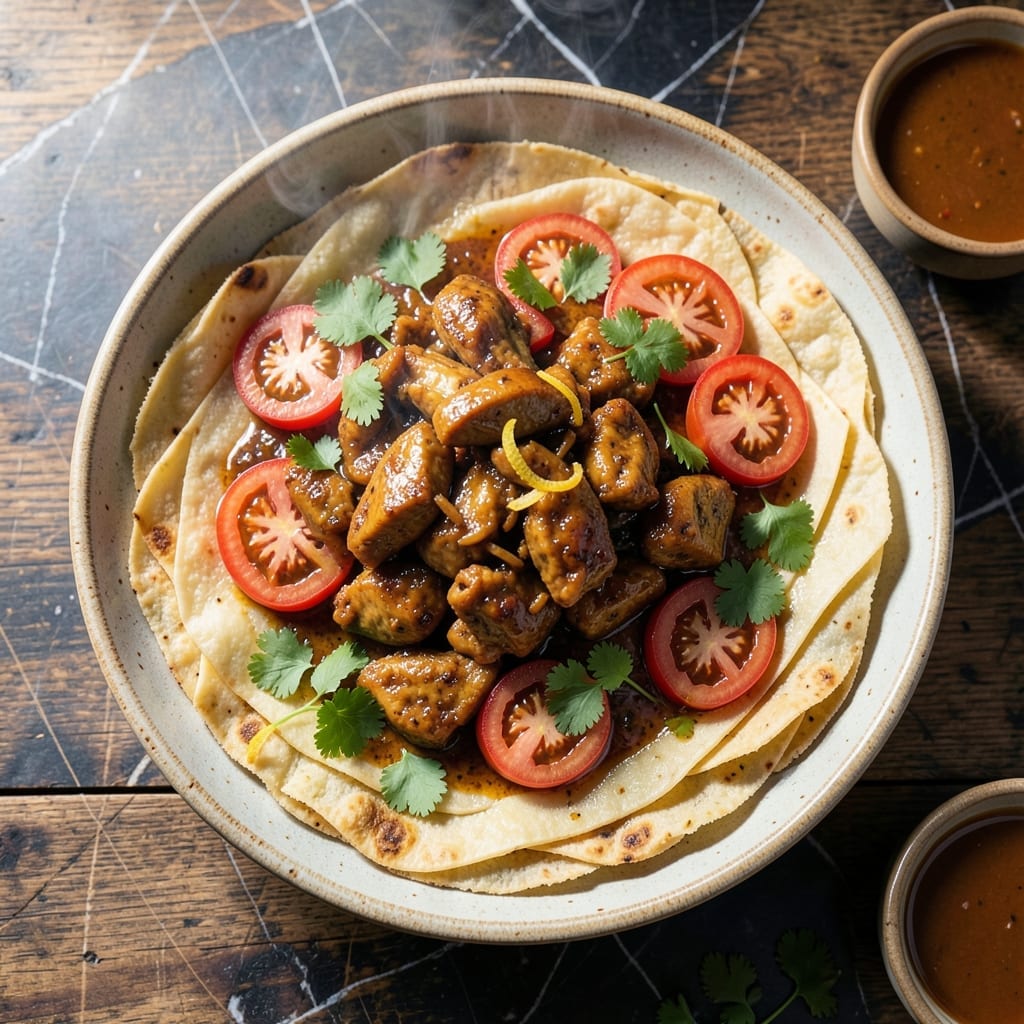
This Caribbean-inspired dish combines tender spiced chicken wrapped in flaky, buttery layers of roti that melt in your mouth. The chicken is marinated in a blend of warm island spices that infuse every bite with authentic flavor.
The roti dough requires careful layering and folding to achieve those signature flaky textures that separate this from ordinary flatbreads. Cooking the chicken low and slow ensures it stays juicy while the spices develop their full potential.
What results is a handheld meal where the soft roti perfectly complements the bold, aromatic chicken filling. Each bite delivers the contrast of tender meat and crisp, layered bread that’s become a Caribbean street food staple.
Serve with a side of pepper sauce or a cool cucumber raita to balance the spices. Here’s how to create this authentic dish at home.
Ingredients for Chicken Roti
Nothing exotic here—just good stuff for that authentic Caribbean flavor.
| Ingredient | Amount | Notes |
|---|---|---|
| Boneless Chicken Thighs 🍗 | 1 ½ lb | Skin-on for extra flavor |
| All-Purpose Flour 🌾 | 3 cups | Plus extra for dusting |
| Unsalted Butter 🧈 | ¾ cup | Melted for brushing |
| Ground Cumin 🌿 | 1 tbsp | Toasted for depth |
| Ground Coriander 🌿 | 1 tbsp | Freshly ground preferred |
| Garlic Powder 🧄 | 1 tbsp | Or 6 fresh cloves minced |
| Ground Turmeric 🟡 | 1 tsp | For vibrant color |
| Scotch Bonnet Pepper 🌶️ | 1 whole | Seeds removed, minced |
| Fresh Ginger 🌿 | 1 tbsp | Grated, no need to peel |
| Green Onions 🧅 | 4 pieces | Thinly sliced for garnish |
| Lime Juice 🍋 | 2 tbsp | Freshly squeezed |
| Vegetable Oil 🫒 | 2 tbsp | For cooking chicken |
| Salt 🧂 | 1 ½ tsp | Divided for dough and filling |
| Fresh Cilantro 🌿 | ¼ cup | Chopped for garnish |
| Water 💧 | ¾ cup | Warm, for dough |
The chicken thighs are non-negotiable here—bone-in, skin-on gives you that juicy, flavorful meat that holds up to the bold spices. Grab them from Whole Foods or any butcher with a good reputation for quality. For the Scotch bonnet, Trader Joe’s sometimes carries them, or check a Latin or Caribbean market (just wear gloves when handling—those peppers are no joke). The butter should be European-style for that extra richness in the roti layers.
No Scotch bonnet? Habanero works in a pinch (same heat, slightly different flavor). Fresh ginger not on hand? Ground ginger at half the amount—not as bright but still good. For the flour, bread flour gives extra chew, but all-purpose is fine. The cilantro can be swapped for parsley if you’re one of those people who thinks it tastes like soap (no judgment).
The roti dough can rest overnight in the fridge if you want to prep ahead. Cooked chicken keeps 3-4 days in the fridge, or freeze for 3 months. Best served fresh though—those flaky layers are magic straight out of the pan.
Why You’ll Love This Recipe
- One Bowl Wonder: I mix the dough and marinate the chicken in the same bowl—saves me from washing a mountain of dishes.
- Warm Spice Hug: The cumin and coriander in the chicken filling make every bite taste like home.
- Feeds a Hungry Table: I stretch one batch of dough into a dozen rotis, perfect for family dinners or packing lunches.
- Pocket-Friendly Feast: Boneless thighs stay juicy and cost half what breasts do, so I make this twice a week without guilt.
Step-by-Step Instructions for Chicken Roti
This method delivers those signature flaky layers packed with bold Caribbean flavors.
Step 1: Prepare the Spiced Chicken Filling
Heat the vegetable oil in a skillet over medium heat. Add the boneless chicken thighs and cook for 6-8 minutes until lightly browned on all sides. I always use skin-on for extra flavor, but either works here.
Stir in the ground cumin, ground coriander, garlic powder, and ground turmeric, coating the chicken evenly. Add the minced Scotch bonnet pepper and fresh ginger, cooking for another 2 minutes until fragrant. Finish with 1 tsp salt and the lime juice, then set aside to cool.
Step 2: Make the Roti Dough
In a large bowl, combine the all-purpose flour with the remaining 0.5 tsp salt. Gradually add the water while mixing with your hands until a shaggy dough forms. It should be slightly sticky but not wet.
Knead the dough on a lightly floured surface for 8-10 minutes until smooth and elastic. I press my thumb into the dough to test—if it bounces back slowly, it’s ready. Cover with a damp towel and let rest for 30 minutes at room temperature.
Step 3: Assemble and Cook the Roti
Divide the dough into 4 equal portions and roll each into a thin circle, about 8 inches in diameter. Spoon a quarter of the chicken mixture onto one half of each circle, leaving a 1-inch border. Fold the dough over the filling to create a half-moon shape, then crimp the edges tightly with a fork.
Heat a dry skillet over medium-high heat. Cook each roti for 3-4 minutes per side until golden brown and puffed in spots. Press down gently with a spatula to encourage even browning. Brush the cooked roti with some of the melted unsalted butter as soon as it comes out of the pan.
Step 4: Garnish and Serve
Thinly slice the green onions and chop the fresh cilantro. Sprinkle these over the hot roti along with any remaining melted unsalted butter. The residual heat will soften the herbs slightly, releasing their aromas.
Stack the roti on a plate and let them rest for 2 minutes before serving. This final rest allows the layers to set, making them easier to pull apart. Serve warm with extra lime juice on the side for a bright finish.
Pro Tips For Making Chicken Roti
- Rest the Dough: Let the roti dough sit for at least 30 minutes after kneading—this relaxes the gluten so it rolls out thin and even, no springing back.
- Dry the Chicken: Pat the boneless thighs completely dry before seasoning; excess moisture steams instead of sears, and you’ll lose that golden crust.
- Skip Cold Butter: Use room-temperature unsalted butter when brushing the roti; cold butter tears the layers instead of melting in smooth and even.
- Toast the Spices: Lightly dry-toast the cumin and coriander in a pan for 30 seconds before adding to the chicken—it wakes up the flavors without burning them.
Troubleshooting This Recipe
Dough Too Tough
If your roti dough feels overly stiff and hard to roll, you likely added too much flour during kneading. Sprinkle 1-2 tsp water at a time and knead it in until the dough softens. Let it rest for 10 minutes before trying again. I often find this happens when I’m nervous about stickiness. 💡
Filling Leaks Out
Prevent filling from escaping by not overloading each roti—use about ½ cup chicken mixture per piece. Seal the edges tightly with a fork, pressing firmly. If it still leaks, try folding the edges inward slightly before crimping for extra security.
Roti Not Flaky
For those signature layers, the dough must be rolled thin—aim for about ⅛ inch thick. Brush with melted butter between folds if you’re making multiple layers. Also, ensure your skillet is fully preheated to medium-high heat before cooking.
Chicken Too Dry
Dry chicken usually means it was overcooked. Reduce the initial browning time to 5 minutes and add 2 tbsp water to the pan, covering it for the last 2 minutes of cooking. This steams the meat, keeping it moist.
Burnt Bottoms
If your roti is burning before cooking through, lower the heat to medium. A heavy-bottomed skillet—like my trusty Lodge cast iron—distributes heat more evenly. Avoid pressing too hard with the spatula, which can cause uneven cooking.
Dough Sticks
Sticky dough often needs more resting time. After kneading, let it rest for the full 30 minutes. If it’s still sticking, lightly dust your surface with flour, but avoid adding too much, which can make the roti dense. 🔥
Nutrition Facts
Frequently Asked Questions
Can I use chicken breast instead of thighs?
Thighs work best because they stay juicy, but breasts can be used. Reduce cooking time to 4-5 minutes to prevent dryness. Add 1 tbsp yogurt to the marinade for extra moisture.
How do I make the roti extra flaky?
Roll the dough paper-thin and brush with melted butter between each fold. Cook on medium-high heat and press gently with a spatula to create layers.
Can I prepare the dough ahead?
Yes! The dough can rest overnight in the fridge. Let it come to room temperature before rolling. This actually improves the texture and flavor.
What can I substitute for Scotch bonnet?
Habanero is the closest substitute. Use half the amount if sensitive to heat. For milder flavor, try jalapeño with a pinch of cayenne.

- Jollof Rice Sauce Recipe: West African Tomato and Spice Infusion - September 25, 2026
- Japanese Rice Soup Recipe: Umami-Rich Comfort in a Bowl - September 25, 2026
- Homemade Cream Of Rice Recipe: Silk-Smooth Breakfast in Minutes - September 25, 2026