
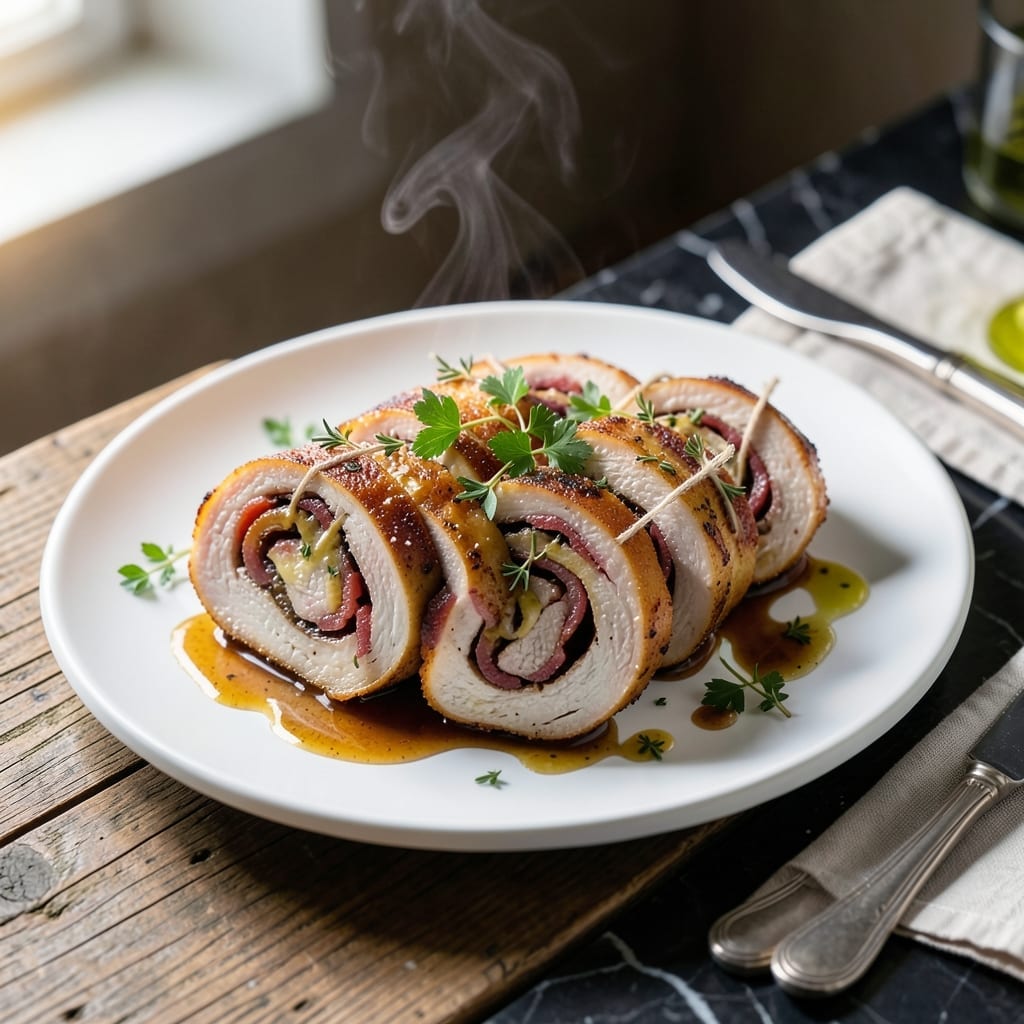
Elevate your dinner with this refined chicken rouladen, where tender chicken breasts envelop a savory herb filling. The rolls are seared to golden perfection, then simmered in a rich white wine sauce that infuses every bite with depth.
This dish transforms simple ingredients into an elegant main course. Thinly pounded chicken ensures even cooking, while the herb and bacon stuffing adds layers of flavor. The wine sauce reduces to a velvety consistency, coating each roll beautifully.
The result is juicy, flavorful chicken with a delicate balance of textures. The herbs lend freshness, the bacon adds smokiness, and the sauce ties everything together in a harmonious finish.
Serve with mashed potatoes or roasted vegetables to complete the meal.
Ingredients for Chicken Rouladen
Simple ingredients transform into an elegant dish with layers of flavor and texture.
| Ingredient | Amount | Notes |
|---|---|---|
| Chicken Breast 🍗 | 1 ½ lb | Boneless, skinless, pounded to 1/4-inch thickness |
| Bacon 🥓 | 8 slices | Thin-cut, for stuffing |
| Fresh Parsley 🌿 | ¼ cup | Chopped, for herb filling |
| Fresh Thyme 🍃 | 2 tbsp | Leaves stripped from stems |
| Dijon Mustard 🟡 | 2 tbsp | For spreading on chicken |
| All-Purpose Flour 🌾 | ¼ cup | For dredging chicken rolls |
| Dry White Wine 🍷 | 1 ½ cups | For deglazing and sauce |
| Chicken Broth 🥣 | 1 cup | Low-sodium preferred |
| Heavy Cream 🥛 | ½ cup | For finishing the sauce |
| Unsalted Butter 🧈 | 2 tbsp | For searing |
| Yellow Onion 🧅 | 1 whole | Finely diced, for sauce |
| Garlic Cloves 🧄 | 2 cloves | Minced, for sauce |
| Olive Oil 🫒 | 2 tbsp | For searing if needed |
| Kosher Salt 🧂 | 1 tsp | Plus more to taste |
| Black Pepper 🌶️ | ½ tsp | Freshly ground |
The chicken must be thinly and evenly pounded—this ensures even cooking and easy rolling. Butcher shops often sell pre-pounded breasts, or use a rolling pin at home between plastic wrap. For the bacon, thin-cut slices from a quality brand like Niman Ranch or Applegate work best, as they cook through without overpowering the herbs. Fresh herbs are non-negotiable here; dried won’t give the same vibrancy.
No white wine? Dry vermouth is a perfect substitute with a similar acidity. Out of bacon? Thinly sliced prosciutto or pancetta adds the same saltiness. For a lighter option, turkey bacon works but lacks depth. The Dijon mustard can be swapped for whole-grain mustard for texture, but avoid yellow mustard—it’s too mild. Low-sodium broth helps control the saltiness of the final sauce.
The rolls can be prepped a day ahead and refrigerated before cooking. Finished dish keeps 3-4 days in the fridge or freezes for 1 month. Reheat gently in the sauce to prevent drying. Always bring the wine and cream to room temperature before starting for even incorporation.
Why You’ll Love This Recipe
- One Pan Wonder: I roll, stuff, and bake everything on a single sheet—minimal cleanup, maximum flavor.
- That Smoky Kick: The bacon and Dijon mustard combo gives it a rich, savory depth I can’t get enough of.
- Weeknight Hero: Honestly, it’s fancy enough for guests but simple enough for a Tuesday dinner.
- Leftovers? Yes Please: The rouladen reheats beautifully, so I always make extra for tomorrow’s lunch.
Step-by-Step Instructions for Chicken Rouladen
This method ensures tender, flavorful rolls with a rich wine sauce every time.
Step 1: Prepare and Stuff the Chicken
Lay the 1.5 lb chicken breast pieces on a clean surface. Spread each with a thin layer of Dijon mustard, then sprinkle evenly with fresh parsley and fresh thyme. Top each piece with 2 slices bacon (using all 8 slices).
Roll tightly from one end to the other, securing with toothpicks if needed. Season the outside with 1 tsp kosher salt and 0.5 tsp black pepper. This step builds the foundation of flavor—don’t skip the herbs as they infuse every bite.
Step 2: Sear the Rouladen
Heat 2 tbsp unsalted butter and 2 tbsp olive oil in a large skillet over medium-high heat until the butter foams. Dredge each roll lightly in 0.25 cup all-purpose flour, shaking off excess, then sear until golden brown on all sides, about 2-3 minutes per side.
Transfer the seared rolls to a plate and set aside. The flour creates a light crust that thickens the sauce later, while the searing develops deep, caramelized flavors in the pan.
Step 3: Build the Wine Sauce
In the same skillet, sauté 1 whole yellow onion (finely diced) until soft and translucent, about 5 minutes. Add 2 cloves minced garlic and cook for 30 seconds until fragrant. Pour in 1.5 cups dry white wine, scraping up any browned bits from the bottom of the pan.
Let the wine reduce by half, about 5-7 minutes, then add 1 cup chicken broth. This deglazing step captures all the concentrated flavors from searing the chicken.
Step 4: Finish with Cream and Serve
Return the rouladen to the skillet, spooning the sauce over the top. Reduce heat to medium-low, cover, and simmer for 15-20 minutes until the chicken reaches 165°F internally and the sauce thickens slightly.
Stir in 0.5 cup heavy cream and simmer for an additional 2-3 minutes until the sauce coats the back of a spoon. Remove the toothpicks before serving, and spoon the rich wine sauce over the top for a restaurant-quality finish.
Pro Tips For Making Chicken Rouladen
- Pound the Chicken: Use a meat mallet to pound the chicken breasts to an even ¼-inch thickness—this guarantees even cooking and prevents dry, chewy spots.
- Pre-cook the Bacon: Par-cook the bacon for 2-3 minutes in a pan before rolling it in the rouladen; it’ll finish cooking in the oven without leaving the chicken underdone.
- Seal with Mustard: Spread Dijon mustard on the inside of the chicken before adding fillings—it acts like glue to hold everything together while adding a tangy kick.
- Rest Before Slicing: Let the rouladen rest for 5 minutes after cooking, tented with foil, so the juices redistribute and don’t spill out when you slice it.
Dietary Considerations for This Recipe
Gluten-Free Option
Swap the all-purpose flour for cornstarch or gluten-free flour blend. Use ¼ cup for dredging, ensuring the same light coating. I’ve tested with Bob’s Red Mill 1-to-1 and it works perfectly without changing the sauce texture. 💪
Dairy-Free Adaptation
Replace heavy cream with full-fat coconut milk for a rich, dairy-free sauce. The flavor is slightly different but still delicious. Use ½ cup just like the original, and add a pinch of nutritional yeast for depth.
Lower-Carb Version
Skip the flour dredge entirely—it’s mostly for thickening the sauce. If you want that body, mix 1 tsp xanthan gum with 1 tbsp cold water and stir into the sauce at the end. The rolls will still brown well from the sear.
Low-Sodium Considerations
Use low-sodium chicken broth and no-salt-added bacon to control the salt content. I prefer Applegate Uncured for this. Reduce added kosher salt by half, and taste the sauce before final seasoning.
Paleo-Friendly Tweaks
Eliminate the flour and use coconut aminos instead of Dijon mustard. For the sauce, thicken with arrowroot powder—mix 1 tbsp with 2 tbsp water and stir in at the end. The result is just as flavorful.
Allergy Notes
This recipe contains dairy (cream, butter) and gluten (flour). For nut allergies, ensure your bacon and broth are processed in nut-free facilities. Always check labels to be safe. 💡
Nutrition Facts
Frequently Asked Questions
Can I make this ahead of time?
Yes! Assemble the rolls, cover, and refrigerate for up to 24 hours before cooking. This lets flavors meld.
What if my rolls fall apart while cooking?
Secure them with kitchen twine instead of toothpicks. Sear gently and turn carefully to keep them intact.
Can I substitute the white wine?
Use chicken broth + 1 tbsp lemon juice or dry vermouth for similar acidity. Avoid cooking wine—it’s too salty.
How do I know when it’s done?
Use a meat thermometer: the thickest part should reach 165°F. The sauce will also thicken noticeably.

- Jollof Rice Sauce Recipe: West African Tomato and Spice Infusion - September 25, 2026
- Japanese Rice Soup Recipe: Umami-Rich Comfort in a Bowl - September 25, 2026
- Homemade Cream Of Rice Recipe: Silk-Smooth Breakfast in Minutes - September 25, 2026