
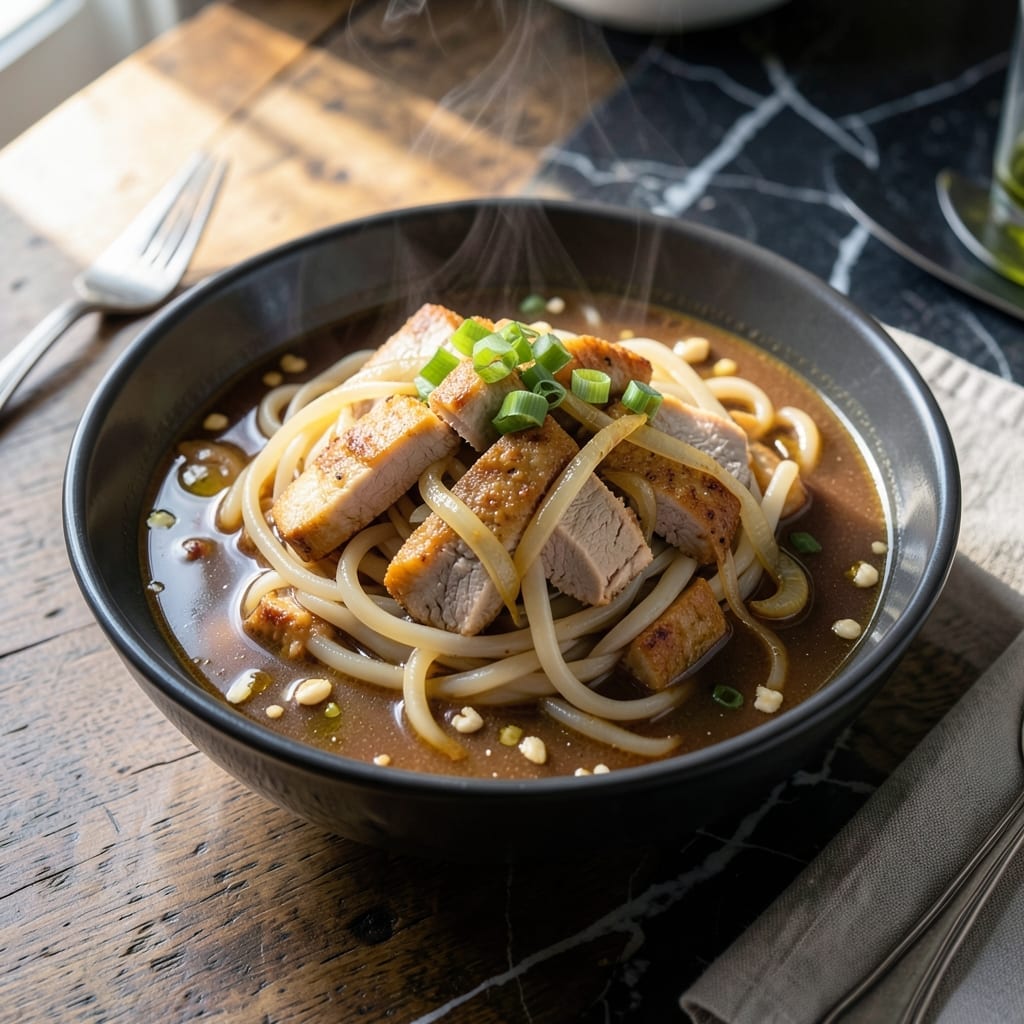
This Filipino glass noodle soup delivers comfort in every steaming bowl, with tender chicken, chewy sotanghon noodles, and a rich, aromatic broth.
I developed this recipe to capture the authentic flavors of home cooking, using simple ingredients and a precise method that builds layers of taste.
The secret lies in the broth—simmered with garlic, onion, and ginger for depth, then finished with a splash of soy sauce for that signature umami kick.
Each bite offers a perfect balance of textures and flavors, from the springy noodles to the savory chicken, all in a light yet satisfying broth.
Ingredients for Chicken Sotanghon
Simple ingredients create a rich, comforting bowl everyone will love.
| Ingredient | Amount | Notes |
|---|---|---|
| Chicken Thighs 🍗 | 1 ½ lb | Boneless, skinless preferred |
| Sotanghon Noodles 🍜 | 8 oz | Cellophane or mung bean noodles |
| Garlic Cloves 🧄 | 6 cloves | Minced for broth |
| Yellow Onion 🧅 | 1 whole | Medium, quartered |
| Fresh Ginger 🌿 | 2 tbsp | Peeled and sliced |
| Soy Sauce 🫒 | ¼ cup | Use low-sodium if preferred |
| Chicken Broth 🥣 | 6 cups | Low-sodium for control |
| Carrots 🥕 | 2 whole | Peeled and sliced |
| Green Cabbage 🥬 | 2 cups | Thinly shredded |
| Green Onions 🌱 | 3 whole | Thinly sliced for garnish |
| Fish Sauce 🐟 | 1 tbsp | Optional for umami depth |
| Black Pepper 🌶️ | ½ tsp | Freshly ground preferred |
| Vegetable Oil 🛢️ | 1 tbsp | For sautéing aromatics |
| Calamansi or Lime 🍋 | 1 whole | Juiced for finishing |
| Salt 🧂 | 1 tsp | Adjust to taste |
The chicken thighs are key here—bone-in adds more flavor but boneless saves time. Asian markets carry sotanghon noodles (also called cellophane noodles) in the dried goods section. Look for brands like Mama Sita or Sampaloc. Fresh ginger and garlic are non-negotiable for that authentic aromatic base, so grab those from the produce section (the pre-minced stuff in jars won’t cut it).
No sotanghon? Rice vermicelli works in a pinch, though the texture differs. Swap chicken thighs for breasts if you prefer, but they’ll be less forgiving if overcooked. Vegetarian? Mushrooms or tofu absorb the broth beautifully. Low-sodium soy sauce lets you control the saltiness, but regular works—just go light on the added salt. Fish sauce adds depth, but skip it for a simpler flavor.
Broth keeps well in the fridge for 3-4 days and freezes for 3 months. Soak noodles in warm water for 10 minutes before cooking (don’t skip this). Leftovers taste even better the next day once flavors meld. Store chicken and broth separately if prepping ahead.
Why You’ll Love This Recipe
- One Pot Wonder: I love that I can cook the chicken, noodles, and aromatics all in one pot—minimal cleanup, maximum flavor.
- Ginger-Garlic Magic: The combo of fresh ginger, garlic, and onion makes the broth so fragrant I can smell it from the living room.
- Feeds a Crowd: Honestly, this stretches easily for family dinners or Sunday lunches with friends.
- Budget Stretcher: Chicken thighs and sotanghon noodles are affordable, and leftovers taste even better the next day.
Step-by-Step Instructions for Chicken Sotanghon
This method delivers a comforting bowl with perfectly tender noodles and rich, savory broth every time.
Step 1: Sauté Aromatics and Brown Chicken
Heat the 1 tbsp Vegetable Oil in a large pot over medium-high heat. Add the 1.5 lb Chicken Thighs and sear for 3-4 minutes per side until golden brown. This builds a flavor foundation for the broth.
Remove the chicken and set aside. In the same pot, add the 6 cloves Garlic Cloves, 1 whole Yellow Onion, and 2 tbsp Fresh Ginger. Sauté for 2-3 minutes until the onion softens and the garlic becomes fragrant. Be careful not to burn the garlic.
Step 2: Build the Broth Base
Return the chicken to the pot. Pour in the 6 cups Chicken Broth, 0.25 cup Soy Sauce, 1 tbsp Fish Sauce, 1 tsp Salt, and 0.5 tsp Black Pepper. Stir to combine and bring to a boil.
Once boiling, reduce the heat to medium-low and let it simmer for 20 minutes. This allows the chicken to cook through and the flavors to meld. You’ll know it’s ready when the chicken reaches an internal temperature of 165°F and easily shreds with a fork.
Step 3: Add Vegetables and Noodles
Remove the chicken from the broth and shred it into bite-sized pieces using two forks. Return the shredded chicken to the pot.
Add the 2 whole Carrots, 2 cups Green Cabbage, and 8 oz Sotanghon Noodles to the broth. Stir well to ensure the noodles are fully submerged. Cook for 5-7 minutes until the noodles are transparent and tender and the carrots are soft.
Step 4: Finish and Serve
Taste the broth and adjust the seasoning if needed. The sotanghon noodles should be fully cooked and the vegetables tender. If the broth is too strong, add a splash of water to balance the flavors.
Ladle the soup into bowls and garnish with the 3 whole Green Onions. Squeeze a bit of 1 whole Calamansi or Lime juice over each serving for a bright, citrusy finish. Serve hot for the ultimate comfort experience.
Pro Tips For Making Chicken Sotanghon
- Soak the Noodles: Cover sotanghon in warm water for 10 minutes before cooking—skipping this leaves them gummy and uneven, and I learned this the hard way after pulling rubbery strands out of my first few batches.
- Brown the Chicken: Sear the thighs in batches to get a golden crust; crowding the pan steams them instead, and after burning three batches, I finally figured out that patience here actually changes the outcome.
- Grate the Ginger: Fresh ginger grated into the oil at the start adds way more punch than minced; sounds weird, but it works and the flavor is way more even.
- Use Thighs, Not Breast: Chicken thighs stay juicy even after simmering in the broth, while breast turns dry—I was skeptical until I tried it, and now I never go back.
Troubleshooting chicken sotanghon
Noodles Too Chewy
Sotanghon noodles need a 10-minute warm water soak before cooking to soften. If they’re still tough, extend the soaking time to 15 minutes or check your water temperature—it should be warm, not cold. 💡
Broth Too Salty
Since soy sauce and fish sauce are salty, go easy on added salt. If it’s too strong, add 1 cup water or low-sodium broth to dilute. A splash of calamansi or lime juice can also balance the saltiness.
Chicken Overcooked
Simmer the chicken for exactly 20 minutes at medium-low heat. If it shreds too easily before this time, your heat was too high. Use a thermometer to ensure it reaches 165°F internally.
Noodles Stick Together
After soaking, rinse the noodles under cold water to remove excess starch. Stir them occasionally while cooking to prevent clumping. If they stick, gently separate with a fork.
Weak Broth Flavor
Sauté the garlic, onion, and ginger until fragrant—this builds the flavor base. If the broth is bland, add 1 tbsp soy sauce or a pinch of fish sauce. Simmer for an extra 5 minutes to meld flavors. 🔥
Vegetables Too Soft
Add carrots and cabbage only after the chicken is cooked and removed. They should cook for 5-7 minutes with the noodles. For firmer veggies, add them 2-3 minutes before the noodles finish.
Nutrition Facts
Frequently Asked Questions
Can I use chicken breast instead of thighs?
Yes, but adjust cooking time to avoid dryness. Chicken breast cooks faster, so reduce simmering to 12-15 minutes and check for 165°F internal temperature. Thighs are preferred for their richer flavor and forgiveness.
How do I store leftovers?
Store noodles and broth separately in airtight containers for up to 3 days in the fridge. Reheat gently on the stove with a splash of water, as sotanghon absorbs liquid over time.
What if I can’t find sotanghon noodles?
Rice vermicelli is the best substitute. Soak them for 5-7 minutes in warm water before cooking. The texture will differ slightly but still works well in this dish.
Can I make this vegetarian?
Swap chicken for tofu or mushrooms and use vegetable broth. Add 1 tbsp soy sauce extra for depth. The cooking method remains the same, just reduce simmering time to 10 minutes.

- Rice Cake Cereal Recipe: Crunchy Homemade Breakfast Delight - September 25, 2026
- Pancake Recipe Using Rice Flour: Light and Airy Gluten-Free Stacks - September 25, 2026
- Japanese Rice Porridge Recipe: Silky Congee With Umami Depth - September 25, 2026