
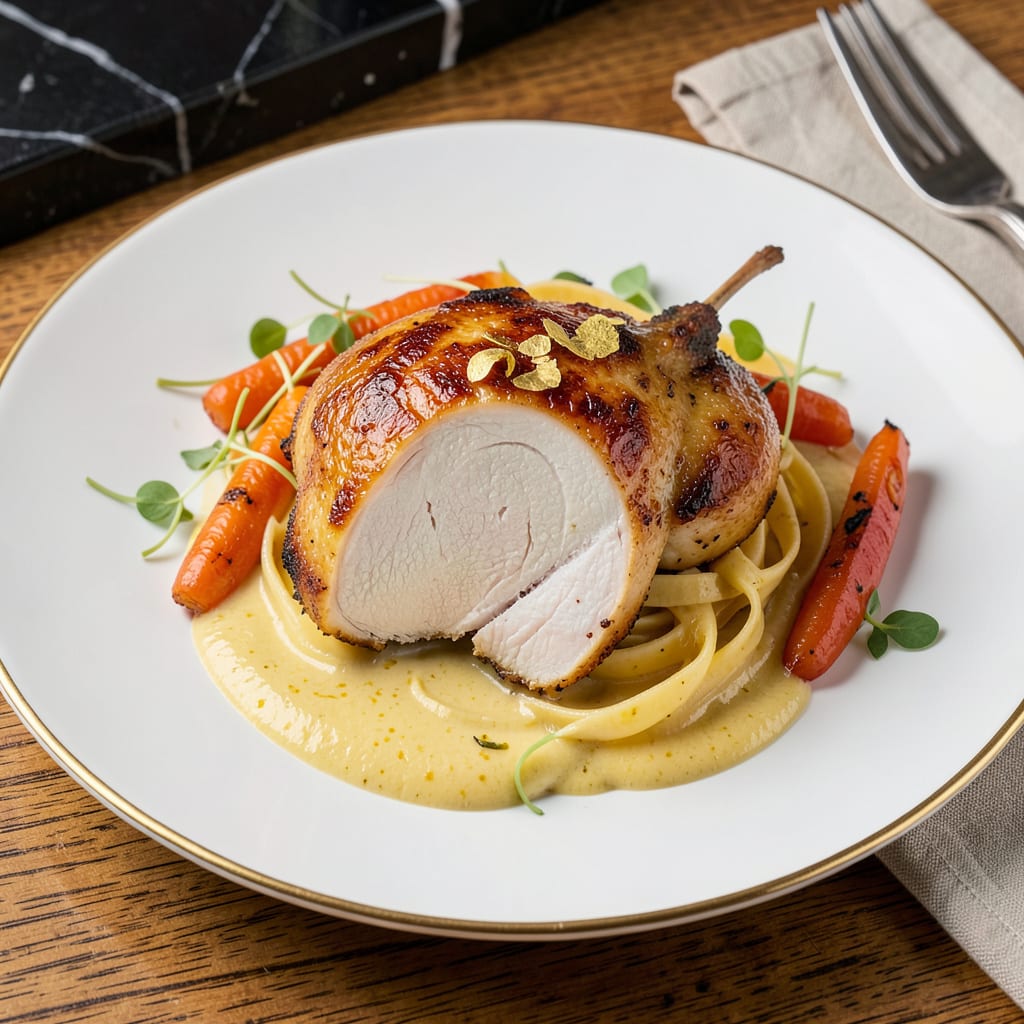
The chicken supreme cut is a boneless, skin-on piece from the breast quarter, featuring the tender breast meat attached to a portion of the wing. It stays juicy when cooked and is prized for its rich flavor and elegant presentation.
This premium cut is essentially the breast’s luxury version, combining the lean tenderness of white meat with the collagen-rich wing section that melts during cooking. What sets it apart is the precise butchering that leaves the skin intact while removing bones—this creates a perfect canvas for crispy searing or delicate sauces. 🔥
I love working with this cut because it delivers restaurant-quality results at home. The attached wing portion acts like a built-in basting mechanism, keeping the meat moist while the skin develops that coveted golden crust. It’s the secret weapon for dishes where both presentation and flavor matter most. ✨
💡 In This Article
- Anatomy of a Chicken Supreme Cut and Its Unique Qualities
- Pro Cooking Techniques for Chicken Supreme Cuts
Anatomy of a Chicken Supreme Cut and Its Unique Qualities
This cut comes from the bird’s anterior breast quarter, where the pectoral major muscle meets the wing joint. A skilled butcher makes two precise incisions: one along the breastbone to separate the meat, and another through the shoulder joint to detach the wing while keeping the skin intact.
The result is a 7-9 oz portion that includes the tender breast fillet plus the first wing segment—this combination creates what chefs call the “supreme” cut. 🔥
The magic happens in the muscle composition. The breast portion provides lean, delicate fibers while the attached wing section contains more connective tissue that renders down during cooking.
This dual structure means the cut stays moist at 165°F internal temperature (unlike standard breast that can dry out) because the wing’s collagen converts to gelatin, basting the meat from within. The skin-on presentation also allows for perfect Maillard browning when seared at 375-400°F. ✨
What sets this apart from other breast preparations is the natural juiciness retention system. Unlike an air-line cut (completely boneless) or paillard (pounded thin), the supreme maintains its three-dimensional shape. The attached wing acts like a built-in moisture reservoir, while the intact skin creates a protective barrier during cooking.
I’ve found this cut loses only about 15% weight during cooking versus 25%+ for standard boneless breasts. 💫
Compare this to similar cuts and the advantages become clear. A standard breast half has less fat and connective tissue, making it prone to drying. The supreme’s wing attachment adds about 1.5-2g of collagen per serving, which breaks down into silky gelatin.
The skin coverage is also 30% greater than a skinless breast, allowing for better heat distribution and crisping. This is why professional kitchens favor it for dishes requiring both elegance and reliable doneness. ⚡
The butchering process itself requires precision. The cut follows the natural seams between the coracoid bone and scapula, leaving the clavicle attached to the wing portion. This specific bone removal (while keeping the first wing joint) creates the signature shape that lies flat for even cooking yet maintains enough structure for beautiful plating.
The skin remains unbroken, which is crucial for developing that glass-like crackling when properly rendered. 🌟
From a culinary science perspective, the supreme cut benefits from what’s called “differential heat transfer.” The thicker breast portion cooks more slowly than the thinner wing section, but because they’re connected, the wing’s faster cooking actually helps regulate the overall doneness.
This is why you’ll often see recipes calling for starting skin-side down in a medium-hot pan (350°F)—it gives the wing time to render fat while the breast comes up to temperature gently. 💛
Next time you’re at the butcher counter, look for supremes with creamy white skin (no bruising), firm texture when pressed, and the wing joint still slightly flexible. The best specimens will have a 1:3 ratio of wing to breast meat by weight, ensuring optimal moisture distribution during cooking.
This attention to selection makes all the difference between a good dish and a spectacular one. 🔥

- Jollof Rice Sauce Recipe: West African Tomato and Spice Infusion - September 25, 2026
- Japanese Rice Soup Recipe: Umami-Rich Comfort in a Bowl - September 25, 2026
- Homemade Cream Of Rice Recipe: Silk-Smooth Breakfast in Minutes - September 25, 2026