
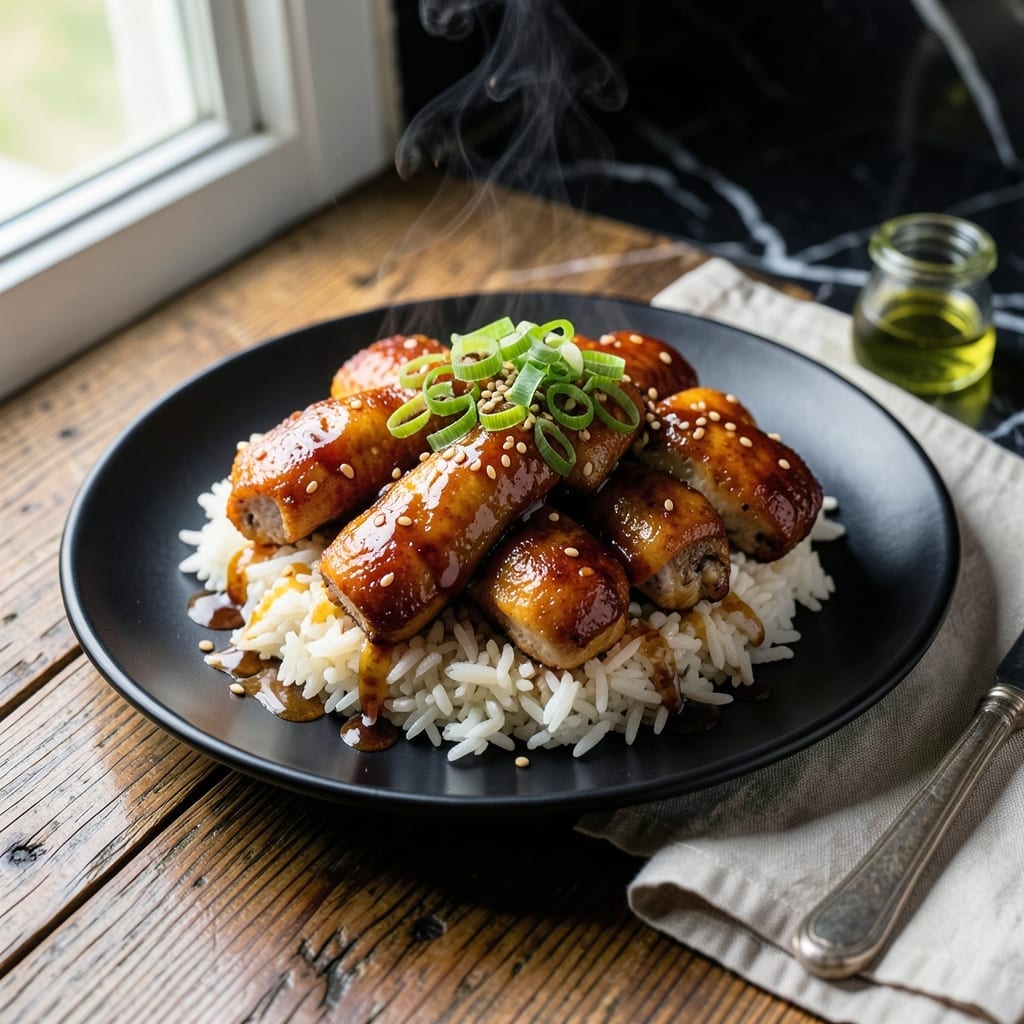
This dish brings restaurant-quality teriyaki chicken to your home kitchen with tender meat and a glossy glaze. The sauce caramelizes beautifully, creating a balance of sweet and savory that coats every piece of chicken.
Cooking the rice separately ensures fluffy grains that soak up the extra teriyaki sauce. The method is straightforward but delivers results that rival any takeout version you’ve tried.
I developed this recipe during my years at The Smoky Pig, adapting it for home cooks. The technique guarantees juicy chicken and perfectly cooked rice without complicated steps.
Serve the glazed chicken over the rice for a complete meal that satisfies every time.
Ingredients for Chicken Teriyaki Over Rice
Tender chicken, glossy glaze, fluffy rice. Restaurant quality right at home, no takeout menu required.
| Ingredient | Amount | Notes |
|---|---|---|
| Boneless Skinless Chicken Thighs 🍗 | 1 ½ lb | Cut into bite-sized pieces |
| Long-Grain White Rice 🍚 | 1 ½ cups | Uncooked, rinsed before cooking |
| Low-Sodium Soy Sauce 🫒 | ½ cup | Or tamari for gluten-free |
| Granulated Sugar 🍚 | ¼ cup | Or brown sugar for depth |
| Mirin 🍶 | ¼ cup | Sweet rice wine, essential |
| Fresh Garlic Cloves 🧄 | 3 cloves | Minced finely for sauce |
| Fresh Ginger Root 🌿 | 1 tbsp | Peeled and grated |
| Cornstarch 🌾 | 1 tbsp | For thickening sauce |
| Water 💧 | ¼ cup | For sauce and cornstarch slurry |
| Neutral Cooking Oil 🫒 | 2 tbsp | Vegetable or canola oil |
| Sesame Oil 🫒 | 1 tsp | Toasted, for finishing |
| Green Onions 🧅 | 3 whole | Thinly sliced for garnish |
| Sesame Seeds 🌰 | 1 tsp | Toasted, for garnish |
The chicken is everything here. Boneless skinless thighs stay juicier than breasts—Costco or Sam’s Club have great bulk packs. If you spot air-chilled thighs, grab those; they brown better. For the rice, jasmine or long-grain white both work, but avoid instant—it turns to mush. Mirin can be tricky to find; look in the Asian aisle of Kroger or Whole Foods.
No mirin? Dry sherry plus 1 tsp sugar per 2 tbsp gets you close. Skip the soy? Coconut aminos are a solid swap (use same amount). Brown sugar instead of white adds a molasses note. The ginger can be ground at 1/4 tsp per tbsp fresh. If you’re out of cornstarch, arrowroot powder works too. And yes, you can use chicken breasts, but they dry out faster (don’t say I didn’t warn you).
Sauce keeps in the fridge for 1 week—the flavors actually deepen. Chicken and rice are best fresh but reheat nicely in a skillet with a splash of water. Leftovers freeze for 3 months (sauce separate from rice). I always make extra sauce; it’s killer on veggies or noodles.
Why You’ll Love This Recipe
- One Pan Wonder: I brown the thighs, then use the same pan for the glaze—no extra dishes, just rich flavor building.
- Sweet-Savory Magic: The mirin and sugar caramelize into a glossy coat that clings to every bite of tender chicken.
- Weeknight MVP: Between us, this tastes like takeout but costs half and feeds the family in 25 minutes flat.
- Leftover Luxe: Honestly, the rice soaks up the sauce overnight, making tomorrow’s lunch even better.
Step-by-Step Instructions for Chicken Teriyaki Over Rice
Here’s the method tested for perfect teriyaki every time, with restaurant-quality glaze.
Step 1: Cook the Rice to Fluffy Perfection
Rinse the 1.5 cups Long-Grain White Rice under cold water until the water runs clear. This removes excess starch that can make rice gummy. Use a 1:1.25 rice-to-water ratio for ideal fluffiness.
Combine the rinsed rice with 1¾ cups water in a saucepan. Bring to a boil, then immediately reduce to low heat, cover, and simmer undisturbed for 15-18 minutes until all liquid is absorbed. Remove from heat and let sit covered for 10 minutes—this steam period finishes the cooking and ensures every grain is tender.
Step 2: Sear and Cook the Chicken
While the rice cooks, cut the 1.5 lb Boneless Skinless Chicken Thighs into bite-sized pieces. Pat them dry with paper towels to ensure a good sear. Heat 2 tbsp Neutral Cooking Oil in a large skillet over medium-high heat until it shimmers.
Add the chicken in a single layer and cook undisturbed for 4-5 minutes until golden brown on the bottom. Flip and cook another 3-4 minutes until cooked through. The internal temperature should reach 165°F. Transfer to a plate and set aside.
Step 3: Create the Teriyaki Glaze
In the same skillet, reduce heat to medium. Add the 3 cloves Fresh Garlic Cloves (minced) and 1 tbsp Fresh Ginger Root (grated). Sauté for 1 minute until fragrant—don’t let them burn, as bitter garlic will ruin the sauce.
Pour in the 0.5 cup Low-Sodium Soy Sauce, 0.25 cup Granulated Sugar, and 0.25 cup Mirin. Stir well and bring to a gentle simmer. In a small bowl, whisk together the 1 tbsp Cornstarch and 0.25 cup Water until smooth, then slowly pour this slurry into the skillet while stirring constantly.
Step 4: Coat and Thicken the Chicken
Return the cooked chicken to the skillet along with any accumulated juices. Stir to coat the chicken in the sauce and simmer for 2-3 minutes until the sauce thickens into a glossy glaze that clings to the chicken. You’ll see it transform from thin and liquid to thick and syrupy.
Remove from heat and stir in the 1 tsp Sesame Oil. This adds a nutty depth that ties all the flavors together. Let the chicken rest in the sauce for 2 minutes to absorb the flavors fully.
Step 5: Plate with Garnishes
Fluff the cooked rice with a fork and divide it among serving plates. Top with the glazed chicken and any remaining sauce from the skillet. Garnish with thinly sliced 3 whole Green Onions and 1 tsp Sesame Seeds for color and crunch.
Serve immediately while hot. The chicken should be tender and coated in a shiny, slightly sticky glaze, with the rice light and separate beneath it. The green onions add freshness, while the sesame seeds provide a subtle toasty note.
Pro Tips For Making Chicken Teriyaki Over Rice
- Dry the Thighs: Pat the chicken thighs completely dry before cooking—after burning three batches, I finally figured out this prevents the sauce from steaming the meat instead of searing it.
- Simmer the Glaze: Reduce the soy, sugar, and mirin together for 3-4 minutes until syrupy. I learned this the hard way—raw sugar in the sauce makes the teriyaki taste flat and thin.
- Skip the Overcrowding: Cook the chicken in a single layer, even if it means two batches. Sounds weird, but it works: crowded pan = boiled chicken in sad gray liquid.
- Rest Before Slicing: Give the cooked thighs 5 minutes under foil before slicing—my grandmother swore by this, and she was right: it keeps the juices where they belong.
Health Benefits of This Recipe
Lean Protein Boost
Chicken thighs provide high-quality protein—about 25 grams per 3-ounce serving—supporting muscle growth and repair. They’re richer in iron and zinc than breasts, which helps maintain energy levels. I prefer thighs for their juiciness and deeper flavor. 💪
Balanced Energy Source
The combination of protein from chicken and complex carbs from rice creates sustained energy. Long-grain white rice offers 45 grams of carbs per cup cooked, fueling your body without blood sugar spikes. This balance keeps you full for hours.
Essential Amino Acids
Chicken delivers all nine essential amino acids your body can’t produce. The 1.5 lb in this recipe provides a complete protein profile for your daily needs. These amino acids support everything from immune function to tissue repair.
Low-Fat Nutrition
Despite their flavor, skinless chicken thighs have only 8 grams of fat per serving, mostly healthy unsaturated fats. The dish stays light yet satisfying when prepared with minimal oil. I find this makes it a guilt-free comfort food option.
Micronutrient Richness
Garlic and ginger in the teriyaki sauce provide antioxidants and anti-inflammatory benefits. 3 cloves of garlic offer immune-boosting allicin. Ginger aids digestion and may reduce nausea. Together, they make this dish as nourishing as it is delicious. ✨
Energy Metabolism Support
The B vitamins in chicken—especially B6 and B12—help convert food into energy. Mirin adds small amounts of B vitamins too. This combination supports your metabolism while delivering incredible flavor.
Nutrition Facts
Frequently Asked Questions
Can I use chicken breasts instead of thighs?
You can, but thighs stay juicier. If using breasts, reduce cooking time to 3-4 minutes per side and check internal temperature reaches 165°F. Overcooking dries them out quickly.
How do I make the sauce thicker?
Simmer the sauce longer after adding the cornstarch slurry. If still thin, mix 1 tsp cornstarch with 1 tbsp cold water, stir into the sauce, and simmer for 1-2 minutes.
Can I prepare this ahead of time?
Cook rice and chicken separately, then store in the fridge for up to 3 days. Reheat chicken in a skillet with a splash of water to prevent drying. Assemble just before serving.
What can I substitute for mirin?
Use 2 tbsp dry sherry plus 1 tsp sugar per 1/4 cup mirin. In a pinch, 1 tbsp rice vinegar with 1/2 tsp sugar works too.

- Jollof Rice Sauce Recipe: West African Tomato and Spice Infusion - September 25, 2026
- Japanese Rice Soup Recipe: Umami-Rich Comfort in a Bowl - September 25, 2026
- Homemade Cream Of Rice Recipe: Silk-Smooth Breakfast in Minutes - September 25, 2026