
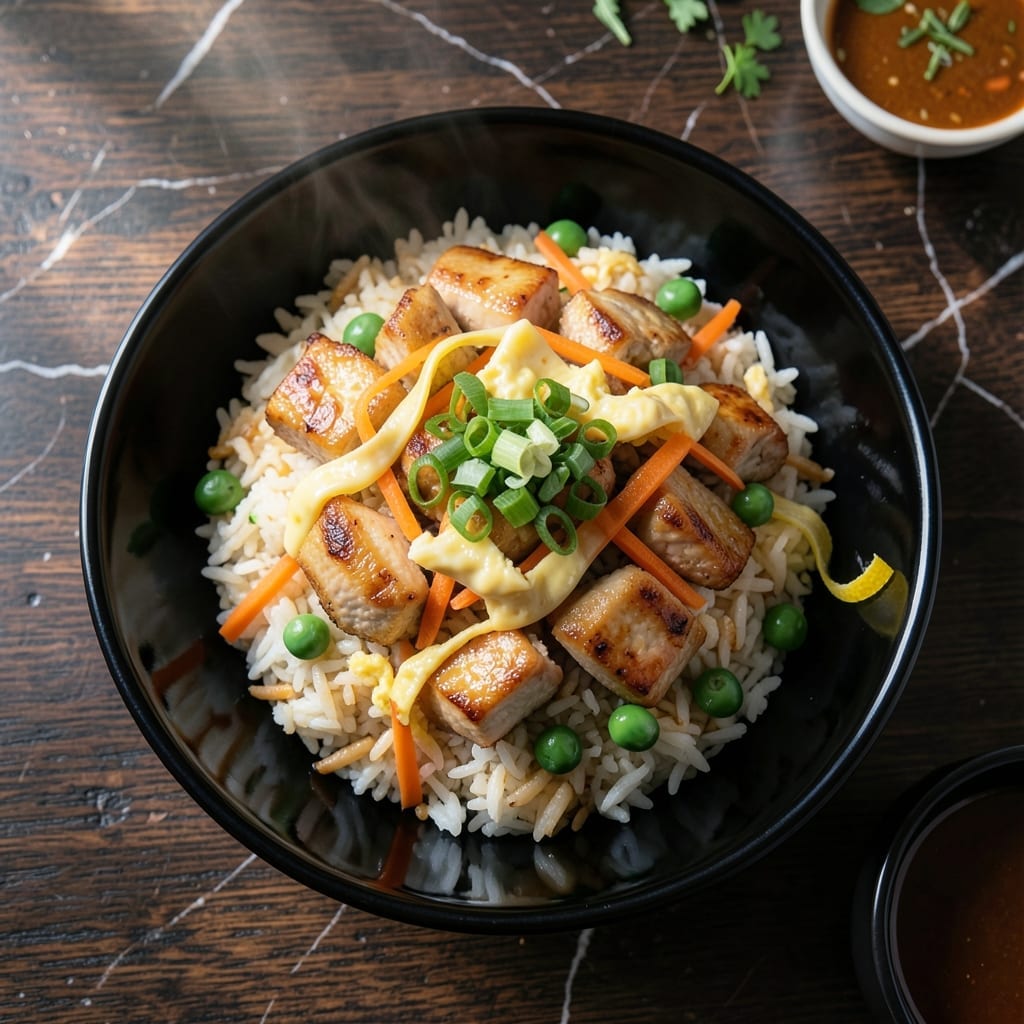
There’s a reason this dish is a takeout favorite—it’s all about the wok-seared flavor and perfect texture. I’ve refined this method to deliver restaurant-quality results at home with simple ingredients and a few key techniques.
What makes this version special is the balance of umami-rich chicken, fresh vegetables, and the signature wok hei aroma. The process is straightforward, but timing and heat control are everything.
Ingredients for Chinese Chicken Fried Rice
Simple pantry staples and fresh vegetables create this restaurant-quality wok-seared classic at home.
| Ingredient | Amount | Notes |
|---|---|---|
| Boneless Skinless Chicken Thighs 🍗 | 1 ½ lb | Diced into small even pieces |
| Long-Grain White Rice 🍚 | 3 cups | Day-old, cooked and chilled |
| Large Eggs 🥚 | 3 whole | Lightly beaten for scrambling |
| Carrots 🥕 | 2 whole | Julienned or finely diced |
| Green Onions 🧅 | 4 whole | Thinly sliced, whites and greens separated |
| Frozen Green Peas 🌱 | 1 cup | Thawed under running water |
| Garlic Cloves 🧄 | 4 cloves | Minced finely for maximum flavor |
| Fresh Ginger Root 🌿 | 1 tbsp | Peeled and grated finely |
| Light Soy Sauce 🫒 | 3 tbsp | Low-sodium preferred for control |
| Dark Soy Sauce 🫒 | 1 tbsp | For depth of color and flavor |
| Sesame Oil 🫒 | 2 tsp | Toasted, for finishing aroma |
| Oyster Sauce 🫒 | 2 tbsp | Optional but recommended for umami |
| Vegetable Oil 🫒 | ¼ cup | High smoke point for wok searing |
| Kosher Salt 🧂 | 1 tsp | Adjust to taste at the end |
| White Pepper 🌶️ | ½ tsp | Freshly ground for authentic taste |
The chicken is critical here. Thighs provide the juiciest result—breasts will dry out under high heat. Source from Whole Foods or a trusted local butcher for quality. Day-old rice is non-negotiable (fresh cooks to mush). Jasmine or long-grain white are ideal. For the vegetables, organic carrots and green onions add authentic texture. Prep everything before heating the wok—things move fast.
No oyster sauce? Vegetarian oyster sauce or hoisin works in a pinch. Short on ginger? Ground ginger at one-third the amount. Fresh out of peas? Diced bell peppers add color and crunch. The soy sauces are both essential—light for seasoning, dark for color. If avoiding gluten, tamari substitutes well. Sesame oil is for finishing only—never cook with it.
Leftovers keep 3-4 days in the fridge but are best fresh. Reheat in a skillet with a splash of water to revive. Freezing isn’t recommended—the rice texture suffers. Always store cooked rice separately until ready to use. The wok hei aroma is best the first time around.
Why You’ll Love This Recipe
- One Pan Wonder: I love that everything—chicken, rice, eggs, even the veggies—comes together in a single skillet. No extra pots, no fuss.
- Umami Bomb: The chicken thighs soak up the soy sauce and sesame oil, while the green onions add just the right fresh bite at the end.
- Meal Prep MVP: Honestly, this tastes even better the next day. I pack it for lunch and it reheats like a dream.
- Budget Hero: Between us, a pound of chicken thighs and a bag of rice stretch into four hearty servings without breaking the bank.
Step-by-Step Instructions for Chinese Chicken Fried Rice
Master the wok technique with these precise steps for authentic texture and flavor.
Step 1: Prepare and Velvet the Chicken
Begin by dicing the 1.5 lb boneless skinless chicken thighs into small, even pieces. In a bowl, combine the chicken with 1 tbsp light soy sauce, 1 tsp kosher salt, and 0.5 tsp white pepper. Mix well and let marinate for 10 minutes while you prep the remaining ingredients.
Velveting the chicken ensures tenderness. Heat 1 tbsp vegetable oil in a wok over high heat until shimmering. Add the chicken and stir-fry for 2-3 minutes until the pieces are just 80% cooked—they’ll finish later. Remove and set aside.
Step 2: Scramble the Eggs and Aromatics
In the same wok, add another 1 tbsp vegetable oil and swirl to coat. Pour in the 3 lightly beaten large eggs and scramble quickly over medium-high heat until just set but still slightly runny. This takes about 1 minute—remove and set aside with the chicken.
Add the remaining 2 tbsp vegetable oil to the wok. Sauté the 4 minced garlic cloves and 1 tbsp grated fresh ginger root for 30 seconds until fragrant. Immediately add the 2 diced carrots and stir-fry for 2 minutes until slightly softened.
Step 3: Combine Rice and Vegetables
Increase heat to high and add the 3 cups chilled long-grain white rice, breaking up any clumps with your spatula. Stir-fry for 2-3 minutes until the rice is hot and slightly toasted. This step is critical for achieving that signature wok hei flavor.
Add the 1 cup thawed frozen green peas and the white parts of the 4 thinly sliced green onions. Stir-fry for another 1 minute to combine. The rice should now be uniformly hot and beginning to crisp at the edges.
Step 4: Finish with Sauces and Final Touches
Return the chicken and eggs to the wok. Drizzle the 2 tbsp light soy sauce, 1 tbsp dark soy sauce, and 2 tbsp oyster sauce over the mixture. Stir-fry for 2-3 minutes until everything is evenly coated and the chicken is fully cooked.
Turn off the heat and stir in the 2 tsp toasted sesame oil. Taste and adjust seasoning if needed. Garnish with the green parts of the green onions and serve immediately while hot. The rice should be fragrant, with distinct wok-seared texture and vibrant color.
Pro Tips For Making Chinese Chicken Fried Rice
- Use Day-Old Rice: Fresh rice turns to mush in the wok. Cook your long-grain white rice the day before and refrigerate it—this dries it out just enough for that perfect chewy texture.
- Velvet the Chicken: Toss your boneless skinless chicken thighs with 1 tsp cornstarch and 1 tbsp soy sauce before cooking. I learned this the hard way—it keeps the meat absurdly tender instead of rubbery.
- High Heat Only: Crank your burner to max and don’t crowd the pan. After burning three batches, I finally figured out that anything less than screaming hot turns fried rice into steamed rice.
- Scramble Eggs First: Push the cooked chicken to one side of the wok, pour in a little more oil, then scramble the eggs separately before mixing everything. Sounds weird, but it works—no gray, sad egg bits.
Common Mistakes When Making This Dish
Overcrowding the Wok
This is the most common mistake I see. A crowded wok steams instead of searing, turning your dish mushy. Cook in batches—no more than 2 cups of rice at a time in a standard 14-inch wok. Trust me, the extra 5 minutes makes all the difference. 🔥
Using Fresh Rice
Freshly cooked rice turns to porridge in the wok. Day-old, chilled rice has dried slightly, creating those distinct grains we love. Spread it on a tray and refrigerate uncovered for 1-2 hours if you’re in a hurry. I’ve ruined batches by skipping this step.
Low Heat Cooking
Fried rice needs high heat to develop wok hei—the smoky aroma that defines the dish. If your oil isn’t shimmering or smoking slightly, it’s not hot enough. A BTU output of 15,000+ is ideal. Home stoves often struggle here, so work quickly and in small batches.
Overcooking the Chicken
Fully cooking the chicken before combining with rice makes it dry and tough. Velvet the chicken to 80% doneness, then finish cooking with the rice. This keeps it juicy. I use chicken thighs specifically for their forgiveness under high heat.
Skipping the Velveting
The marinade step isn’t just for flavor—it’s about texture. Mixing the chicken with 1 tbsp soy sauce and 1 tsp cornstarch (if using) for 10 minutes creates a protective layer. This prevents the meat from seizing up in the wok.
Neglecting the Sauce Order
Adding all sauces at once can make the dish soggy. I add soy sauces first to coat everything, then finish with sesame oil off the heat. This preserves the aromatic qualities. The dark soy goes in last for that perfect caramelized color. 💡
Nutrition Facts
Frequently Asked Questions
Can I use chicken breast instead of thighs?
Thighs are recommended for their juiciness, but you can use breasts. Dice them small and cook for only 1-2 minutes initially to prevent drying out. Thighs tolerate high heat better.
Why use day-old rice?
Fresh rice is too moist and turns mushy when stir-fried. Day-old rice has dried slightly, creating separate grains that crisp up nicely in the wok. Spread hot rice on a tray to cool quickly if needed.
What if I don’t have a wok?
A large, heavy skillet works in a pinch. Use high heat and cook in small batches to avoid steaming. A 14-inch wok is ideal, but don’t let that stop you from trying.
How do I get that smoky wok hei flavor?
Crank the heat to maximum and let the oil get very hot before adding ingredients. Cook in small batches so the food sears rather than steams. This creates the signature aroma.

- Jollof Rice Sauce Recipe: West African Tomato and Spice Infusion - September 25, 2026
- Japanese Rice Soup Recipe: Umami-Rich Comfort in a Bowl - September 25, 2026
- Homemade Cream Of Rice Recipe: Silk-Smooth Breakfast in Minutes - September 25, 2026