
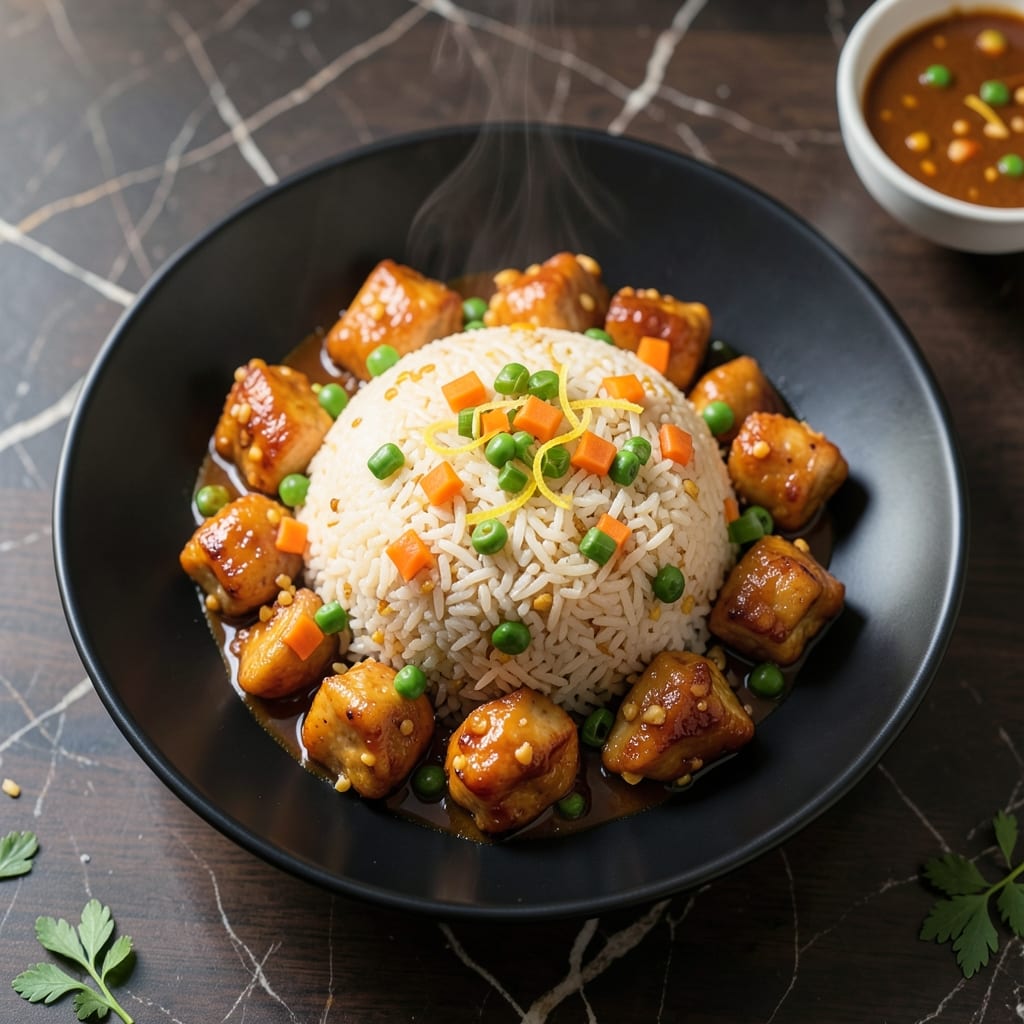
This duo brings the vibrant flavors of Indo-Chinese cuisine to your kitchen with minimal effort. I perfected this combination during my years in Charleston, adapting street food techniques for home cooks.
The fried rice delivers perfectly chewy grains with subtle wok hei, while the Manchurian offers tender chicken in a tangy, slightly sweet sauce. Both dishes come together faster than delivery.
You’ll achieve restaurant-quality texture and depth by following the proper sequence and temperatures. The rice should be day-old for best results, and the chicken needs a quick velveting step.
Serve them together for a complete meal that’s satisfying without being heavy. The contrast between the savory rice and bold Manchurian sauce makes this a family favorite.
Ingredients for Chinese Fried Rice and Chicken Manchurian
Day-old rice and a handful of pantry staples bring this takeout favorite to life at home.
| Ingredient | Amount | Notes |
|---|---|---|
| Long-Grain White Rice 🍚 | 3 cups | Day-old, cooked and cooled |
| Boneless Skinless Chicken Thighs 🍗 | 1 ½ lb | Cut into bite-sized pieces |
| Large Eggs 🥚 | 2 whole | Lightly beaten for rice |
| Frozen Green Peas 🌱 | ¾ cup | Thawed before cooking |
| Carrots 🥕 | 2 whole | Medium, finely diced |
| Green Onions 🧅 | 4 whole | Thinly sliced, whites and greens separated |
| Garlic Cloves 🧄 | 6 cloves | Minced, divided between dishes |
| Fresh Ginger 🌿 | 1 tbsp | Finely grated or minced |
| Soy Sauce 🫒 | ⅓ cup | Low-sodium preferred for control |
| Dark Soy Sauce 🫒 | 1 tbsp | For color depth in Manchurian |
| Rice Vinegar 💧 | 2 tbsp | For tang in Manchurian sauce |
| Tomato Ketchup 🍅 | ⅓ cup | For sweetness and color |
| Granulated Sugar 🍚 | 1 tbsp | Balances acidity in sauce |
| Cornstarch 🌾 | 2 tbsp | For velveting chicken and thickening |
| Vegetable Oil 🫒 | ½ cup | High smoke point for frying |
| Kosher Salt 🧂 | 1 tsp | Or to taste |
| Ground White Pepper 🌶️ | ½ tsp | Traditional for Manchurian |
| Dry Sherry 🍷 | 2 tbsp | Optional, for depth in sauce |
The rice is non-negotiable—day-old, cold, cooked rice fries up with that perfect chew you expect from takeout. For the chicken, thighs stay juicier than breasts during the velveting process. I grab mine from Whole Foods or H Mart when I want better quality. The green onions add freshness, so don’t skip them (the tops make a great garnish). Look for low-sodium soy sauce so you can control the salt level yourself.
No dark soy sauce? Add an extra tablespoon of regular soy plus a pinch of sugar for color. Dry sherry can be swapped with Shaoxing wine or even dry white wine in a pinch. For a vegetarian twist, extra-firm tofu works great in the Manchurian—press it well first. The ketchup might seem odd, but it’s key for that authentic Indo-Chinese sweet-tangy flavor (trust me on this one).
Both dishes reheat well—store leftovers in airtight containers for up to 3 days in the fridge. The Manchurian sauce thickens as it cools, so thin with a splash of water when reheating. Freeze the chicken Manchurian for up to 3 months (the rice doesn’t freeze as well).
Why You’ll Love This Recipe
- One Pan Dinner: I love that everything cooks in stages in the same wok—rice, chicken, veggies, all in one go.
- Saucy & Spicy: The Manchurian glaze on the chicken with the fried rice’s soy-garlic kick is ridiculously good.
- Feeds the Crew: Honestly, it’s my go-to when I need to feed both picky kids and spice-loving adults in one meal.
- Leftovers? Yes Please: Tastes even better the next day, and the rice soaks up the extra sauce overnight like a dream.
Step-by-Step Instructions for Chinese Fried Rice and Chicken Manchurian
Here’s the method I use to nail this takeout favorite every single time.
Step 1: Velvet the Chicken for Manchurian
Cut the 1.5 lb boneless skinless chicken thighs into bite-sized pieces and place in a bowl. Add 1 tablespoon fresh ginger, 3 cloves minced garlic cloves, 1 tablespoon soy sauce, 1 tablespoon cornstarch, and 1 tablespoon dry sherry. Mix well and let marinate for 15 minutes.
This velveting technique keeps the chicken incredibly tender. I always use thighs instead of breasts—they stay juicier through the high-heat cooking process. The cornstarch coating also helps create that signature crispy exterior.
Step 2: Fry the Chicken Manchurian
Heat ½ cup vegetable oil in a wok over high heat until shimmering. Carefully add the marinated chicken in a single layer and fry for 4-5 minutes until golden brown and cooked through. Remove with a slotted spoon and drain on paper towels.
In the same wok, add the remaining 3 cloves minced garlic cloves, 4 whole thinly sliced green onions (whites only), 2 medium finely diced carrots, and 0.75 cup thawed frozen green peas. Stir-fry for 2 minutes until the vegetables soften.
Step 3: Make the Manchurian Sauce
Add 0.33 cup tomato ketchup, 2 tablespoons rice vinegar, 1 tablespoon dark soy sauce, 1 tablespoon granulated sugar, 0.5 teaspoon ground white pepper, and the remaining 0.33 cup soy sauce to the wok. Stir well and bring to a simmer.
Mix 1 tablespoon cornstarch with 2 tablespoons water to make a slurry, then stir it into the sauce. Cook for 1-2 minutes until the sauce thickens enough to coat the back of a spoon. Return the fried chicken to the wok and toss to coat evenly.
Step 4: Cook the Fried Rice
In a separate large skillet or wok, heat 1 tablespoon vegetable oil over high heat. Add the 2 whole lightly beaten large eggs and scramble until just set. Remove and set aside.
Add the remaining oil and the 3 cups day-old cooked long-grain white rice (broken up with your hands). Stir-fry for 2-3 minutes until the rice is hot and slightly crispy. Add the scrambled eggs, green onion greens, and 1 teaspoon kosher salt. Toss everything together and cook for another 1 minute.
Pro Tips For Making Chinese Fried Rice And Chicken Manchurian
- Use Cold Rice: Always start with day-old, refrigerated rice—fresh rice turns mushy in the wok. I learned this the hard way after my first few batches came out like porridge.
- Velvet the Chicken: Toss the chicken thighs with 1 teaspoon cornstarch and 1 tablespoon soy sauce before cooking. Sounds weird, but it works: the coating keeps the meat tender and helps it hold onto the sauce.
- Skip the Thaw: Toss frozen peas and diced carrots straight into the hot wok—they’ll cook through in seconds without turning to mush. After burning a batch waiting for them to thaw, I finally figured out this saves time and texture.
- High Heat Only: Crank the burner to max and let the wok get screaming hot before adding oil. My grandmother swore by this, and she was right: it’s the only way to get that smoky, restaurant-style flavor in your fried rice.
Best Sauces and Condiments for This chinese fried rice and chicken manchurian
Classic Pairings
For the fried rice, a drizzle of light soy sauce and a sprinkle of toasted sesame seeds just before serving enhances the nutty flavor. I also love a dash of chili oil for those who enjoy a subtle kick.
Manchurian Enhancers
The chicken Manchurian shines with a squeeze of fresh lime juice to brighten the rich sauce. For extra depth, serve with a side of sweet chili sauce—its fruity heat complements the tangy profile perfectly.
Fresh Garnishes
Top both dishes with extra green onion greens for freshness. A handful of cilantro leaves adds a citrusy note that pairs beautifully with the bold flavors of the Manchurian. 🥗
Dipping Sauces
Offer Sriracha or hoisin sauce on the side for dipping. I prefer Kikkoman hoisin for its smooth texture and balanced sweetness. These sauces let everyone customize their bite.
Crunchy Add-Ons
Add crispy fried shallots as a garnish for texture contrast. You can find them pre-made at Asian markets, or fry thin shallot slices in vegetable oil until golden. 🔥
Spicy Boost
For heat lovers, a dollop of Sambal Oelek on the side lets them control the spice level. Just ½ teaspoon mixed into the Manchurian sauce adds depth without overwhelming the dish.
Nutrition Facts
Frequently Asked Questions
Can I use fresh rice instead of day-old?
No, fresh rice is too moist and will turn mushy. Day-old rice has dried out slightly, giving you that perfect separate grain texture essential for authentic fried rice.
Why velvet the chicken first?
Velveting keeps the chicken juicy and tender. The cornstarch marinade creates a protective layer that seals in moisture during frying, resulting in that restaurant-quality texture.
Can I make this gluten-free?
Yes! Use tamari instead of soy sauce and ensure your ketchup is gluten-free. For thickening, swap cornstarch with arrowroot powder in equal amounts.
How do I prevent soggy Manchurian?
Fry the chicken in small batches to avoid overcrowding. Also, thicken the sauce after adding the chicken back to the wok to maintain crispiness.

- Jollof Rice Sauce Recipe: West African Tomato and Spice Infusion - September 25, 2026
- Japanese Rice Soup Recipe: Umami-Rich Comfort in a Bowl - September 25, 2026
- Homemade Cream Of Rice Recipe: Silk-Smooth Breakfast in Minutes - September 25, 2026