
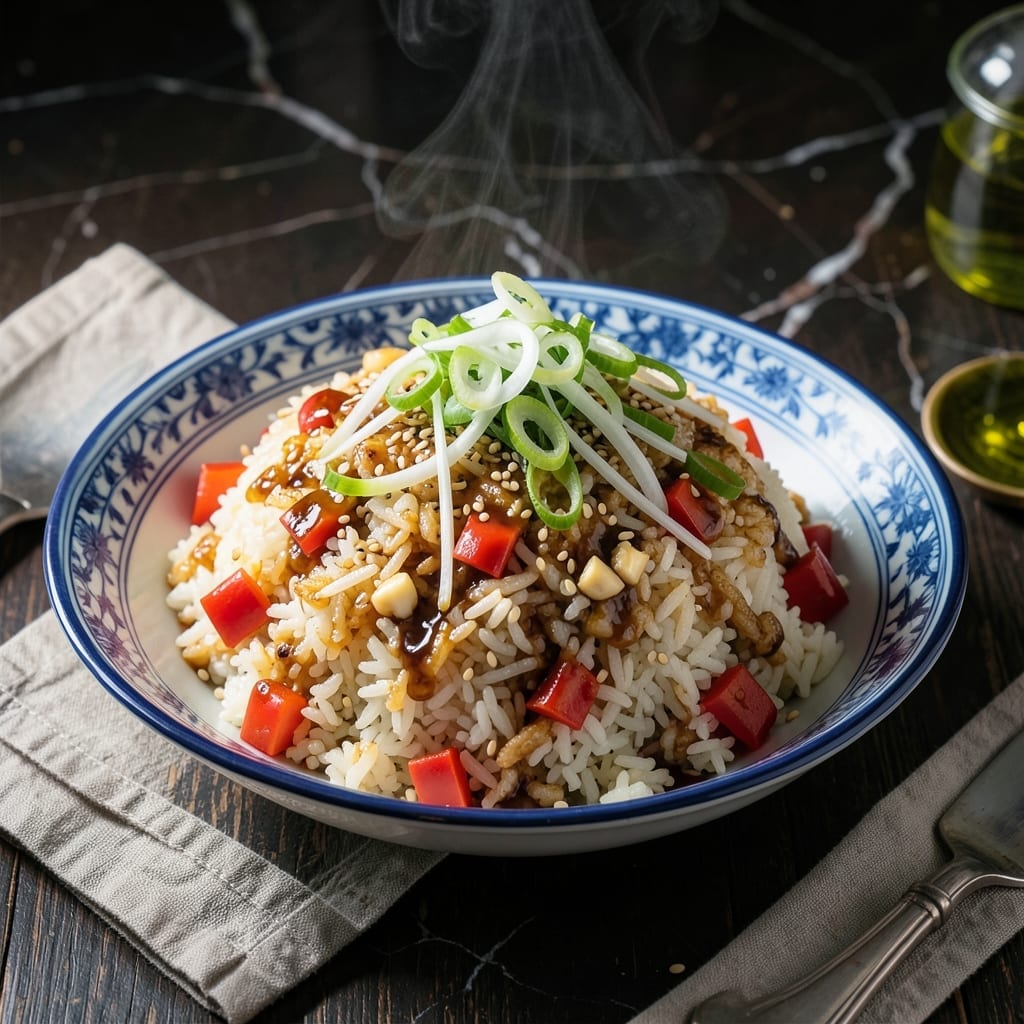
This recipe delivers the authentic Cantonese wok hei flavor you’ve been craving at home. The secret lies in high heat and the perfect balance of oyster sauce with traditional seasonings.
With proper technique, you’ll achieve that signature smoky aroma and restaurant-quality texture. The dish comes together quickly once you master the wok tossing method.
Ingredients for Chinese Fried Rice Recipe with Oyster Sauce
Authentic Cantonese wok hei requires these precise ingredients for restaurant-quality results at home.
| Ingredient | Amount | Notes |
|---|---|---|
| Jasmine Rice 🍚 | 4 cups | Day-old, chilled thoroughly |
| Oyster Sauce 🫒 | 3 tbsp | High-quality Cantonese brand |
| Soy Sauce 🫒 | 2 tbsp | Light soy sauce preferred |
| Sesame Oil 🫒 | 1 tbsp | Toasted, for finishing |
| Peanut Oil 🫒 | 3 tbsp | High smoke point essential |
| Garlic Cloves 🧄 | 3 cloves | Minced finely |
| Fresh Ginger 🌿 | 1 tbsp | Grated or minced |
| Green Onions 🧅 | 4 whole | Thinly sliced, white and green parts separated |
| Large Eggs 🥚 | 3 whole | Lightly beaten |
| Frozen Peas 🌱 | ¾ cup | Thawed, patted dry |
| Carrot 🥕 | 1 whole | Small dice, blanched |
| Cooked Char Siu 🥩 | ½ cup | Diced, optional protein |
| White Pepper 🧂 | ½ tsp | Ground, for authenticity |
| Salt 🧂 | ½ tsp | To taste, adjust carefully |
| Shaoxing Wine 🍷 | 1 tbsp | Dry sherry acceptable substitute |
The rice is non-negotiable—day-old jasmine with separated grains is essential for proper texture. Peanut oil handles the high heat without smoking, a critical factor for achieving authentic wok hei. For oyster sauce, Lee Kum Kee Premium or Maekrua brands deliver the depth required. Source these at Asian grocery stores for optimal quality and variety.
Substitutions must be strategic. Vegetable oil can replace peanut oil in a pinch, though it lacks the same heat tolerance. Dark soy sauce at half the quantity works if light isn’t available, but expect deeper color. Fresh ginger is ideal, but ground ginger at one-third the amount is acceptable. Skip the char siu? Shrimp or diced chicken maintain the protein balance without compromising authenticity.
Prep all ingredients before heating the wok—this dish moves fast. Store oyster sauce and Shaoxing wine in a cool, dark place for up to 12 months. Cooked rice keeps in the fridge for 3-4 days, but use it fresh for best fried rice texture.
Why You’ll Love This Recipe
- One Pan Done: I toss everything in a wok and it’s ready before the rice even cools—no extra bowls, no fuss.
- Umami Bomb: The oyster sauce hits with that deep, salty-sweet punch, while sesame oil finishes it with a nutty warmth.
- Feeds the Week: I make a big batch on Sunday, and it reheats like a dream for lunches or late-night snacks.
- Pantry Hero: Jasmine rice, oyster sauce, soy—stuff I always have, so dinner’s never more than 15 minutes away.
Step-by-Step Instructions for Chinese Fried Rice With Oyster Sauce
Achieve authentic wok hei with this time-tested Cantonese method for home cooks.
Step 1: Prepare and Heat the Wok
Begin by heating your wok over high heat until it just begins to smoke. Add 2 tbsp Peanut Oil and swirl to coat the surface evenly. The oil should shimmer but not burn. This high-heat sear is essential for developing the signature wok hei, or “breath of the wok,” that defines authentic Cantonese fried rice.
Add the minced 3 cloves Garlic Cloves and 1 tbsp Fresh Ginger to the hot oil. Stir-fry for 10-15 seconds until fragrant but not browned. Immediate action here prevents burning—garlic and ginger cook quickly at this temperature.
Step 2: Cook the Eggs and Aromatics
Push the garlic and ginger to one side of the wok. Pour in the 3 whole Large Eggs and scramble quickly with a spatula until just set but still slightly runny. Break them into small, even pieces—this ensures every bite of rice gets a bit of egg.
Add the white parts of the 4 whole Green Onions, the small dice blanched 1 whole Carrot, and the thawed, patted dry 0.75 cup Frozen Peas. Stir-fry for 1-2 minutes until the vegetables are tender but still vibrant. The peas should be bright green, not dull.
Step 3: Combine Rice and Seasonings
Add the chilled thoroughly 4 cups Jasmine Rice to the wok, breaking up any clumps with your spatula. The rice should be cold and dry—freshly cooked rice would turn mushy. Distribute it evenly across the wok surface to maximize contact with the heat.
Drizzle the 3 tbsp Oyster Sauce, 2 tbsp Soy Sauce, 1 tbsp Shaoxing Wine, 0.5 tsp Salt, and 0.5 tsp White Pepper over the rice. Toss everything together vigorously for 2-3 minutes until each grain is well-coated and the rice begins to develop a light golden color.
Step 4: Incorporate Protein and Finish
Add the diced 0.5 cup Cooked Char Siu to the wok. Stir-fry for another 1-2 minutes to heat the protein through and integrate its smoky-sweet flavor. The char siu should be warm but not overcooked—it’s already fully cooked.
Remove from heat and drizzle with the 1 tbsp Sesame Oil. Add the green parts of the 4 whole Green Onions and toss once more. The sesame oil adds a final aromatic touch, while the green onions provide freshness and color contrast.
Serve immediately while hot, with each grain of rice distinct yet infused with the deep, savory flavor of the oyster sauce and wok hei aroma.
Pro Tips For Making Chinese Fried Rice Recipe With Oyster Sauce
- Use Day-Old Rice: Fresh rice turns mushy—spread leftover jasmine rice on a tray and refrigerate overnight so the grains stay separate and fry up perfectly.
- High Heat Only: Peanut oil should shimmer before adding anything; I learned this the hard way after too many soggy batches from a timid flame.
- Sauce Last, Not First: Toss in the oyster sauce and soy sauce at the very end to avoid steaming the rice—this keeps the texture right and the flavor bold.
- Finish With Sesame: Drizzle the sesame oil off heat after plating; adding it early makes the aroma disappear and the flavor dull.
Best Sauces and Condiments for chinese fried rice recipe with oyster sauce
Oyster Sauce Boost
For deeper flavor, drizzle an extra 1 tbsp oyster sauce over your finished dish. I love Lee Kum Kee Premium for its rich, caramelized depth. This enhances the umami without overpowering the dish. 🫒
Chili Oil Heat
Add 1-2 tsp chili oil for a spicy kick that complements the savory base. Lao Gan Ma brand offers the perfect balance of heat and aroma. Stir it in just before serving to preserve its fragrant qualities.
Sweet and Sour
Serve with sweet chili sauce on the side for dipping. Mae Ploy is my go-to—its tangy sweetness contrasts beautifully with the fried rice. Offer 1-2 tbsp per serving for a balanced bite.
Sesame Garnish
Toast 1 tbsp sesame seeds and sprinkle over the top for nutty crunch. I lightly toast mine in a dry pan for 1-2 minutes. This simple addition elevates texture and visual appeal.
For extra richness, mix seeds with 1 tsp crushed peanuts. 💛
Fresh Herb Touch
Fresh cilantro or Thai basil adds brightness. Chop ¼ cup cilantro and toss in at the end. The citrusy notes cut through the dish’s richness perfectly.
Nutrition Facts
Frequently Asked Questions
Can I use fresh rice instead of day-old?
No, fresh rice contains too much moisture and will turn mushy. Day-old rice is essential for achieving the right texture in fried rice. Spread freshly cooked rice on a tray and refrigerate for 4-6 hours to dry it out if needed.
What can I substitute for oyster sauce?
For a vegetarian option, use vegetarian oyster sauce or hoisin sauce mixed with 1 tsp soy sauce. For seafood allergies, try fish sauce with a touch of sugar, though the flavor will differ slightly.
Why does my fried rice turn out soggy?
Soggy rice usually results from overcrowding the wok or using rice that wasn’t cold. Cook in batches if needed, and ensure your wok is very hot before adding ingredients. High heat is key to that perfect texture.
Can I add other proteins?
Try shrimp, chicken, or tofu. Cook proteins separately first, then add back at the end. For best results, use ½ lb protein per 4 cups rice to maintain balance.

- Rice Pudding Recipe With Eggs and Milk: Old-Fashioned Custard-Style Comfort - September 30, 2026
- Rice Noodle Sauce Recipe: Bold Umami Depth for Authentic Stir-Fry - September 30, 2026
- Rice Pilaf Recipe: Fragrant Basmati With Toasted Vermicelli - September 30, 2026