
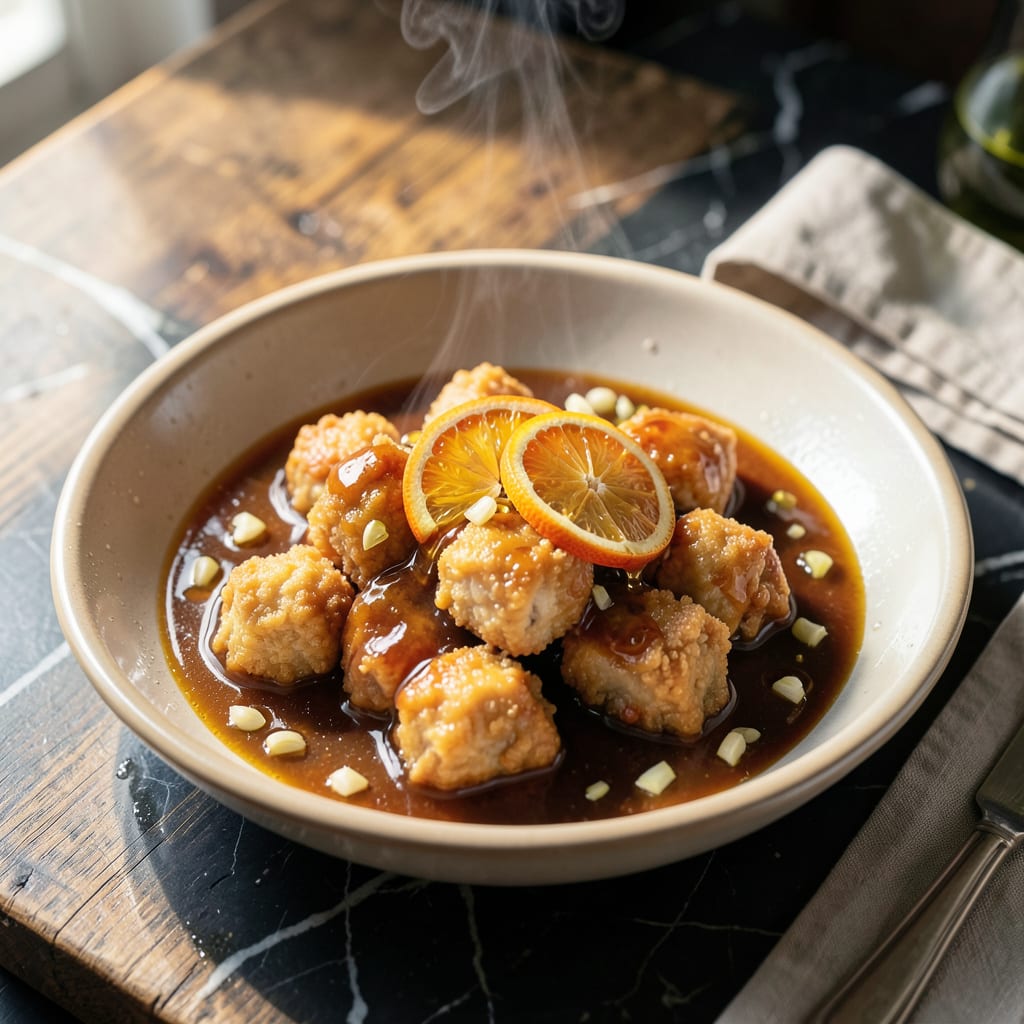
This sauce transforms ordinary chicken into restaurant-quality orange chicken with its perfect balance of sweet, tangy, and savory flavors. The secret lies in the precise combination of citrus and umami that creates that signature sticky glaze.
With just a few simple ingredients and 10 minutes of cooking, you’ll have a versatile sauce that’s ready to elevate your next meal. It works beautifully with chicken, tofu, or even as a dipping sauce for appetizers.
Ingredients for Chinese Orange Chicken Sauce
Nine ingredients. Ten minutes. That sticky, citrusy magic is closer than you think.
| Ingredient | Amount | Notes |
|---|---|---|
| Fresh Orange Juice 🍊 | ¾ cup | Newly squeezed for best flavor |
| Orange Zest 🍊 | 1 tbsp | Finely grated from fresh oranges |
| Soy Sauce 🫒 | ¼ cup | Low-sodium preferred for balance |
| Rice Vinegar 🍚 | 2 tbsp | Substitute apple cider vinegar if needed |
| Brown Sugar 🍚 | ⅓ cup | Packed for sweetness consistency |
| Honey 🍯 | 2 tbsp | Pure for natural sweetness |
| Minced Garlic 🧄 | 2 tsp | Freshly minced for pungency |
| Fresh Ginger 🌿 | 1 tsp | Finely grated for smooth texture |
| Cornstarch Slurry 🌾 | 1 tbsp | Mixed with 1 tbsp water |
[recipeingredientscaler]
The orange juice and zest are non-negotiable here. Navel oranges give the brightest flavor (skip the blood oranges—they’re too bitter). I grab mine from Whole Foods since they’re usually juicier, but any grocery store works. The soy sauce? Go for Kikkoman low-sodium so you can control the salt. And please, juice the oranges yourself—bottled stuff tastes flat and sad.
No fresh ginger? Ground ginger at one-quarter the amount works, but it’s not the same. Short on honey? Maple syrup or agave in a 1:1 swap. If you’re avoiding sugar, coconut sugar works but changes the color. The cornstarch slurry is what gives you that glossy, restaurant-style finish—don’t skip it (or use arrowroot powder if that’s what you’ve got).
This sauce keeps beautifully—5 days in the fridge, 3 months frozen. I always make a double batch since it’s so versatile. Reheat gently to keep that silky texture.
Why You’ll Love This Recipe
- I’ll be real: it tastes even better the next day, so I double the batch for lunches—my wallet loves that.
- No-Fuss Mixing: I just dump the orange juice, zest, and soy sauce in a pan—no fancy techniques, just stir and simmer.
- Sweet-Tangy Magic: The brown sugar caramelizes with the rice vinegar for that sticky, crave-worthy balance of citrus and umami.
- Weeknight Hero: Honestly, I toss it with chicken or tofu on busy evenings and dinner’s ready before the rice finishes cooking.
Step-by-Step Instructions for Chinese Orange Chicken Sauce
Here’s the method I use to create that perfect balance of sweet, tangy, and sticky every time.
Step 1: Bloom Aromatics in the Pan
Heat a medium saucepan over medium heat. Add the 2 tsp minced garlic and 1 tsp fresh ginger, stirring constantly for 30-45 seconds until fragrant. This step releases their essential oils and builds the flavor foundation.
Watch carefully—you want the garlic and ginger to turn just lightly golden but not brown. If they burn, they’ll impart a bitter taste that will overpower the sweet citrus notes. The pan should smell intensely aromatic at this point.
Step 2: Combine Liquid Ingredients and Sweeteners
Pour in the 0.75 cup fresh orange juice, 0.25 cup soy sauce, 2 tbsp rice vinegar, 0.33 cup brown sugar, and 2 tbsp honey. Stir well to dissolve the brown sugar completely—it should create a smooth, glossy mixture.
Bring the mixture to a gentle boil, then reduce heat to medium-low. The liquid will start to bubble around the edges. This is where the magic happens as the flavors begin to meld together. Let it simmer for 3-4 minutes to allow the sugar to fully incorporate.
Step 3: Add Zest and Thicken the Sauce
Stir in the 1 tbsp orange zest, which adds that bright, citrusy punch that defines this sauce. Then slowly pour in the 1 tbsp cornstarch slurry while whisking constantly to prevent lumps from forming.
Continue cooking for another 2-3 minutes until the sauce thickens enough to coat the back of a spoon. You’re looking for a consistency that’s glossy and syrupy but still pourable. If it thickens too much, add a splash of water to loosen it slightly.
Step 4: Check Consistency and Adjust
Remove the sauce from heat and let it sit for 1 minute. The sauce will continue to thicken slightly as it cools. Give it a final stir—it should have a beautiful sheen and ribbon off your spoon in a thick, steady stream.
Taste and adjust if needed. The sauce should have a perfect balance where no single flavor dominates—the citrus should be bright but not overpowering, the sweetness should be present but not cloying, and there should be just enough saltiness from the soy sauce to round everything out.
Pro Tips For Making Chinese Orange Chicken Sauce
- Reduce the Juice: Simmer the fresh orange juice for 8-10 minutes first to concentrate the flavor—raw juice makes the sauce watery and bland.
- Zest Before Juicing: Always grate the orange zest before cutting and juicing the fruit; it’s nearly impossible to zest a halved orange, and you’ll waste that bright citrus oil.
- Balance the Sweet: Brown sugar can overpower, so add it gradually and taste as you go—rice vinegar and soy sauce should still cut through the sweetness.
- Skip Bottled Zest: Dried orange zest from the spice aisle lacks the fresh, aromatic punch this sauce needs; fresh zest makes a real difference in the final flavor.
Flavor Customization for chinese orange chicken sauce
Extra Spicy Kick
Add ½ tsp red pepper flakes with the garlic and ginger, or stir in 1 tsp sriracha at the end. I love this variation when I want a little heat to cut through the sweetness. The spice builds gradually—perfect for those who enjoy a warm finish. 🌶️
Citrus Twist
Swap ½ cup of the orange juice for fresh grapefruit juice to add a bittersweet complexity. You can also add 1 tsp lime zest for a brighter, more layered citrus profile. This version pairs wonderfully with grilled shrimp.
Umami Boost
Increase the depth by adding 1 tbsp oyster sauce or 1 tsp fish sauce with the soy sauce. This small addition enhances the savory notes without overpowering the citrus. I use Lee Kum Kee oyster sauce for consistent quality.
Sweet & Smoky
For a BBQ-inspired take, mix in 1 tbsp hoisin sauce and ½ tsp smoked paprika. The hoisin adds richness while the paprika introduces a subtle smokiness. This works especially well with grilled or roasted meats. 🔥
Herbal Freshness
Finish the sauce with 1 tbsp chopped cilantro or 2 tsp chopped mint for a fresh, aromatic touch. Stir these in right before serving to preserve their vibrant color and flavor. I prefer cilantro for its citrusy notes.
Low-Sugar Option
Replace the brown sugar with ¼ cup coconut sugar and the honey with 1 tbsp erythritol. The sauce will be less sweet but still have that signature glossy texture. Just note the color will be slightly deeper. 💡
Nutrition Facts
Frequently Asked Questions
What can I use instead of fresh oranges?
Use 100% orange juice from the store, but add ½ tsp citrus extract to boost the flavor. Avoid concentrates—they’re too sweet and lack freshness.
How do I fix sauce that’s too thin?
Mix 1 tsp cornstarch with 1 tbsp cold water, then whisk it into the simmering sauce. Cook for 1-2 minutes until it thickens to your desired consistency.
Can I make this sauce ahead of time?
Yes! It keeps well in the fridge for up to 5 days in an airtight container. Reheat gently on the stove, adding a splash of water if it thickens too much.
Why does my sauce taste bitter?
This usually happens if the garlic or ginger burns. Always cook them on medium heat for just 30-45 seconds until fragrant, not brown.

- Jollof Rice Sauce Recipe: West African Tomato and Spice Infusion - September 25, 2026
- Japanese Rice Soup Recipe: Umami-Rich Comfort in a Bowl - September 25, 2026
- Homemade Cream Of Rice Recipe: Silk-Smooth Breakfast in Minutes - September 25, 2026